
The South China Sea issue is heating up the ASEAN regional forum.
The Indonesian Foreign Minister stated that ASEAN has reached a high degree of consensus and will continue to maintain this consensus on the South China Sea issue.
The ASEAN Regional Forum (ARF) opened on the morning of July 2nd at the International Convention Center in Banda Seri Begawan, Brunei, to discuss pressing regional issues, particularly the South China Sea. The participation of major powers such as Russia, the United States, China, India, Japan, and South Korea at this ASEAN forum will undoubtedly attract significant public attention.
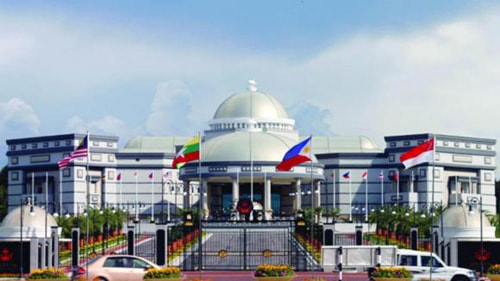 |
Begawan International Convention Centre, Brunei (Photo: Reuters) |
At this morning's meeting, the 20 ASEAN ministers and dialogue partners focused on discussing many pressing issues such as the situation in the South China Sea, North Korea, Syria, cyber espionage, etc. In particular, the South China Sea issue and current disputes stood out at this conference.
During the ASEAN meetings, ASEAN and its partners discussed this issue extensively over the past two days. Indonesian Foreign Minister Marty Natalegawa, speaking to the press on the sidelines, also affirmed that ASEAN had reached a high level of consensus and would continue to reach a consensus on the South China Sea issue in this morning's session.
The Indonesian Foreign Minister stated: “We will continue to unify our positions at the ARF. Together with the stakeholders at this forum, we will discuss how to build trust and enhance cooperation on the South China Sea issue. This is crucial for achieving progress.”
ASEAN's dialogue partners, including Russia, the United States, Japan, South Korea, Australia, Canada, New Zealand, India, and Bangladesh, all share the view that they hope the issues concerning the South China Sea will be resolved by the relevant parties on the basis of the rules of international law, the 1982 United Nations Convention on the Law of the Sea, and the six-point principles of the Declaration on the Conduct of Parties in the South China Sea (DOC). Both ASEAN and its dialogue partners call for cooperation from all relevant parties and continued negotiations to reach a Code of Conduct for Parties in the South China Sea (COC).
During this morning's session, the ministers discussed tensions on the Korean Peninsula, the situation in Syria, and other non-traditional security issues.
According to VOV - DT


