
Peer-to-peer online lending is being distorted with interest rates as high as 720%.
Peer-to-peer lending itself is not inherently bad, but it has been distorted, manipulated, and operated illegally by many investors.
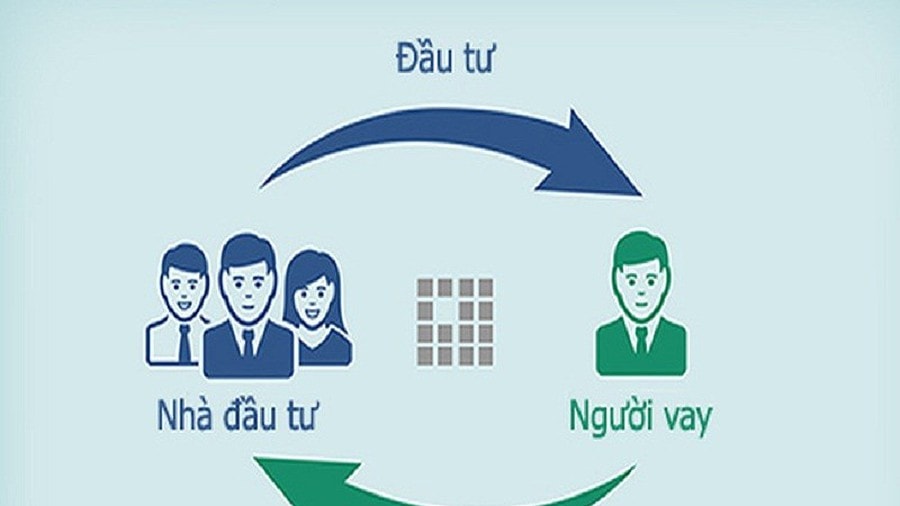
At a training session on the consumer finance market recently organized by the Vietnam Banking Association in Vung Tau, many experts acknowledged that online lending and peer-to-peer (P2P) lending models are experiencing rapid growth in Vietnam.
 |
Currently, there is a newly established P2P lending company in Vietnam, less than two years old, that receives approximately 2,000 loan applications daily. Meanwhile, according to a survey by PV, as of 8 AM yesterday, Tima, a peer-to-peer lending company, had raised a total of over 45,709 billion VND from 25,051 participating investors.
The relationship between intermediaries and investors is unclear.
Commenting on this lending model, Dr. Can Van Luc, Chief Economist of the Vietnam Investment and Development Bank (BIDV) and Director of the BIDV Training School, said: Recently, peer-to-peer lending, online lending, which does not go through intermediaries like banks but only through intermediary companies providing technology platforms connecting lenders and borrowers, similar to Uber and Grab, has appeared in Vietnam.
Globally, this model is also developing rapidly. In China, outstanding peer-to-peer lending (P2P) debt reached approximately $30-40 billion by the end of last year, with around 6,000 companies involved in the P2P lending sector. However, due to the potential for abuse of this model, China has now reduced the number of P2P lending companies to around 2,000.
Speaking about the positive aspects of the online lending model, Mr. Luc shared: "There is always a real need in the economy: there are people who need to borrow and people who want to lend. Now, thanks to technological development, there is no need to go through intermediary financial institutions, no need for branches or offices, and the number of transaction staff is not large, resulting in extremely low transaction costs. And borrowers receive funds very quickly."
"It has many advantages, but the worrying thing is that this supposedly advantageous form of lending has been distorted, with many people raising capital intentionally doing wrong, using the raised funds to invest in other areas instead of simply lending. The relationship between the technology platform provider and the investor is unclear."
"Whether it's P2P lending in Vietnam or the US, the common point is that most borrowers in this model are subprime, not meeting the lending standards of commercial banks or finance companies," Mr. Luc emphasized.
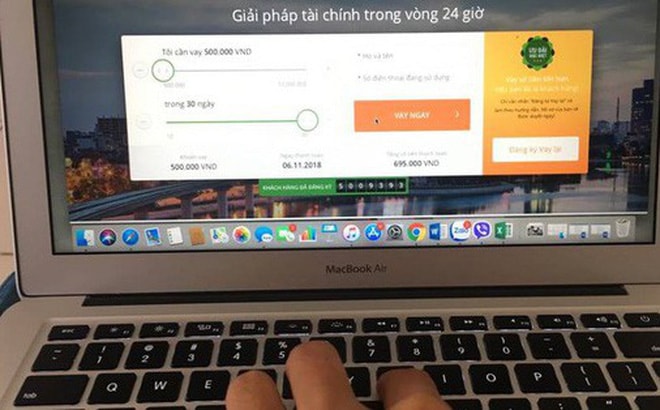 |
| The peer-to-peer lending model will continue to develop without a legal framework, posing risks to both borrowers and lenders, but investors face even greater risks. |
A legal framework is needed soon.
According to many experts, the biggest challenge is that Vietnam currently lacks a legal framework to regulate peer-to-peer lending. With the peer-to-peer lending model expected to continue developing without a legal basis, this poses risks for both borrowers and lenders, but investors face even greater risks.
Because of the fear of facing greater risks, many investors who have borrowed capital through P2P platforms always want to use every means to recover their debts, including using gangster-style debt collection methods.
Therefore, how operators should manage and develop it in the future is a matter of great public interest.
 |
Dr. Can Van Luc stated: Peer-to-peer lending is essentially a civil relationship, meaning that legally, it already has a basic structure. However, this form of lending, coupled with technology, presents a new challenge.
Currently in the US, they manage peer-to-peer lending very scientifically. Firstly, they assign the US Securities and Exchange Commission (SEC) as the central coordinating body. Secondly, they strictly regulate the technology platform providers, requiring them to be licensed investment management companies, and their employees to be licensed professionals.
At the same time, the US also enacted regulations to manage the rights of investors (lenders), which included setting limits, preventing intermediary companies from raising excessive capital, and restricting the investment amount of investors.
For example, investors are only allowed to borrow up to their income; if they earn 20 million VND a month, they are only permitted to invest an amount equivalent to that, not many times their income. These are very valuable lessons that Vietnam could learn from.
According to Mr. Luc, given the rapid development of the peer-to-peer lending model, he suggested that the State Bank of Vietnam should issue a legal framework as soon as possible, but he emphasized that it is certainly not acceptable to ban it simply because it is difficult to manage.
Because this is a developing trend in technology, and this model has already flourished worldwide, if a legal framework is not established soon and this model is allowed to operate outside the law and spiral out of control, the potential risks and consequences for society will be enormous.


