
The Ministry of Health explains the reduction in health insurance coverage for cancer drugs.
Following concerns from patients that some cancer treatment drugs covered by the Health Insurance Fund would have their coverage reduced from 100% to 50%, the Ministry of Health held a press conference to provide information on the matter.
Reduce reimbursement rates for 4 types of cancer drugs.
According to Mr. Phan Van Toan, Deputy Director of the Health Insurance Department (Ministry of Health), the Ministry of Health has just issued Circular 40/2014/TT-BYT on the list of modern medicines covered by the Health Insurance Fund, including 845 active ingredients, 1,064 modern medicines, and 57 radioactive drugs and labeling compounds.
This circular has removed 111 drugs whose marketing authorization was discontinued or whose marketing authorization had expired; added 37 drugs belonging to various specialties; added new dosage forms for 22 drugs; and expanded the scope of use for 77 drugs to facilitate access to treatment at primary healthcare facilities for patients with health insurance cards.
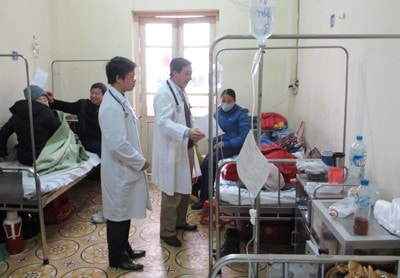 |
| There are many treatment methods for cancer patients, such as surgery, radiation therapy, and medical treatment (using medication). Photo: VGP |
This list includes 25 drugs with regulated reimbursement rates: 5 new drugs (which will be reimbursed 50% by the Health Insurance Fund); 11 cancer and anti-rejection drugs not on the list that will maintain a 50% reimbursement rate; and 9 drugs currently on the list with 100% reimbursement by the Health Insurance Fund, which will have their reimbursement rate reduced to 50% from January 1, 2015.
According to Mr. Toan, the nine types of drugs with reduced reimbursement rates include: four cancer treatments and five drugs for treating arthritis, hepatitis C, detoxification, and growth hormone deficiency.
"The reduction in reimbursement from the Health Insurance Fund for four types of cancer treatment drugs will inevitably have an impact on people undergoing cancer treatment," Mr. Toan acknowledged.
However, to support and ensure the rights of patients with health insurance cards during the transitional period (when Circular 40 takes effect from January 1, 2015), a representative from the Ministry of Health stated that in cases where patients with health insurance cards were admitted to hospitals before January 1, 2015, but are still receiving treatment at medical facilities, the current payment rate from the Health Insurance Fund will apply until the patient is discharged.
Specifically, for cancer patients who were using four drugs – Doxurubicin, Erlotinib, Gefitinib, and Sorafenib – at healthcare facilities before January 1, 2015, the Health Insurance Fund will continue to cover 100% of the costs as per regulations. For new patients receiving treatment from January 1, 2015, the Health Insurance Fund will apply a 50% reimbursement rate for these four drugs.
To support cancer patients using the four aforementioned medications after January 1, 2015, a representative from the Health Insurance Department stated that the Ministry of Health will partially subsidize these patients' costs from the Fund for Medical Examination and Treatment for the Poor, and will encourage pharmaceutical companies to provide additional financial support through drug donations or partial reimbursement of health insurance costs.
Why were payments for these four drugs cut?
According to Mr. Mai Trong Khoa, Director of the Center for Nuclear Medicine and Oncology (Bach Mai Hospital), among the four types of cancer treatment drugs that will have their reimbursement from the Health Insurance Fund reduced, Doxorubicin is significant in reducing side effects, Erlotinib and Gefitinib are prescribed for lung cancer, and Sorafenib is used to treat liver cancer.
Currently, Erlotinib costs 1,337,420 VND/tablet, Gefitinib costs 1,199,076 VND/tablet, and cancer patients need to take one tablet of each per day. Sorafenib costs nearly 1 million VND/tablet with a dosage of 4 tablets/day.
The three drugs used to treat lung and liver cancer are targeted therapies, meaning they are typically prescribed for patients with advanced-stage cancer or those who have failed to respond to other medications.
According to Professor Mai Trong Khoa, these are new drugs that have already been used in developed countries, so they need to be brought to Vietnam so that doctors have the opportunity to use them for patients.
These targeted therapies, while not extending a patient's lifespan, improve their quality of life and allow for the use of other, more effective treatments such as radiation therapy and chemotherapy, without necessarily requiring these drugs.
However, it is very difficult to successfully treat patients with late-stage cancer. Without targeted therapy, or even with targeted therapy, patients cannot survive. Even in developed countries, there is currently no cure for late-stage cancer. Cancer can only be cured if detected early," said Professor Mai Trong Khoa.
Mr. Tran Van Thuan, Deputy Director of K Hospital, also stated that the list of cancer treatment drugs covered by the Health Insurance Fund currently includes 65 types of drugs. In addition, there are 9 immunomodulatory drugs, 57 radioactive substances, etc. Thus, it can be said that this list contains all the essential drugs for cancer treatment and offers a wide variety for doctors to choose from.
The four types of drugs whose reimbursement from the Health Insurance Fund is reduced are just a few of the cancer treatment drugs on the list. These drugs are currently prescribed very rarely, and with caution and infrequently.
According to Mr. Nguyen Minh Thao, Deputy General Director of Vietnam Social Security, approximately 125,000 new cancer patients are diagnosed in Vietnam each year. If the average treatment cost per patient is 10 million VND, then more than 1,200 billion VND per year would be needed. However, if the average cost is 100 million VND per cancer patient, then 12,000 billion VND per year would be required.
"If the health insurance fund were to cover all of this enormous amount, it would be very difficult to allocate funds to other specialties such as tuberculosis, kidney failure, etc., and in the future, ARV drugs will also be covered by the health insurance fund. Therefore, paying 100% for these drugs would exceed the health insurance fund's capacity," Mr. Thao explained.
According to chinhphu.vn


