
Injecting 40 trillion VND in credit into the economy each month.
To implement socio-economic development tasks and remove difficulties for production, from now until the end of the year, the Government strives to provide approximately 40,000 billion VND in credit each month, and accelerate the disbursement of the real estate support package...
As the last government member to take the podium during the question-and-answer session on the afternoon of June 14th at the National Assembly, Deputy Prime Minister Nguyen Xuan Phuc spent approximately 20 minutes presenting an updated report on the socio-economic situation and tasks requiring attention in the coming period.
|
| The Deputy Prime Minister stated that approximately 40 trillion VND in credit will be injected into the economy each month. Photo: Hoang Ha |
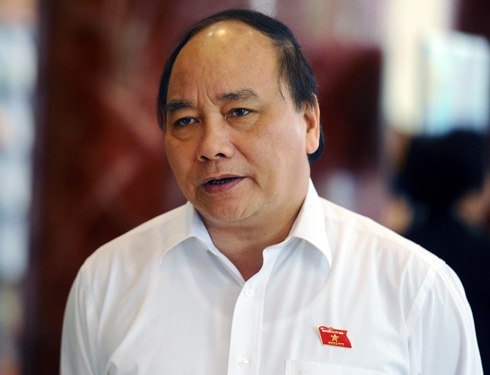
According to the government's assessment, after the first five months of the year, the macroeconomic situation has basically improved, with low CPI growth and improvements in exports, imports, and credit. For the remainder of 2013, the government affirms its commitment to controlling inflation, stabilizing the macroeconomy, removing obstacles for businesses, and striving to achieve the highest possible results for the socio-economic targets set by the National Assembly.
Regarding the task of removing obstacles to production, the report presented by the Deputy Prime Minister emphasized credit solutions, including the policy of continuing to reduce interest rates on old and new loans, prioritizing capital for production, projects, and businesses operating efficiently. Specifically, the Government stated that it will strive to manage the economy to inject approximately 40,000 billion VND in credit each month to achieve the target of 12% credit growth this year. In the first five months of the year, credit growth was less than 3%.
Acknowledging the slow implementation of the 30 trillion VND housing support package for low-income earners, a government representative stated that they will strive to disburse approximately 15,000-20,000 billion VND this year. Simultaneously, the government also aims for the banking sector to resolve around 105,000 billion VND of non-performing loans this year.
According to National Assembly Chairman Nguyen Sinh Hung, approximately 20 delegates were waiting to question the Deputy Prime Minister immediately after the aforementioned report. Names like Nguyen Ba Thuyen, Le Nhu Tien, Nguyen Thai Hoc, and Tran Du Lich... partly indicate the difficulty of the questions. Most delegates wanted the government representative to clarify issues of individual responsibility and vested interests in the administration process.
Expressing frustration with the slow pace of economic restructuring, delegate Nguyen Ba Thuyen requested the Deputy Prime Minister to clarify the reasons, propose solutions, and answer constituents' questions about whether vested interests are a major obstacle to this process.
In response, the government representative clearly outlined four reasons for the obstacles, including institutional issues, a challenging financial market, human resources, and governance. However, the Deputy Prime Minister also noted that the process has achieved certain results in reforming public investment, approving corporate restructuring plans, and reorganizing banks.
Acknowledging shortcomings due to a lack of decisive action in the implementation process, the government representative stated: "Besides objective factors, the slow pace of restructuring has subjective causes for which we, the ministries, and the localities are responsible...". However, the Deputy Prime Minister's response did not address the issue of vested interests as the delegates had hoped.
Disagreeing with the use of the word "we" when referring to responsibility, delegate Le Nhu Tien suggested that the Deputy Prime Minister use the word "I" when evaluating the work accomplished in his assigned field after half of his term, because, according to him, the essence of parliamentary questioning is to seek individual responsibility.
In response to this request, the Deputy Prime Minister "listed" the four areas under his responsibility, including anti-corruption, handling complaints and denunciations, ensuring traffic safety, and institution building, with quite positive results achieved in the past. "Regarding the areas we are responsible for, there have been efforts made. We are most committed to resolving long-standing complaints and denunciations, which have been significantly reduced," he said.
According to VnExpress-TH


