
Vietnamese football lags behind due to a lack of opportunities for young players.
In advanced football nations in Asia, or even in Thailand, the youth league systems differ significantly from those in Vietnam. Vietnamese youth leagues are diverse, but they prioritize achievements over opportunities for young talents to reach professional levels.
Thai football is one step ahead.
In the past 29 years since 1995, the Vietnamese national team has only won against Thailand 3 times, losing 18 and drawing 8. Surpassing Thailand is already a difficult feat, let alone achieving that.World Cup dreamThat is precisely the need for change in Vietnamese football.
For many years, Vietnamese football has been unable to match Thai football, especially when considering the national team. However, the Thai youth football league system has many differences compared to the youth league systems in Vietnam.
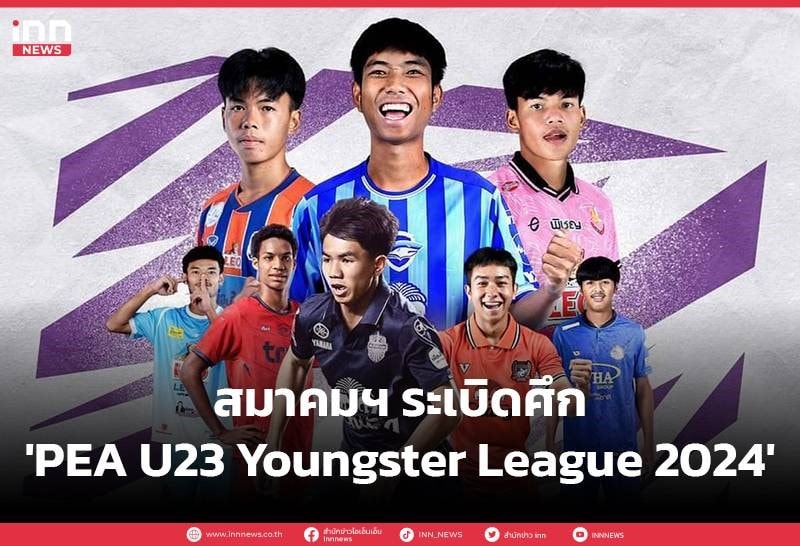
Thailand's national youth football league system has five age groups: U19, U16, and U14 (11-a-side); and U12 and U10 (7-a-side). Furthermore, Thailand has established the PEA U23 Youngster League 2024 to provide more opportunities for young players to compete.
Accordingly, participating players must be under 23 years old (as of the year of registration), be Thai citizens, and not previously registered with any other club in leagues organized by the Football Association of Thailand (FAT). Eight clubs will compete in a double round-robin format, with home and away matches. The first season will consist of 56 matches, with each club playing 14 games.
Vietnamese football remains at a standstill.
Meanwhile, in Vietnam, for players aged 15-23, the age group that needs to play a lot, if they don't participate in international tournaments like...U19Regarding the U21 category, a youth team in Vietnam can only play a maximum of 15 matches per year, from the qualifying rounds to the finals. If they are eliminated in the qualifying rounds, a youth team only has 8 to 10 matches. Previously, there were international U19 and U21 tournaments, but these no longer exist. Plans to organize the U17 National Cup and U19 National Cup are also currently on hold.
At the U9 to U13 level, while advanced football nations organize festivals to bring together many youth teams, creating a playing field and providing opportunities for players in this age group to gain experience, the youth and children's leagues organized by Vietnam are part of the official competition system. This leads to many negative consequences such as a focus on achieving high scores or the practice of falsifying players' true ages.
According to experts, the age range of U9-U13 is the golden age for children to naturally develop their talents and receive training and skill development to perfect their abilities. However, due to the goal of winning medals or championships, most children are trained in skills for competition, leading to early development but difficulty integrating when they reach professional level.
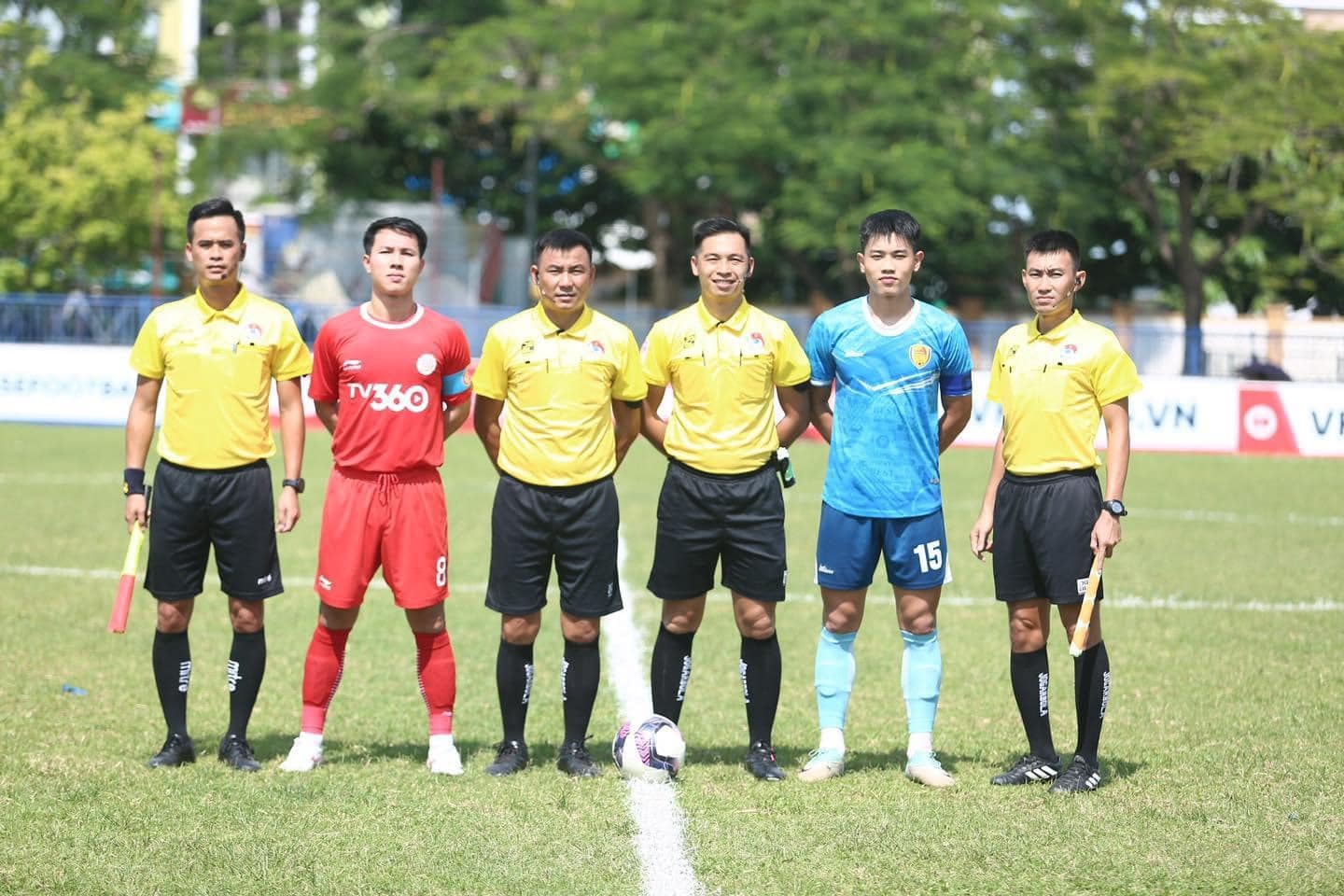
It's easy to see that at the U15 and U17 levels, Vietnamese youth teams are in no way inferior to teams in the region, but when they reach the U19 or U23 levels, they gradually stagnate and lose momentum. Young players aged 21-23 in Vietnam mostly play in the Third, Second, or First Division, and not many of them are boldly given the opportunity to play in the V.League.
In Vietnam, only HAGL, Hanoi, Viettel, and SLNA dare to use young players in the V.League, but it's not easy for them to compete for a starting spot. Alternatively, clubs are forced to loan them out to play in the First or Second Divisions to gain experience before recalling them after a few years.
The youth league system is unlike any other.
The irony of Vietnamese football is further highlighted in the U21 tournament, where player Phan Bá Quyền, under 21 years old, was loaned by SLNA to two teams to give him playing opportunities and experience, only to be banned from playing for SLNA in the 2022 National U21 Championship because the regulations did not allow it. This shows the inadequacies in the way Vietnamese youth tournaments are organized. Even the U19 and U21 tournaments feature many national team players or players who have already gone on to play professionally.
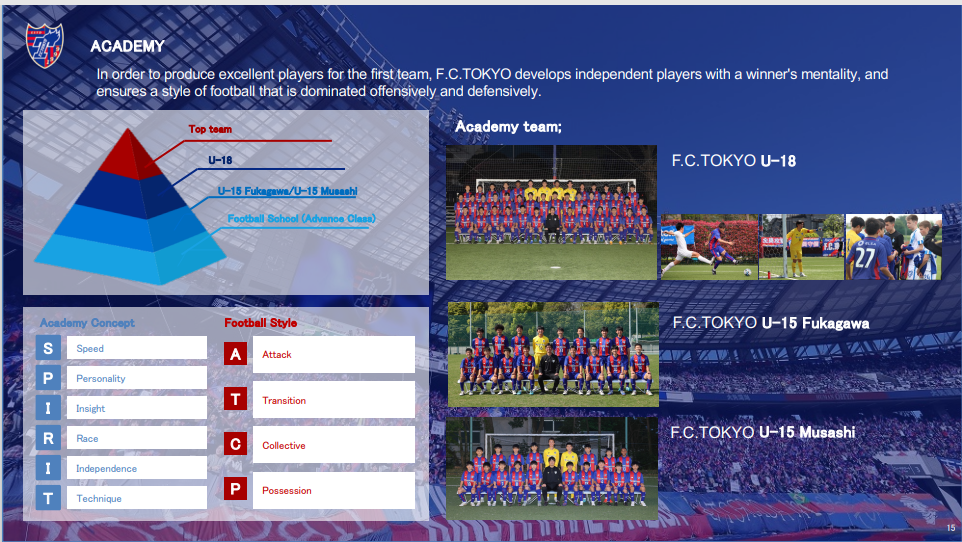
Looking at Japanese football, J.League 1 – Japan's top league – teams focus primarily on two crucial youth leagues: U15 and U18. For example, Tokyo FC has two U15 teams and one U18 team, but boasts over 4,000 athletes aged 12 and under, considered as foundational or scattered players within school football systems. Despite having only one U18 team, these players are carefully selected, compete in numerous tournaments, and are fully capable of playing professionally at any time.
In Vietnam, there aren't many training centers with hundreds of athletes from U9 to U12 like Song Lam Nghe An, Hanoi, Viettel, or HAGL. Currently, Song Lam Nghe An has 25 grassroots talent classes in districts/cities/towns with nearly 500 athletes, but compared to teams in Japan and Thailand, this is still a very modest number.
To ensure the holistic development of young players, many clubs and training centers have been forced to send their U14 teams to the U15 league, their U17 teams to the U19 league, or players aged 17-19 to the U21 league. This allows many players to develop and eventually play in the V.League. Players aged 17 who are given the opportunity to play in the U17, U19, and U21 leagues tend to develop better than their peers.
I believe the Vietnam Football Federation should reconsider the importance of youth tournaments like U9, U11, and U13 within the Vietnamese youth football system. There is a need for more tournaments like the Nghe An Newspaper Cup Youth Football Tournament in each locality, and more national U9, U11, and U13 tournaments to provide young players with opportunities to compete, gain experience, and learn from each other, rather than focusing on winning championships at all costs.


