
Vocational schools in Nghe An province are experiencing a boom in student enrollment.
In recent years, with the growing awareness of new career opportunities, vocational schools have been admitting an increasing number of students. To meet the demands of teaching and the labor market, many vocational training institutions in Nghe An have implemented innovations to attract students in their own unique ways.
Building a brand for teaching and learning at the cultural level.
InNational High School Graduation ExaminationRecently, Hong Lam Vocational School of Economics and Technology (KT-KT) achieved a 100% pass rate in the entrance exam with an average score of 6.68, ranking 4th in the province. Ten students scored 26 or higher, and 60% were admitted to their first-choice universities. This result was not surprising to the teachers and students, as they practically followed the motto "eat, sleep, and breathe study" throughout the final months of the semester.
Mr. Phan Xuan Dung, Principal of Hong Lam Vocational School of Economics and Technology, said: “For our vocational school, the time after the Tet holiday is considered a time solely for studying; we no longer organize vocational training modules for 12th-grade students, but only focus on reviewing academic subjects for exams. Teachers and students are practically in the classroom studying day and night.” Principal Phan Xuan Dung also stated that Hong Lam Vocational School has affirmed its achievements in academic training according to the standards of the Ministry of Education and Training for many years. It has become a brand name for the school, as for many years, the school has consistently had students pass provincial-level academic competitions, and its results in the National High School Graduation Examination have always been among the top.

The quality of general education has always been a concern for vocational schools, as the quality of incoming students at the intermediate level is often very low. At Viet-Duc College, for many years, the enrollment target has consistently exceeded 100% because the quality of general education here is highly trusted by parents and students. In the recent 2023-2024 National High School Graduation Examination, 100% of the school's students passed, with approximately 50% achieving 20 points or more, and 20% achieving 25 points or more. This year, the school has already achieved 110% of its assigned enrollment target. According to Principal Nguyen Huu Hang, "To achieve top-tier post-training quality in the province's vocational education sector, the school has gone through a challenging process, constantly receiving students from mountainous districts with low entry-level qualifications. These students often want to drop out midway through their studies for a variety of reasons, and many register for vocational training simply because of family guidance, without any personal goals. In some years, just one or two weeks after the start of the school year, many students from mountainous districts would come to the principal's office asking to leave school to go to work. Therefore, persuading and guiding them back to vocational training was extremely difficult and arduous. And after each graduating class receives both a vocational certificate and a high school diploma, not only the students and their parents but also we are moved to tears."
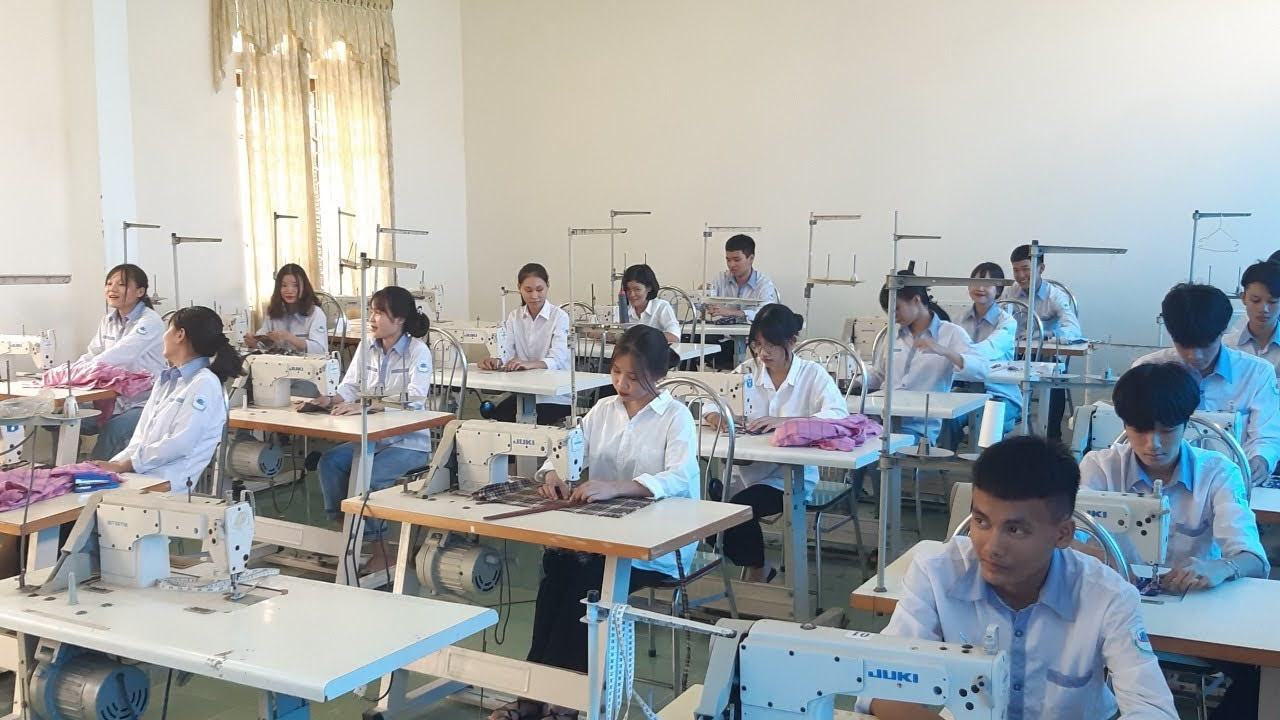
For many years, the curriculum for cultural subjects (following the 7-subject program, also known as the 9+ program), designed by the Ministry of Education and Training and called the framework curriculum for vocational secondary education according to Circular No. 16/2010/TT-BGDĐT, has been taught in many vocational education institutions in the province. However, these vocational education institutions must be affiliated with continuing education centers in the province to be allowed to provide training.
The school has partnered with the Provincial Center for Continuing Education No. 2, and from there, the school has access to a high-quality teaching staff. These dedicated teachers devote all their time and effort during the final year of high school to producing a high-quality graduating class, excelling in both vocational skills and academics. If the quality of education is poor in any given year, the school will immediately lose its ability to attract students the following year, as many parents and students now prefer vocational schools but still require a high school diploma.
Principal of Hong Lam Vocational School of Technology and Engineering, Phan Xuan Dung
Currently, there are 54 vocational education institutions in the province, including: 9 colleges, 12 vocational secondary schools, 22 vocational education centers, vocational education and continuing education centers, and 11 other institutions involved in vocational training. Of these, 39 are public institutions (4 under the management of central ministries and agencies, and 35 under provincial management) and 14 are private institutions. Among these, vocational education and continuing education centers provide general education, and many vocational schools also participate in general education under the 9+ program through partnerships with continuing education centers in the province.
In recent years, thanks to effective collaboration in cultural education, many vocational schools have attracted a large number of students, with many exceeding their targets. As a result, vocational training and cultural education for students after streaming in the area have achieved outstanding results. Enrollment scale: 88,500 students/year, an increase of 8.9% compared to 2014, rising from 80,600 in 2015 to 88,500 in 2020 (an increase of 9%). Of these, vocational colleges increased by 17.2% with 7,975 students; vocational secondary schools: 15,655 students; and basic vocational training and regular vocational training: 64,870 trainees.
According to Mr. Hoang Sy Tuyen, Head of the Vocational Training Department, Department of Labor, War Invalids and Social Affairs.
Innovating many academic disciplines to meet market demands.
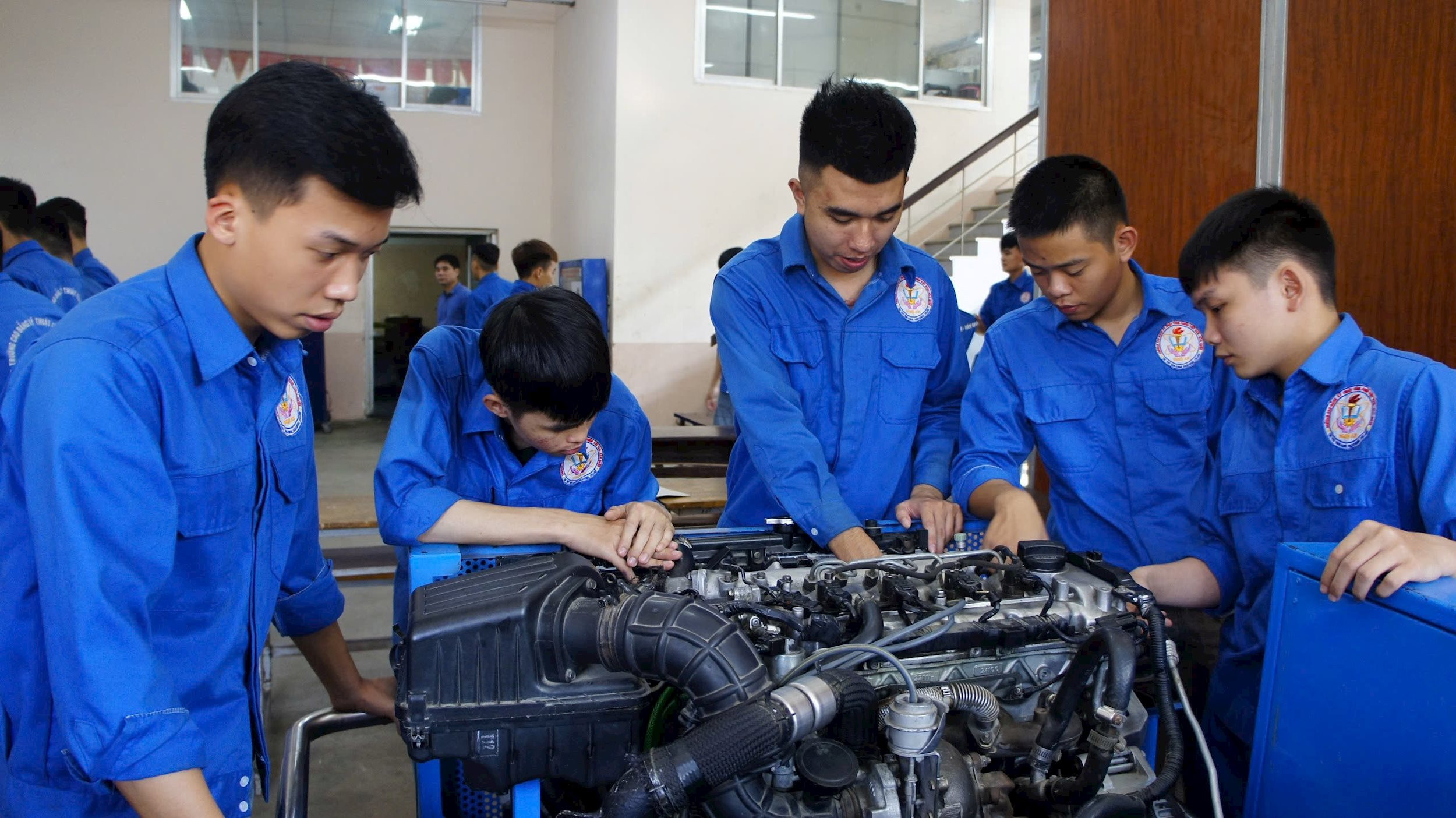
To date, the Vietnam-Korea College of Technology and Industry has met its enrollment targets for the college-level program through the selection process and exceeded its enrollment targets for the vocational program by 15%. For the college-level programs, some majors require students to have a high school graduation exam score above 25 points. As in previous years, the school will hold an awards ceremony at the beginning of the academic year for students with scores of 23 or higher to encourage and motivate students studying in the school's departments and majors. In addition, the school is also planning to invest in equipment to upgrade teaching modules. The school's principal, Mr. Ho Van Dam, stated: Currently, the school offers 12 majors in the fields of electrical engineering, automotive technology, welding technology, air conditioning, mechatronics, information technology, etc. These majors all meet international standards, ensuring that graduates have high-paying job opportunities.
However, according to Mr. Dam, in order to meet the skill standards, the school has to update its teaching modules annually to suit the requirements of orders and the current labor market. Therefore, the criteria for attracting students and improving the quality of teaching are to innovate methods and upgrade outdated equipment, integrating various devices to create simpler and more modern equipment. Mr. Dam also said: "In the next academic year, we plan to open more majors that are in high demand from businesses, and if students intend to work abroad, there will be a large job market with high incomes."
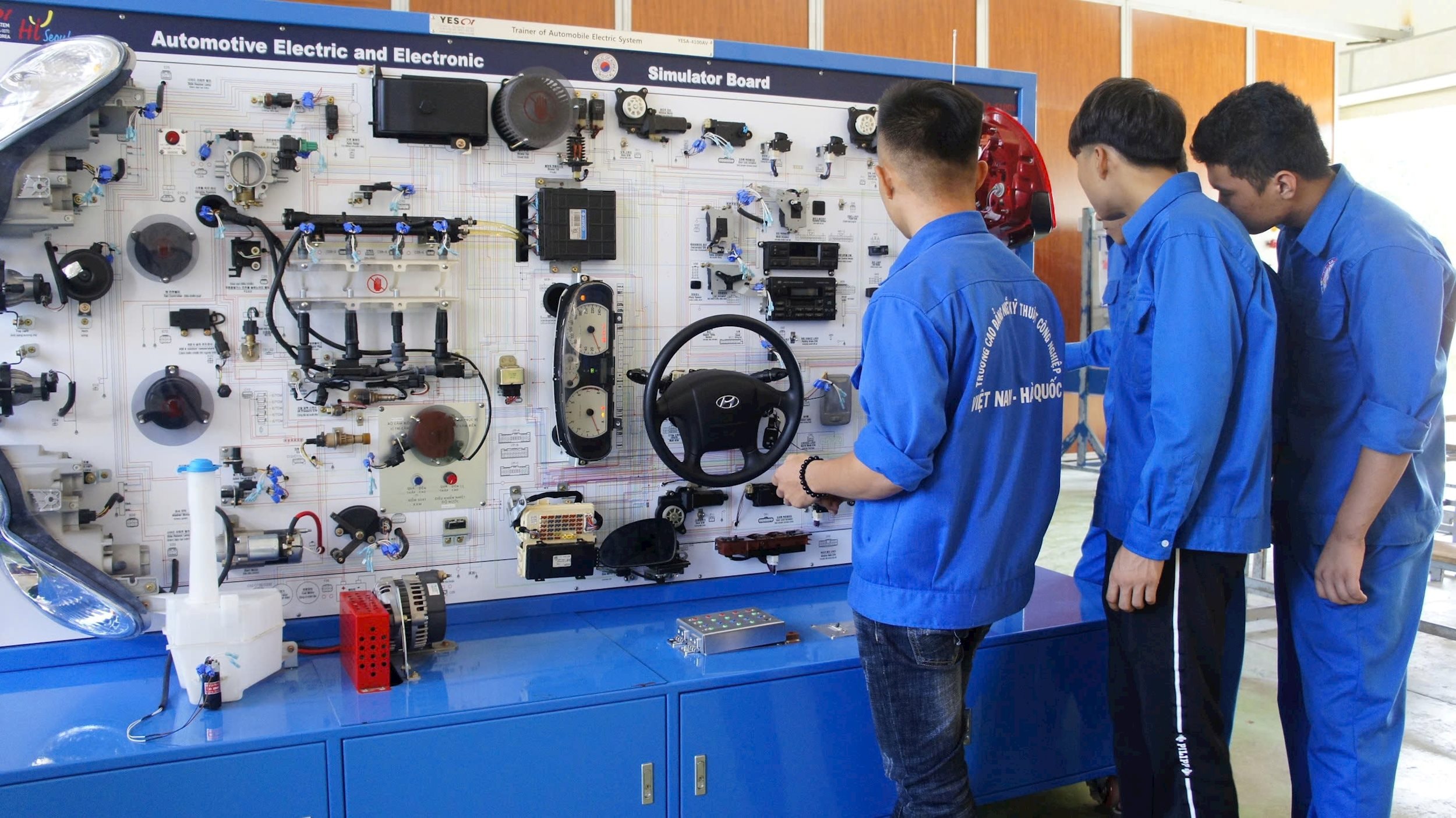
As for Viet-Duc College, many college-level programs have exceeded their enrollment targets; however, there is a disparity between programs. For example, programs like welding and automotive technology have over 100 students, while electronics only has 30. This difference is due to the fact that the electronics program charges 100% tuition fees, at over 1 million VND per student per month, while other programs only charge around 300,000 VND per month.
With the perspective of vocational training meeting the workforce needs of society, Viet-Duc College conducts a major review of its training programs every two years through feedback from teachers, businesses, and graduates. In 2024, Viet-Duc College will review and adjust the program to better suit current realities. Currently, electric vehicles are gaining a large market share, and the school is reviewing and increasing the content related to this type of vehicle in its training program. Mr. Nguyen Huu Hang is concerned that although the school attracts a large number of students, most choose to work abroad, despite the large domestic job market and businesses readily hiring 100% of their workforce across various fields.


