During a working visit to Thach Ngan commune, Con Cuong mountainous district, in addition to sharing about the effectiveness of the "Cattle Bank" model spearheaded by the Con Cuong District Fatherland Front in helping many households escape poverty, officials and residents also revealed another equally effective way to help each other escape poverty: organizing various "group" activities such as "house group," "rice group," and "fence group."
"Unlike the informal lending schemes in lowland districts, which are prone to risks such as default and fraud, our villagers participate in these schemes using more practical methods, ensuring that participants always benefit," said Ms. Luong Thi Thang, head of Dong Thang village, Thach Ngan commune.
The village of Dong Thang has 123 households, divided into 6 neighborhood groups, each with 15-23 households. These groups elect their own leaders and deputy leaders to manage activities and disseminate information from higher levels and the village community. It is from these neighborhood group meetings that the formation of "wards" (or "neighborhoods") has emerged.
According to the people of Dong Thang village, the earliest form of "ward" organization was established in Neighborhood Group No. 1, known as the "house ward". One day in mid-July, we had the opportunity to visit Dong Thang village, specifically Neighborhood Group No. 1, where we heard the villagers happily recount the positive effects of the "house ward".
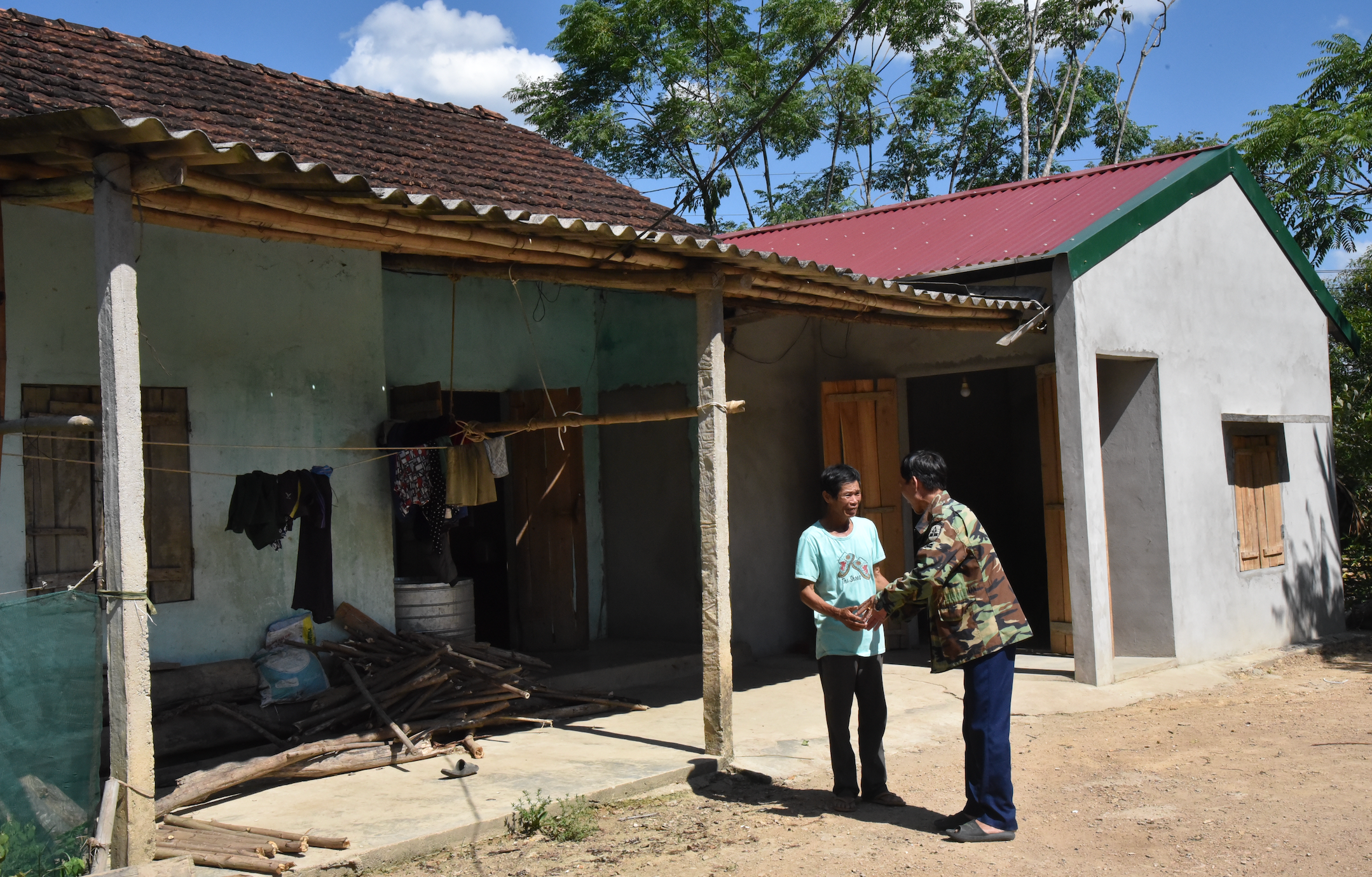
"The 'house ward' of Neighborhood Group No. 1 has 20 participating households." Village head Luong Thi Thang pointed to a spacious three-room tiled house across the inter-village road and said, "That's the house of Mr. Lo Van Hung, a poor household, the first household in the ward to build a new house."
Mr. Hung's house sits on the edge of the village's main road, painted a sturdy yellowish-brown and surrounded by lush greenery. It is known that about five years ago, Mr. Lo Van Hung's house was a dilapidated thatched hut, like many other households. After the "house ward" of Neighborhood Group No. 1 was established, the households agreed to build and repair houses for two families each year. And Mr. Hung's house was one of the first two families to benefit.
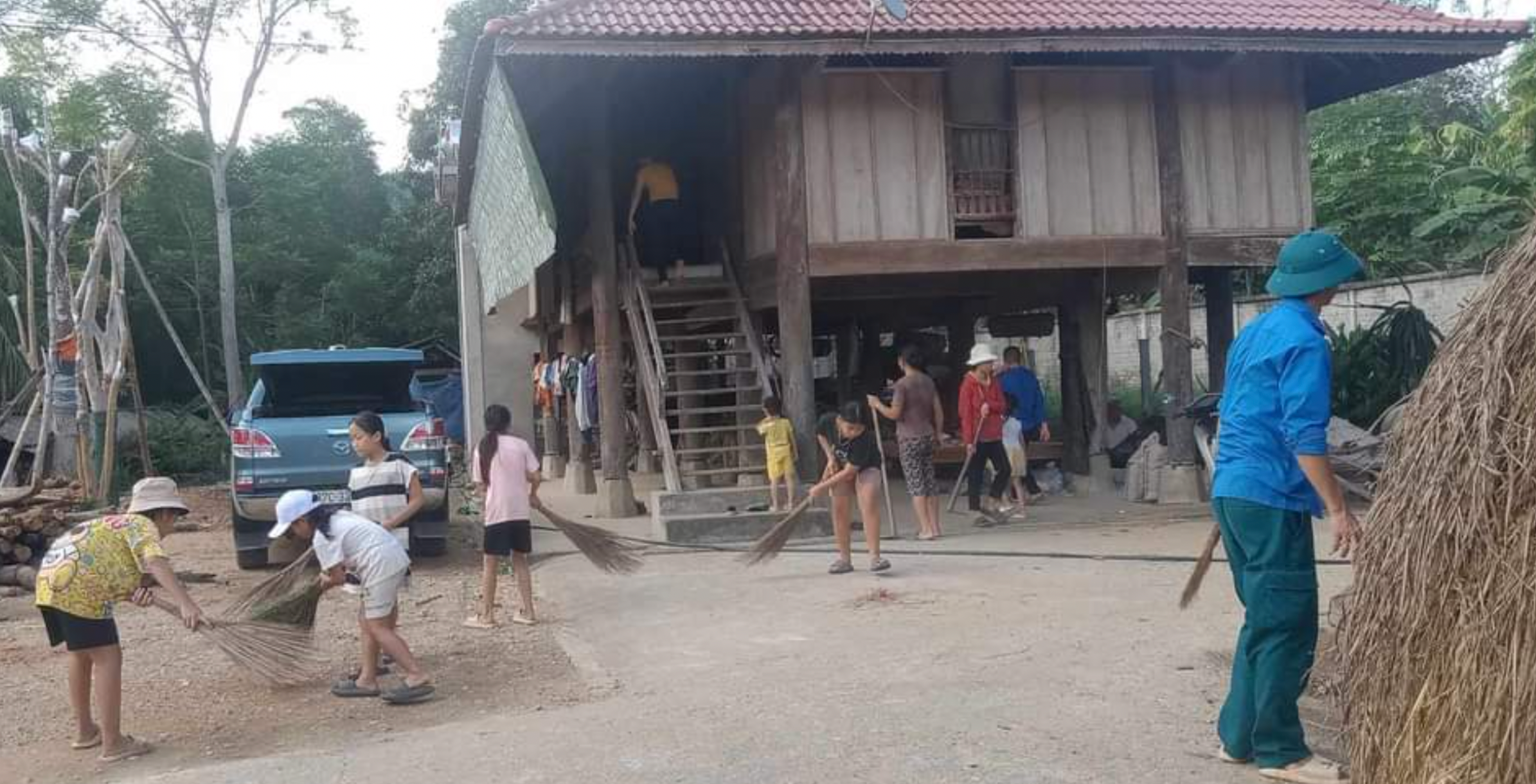
The way this "neighborhood council" works is that each year, residents contribute building materials to a designated household, which includes 1 ton of cement or an equivalent amount of bricks and tiles, along with all the labor for construction. The remaining costs are covered by the homeowner.
When Mr. Hung's family was chosen as the "neighborhood ward," the other nine households contributed cement and all the labor for the construction. Each household sent one worker to help Mr. Hung's family until the house was completed. The men mixed mortar and did the construction, while the women cooked, cleaned, and helped with lighter tasks. Mr. Hung's family said that in 2015 they rebuilt their house with a cost of approximately 200 million VND.
From the first two households whose houses were built in 2015, by 2023, this "house ward" had 10 households whose homes were upgraded and renovated to be more spacious, clean, and beautiful than before, for example, the households of Luong Thien Thang, Ngo Duc Quy, Ngo Thi Binh, Luong Thi Nhung, Luong Van Bang, Vi Van Tu…
Households that already have solidly built houses can construct fences, gates, or auxiliary structures such as gardens, kitchens, etc., with equal material contributions, and labor contributions depending on the scale of construction or renovation undertaken by the homeowner.
In Neighborhood Group No. 3, not far from Neighborhood Group No. 1, the households here have chosen to organize a "neighborhood fence project." The motto is to build two fences or walls for one or two households each year, with the main contribution being labor. The reason these households chose this project is that while most have solid houses, few have beautiful, sturdy fences. After four years of implementation, 7 out of 10 households now have clean and attractive fences or walls.
Seeing the practical benefits of helping each other build houses and improve living standards, the remaining neighborhood groups in Dong Thang village also followed suit with forms such as "rice groups" and "money groups". For example, Neighborhood Group No. 4 and Neighborhood Group No. 5 implemented a "rice group," where each household contributes 1 or 2 quintals of rice depending on their yield each harvest season.
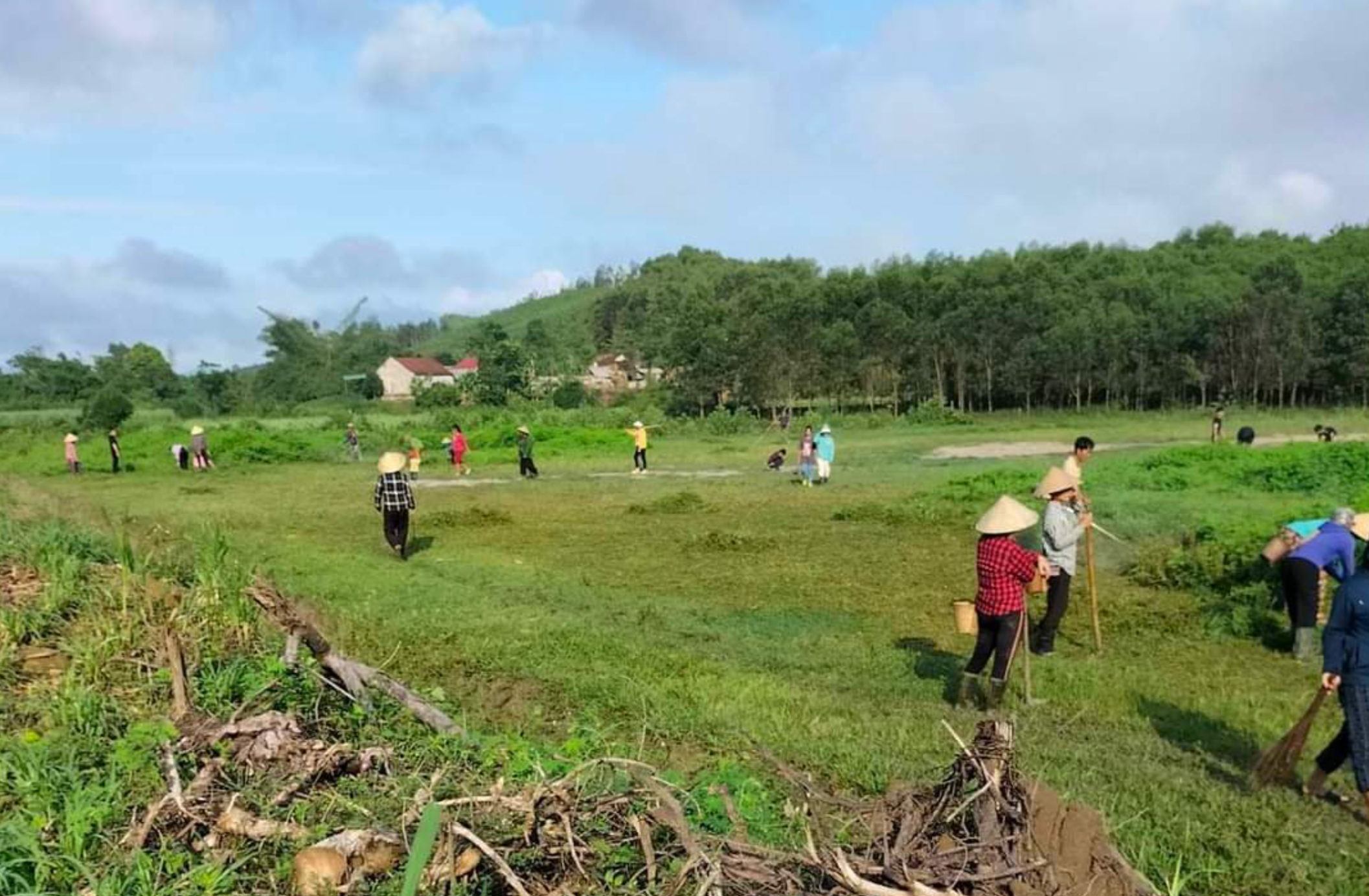
Ms. Lo Thi Thuy from Neighborhood Group No. 4 said that the group has 20 households divided into 2 "rice groups," with 10 households in each group. Each year, households usually contribute to the rice group twice. "In Thach Ngan, we mainly grow spring rice, and autumn rice is less common. For example, in the 2023 autumn crop, the group didn't contribute autumn rice because of the prolonged drought, dry and cracked land, and many fields lacking water. Many households hadn't planted rice by mid-July, and there was a possibility they would have to abandon the autumn crop. It hasn't rained in Thach Ngan commune for a month now. Therefore, in 2023, households only contributed spring rice."
Accordingly, after harvesting and drying the rice, each family contributes 200 kg of rice to the communal rice fund. Each year, two families are selected to receive the fund, averaging about 2 tons of rice per household during the spring harvest. The amount of rice contributed depends on each family's needs. "Some families sell it to buy things and cover their family expenses. Others mill some of it for consumption and sell the rest. This rice contribution helps families ensure food security year-round, provides additional income for purchasing household items, and some families buy livestock for farming," said Vi Văn Diệu, an official from the Thạch Ngàn Commune People's Committee.
During our visit to Thach Ngan commune, we accompanied officials from the Con Cuong District Fatherland Front Committee and Thach Ngan commune to visit families who received breeding cows under the "Cow Bank" model of Con Cuong district, spearheaded by the District Fatherland Front Committee. According to the "Cow Bank" program, each selected poor household receives a breeding cow worth 12 million VND. The recipient households also committed to investing in building barns and ensuring a sufficient food supply for the cows' growth and reproduction (each household must have at least 500m² of land).2 (planting elephant grass).
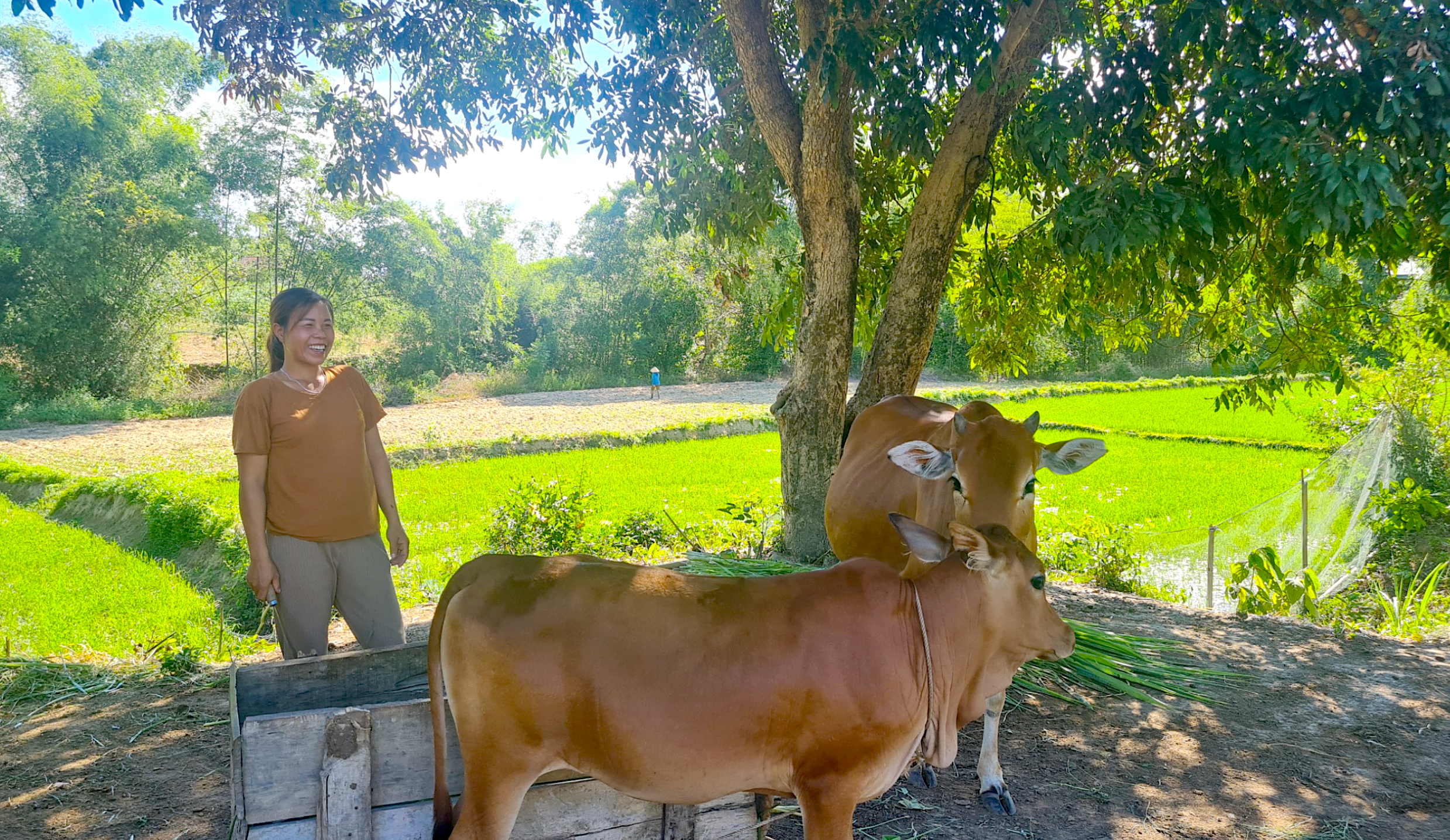
Ms. Nguyen Thi Hai's household is one of the households in Dong Thang village that received a breeding cow under the "Cow Bank" model, and the cow has now given birth to one calf. Ms. Hai said that, along with the cow support model of the Fatherland Front Committee of the district and commune, the neighborhood group is also implementing an additional "cow ward" to help more households quickly escape poverty.
“The traditional village games in Dong Thang hamlet, Thach Ngan commune, not only bring positive economic results but also help to strengthen and deepen the bonds between neighbors. As a result, grassroots movements and activities are becoming more effective,” affirmed Mr. Vi Van Bien, Chairman of the Fatherland Front Committee of Thach Ngan commune.





Governing body: Nghe An Provincial Party Committee
Director: Tran Minh Ngoc
Electronic newspaper operating license number: 153/GP-BTTTT
Issued by the Ministry of Information and Communications on March 24, 2022






.png "Ecopark ra mắt biệt thự đảo The Palm Island tại đại đô thị xanh lớn nhất miền Trung")