
How Nghe An responded to the historic flood in the western communes.
In recent days, many mountainous communes in Nghe An province have suffered from an unprecedented flood, with the amount of water flowing into the Ban Ve hydroelectric reservoir three times greater than the 2018 flood. To respond, local authorities and relevant units have worked tirelessly, racing against time to ensure the safety of residents and minimize damage. Notably, the response to the flood has also demonstrated the effectiveness of the newly established two-tiered government system.
Racing against the historic flood
Sitting in shock in front of his house, which had been torn apart by the flood, Mr. Kha Duong Tien (80 years old, Nhon Mai commune) was still reeling from witnessing the historic flood that devastated his village.
"I've never seen a flood as terrifying as this, not even in my imagination. Thankfully, it's over and all my family members are safe," Mr. Tien said.
Gazing wistfully at the Hỷ stream, the "culprit" that had caused him and many other residents to live in fear for the past few days, Mr. Tiến said that if he hadn't heeded the authorities' call to evacuate early, he would probably have been swept away by the familiar stream by now.
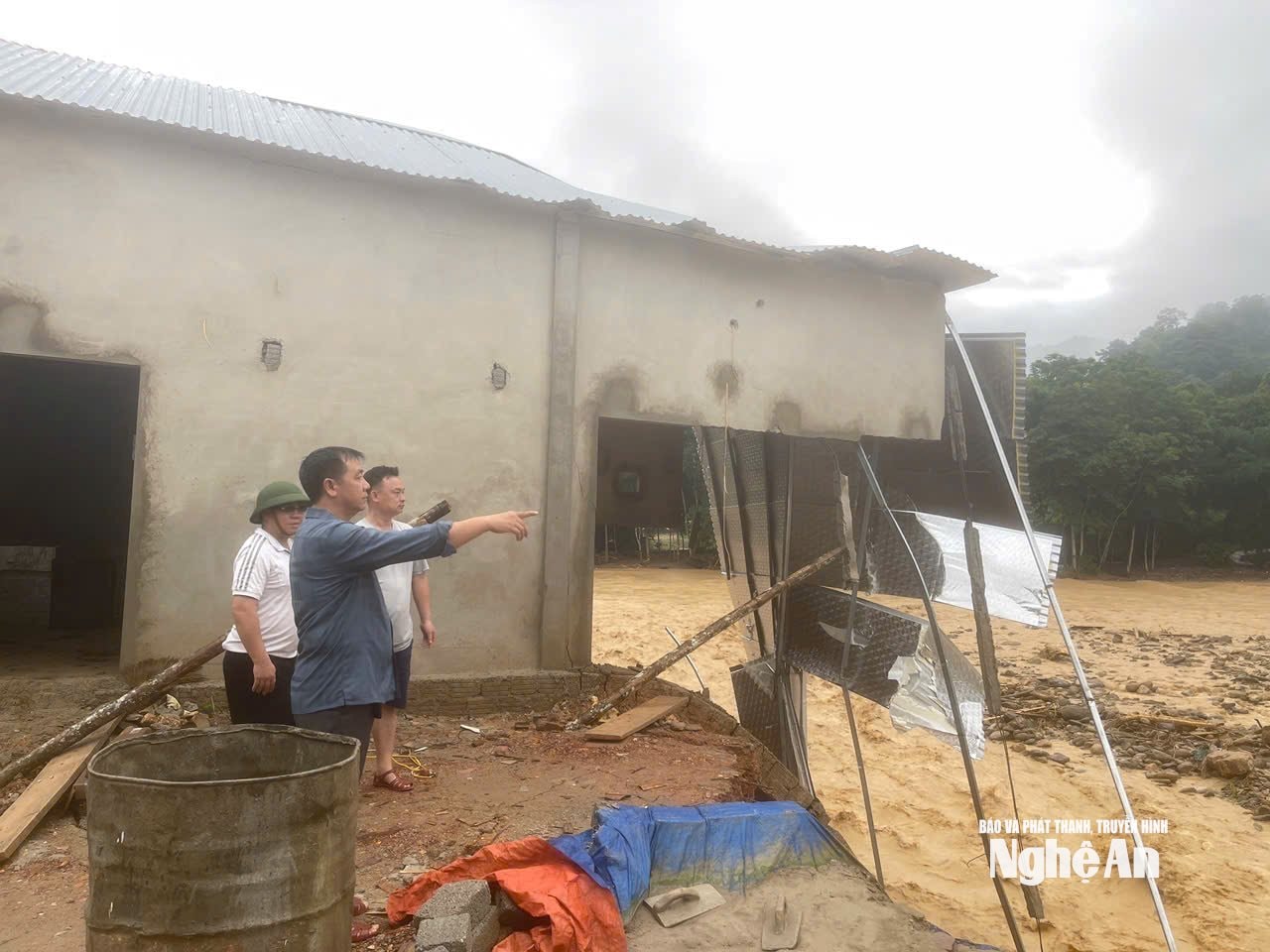
Nhon Mai is a border commune located upstream of the Lam River. The residents of its 21 villages mainly build their houses alongside streams and creeks flowing from Laos. This was the first commune in Nghe An province to be affected by the flood and also one of the most severely damaged. From early morning on July 21st, heavy rain began in Nhon Mai. The rain continued without interruption until late afternoon on July 22nd.
“It’s true that the heavy rain lasted a long time, but that amount of water wasn’t enough to cause this devastating flood. The water mainly flowed down from Laos via streams and ravines, probably from across the border, where the rain was extremely heavy,” said Mr. Lu Ngoc Tinh, Vice Chairman of the People’s Committee of Nhon Mai commune. He added that before the large floodwaters could sweep down, recognizing the danger, from the afternoon of July 21st, all commune officials and civil servants had to race against time to respond, urging people in villages near streams and ravines to evacuate to higher ground. The most dangerous situation was in Xoi Voi village, where the authorities had to erect temporary shelters on higher ground and evacuate dozens of households to take refuge there.
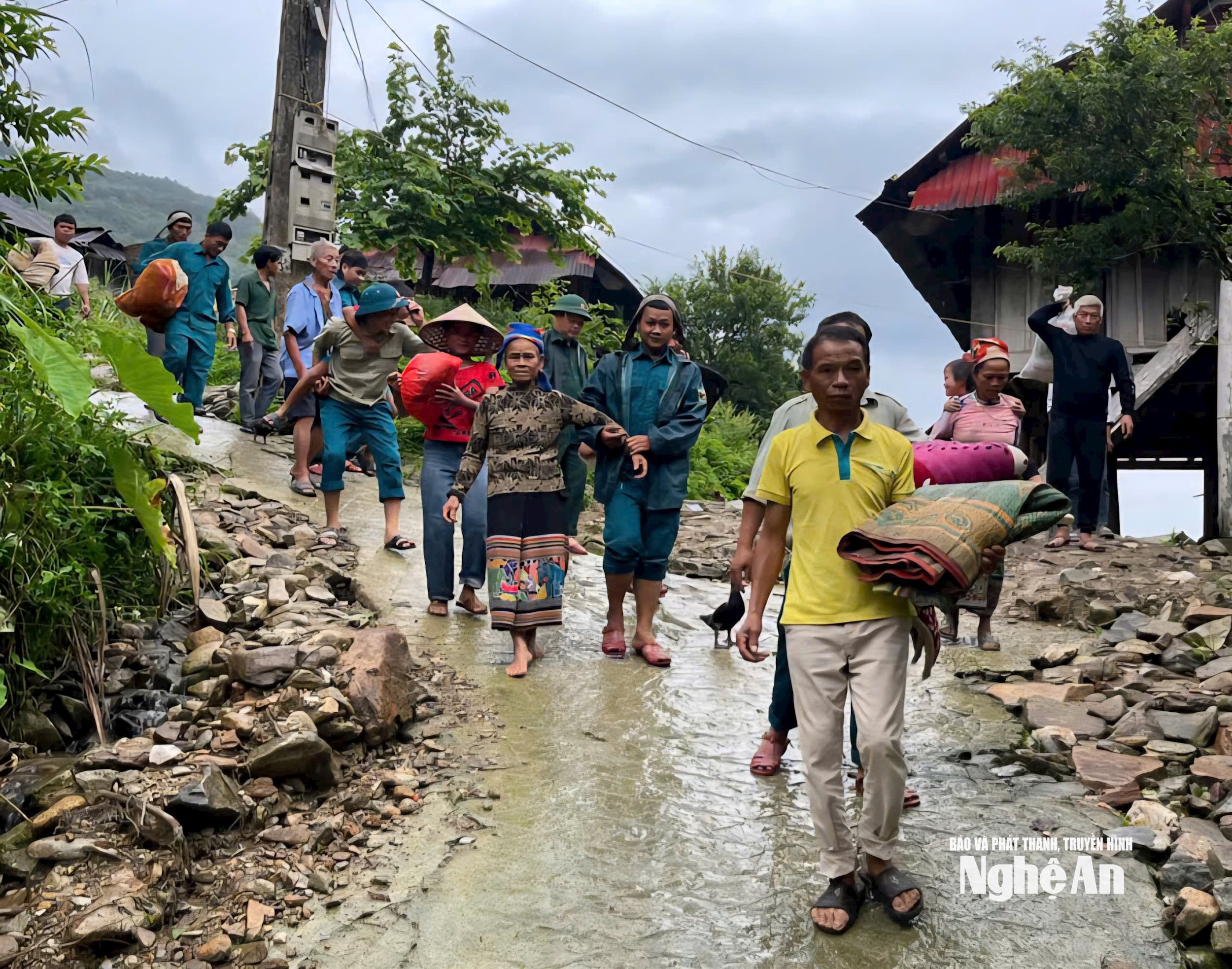
In many remaining villages, residents were encouraged to find safe shelters on their own, even accepting sleeping outdoors. Many valuable possessions in their homes were also urgently moved by residents and authorities.
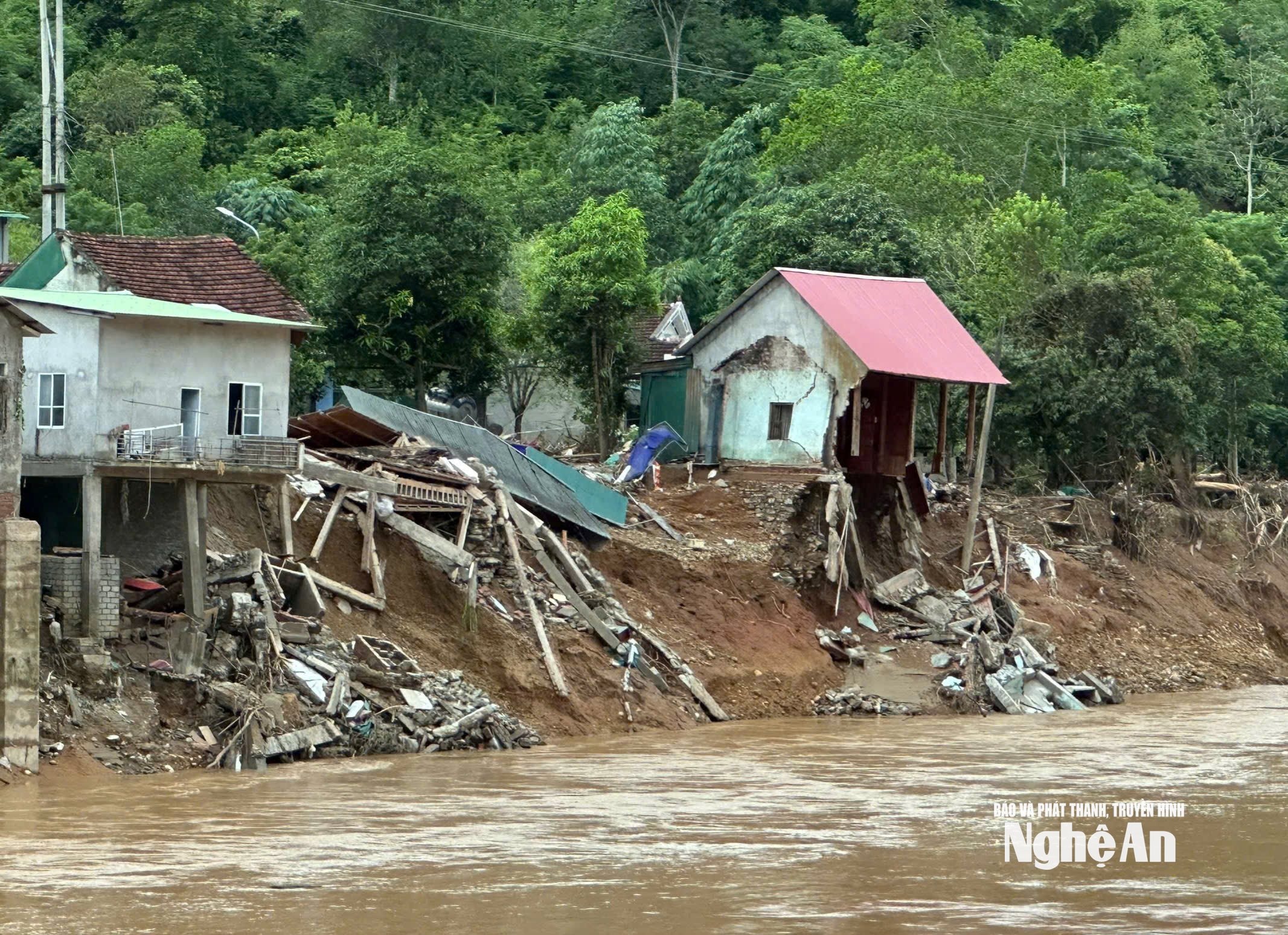
By noon on July 22nd, flash floods from streams and ravines began to pour down, sweeping away numerous houses and buildings. In many villages, such as Co Ha and Xoi Voi, most of the houses were washed away. National Highway 16, running through Nhon Mai commune, was torn apart by the flood, its surface completely destroyed, isolating the commune entirely. The entire transportation system from the commune center to the villages was completely cut off until the afternoon of July 24th…
"Luckily, the evacuation was timely; if people had stayed in their homes, the consequences would have been unimaginable," added Mr. Lu Ngoc Tinh.

Located next to Nhon Mai, the villages in My Ly commune also suffer from the raging floods pouring in from rivers and streams on the other side of the border. My Ly and Nhon Mai are two upstream communes of the Ban Ve hydroelectric reservoir, with My Ly being the first point where the Nam Non River - the main stream of the Lam River - flows into Vietnam.
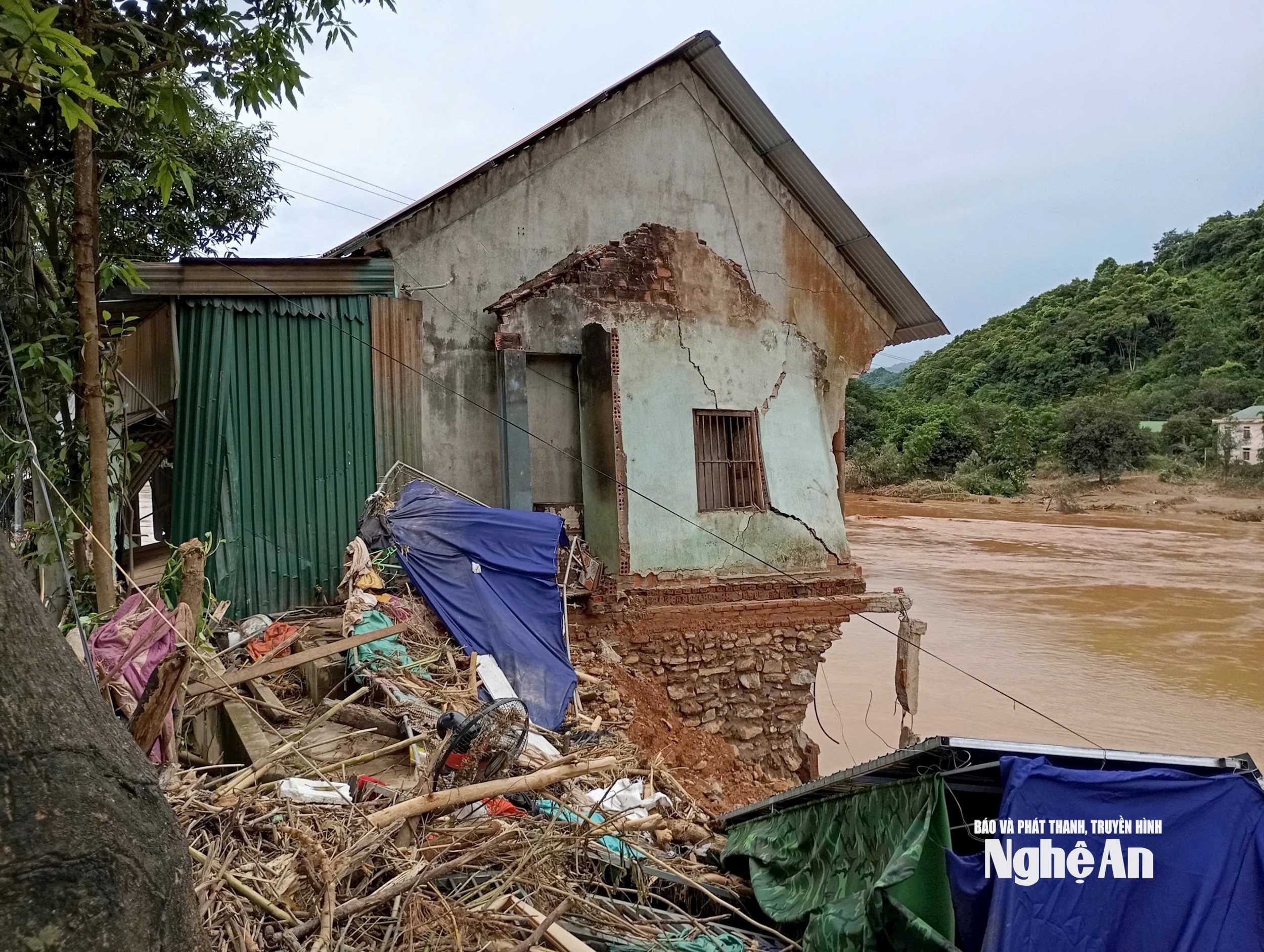
Mr. Luong Van Bay, Chairman of the People's Committee of My Ly commune, said that although the flood came very suddenly, the authorities had managed to mobilize and educate people to evacuate to safe places. On the evening of July 22, the flood collapsed and submerged hundreds of houses, and many bridges were swept away. The once peaceful villages along the Nam Non River were left desolate after the flood.
"Timely adjustment"
At the same time, more than 100km downstream from My Ly on the Nam Non River, dozens of leaders and employees of the Ban Ve Hydropower Plant were also "sitting on pins and needles" as the water flow into the reservoir increased rapidly. They had to stay up all night, monitoring every change to issue warnings and reports so that the provincial People's Committee leaders could make timely decisions to ensure the safety of the dam while minimizing damage to the downstream areas.

Mr. Ta Huu Hung, Director of Ban Ve Hydropower Plant, said that meteorological agencies forecast that due to the influence of typhoon No. 3, the hydropower reservoir basin will experience heavy rainfall, but the predicted water inflow into the reservoir is only about 3,000 cubic meters.3/S.
"Despite this forecast, we are not being complacent and have prepared contingency plans for a water inflow into the reservoir that is double the forecast, at 6,500 cubic meters."3"/s," Mr. Hung said, recounting that on July 21st, before the flood even appeared, the Chairman of the Provincial People's Committee made a very timely decision to allow the Ban Ve hydropower plant to release water early so that the reservoir would have more capacity to accommodate the flood.
“At that time, the downstream area was not yet flooded, and there were no forecasts of a major flood. The reservoir water level was low, so according to procedure, there was no need to release the water early. However, the Chairman of the Provincial People's Committee decided to release it early, thus creating a very large capacity in the reservoir to await the flood. That was a very correct decision, because releasing the water only after the flood had arrived would be very dangerous, and before releasing it, they would have to wait for many hours to complete the procedures and notify the people downstream,” Mr. Hung said.

By 4:00 AM on July 22nd, floodwaters began flowing into the hydroelectric reservoir at a rate of 583 m³/s, with the water level at 189.08 m. At 10:00 AM the same day, the flood flow increased rapidly, reaching 1,500 m³/s, and the water level reached 194.36 m.
From 4:00 PM on July 22nd, the plant began releasing floodwaters at a total flow rate of 845 m³/s, reaching a reservoir water level of 191.23 m, approaching the lowest flood control level (191.5 m). By evening, heavy rain continued, causing a rapid increase in water inflow into the reservoir, peaking at 2:00 AM on July 23rd at 12,800 m³/s. This was an unprecedented flow rate, even three times greater than the flood that caused significant damage to the downstream area in 2018. However, thanks to the early release of water, which created additional reservoir capacity, the discharge rate at this point was only 3,285 m³/s. This means the Ban Ve hydropower plant contributed to reducing flooding in the downstream area by 74%.
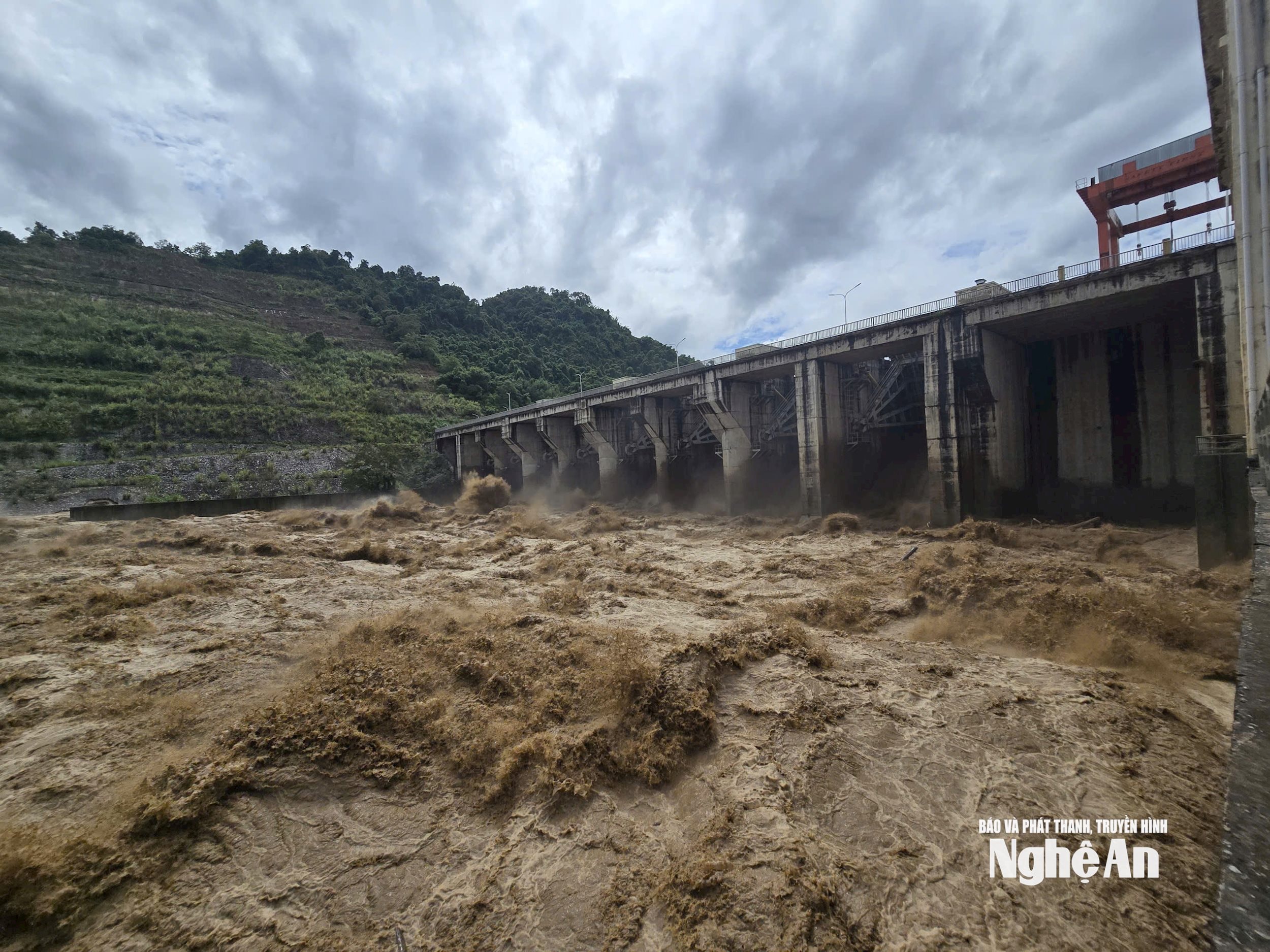
After inspecting the Ban Ve and Khe Bo hydroelectric power plants and assessing the flood situation in western Nghe An province, Mr. Pham Van Hoa, Director of the Department of Industry and Trade, stated that the floods have caused significant damage to the people.
"However, it can be affirmed that during this flood, the flood discharge operation at Ban Ve in particular and hydropower plants in general was effective in mitigating the flood. Without timely coordination, a flood of this scale would have been a tragedy," Mr. Hoa commented.
Mr. Hoa stated that immediately after receiving forecasts regarding the impact of Typhoon No. 3, the provincial leadership and the Department of Industry and Trade directed hydropower plants to strengthen measures to ensure dam and reservoir safety. They strictly followed the operating procedures for single and interconnected reservoirs, regularly monitored and operated the water release to ensure safety in downstream areas, and monitored flood developments to lower reservoir water levels according to established procedures to ensure safe operation. They also closely coordinated with local authorities, providing full and timely information through various methods to local authorities, residents, and relevant downstream units regarding flood release operations to enable proactive response plans, especially in emergency flood release situations and nighttime flood releases.
.jpg)
The effectiveness of a two-tiered government system.
Located right at the foot of the Ban Ve hydroelectric dam, Mr. Nguyen Van Thang, Secretary of the Party Committee of Luong Minh commune, believes that without proper regulation, if the hydroelectric dam only released water at half the rate of inflow into the reservoir, most houses in Luong Minh would have been swept away.
“Luong Minh has a very dangerous location, not only at the foot of the hydroelectric dam, but most of the houses are located on a narrow strip of land along the river. Therefore, ensuring the safety of people during such a large flood can be considered a miracle,” Mr. Thang said, adding that although the hydroelectric dam helped to reduce the flood to some extent, this flood was so severe that nearly 100 houses in Luong Minh commune were damaged by more than 70%.
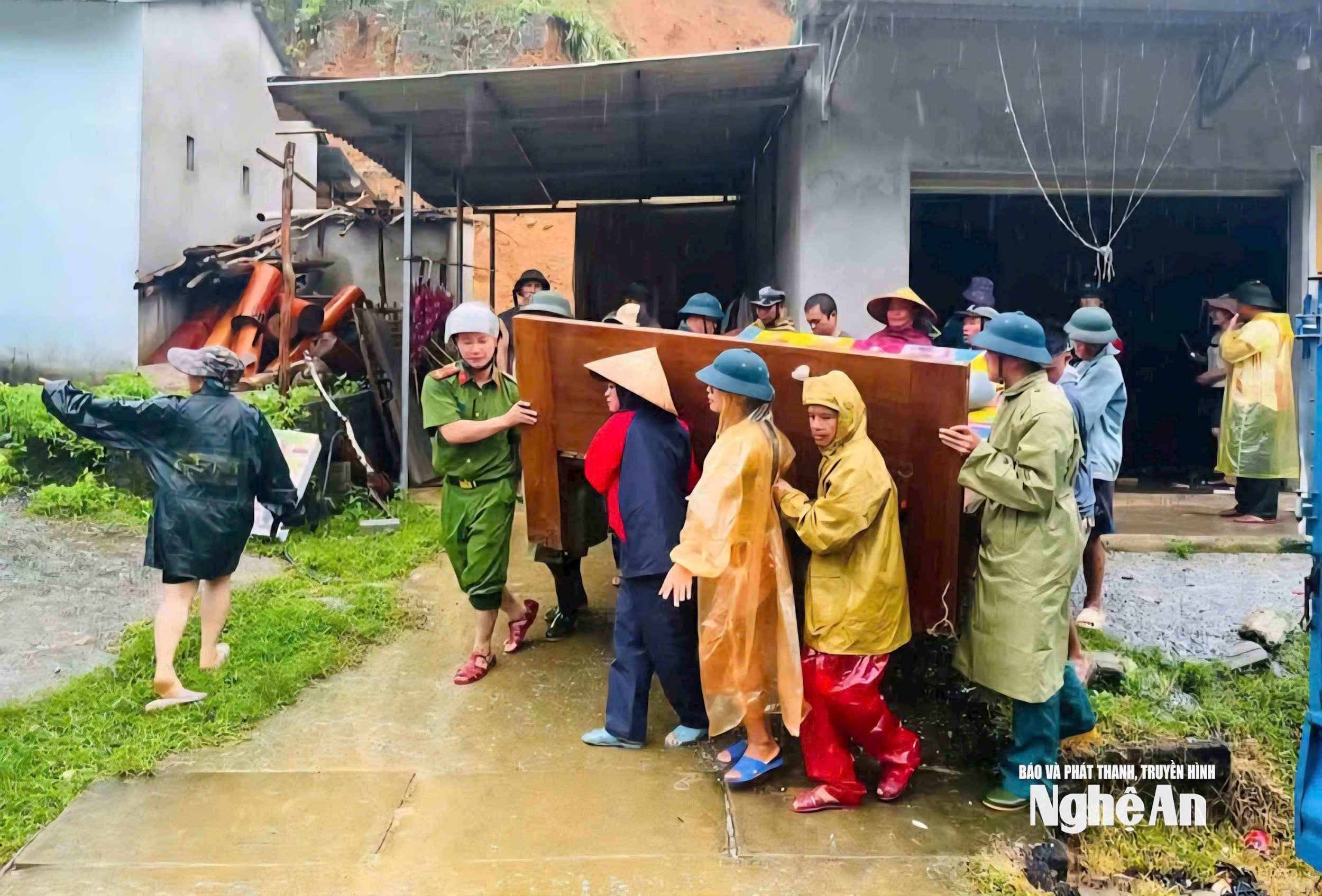
Mr. Thang believes that during this historic flood, the authorities at both levels have been effective in minimizing damage. "I witnessed the 2018 flood; although the amount of water was much smaller than now, it caused enormous damage. At that time, disaster prevention was limited; the district-level authorities waited for reports from the communes, and the communes waited for district directives, lacking close contact with the people. Meanwhile, disaster prevention needs to be timely," Mr. Thang said, adding that to respond to this flood, the commune had inspected each village early on and evacuated nearly two-thirds of the households to safe locations. The commune headquarters and schools became shelters for residents, and many valuable assets were also moved in time.

Sharing this view, Mr. Nguyen Phung Hung – Vice Chairman of the People's Committee of Tuong Duong commune – said that the two levels of government had created many favorable conditions in the work of preventing and combating this historic flood: "Although the flood was a record-breaking event, Tuong Duong commune and Luong Minh commune suffered no casualties, which can be considered a miracle. To be honest, on the evening of July 22nd, when we received information about the floodwaters pouring into the reservoir of the hydroelectric power plant, we also thought of a tragedy."
According to Mr. Hung, to respond to the flood, Tuong Duong commune divided into teams responsible for each area within the commune. All officials, civil servants, police, and military personnel were mobilized, working through the night to persuade and assist people in evacuating to safe places. In a short time, more than 2,200 households, accounting for half of the commune's population, were urgently relocated. In some cases, forced relocation was even necessary.
“Previously, when dealing with floods, we had to report to and seek guidance from the district level, then wait for instructions, which was very reactive and meant we couldn't react quickly when the floodwaters rose. But now, the commune has the authority to make decisions, so it's much more timely and proactive. Furthermore, with the two-tiered government system, the commune directly receives notifications, contacts hydropower plants, and receives instructions directly from provincial leaders, making it more timely compared to floods in previous years,” Mr. Hung added.


