
How to handle a flat tire on the road.
Not every trip goes smoothly; technical problems can occur with the vehicle along the way, one of the most common being a flat tire, especially in the context of the increasing problem of tire punctures.
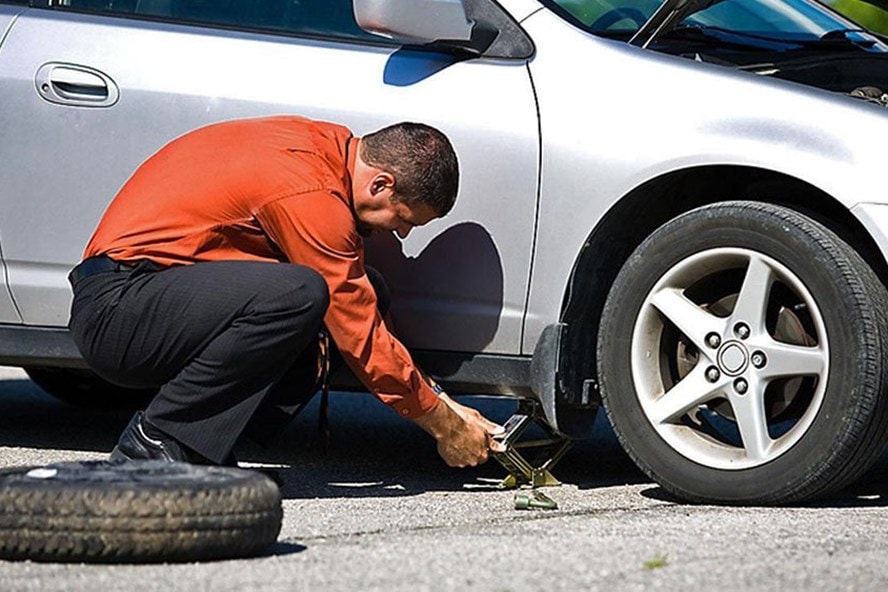 |
1. Drive slowly.
Do not attempt to drive faster than 24-32 km/h with a flat tire. Driving fast can cause permanent damage to the wheel if your tire is flat. Stay calm and drive slowly until you find a place to change the tire.
Driving at high speeds will damage your tires faster. If you drive at high speeds without tires to protect your tires from bumps or debris on the road, the tires will quickly wear out.
If you're going downhill, let the car coast gently while using the brakes.
2. Drive on a smooth road surface.
Avoid rough, rocky roads. Poor road surfaces can bend or deform your wheel rims.
You should also be cautious of roads that are sandy, gravelly, uneven, or prone to getting stuck. Paved roads, parking lots, or highways are suitable routes for driving when you have a flat tire.
3. Going in a straight line is the best option.
You need to avoid winding, meandering roads while looking for a place to change a tire. Instead, drive slowly, straight, and make turns gently. Prioritize straight roads.
While driving, you need to remember:
- Keep the wheels spinning steadily to maintain a consistent wheelie. However, don't overdo it, as this will hinder your steering.
- Making quick and sharp turns can put pressure on the wheel rims. This will lead to your rims wearing out faster.
4. Park in a safe place.
If you've exited the main road and parked in a less populated area, bring your vehicle to a complete stop. Make sure it's a full stop, engage the parking brake, and turn on your hazard lights to signal to other drivers that your vehicle is experiencing a problem. Park on a level surface if your vehicle uses a jack.
You shouldn't get out of the car until you're sure about the traffic conditions on the road.
5. Don't drive too far with a flat tire.
Don't try to drive a car with a flat tire for long distances, even if the tire isn't completely flat. You might have to travel a long distance to find a tire repair shop, but try to park in a safe place. If you can't find a tire repair shop, call for roadside assistance.
Make sure you're safe before you even think about getting your car repaired.
To be safer, consider getting a mini air compressor to inflate your tires. This device is quite compact, allowing you to quickly inflate your tires before taking your car to a repair shop.


