
Canada is bracing itself against terrorism on its "home turf"!
(Baonghean) - Following two terrorist attacks that shocked Canadian public opinion last week, the government has been forced to adjust its policies related to combating this threat. Accordingly, a draft Act on Protecting Canada has just been passed by the government.
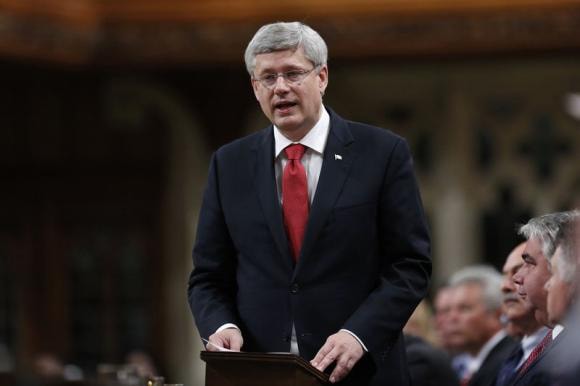 |
| Canadian Prime Minister Stephen Harper is stepping up counter-terrorism efforts from within the country. (Source: Reuters) |
Is this an effective way for Canada to protect itself, given that the threat of terrorism is not confined to the borders of Syria or Iraq but is gradually infiltrating any country worldwide?
The image of Canada as one of the safest countries in the world, rarely experiencing violence, was completely shattered last week with a series of terrorist attacks in the capital Ottawa and near the Parliament building. These attacks forced Prime Minister Stephen Harper's government to adjust its terrorism policy, after numerous statements asserting that "Canada is never threatened by terrorism." Security concerns also led Prime Minister Harper to cancel his planned attendance at the Asia-Pacific Economic Cooperation (APEC) forum in Beijing, China, this November.
It is undeniable that Canada has been very successful with its counter-terrorism strategy over the years. An impressive fact, as recently reported by the Global Counterterrorism Database, is that only one Canadian was killed by terrorism during the entire 10-year period (2002-2013). This experience demonstrates the Canadian government's consistent investment of financial resources in early detection of potential threats and challenges posed by terrorist groups within the country. However, it is clear that the current context is different. Public opinion immediately raised this issue when terrorist attacks in Canada occurred just days after the country joined the US-led airstrike campaign against the Islamic State (IS) in Iraq. Furthermore, analysts suggest that Canada's 12-year alliance with the US against terrorism, as well as its military intervention in Afghanistan, has made it a prime target for global terrorist organizations. Even more dangerous is that terrorism has not only been directed from outside Canadian territory, but has also become a ticking time bomb within the country itself, with some terrorists even being Canadian citizens. According to statistics, there are currently over 130 Canadians abroad suspected of participating in terrorist activities in Iraq, Syria, and other countries.
Given the clear danger, the Canadian government has passed legislation increasing the powers of its security agencies. The law grants increased authority to the Intelligence Agency, allowing it to conduct investigations both inside and outside the country. In addition, the government has introduced technical amendments to the Citizenship Enhancement Act. Canada now allows the Department of Citizenship and Immigration to revoke the citizenship of dual Canadians accused of terrorism, treason, or defense espionage, depending on the charges. At this time, the effectiveness of these amendments remains unclear; however, internal debates within Canada will undoubtedly continue, such as whether the police force is adequately equipped to respond to terrorist attacks similar to last week's. Will Canadian gun control laws be tightened, and how will Canada's foreign policy have to be adjusted to avoid a situation of "internal conflict and external threats"?... These are not only issues that Prime Minister Stephen Harper's government will have to consider, but also thorny problems for many other countries, especially Western nations that are participating with the US in the mission to combat the Islamic State (IS) terrorist organization in Iraq and Syria.
The reality is that, despite initial positive results in the fight against IS, "lone wolves"—extremist Islamic militants—are infiltrating and carrying out bombings in their own homelands. These are truly difficult threats to resolve, forcing countries to seek their own solutions to protect themselves. For example, France is in the process of passing a law allowing for travel bans on suspected individuals and imposing penalties on "lone wolves"; Australia has also passed amendments to its National Security Law with new provisions to strengthen counter-terrorism efforts; while many other countries are considering measures to prevent terrorist acts and enhance domestic security. Certainly, this will remain a long and arduous battle for all nations worldwide.
Phuong Hoa


