
Gulf tensions: What do Arab nations expect from Qatar?
Arab countries assert that they have no intention of "regime change" in Qatar, but only want Qatar to "change its behavior accordingly."
Qatar-"The Trojan Horse" in the Arab World
AP quoted UAE Foreign Minister Anwar Gargash as emphasizing last weekend that the Arab countries' isolation of Qatar on the grounds of sponsoring terrorism was not aimed at forcing the Qatari royal family to abdicate. However, the official stressed that the Arab countries were ready to "play tougher" with Qatar if it refused their "13-point demands."
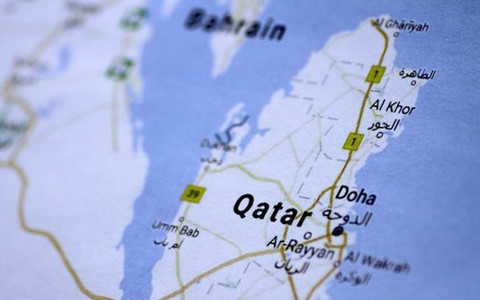 |
| Illustration photo: AP |
Foreign Minister Anwar Gargash emphasized that the six Gulf states and Qatar are in a diplomatic crisis, describing Qatar as a "Trojan horse" that has broken the close ties of the Arab monarchies. Therefore, Qatar deserves to be isolated for a long time if it does not agree to "surrender."
“We did not want to further escalate tensions, which is why we chose to ‘go our separate ways’ [referring to pushing Qatar out of the group]. It is difficult to maintain a common community when one of the members actively supports extremist and terrorist views,” said Foreign Minister Anwar Gargash.
Previously, Arab countries had sent a "13-point list of demands" to Qatar, emphasizing that Qatar only had 10 days to implement these demands. The Arab countries also threatened that if Qatar did not "submit," they would continue to isolate Qatar indefinitely by land, air, and sea, and increase economic pressure on Qatar.
In response, Qatar said it was considering the Arab countries' demands, such as closing the Qatari branch of Al-Jazeera and severing ties with Islamist militant groups like the Muslim Brotherhood. However, Qatar also firmly stated that there would be no negotiations while the country remained under siege.
It's stressful, but there's still a way out.
Although Arab countries have all asserted that their "13-point demands" constitute an "ultimatum" to Qatar, UAE Foreign Minister Gargash cautiously stated that Arab nations remain open to dialogue with Qatar through Kuwait as an intermediary.
"The role of a mediator is to listen to the views of all parties and find common ground and solutions that all parties can implement," Foreign Minister Gargash emphasized.
Qatar itself has denied sponsoring extremist groups or donating money to terrorists. However, the country has acknowledged allowing members of some militant groups, such as Hamas, to reside in Qatar.
Nevertheless, many Arab countries remain skeptical of Qatar's claims. They believe that the Al-Jazeera branch opened in Qatar is intended to shelter terrorist organizations such as the Muslim Brotherhood or Al-Qaeda, and that the channel itself has become a "mouthpiece" for them.
In response, Qatar asserted that the Arab countries' demands were unacceptable. Qatar's media representative, Sheikh Saif Al-Thani, emphasized: “The Arab countries' demands once again demonstrate Qatar's initial statement that the Arab countries' isolation of Qatar is illegal and unrelated to the fight against terrorism. The Arab countries are deliberately isolating Qatar in order to limit Qatar's sovereignty and control our foreign policy.”
What demands are the Arab countries making of Qatar?
According to UAE officials, the "13-point list of demands" that Arab countries sent to Qatar was classified information. The UAE also accused Qatar of deliberately leaking this list of demands and asserted that this showed Qatar's "lack of goodwill" to improve the situation.
In addition to the demands that have been widely reported by major news outlets around the world, the "13-point list of demands" that the Arab countries sent to Qatar also includes the following additional requests:
- Restrict diplomatic and trade relations with Iran.
- Stop paying for news outlets like Arabi21, Al-Araby Al-Jadeed, and Middle East Eye immediately.
- Handing over to Arab countries the "terrorists" and individuals wanted by those countries.
- Stop providing financial or personnel support to organizations that are listed as terrorist groups by Western countries.
- Spending an unspecified amount of money to "mend the relationship"
- Cease all contact with opposition factions in the aforementioned Arab countries.
According to VOV
| RELATED NEWS |
|---|


