
Be wary of hotel booking scams during peak tourist season.
Taking advantage of the increased demand for travel, especially during peak season, many individuals have created fake fan pages of major tourist resorts and hotels to scam customers into booking rooms.
Many people fell into the trap.
According to our information, many customers have recently been scammed when booking accommodation in Cua Lo online.
Accordingly, the scammers used the tactic of creating numerous Facebook fan pages with names identical to or similar to the names of famous hotels and resorts in Cua Lo.
These fan pages often post glamorous images, attractive information, and "shockingly low-priced" promotions such as: 2-day, 1-night combo for only 399,000 VND/person; Free breakfast buffet and entrance tickets to tourist attractions; Complimentary shuttle service from Vinh bus station or airport...
Due to the high demand for hotel bookings, especially leading up to the tourist season and the opening of the Cua Lo tourist season on April 19th, many customers trusted the scammers and booked rooms only to fall into the trap.
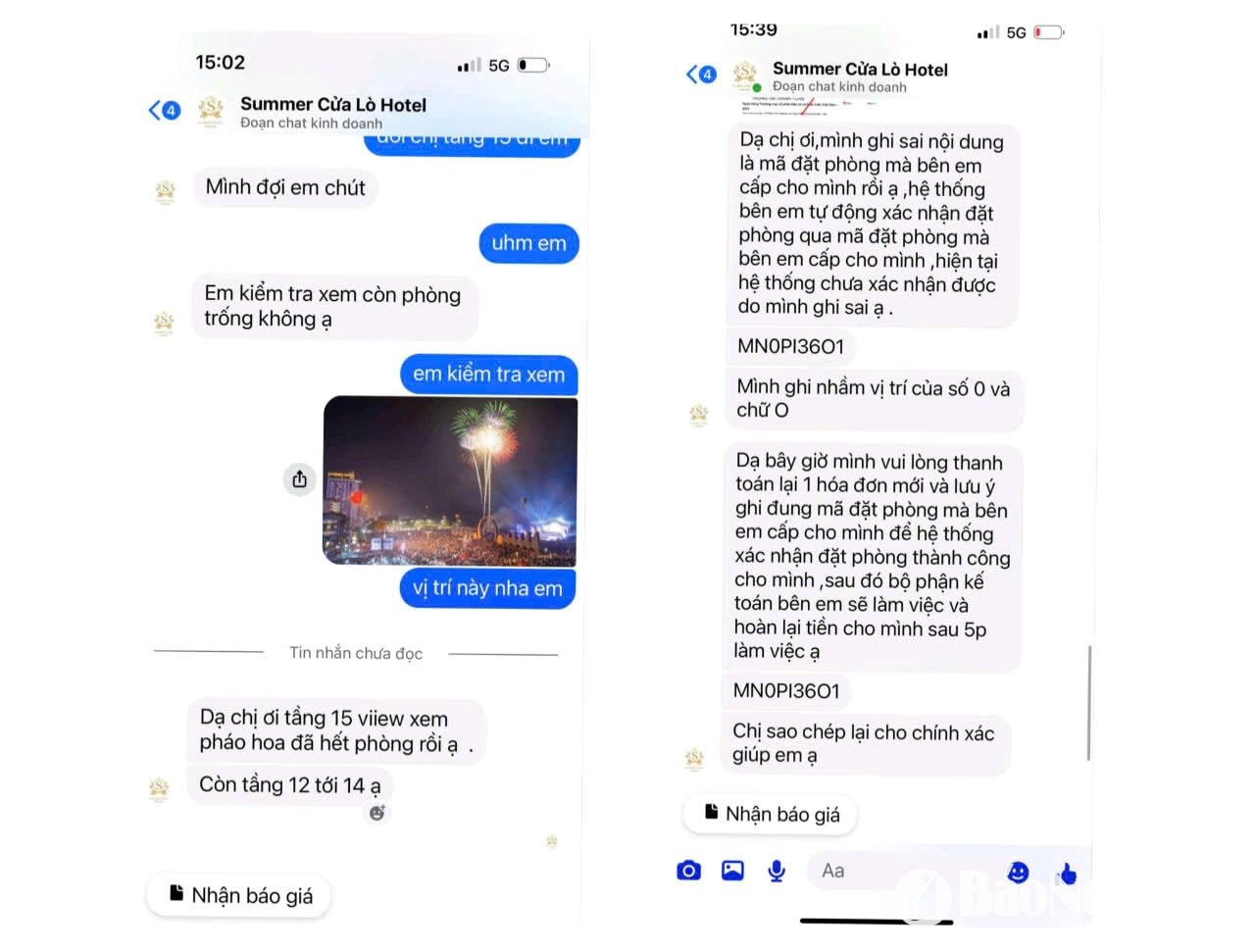
Ms. Thu, a resident of Hanoi who was recently scammed out of her deposit when booking a hotel room in Cua Lo through these fake fanpages, said: Her family wanted to go to Cua Lo for a weekend getaway, coinciding with the opening of the tourist season, so she went online to the Summer Cua Lo hotel fanpage to book a room.
Because many scammers have created fake pages for Summer Cua Lo Hotel online, Ms. Thu, unaware of the deception, contacted one page to make a reservation and was asked to transfer money before her booking could be secured.
After Ms. Thu transferred the money, the scammers reported that they had sent the wrong syntax code and asked her to transfer the money again with the correct code. Suspecting she had been scammed, Ms. Thu requested a refund, but the scammers immediately blocked her messages.
"This fake fan page was advertising a room for 1.4 million VND on April 19th, with an additional 10% discount. Because I needed a room, and also because this hotel was near Binh Minh Square - where the opening ceremony of the Cua Lo Tourism Festival was held, and I could easily watch the fireworks, I immediately transferred the money. But unexpectedly, I ended up being scammed," Ms. Thu said bitterly.
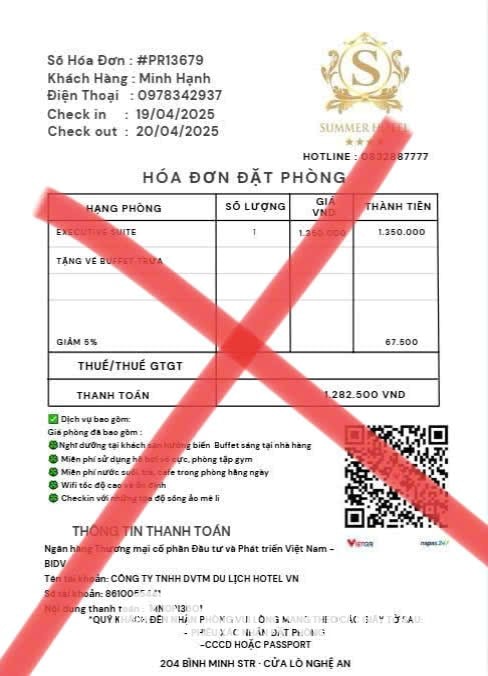
It's not just customers from outside the province; many residents of Vinh City have also fallen victim to scams targeting people who book hotel rooms in Cua Lo via fan pages. Mr. Dinh Xuan Bang, residing in Nghi Phu ward (Vinh City), was also scammed out of over 2.5 million VND using a similar method on the afternoon of April 15th.
Mr. Bang stated: Because he needed to book a room to watch the fireworks display during the opening ceremony of the Cua Lo Tourism Festival on April 19th, he used Facebook to book a room at the Summer Cua Lo Hotel. After messaging them, the scammers quoted a price of 1,350,000 VND per room with a 5% discount, bringing the remaining price to 1,282,500 VND, plus a lunch buffet ticket. They demanded that he transfer the full amount to secure the room. Immediately afterward, Mr. Bang transferred the money to the scammers.
After the first transfer, Mr. Bang was informed that he had to transfer the money again because the syntax code was incorrect. Believing the scammers, Mr. Bang transferred the money a second time. Immediately afterward, the scammers blocked all communication.
In fact, there have been many cases of tourists being scammed into transferring money for hotel bookings. Some people don't even realize they've been scammed until they arrive at their destination and present a fake receipt cleverly designed by the fraudsters.
We need to increase our vigilance.
It's clear that online scams are nothing new. The creation of fake fan pages and websites that closely resemble those of famous resorts and hotels has been happening for several years now.
However, the fact that these fake fan pages run ads and generate fake likes to mislead many people into thinking they are reputable pages (i.e., pages with professional investment) is considered sophisticated by many.
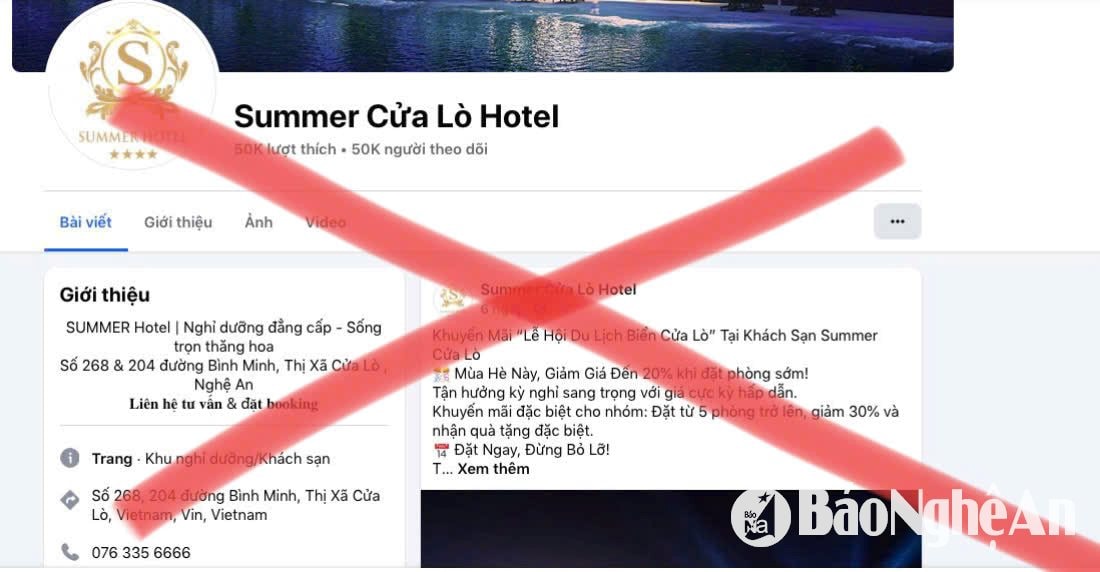
Mr. Nguyen Trong Ky, manager of Summer Cua Lo Hotel, said: Summer Cua Lo Hotel only has one official fanpage, but in reality, many scammers have created numerous fake fanpages on Facebook.
The modus operandi of these scammers is usually that after customers visit fake fan pages and message them to book a room, they will create a fake booking code, complete with hotel information, booking details, and a bank account number that looks like that of a real hotel. Then, they will ask the customer to transfer a deposit of 10% to 50% to "reserve" the room.
However, after receiving the deposit, the scammers continued to lure their victims into a second round of fraud by impersonating hotel receptionists, calling customers to inform them that the transaction details were incorrect and did not match the system's code.
They require customers to transfer the full room payment before they can receive their booked room upon arrival.
With the mindset that the travel date has arrived but there are no rooms available, plus the fact that a deposit has already been paid, many people will transfer the entire room payment at once to avoid the hassle and fall into a trap.
If anyone questions it, they'll text back saying that an accountant will contact them to return the money, at which point they'll lure the customer into the third stage of the scam.
Scammers impersonate hotel accountants, contacting customers and sending them a link or code via text message, prompting them to enter their bank account number or citizen identification card details. If customers are not vigilant and click on these links, their accounts will be compromised and all the money in their bank accounts will be withdrawn.

After completing the scam, these fan pages immediately block or deactivate the user's account, making it impossible for the victim to contact them and resulting in the complete loss of the money sent.
Mr. Ky also stated that Summer Cua Lo Hotel has witnessed many groups of guests arriving and presenting fake money transfer receipts, only to realize they had been scammed. One group of guests from Laos was even defrauded of over 50 million VND in this way.
According to hotel service businesses, although they know the fan page is being faked, it is very difficult to stop it because if they block one page, the scammers will create another, and whatever images and content the real page posts, they will repost exactly the same.
Therefore, to avoid being scammed, customers need to carefully check the information, such as verifying the phone number (hotels often register landline numbers as hotlines); checking the creation date of the fan page (fake pages are usually newly created); requesting a video call via Zalo; requesting confirmation via email; booking through reputable platforms; and absolutely not clicking on login links or providing bank account numbers or citizen identification numbers.
Regarding this issue, in 2024, the Nghe An Department of Tourism (now the Department of Culture, Sports and Tourism) issued a warning about fraudulent activities in the tourism service business. Specifically, on July 9, 2024, the Department of Tourism sent Document No. 856/SDL-TTR to relevant agencies, organizations, and individuals engaged in tourism services regarding the situation where, taking advantage of the peak tourist season and localized shortage of accommodation in Cua Lo, individuals impersonating accommodation establishments on social media platforms such as Zalo, Facebook, and TikTok were engaging in fraudulent activities, collecting room deposit money from tourists.
Therefore, the Nghe An Department of Tourism has requested the Provincial Police to direct its operational units to investigate, verify, and strictly handle online fraud in tourism activities. It also requests that organizations and individuals operating tourism services in the province in general, and the Cua Lo area in particular, publicly disclose their phone numbers, bank account details, and business addresses, and implement self-protection measures and warnings to customers to avoid being scammed.


