
'Bridge' helps women members in Nghe An develop economically.
Through savings and loan groups managed by the Provincial Women's Union, thousands of women members in Nghe An province have received preferential loans from the Social Policy Bank to develop production and business models.
Providing policy credit "fishing rods".
Driven by a passion for sculpting, carving, and civil carpentry, Mr. Nguyen Van Huy, residing in Hamlet 5, Hanh Lam Commune, Thanh Chuong District, discussed with his wife, Ms. Pham Thi Huyen, the idea of opening a civil carpentry workshop. Initially, lacking capital, they could only afford a saw and a few other tools for the job. Knowing that the Social Policy Bank had a loan program to support employment, Mr. Huy's family registered with the Hamlet 5 Savings & Loan Group, headed by Ms. Dang Thi Ngoc.
Thanks to a 50 million VND loan from the Social Policy Bank, Huy and his wife invested in an additional sawing machine to expand their civil carpentry workshop. With the added machinery, they received more orders, delivered on time, and improved their reputation for quality.
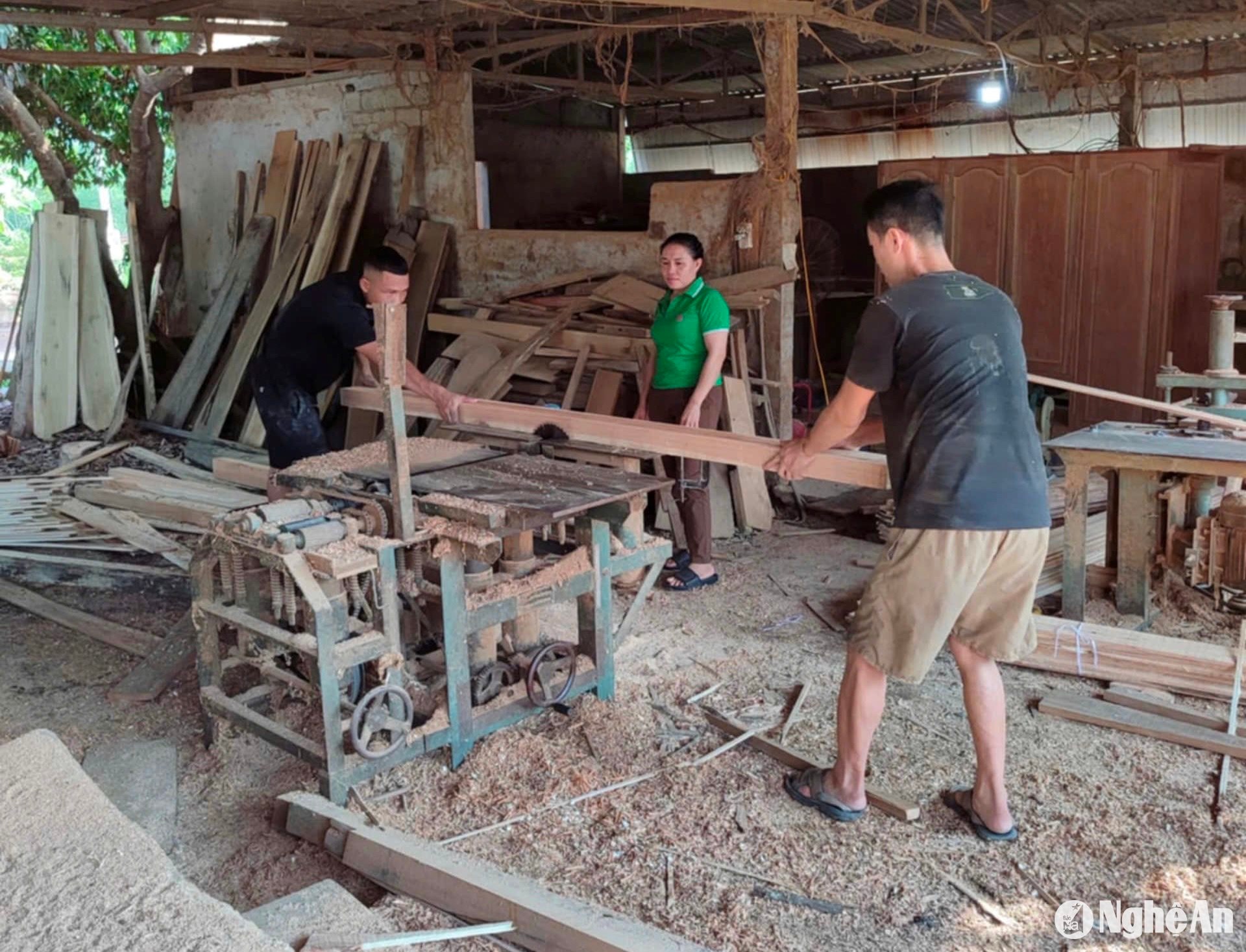
Ms. Huyen previously lacked a stable job and income, but since the factory expanded, she has been managing its operations alongside her husband. She acts as a marketing employee, accountant, and cashier. The work is quite busy, and initially, the family's income has increased significantly to 100-120 million VND per year, making them very happy.
Ms. Nguyen Thi Hue, Chairwoman of the Women's Union of Hanh Lam commune, said: "With efforts to improve their economic situation and change their lives, Ms. Huyen's family has built a spacious house with full amenities; they are one of the exemplary economic development models in the commune thanks to loans from the Social Policy Bank. Currently, in Hanh Lam commune, nearly 2 billion VND has been lent from the Social Policy Bank's employment creation credit program to 38 customers. Of these, the Women's Union of the commune is entrusted with lending 517 million VND to 11 customers."
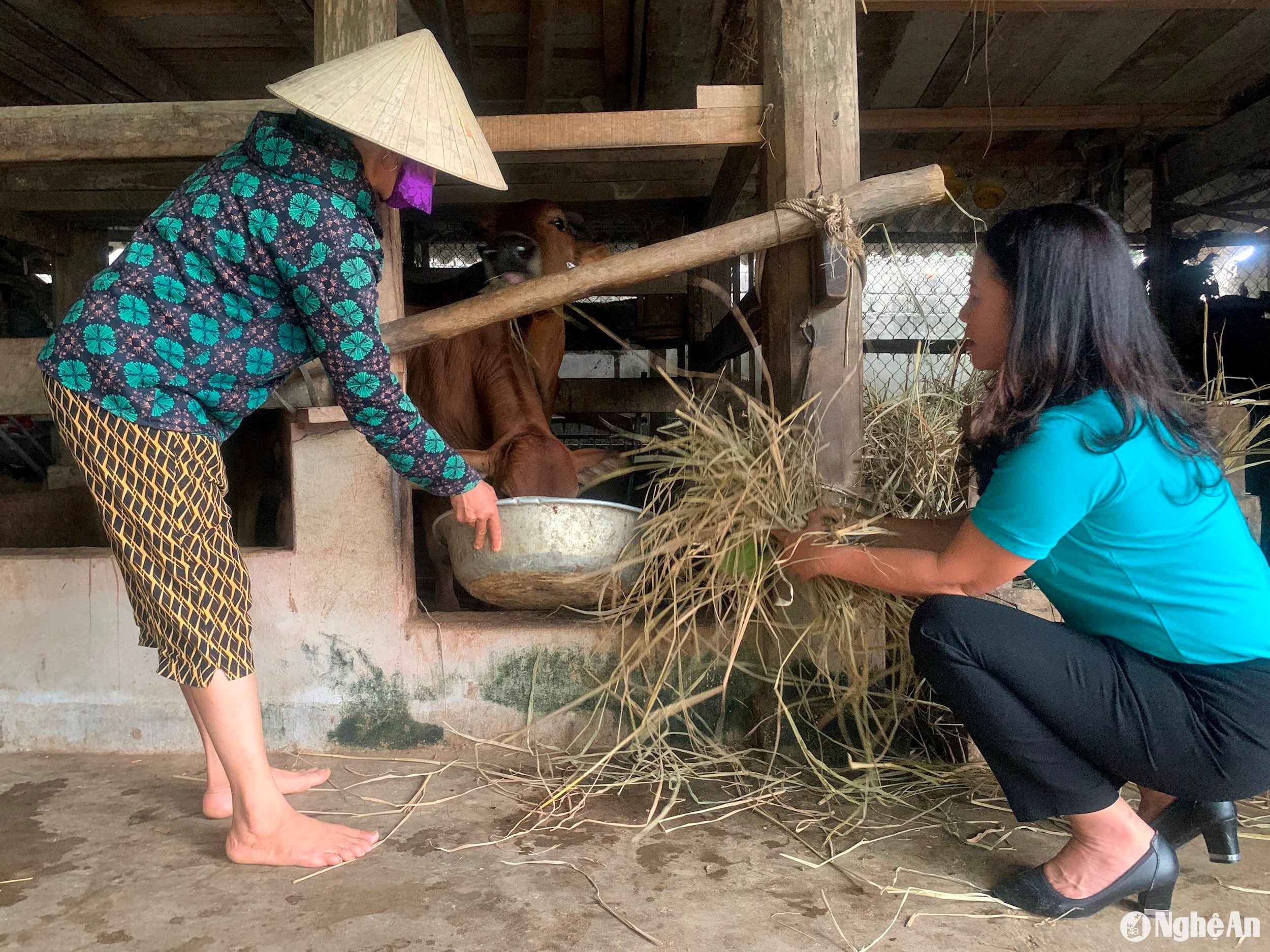
Not only in Hanh Lam commune, but the use of loan capital has been widely developed by women in all communes of Thanh Chuong district. Ms. Dinh Thi Han - President of the Thanh Chuong District Women's Union - said: As of August 31, 2024, the District Women's Union managed 116 savings and loan groups, entrusted with lending with a total outstanding loan balance of 354,396 million VND, for 4,085 households. To ensure the safety and effectiveness of the capital, the District Women's Union regularly inspects and monitors the capital of borrowing households. In coordination with relevant agencies, they strengthen training and transfer of scientific and technological advancements and new technologies into production, helping members effectively apply them to farming and livestock raising...
Supporting women in accessing loans for economic development.
As a socio-political organization within the political system, the Nghe An Provincial Women's Union consistently plays a crucial role in uniting its members and women, and in promoting the dissemination of the Party and State's policies and guidelines to its members and women.
Immediately after the Party Central Committee issued Directive No. 40-CT/TW on November 22, 2014, on strengthening the Party's leadership over social policy credit, the Women's Union at all levels made significant progress, proactively and actively promoting the Party and State's social credit policies, always focusing on building many operational models to support women in borrowing capital for economic development and sustainable poverty reduction.

Annually, the Provincial Women's Union includes targets for developing and improving the quality of Savings and Loan Groups in the emulation criteria at all levels of the Union. It directs grassroots Women's Unions to proactively coordinate with local authorities to identify eligible beneficiaries, participate in reviewing poor and near-poor households, and determine the causes of poverty, ensuring transparency, openness, and democracy. They also develop plans to strictly implement the loan disbursement process for poor households and several credit policy programs.
At the same time, the Women's Union at the grassroots level was directed to coordinate with the Social Policy Bank at the district level and local authorities to urge the recovery of due debts, handle overdue debts, and debts of borrowers who have left the locality... As a result, the quality of credit has improved significantly: The growth rate of entrusted loan balances increased from 1.6% in 2014 to 5% in 2019 and 10.7% in April 2024 (an increase compared to the beginning of the period, which was 9.1%).
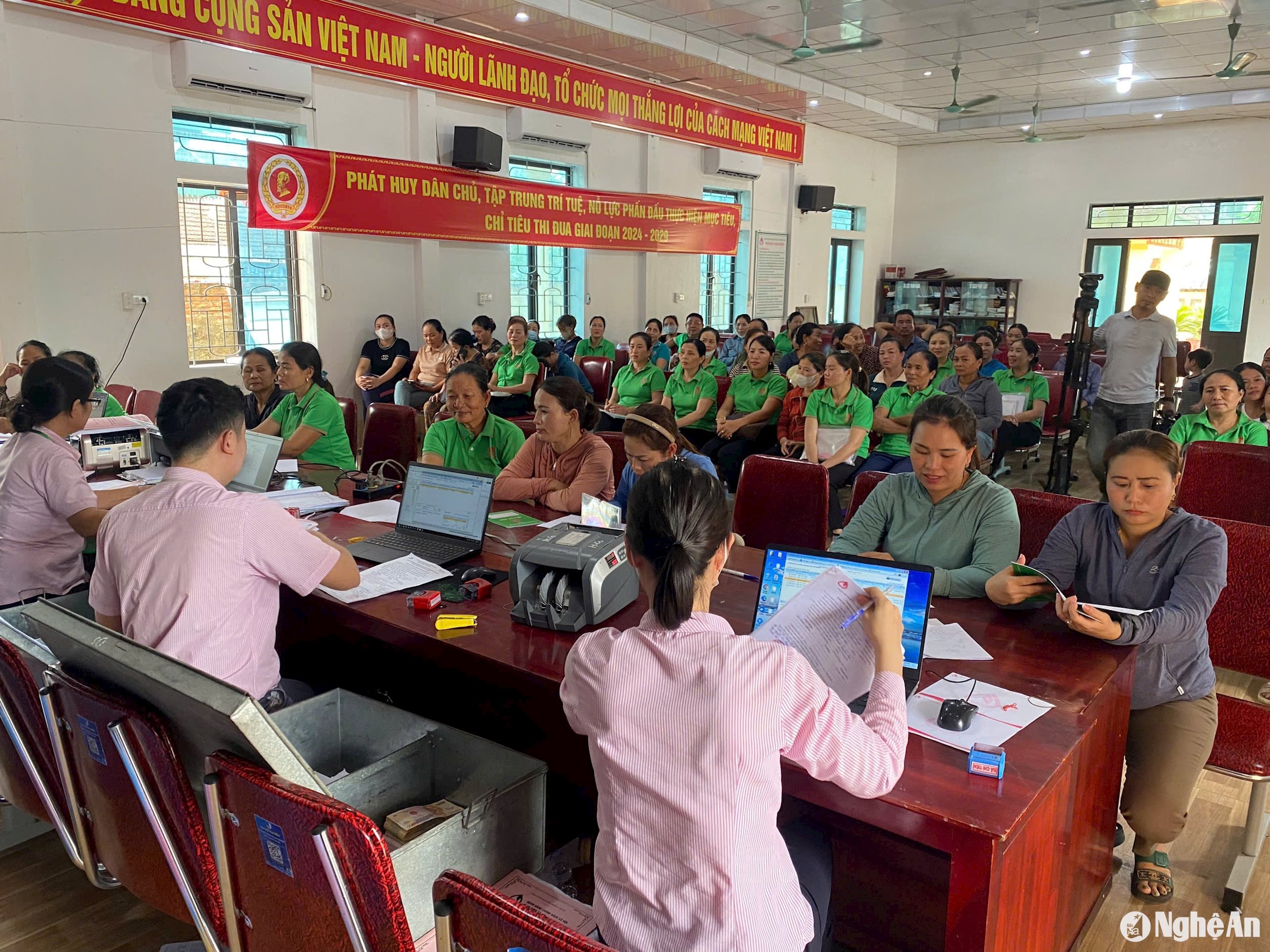
To increase lending capital and foster a habit of saving among members, while also promoting a sense of responsibility, mutual support, and helping each other overcome difficulties, the Women's Union at all levels has coordinated with the Social Policy Bank to organize propaganda and mobilize members to practice saving effectively. The percentage of members participating in savings through the groups increased from 89% in 2014 to 100% in April 2024.
Currently, there are 77,081 members participating in savings programs with a total deposit balance of VND 223.612 billion (an increase of VND 169.680 billion compared to the same period in 2014). This has mobilized resources to help members in difficult circumstances in general, and households receiving preferential loans in particular, to improve their production, stabilize their lives, and repay their loans. Due debts have been repaid in full, and interest payments have been made diligently and effectively by the households.
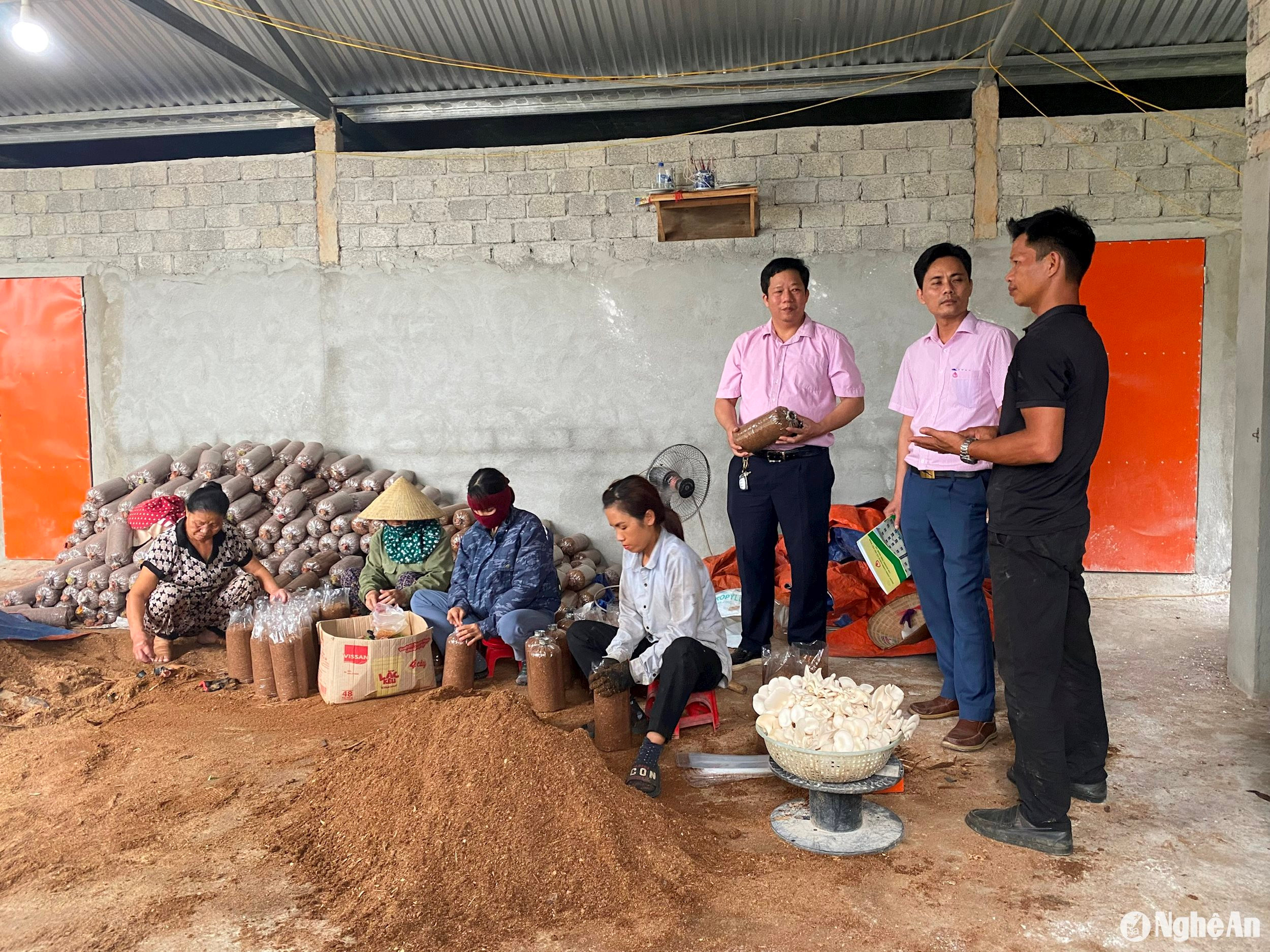
Along with providing support and access to loans, the Women's Union at all levels has proactively coordinated with relevant agencies to organize the transfer of scientific and technical knowledge, vocational training; and the development of economic development models and businesses owned by women.
Over the past 10 years, women's associations at all levels have coordinated with relevant agencies to organize training for 374,198 women on techniques for caring for crops and livestock, knowledge of production and business, and guidance for loan recipients on using loan capital for the right purposes, creating conditions for households to implement the Bank's credit programs effectively and sustainably.
Ms. Le Thi Huong Giang, Vice President of the Provincial Women's Union, stated: Thanks to the efforts of the Women's Union at all levels, the entrusted capital from the Social Policy Bank managed by the Union has been increasingly expanded, and the outstanding credit balance has increased, creating opportunities for more and more members and women in need to access loan capital. Many women have risen out of poverty and achieved legitimate wealth; some have become successful farm owners, successful business models, cooperative directors, and enterprise directors, starting businesses with incomes of hundreds of millions of VND per year.
The Association has always considered the entrusted activities with the Social Policy Bank as an important task that must be effectively directed and implemented. In the coming time, the Nghe An Provincial Women's Union will coordinate with relevant agencies to organize training, transfer advanced scientific and technical knowledge, build collective economic models, guide entrepreneurship and business startups to help poor households use loan capital effectively, rise out of poverty sustainably, and improve their quality of life...
Ms. Le Thi Huong Giang – Vice President of the Provincial Women's Union
To continue effectively implementing Directive No. 40-CT/TW and Conclusion No. 06-KL/TW, it is proposed to increase the maximum loan amount for the rural clean water and sanitation loan program to 20 million VND per project; and to add a loan program for households with average living standards to develop production and business activities in line with the current socio-economic development goals. In addition, it is proposed that the Provincial People's Committee and the People's Committees of districts, towns, and cities continue to balance and prioritize increasing loan capital for the poor and other policy beneficiaries, especially local budget funds, to support job creation, maintenance, and expansion.


