
Cow's udder plant - A medicinal herb that strengthens the spleen and nourishes the lungs.
The cow's udder plant is used to treat rheumatism, paralysis, cough due to pulmonary tuberculosis, night sweats, fatigue and weakness in the limbs, poor appetite, abdominal distension, edema, hepatitis, and postpartum lack of milk.
The plant known as Ficus simplicissima Lour. also has other names such as cow's udder, pig's udder, and three-lobed fig. Its scientific name is Ficus simplicissima Lour. This plant grows wild in secondary forests in Vietnam. The medicinal part is the root bark, harvested year-round, and is used as a substitute for astragalus, hence its name "earth astragalus". The plant contains many organic acids, amino acids, triterpenes, alkaloids, and coumarins.
According to Traditional Chinese Medicine, Astragalus membranaceus has a pungent, sweet, and slightly warm taste. It strengthens the spleen, nourishes the lungs, promotes qi circulation and eliminates dampness, and strengthens tendons and bones. It is used to treat rheumatic paralysis, cough due to pulmonary tuberculosis, night sweats, fatigue and weakness in the limbs, poor appetite, abdominal distension, edema, hepatitis, leucorrhea, and postpartum lack of milk. Dosage: 20-40g in decoction form.
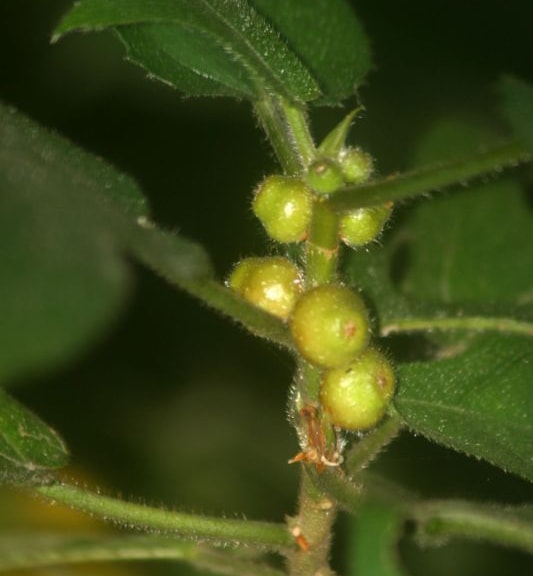
Cow's udder tree
The prescription includes the herb Astragalus membranaceus (ox udder).
Strengthens the spleen and eliminates dampness, treats chronic hepatitis, cirrhosis, and edema due to malnutrition.20g of Astragalus membranaceus, 16g of Phyllanthus niruri, 12g of Artemisia capillaris, 16g of Centella asiatica. Decoction for oral administration.
Expectorant and cough suppressant (bronchitis, cough with phlegm):20g of Astragalus membranaceus, 12g of Ophiopogon japonicus, 20g of Houttuynia cordata, 16g of apple leaves. Decoction for oral administration.
Nourish qi and blood, spleen and kidneys; nourish blood, nourish spleen, nourish kidneys:20g of Astragalus membranaceus, 10g of Angelica sinensis, 10g of Atractylodes macrocephala, 10g of Rehmannia glutinosa. Decoction to be taken once a day. This formula can also be used in higher doses to make a tincture, soaking for 10-15 days. Drink 30ml daily.
To tonify the spleen and replenish qi, treat poor appetite, poor digestion, bloating, and loose stools: 20g of Astragalus membranaceus, 4g of Saussurea costus, 6g of Amomum cardamomum, and 6g of Amomum cardamomum. Decoction for oral administration.
Treatment for chronic rheumatism: 20g of Astragalus membranaceus (roasted), 16g of Clematis chinensis (roasted), 12g of Ficus microcarpa root (roasted), 12g of Dioscorea opposita root (roasted), 16g of Rhus chinensis root (roasted), 12g of Angelica dahurica, 8g of Rhus chinensis root. Boil in water, add a little wine and drink.
Treating rheumatism:60g of Astragalus root, 250g of pig's trotters, 60g of white wine. Add water, decoct until one bowl of liquid remains, divide into two doses and drink twice a day.
Treating bruising and hematomas caused by falls or injuries:Crush the leaves or fruits, boil them with alcohol, and apply as a poultice or compress.
Treatment for stomach prolapse, rectal prolapse, and uterine prolapse:30g of Astragalus membranaceus, 12g of Caesalpinia sappan, 12g of Polygonum multiflorum, 12g of Achyranthes bidentata, 12g of Akebia quinata. Decoction for oral administration. Drink for 2-3 months.
Treatment for amenorrhea and postpartum abdominal pain due to blood stasis:30-60g. Boil in water, add a little wine and drink.
Testicular swelling and pain:60-120g of fresh Astragalus root. Brew and drink.
Leukorrhea:60g of dried Astragalus root. Brew and drink.
To increase milk production: 20g of Astragalus membranaceus, 20g of Alisma orientalis, 20g of Akebia quinata, 10g of pangolin scales. Decoction for oral administration.
According to Health & Life - NT


