
The 'underground missile city' strategy helps Iran maintain its deterrence capability.
A network of nearly 30 missile systems located up to 500 meters deep within the Zagros Mountains helps the Iranian military preserve its forces and maintain its ability to retaliate against airstrikes.
In its modern defense strategy, Iran has built a specialized underground military base system, often referred to as "missile cities." This network of facilities for storing, assembling, and launching missiles is designed to withstand even the most intense air attacks. According to military analysis reports, Tehran currently operates nearly 30 such complexes, primarily concentrated along the Zagros Mountains and in strategic desert areas.
The scale and defensive capabilities of underground bases
Iran's missile cities are not simply weapons depots but are designed as self-contained military ecosystems. These facilities serve multiple roles, from storage and component assembly to engine testing, all located underground. A key design element of these structures is their depth, ranging from 50 to 500 meters.
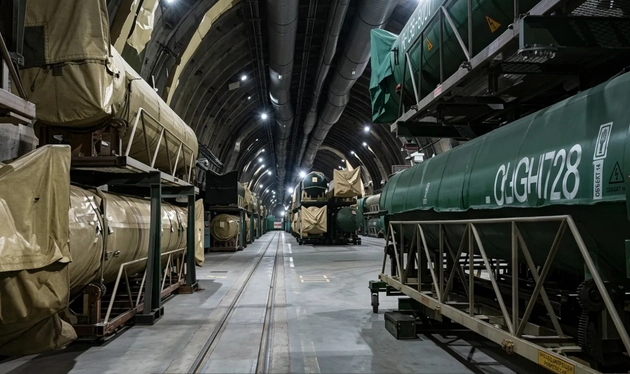
This technical specification is vital because even the most powerful penetrating bombs currently available can only penetrate about 60 meters of compacted soil or a few meters of reinforced concrete. Being located hundreds of meters deep within rocky mountains makes Iran's facilities virtually immune to conventional weapons. Inside the tunnels is a mobile launch system, allowing missiles to move quickly to firing positions and retreat to cover in a short time.
History of formation and design philosophy
This underground defense system is the result of lessons learned from the Iran-Iraq conflict (1980-1988). After suffering heavy losses from air strikes on surface infrastructure, the Iranian Islamic Revolutionary Guard Corps (IRGC) prioritized the development of highly survivable infrastructure.
To maintain operational readiness, the underground bases are equipped with multi-layered command and communication systems, including fiber optic cables and satellite links. This ensures the command network remains operational even if the above-ground telecommunications infrastructure is completely destroyed. Among the strategic locations, the base near Yazd is considered a prime example, its plateau terrain surrounded by mountains and desert, creating a natural, inaccessible fortress.
Diverse arsenal and saturated strategy
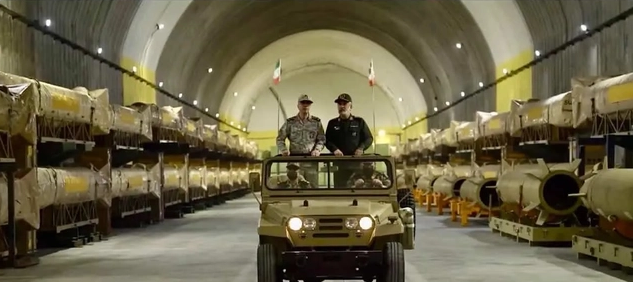
This network of underground tunnels houses Tehran's diverse missile arsenal, serving a strategy of "saturating" enemy air defenses. The main missile types include:
- Shahab lineage:Medium-range ballistic missiles with a range of approximately 2,000 km.
- Sejjil lineage:Using a two-stage solid fuel system significantly shortens launch preparation time.
- Emad missile:It is possible to adjust the trajectory in the final stage to increase accuracy.
- Haj Qasem missile:A range of 1,400 km with a highly maneuverable warhead.
Besides ballistic missiles, underground cities also contain low-flying cruise missiles. Maintaining a large number of weapons of various types makes it difficult for even the most modern enemy defense systems to completely intercept them in a single, coordinated attack.
Significance for regional security
The ability to maintain production and assembly underground gives Iran flexibility in dealing with international surveillance and sanctions. Militarily, this system creates a passive but highly effective defensive posture. Even if its airfields and bases are neutralized, Iran retains a strong counter-attack capability from underground, increasing the risk of any direct military intervention on its territory.


