
Iran's five-layered strategy protects its ballistic missile stockpile from attacks.
Iran has deployed a multi-layered defense system, ranging from underground 'missile cities' to sophisticated decoy networks, to preserve its strategic deterrence capabilities.
Amid escalating tensions in the Middle East, Iran has identified ensuring the survivability of its strategic missile systems as a task as crucial as operational capability. The nation has developed a multifaceted defense system based on natural terrain and sophisticated engineering techniques to conceal and protect its arsenal from external threats.
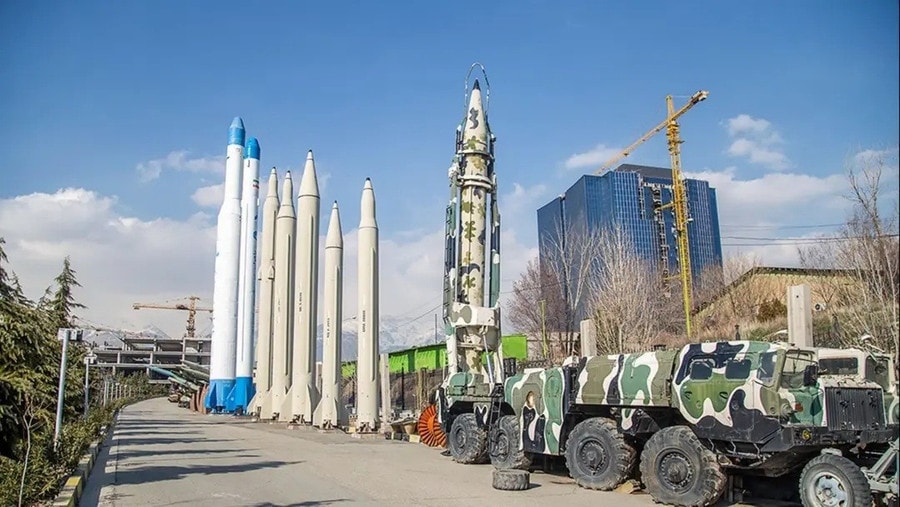
A network of 'missile cities' deep inside the mountains.
Iran has built large-scale missile facilities deep within hundreds of meters of solid rock in mountain ranges. This structure significantly reduces the risk of being destroyed by modern bunker-busting weapons or high-energy nuclear attacks.
These "missile cities" are not just storage facilities, but self-contained complexes comprising a system of reinforced tunnels, warhead assembly areas, fuel depots, and separate guidance centers. The dispersed design allows the entire system to remain operational even if some of its entrances are hit by enemy fire.
Reinforce gateways and impact-absorbing structures.
The entrances to underground bases are typically designed to be hidden behind natural terrain and reinforced with thick reinforced concrete. Inside, the tunnels are not built straight but have tactical dead-end branches to absorb shock waves from explosions, minimizing damage spreading to the central area.
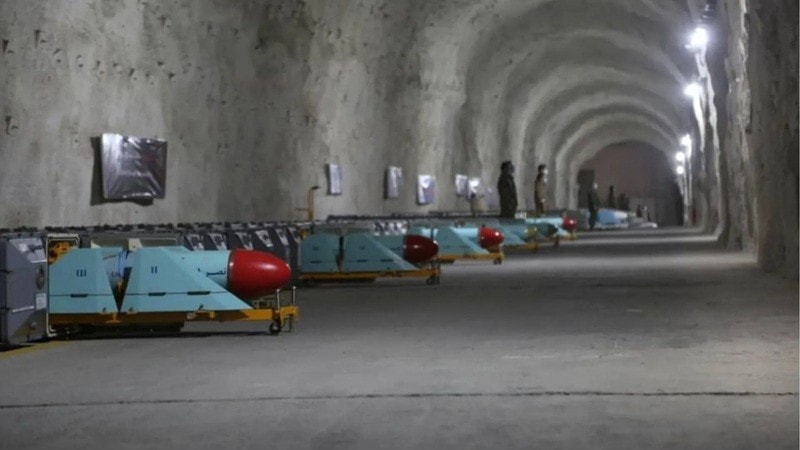
Explosion-proof doors and pressure-resistant chambers are installed along the main tunnel corridors. This helps prevent chain collapses and protects personnel and equipment inside in the event of a direct impact at the tunnel entrance.
Camouflage tactics and the use of dummy launchers.
To counter satellite reconnaissance systems and drones, Iran employs a combination of optical and infrared camouflage. Military units frequently deploy dummy launchers made of wood or inflatable models in open areas to draw enemy fire.
Notably, many missile storage facilities have been repainted to resemble ordinary civilian buildings. Some areas have even been covered with heat-shielding nets and special materials to reduce radar signatures, making it difficult for long-range sensors to accurately identify targets.
Optimize mobility with the TEL system.
Instead of relying on easily detectable fixed launch platforms, Iran prefers the use of mobile missile launchers (Transporter-Erector-Launchers - TELs). These launchers are capable of constantly moving between bunkers, underground garages, and temporary combat positions on highways or in remote valleys.
The combination of mobility and a complex road network makes it difficult for the enemy to track in real time. The ability to deploy quickly and withdraw immediately helps preserve forces after each launch.
'Coffin-style' structural protection technique
Another unique protection method involves constructing thick layers of concrete and earth, known as "coffin-like" structures, over critical foundations. Once completed, the entire structure is completely buried to blend into the natural terrain.
This technique has been applied in areas near Tehran, creating a layer of static armor that helps structures withstand precision-guided bombs. In the event of an attack, Iran typically quickly implements emergency repair measures such as sealing tunnel entrances and erecting temporary roofs to restore combat readiness in the shortest possible time.


