
The US's two-pronged policy is creating difficulties for Israel.
(Baonghean.vn) - Israeli Defense Minister Moshe Yaalon recently expressed concern that the US providing advanced weapons to Gulf countries to deter Iran could challenge Israel's military superiority in the region. This statement shows that the US's two-pronged policy in the Middle East is causing genuine worry among its close allies.
Looking back at history, 70 years ago, the leaders of the United States and Saudi Arabia signed an agreement stipulating that the US would guarantee the security of Saudi Arabia in particular and the Gulf region in general in exchange for oil. Therefore, for decades, the Gulf states and the US have been considered allies, although this relationship was based on a reciprocal exchange. However, recently, the approach of the Obama administration on the issues of Syria and Iran has displeased and somewhat unsettled the Gulf states. Concerned about the growing power of Iran and Israel, the Gulf states have proactively enhanced their defense capabilities and do not want to rely entirely on US security guarantees.
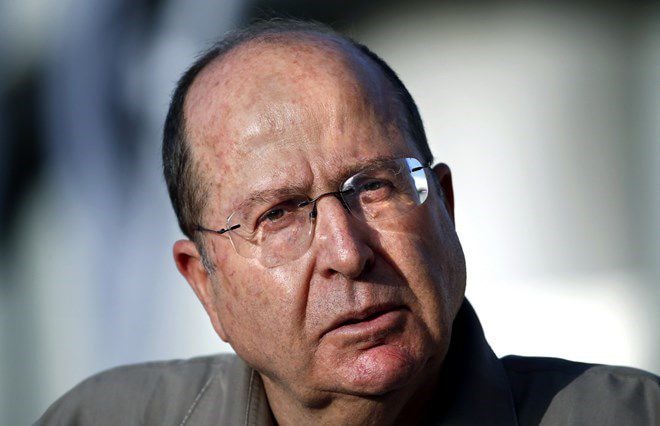 |
| Israeli Defense Minister Moshe Yaalon. Photo: AFP |
In this context, the United States has become a major arms supplier to the Gulf states. Currently, many Gulf countries possess advanced American weapons and are working with the US to upgrade their missile defense, cybersecurity, and counterterrorism capabilities. Analysts also predict that in the next two decades, the US will become less dependent on Gulf oil due to changes in the oil market and the emergence of alternative fuels. However, the US strategy remains focused on expanding its arms market in the Gulf, as it has an advantage over Russia, China, and the EU in accessing this market thanks to its traditional relationships. Beyond economic benefits, the US's true intention is to create a strategic balance in the Middle East and enhance the deterrence capabilities of the Gulf states against Iran, given Iran's growing strength and its acquisition of modern weapons from Russia.
Therefore, it's not difficult to understand Israel's concerns about the US becoming a major arms supplier to Gulf Arab states. In reality, the relationship between Israel and the Arab world remains one of antagonism. Jews and Arabs have experienced numerous protracted wars, and mutual distrust persists. Israel, with US support, has consistently held a significant military advantage in the Middle East for many years. However, recently...While Iran is being backed by Russia with an agreement to acquire the advanced S-300 air defense missile system, the Gulf states are also increasingly strengthening their military power with weapons purchased from the United States. In mid-May, following a high-level meeting at Camp David between US President Barack Obama and six Gulf leaders, agreements were reached on US security assistance to the Gulf states.
It could be said that the US is pursuing a two-pronged policy in the Middle East: on the one hand, maintaining its key alliance with Israel, while on the other hand, supplying weapons to Gulf states, rivals of the Jewish state. Currently, the Middle East is characterized by overlapping animosity between Iran, Israel, and the Gulf states, making it difficult for the US to choose sides in this tense situation. While skillfully balancing bilateral relations, the US's arms supply to the Gulf states has clearly caused considerable concern for its ally, Israel.
Nguyen Cao Bien
| RELATED NEWS |
|---|


