
Fed Chairman Kevin Warsh and the interest rate dilemma that contradicts President Trump's expectations.
Taking office amidst rising inflation and volatile bond markets, the new Fed Chairman Kevin Warsh faces the possibility of having to raise interest rates to curb inflation, going against President Donald Trump's desire to cut interest rates.
Kevin Warsh officially took office as Chairman of the Federal Reserve (Fed) last Friday, taking over an economy in a turbulent period. While President Donald Trump has publicly expressed expectations that the Fed will lower interest rates to boost growth, real-world signals from the market and inflation are placing the new Chairman in a contrasting position.
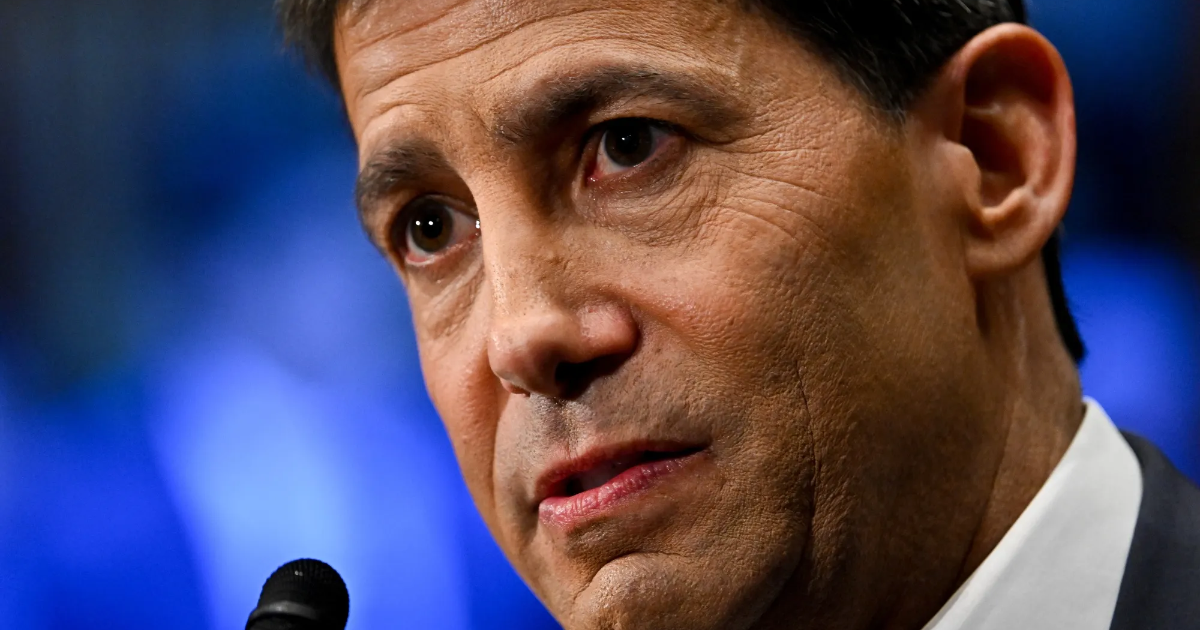
At his White House inauguration, President Trump emphasized his view that there was no need to curb the rapidly growing economy, believing that this growth would not cause inflation. However, actual data shows that inflation is on the rise and long-term US Treasury yields are climbing, leading investors to begin forecasting an interest rate hike instead of a cut.
Conflict between political expectations and market realities
Geopolitical and technological factors are further complicating the Fed's agenda. The outbreak of war in Iran has created a supply shock, pushing prices higher in the short term. In addition, the boom in artificial intelligence (AI) is stimulating demand and growth, indirectly adding to inflationary pressure.
While senior economic officials such as Treasury Secretary Scott Bessent and National Economic Council Director Kevin Hassett argued that inflationary pressures were only temporary, financial markets reacted the opposite. Investors sold off bonds, pushing real interest rates on home mortgages and credit cards higher. Many economists believe the Fed will have to seriously consider raising interest rates if inflation does not subside.
Challenges to the Fed's Independence
Kevin Warsh affirmed that he would base policy decisions on the actual situation and that there was no tacit agreement with the President regarding lowering interest rates. Notably, President Trump recently made a somewhat more flexible statement, saying he would let Warsh "do what he wants to do." This opens up the possibility that the Fed could tighten monetary policy without facing immediate and strong opposition from the White House.
According to analysis from BNP Paribas, the President's remarks supported a reassessment in the bond market, suggesting a potential interest rate hike. However, political risks remain. If President Warsh decides to raise interest rates, observers fear he could face similar criticism to his predecessor, Jerome Powell.
Future policy scenarios
Some analysts, including experts from SMBC Americas, believe that due to the impact of the war, the Fed may need to raise interest rates by about 1.00 percentage point, completely reversing the three rate cuts already implemented in the second half of 2025. The current sell-off in long-term government bonds is evidence that the market does not believe in the possibility of easing monetary policy in the short term.
Warsh's tenure began with a major challenge but also an opportunity to solidify his reputation for toughness on inflation. Decisions in the first few months will be crucial to market confidence in the independence of the world's most powerful central bank.


