
"Until it's exposed, there's no... regret?"
(Baonghean)Since the Party's Central Committee Resolution No. 4 deeply permeated social life, the fight against corruption seems to have entered a new phase as major cases are successively brought to light. The people are gradually becoming accustomed to the shocking figures of losses. They are also no longer surprised by the sight of officials who were previously considered "clean" suddenly bowing their heads and confessing before the court! Yet, for the past week, public opinion has remained stunned by the alleged bribery scandal of a "transnational" scale, after a Japanese contractor (JTC) accused Vietnamese railway officials of sharing billions of dong in kickbacks.
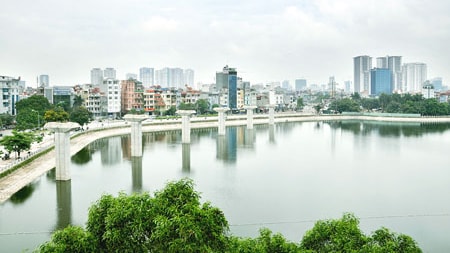 |
| A project using Japanese ODA funds (Internet photo) |
The matter quickly heated up for several reasons: firstly, the "international" nature of the story; secondly, the enormous scale of the so-called "commissions"; thirdly, the immediate and decisive intervention of the authorities; and finally, the "familiar faces" involved in the allegations. It must be said that never before has the anti-corruption campaign been so swiftly and decisively conducted with such a credible, even somewhat zealous, attitude as in this case. The shuttle-like work teams, the dedicated hotlines for the case, the extensive updates in the press, and the suspensions and explanations are all attracting significant public attention. And rightly so, because it is so large and so serious! It's no longer just an internal matter; it's now about national honor, and also about mobilizing ODA and other funding sources… When relations between Vietnam and Japan are excellent, when the 40th anniversary of the establishment of diplomatic relations is further affirming new progress in the relationship, when the friendly official visits between the leaders of the two countries are still warm… then this incident arises!
Just when public opinion seemed to have succumbed to the "one painful blow, a lifetime of regret" sentiment, hope flickered again when a dozen officials who were required to explain themselves unanimously affirmed that they had not received a single penny from the Japanese contractor JTC.
The situation suddenly became tense. Thus, only two possibilities remained. The most unbelievable but most anticipated possibility was that the Japanese contractor, JTC, was falsely accusing our officials! That was the first possibility, a last resort, but nonetheless a hopeful one! Everyone wanted the matter clarified, our officials vindicated, and the positive image of these trained, hardworking officials returning to their daily "serving the country and the people"—the accuser—to be severely punished by law. The bright image of the "investor" would be reaffirmed. However, let me reiterate that this was the first possibility?!
What about the second possibility? Of course, getting "caught"!
Public opinion is eagerly awaiting each development. However, there is reason to be concerned, as in reality, in most corruption cases, before being exposed, no one seems to admit guilt from the outset. It's quite possible this is a kind of "occupational hazard," a case of "not repenting until it's exposed"!
Nguyen Khac An


