
Back pain in the elderly
Back pain is a common ailment among older adults, often caused by unhealthy habits. Approximately 80% of back pain cases are preventable.
Causes of back pain
Back pain has two basic causes: mechanical stress and inflammation.
Back pain due to mechanical factors: This type of back pain is common in adults and especially in the elderly, such as spinal degeneration, herniated discs, and spinal stenosis. Spinal degeneration often occurs in the cartilage and discs, due to the excessive weight of the body acting on the spine daily, as well as the weight pressing down on the shoulders and neck and then on the vertebral system (for example, sitting for long hours without movement).
When the spine degenerates, back pain symptoms appear quite early, and it is precisely this very uncomfortable back pain that forces patients to seek medical attention. Besides spinal degeneration, there are also mechanical causes such as heavy lifting, sudden changes in posture, or unbalanced lifting and carrying...
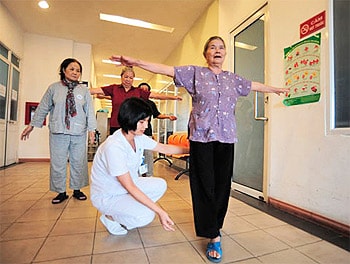
Back pain due to inflammation: Inflammation can originate directly in the spine, such as disc inflammation, spinal tuberculosis, spinal cancer, sacroiliitis, etc. There are also many cases where back pain is caused by inflammation in another organ of the body, such as pelvic inflammatory disease (PID), oophoritis, gastritis, duodenitis, urinary tract infections (due to stones or bacteria), etc. These types of illnesses often cause dull, persistent back pain that occurs simultaneously with the main symptoms of the disease (for example, stomach pain or urinary stones). These causes are also more common in older adults than in younger people.
What to do when you have back pain?
When elderly people experience lower back pain, they should not self-diagnose and buy medication to treat it, but should seek examination at medical facilities with adequate diagnostic equipment to receive an early and accurate diagnosis from a doctor. Nowadays, with the advancement of medicine, diagnosing lower back pain is not as difficult as it used to be.
Patients need to answer all of the doctor's questions fully and clearly describe their back pain and any accompanying symptoms.
Early and proper treatment according to the correct protocol will yield far better results than late diagnosis and treatment, or treatment that is merely palliative. If lower back pain is caused by spinal issues, in addition to Western medicine and physical therapy, one can also combine it with traditional Eastern medicine such as acupuncture, acupressure, or herbal remedies.
Is the disease preventable?
For older adults, prevention should involve supporting or helping to avoid unnecessary strain on muscles and also strengthening the muscles that support the spine.
To avoid back pain, sleep on a firm mattress; lie on your side with your knees bent, or if lying on your back, place a pillow under your knees. Use a pillow of moderate height so that your head and body are level.
Elderly people should be careful when carrying heavy objects. They should avoid bending down to lift them, instead sitting down, holding the object with both hands, and slowly standing up using the strength of their knees. This helps prevent back injuries. When a heavy object is on a table, they can hold it against their stomach or turn their back to carry it.
Especially for older adults, practicing proper posture while standing, with the abdomen tucked in and the pelvis tilted backward, will help stabilize the lower spine. If standing for a long time is necessary, place one foot on a raised object about two inches high to tilt the pelvis backward.
Sitting for long periods causes a lot of discomfort for the back, so you should stand up, walk around, and relax your lower back. Avoid sitting on overly soft seat cushions.
Exercise involves movements that relax the joints and muscles, strengthening the muscles and ligaments in the back. In the morning, before getting out of bed, you should do some stretching exercises to relax your back. After a long night's sleep, the joints and muscles become stiff; standing up immediately could cause falls, injuring the back and other parts of the body.
Avoid smoking and lose weight if you are overweight, as obesity puts strain on the soft tissues in your back.
Some ways to relax the spine.
- Stand upright, feet shoulder-width apart, palms facing down at your sides. Keep your knees straight and arch your back as far back as possible. Hold this position for a few seconds, then return to the starting position. Repeat this movement five times.
- Stand upright, placing both hands on the back of the chair. Keep your knees straight and raise one leg as high as possible behind you. Slowly lower the leg and repeat the same movement with the other leg. Perform 5 repetitions for each leg.
- Lie face down with legs straight, elbows bent, and hands flat on the floor. Use your hands to push your body up as high as possible, keeping your buttocks and legs flat on the floor. Repeat this movement ten times.
- Lie on your back with your knees bent and feet flat on the ground. Slowly lift your head and shoulders off the floor, bringing your hands towards your knees. Hold this position for ten counts, then return to a straight position. Repeat the same movement five times.
- Lie face down with your hands and feet touching the surface. Raise one leg, count from 1 to 10, then lower it. Repeat the same movement with the other leg. Do this five times for each leg.
According to Health & Life -nt


