
The story of international journalists reporting from the 'death zone' of Mosul.
The deaths of two journalists in Mosul have once again raised concerns about the safety of journalists reporting from this hottest battleground in the world.
Ignoring the danger, they put themselves in deadly situations.
According toAFPA landmine exploded, killing Iraqi journalist Bakhtiyar Addad, 28, on June 19. Shortly afterward, Addad's French colleague, Stephan Villeneuve, also died from his severe injuries.
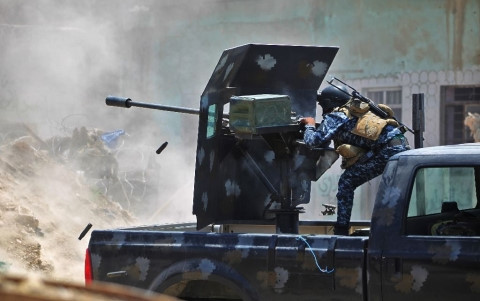 |
| Iraqi soldiers fight against ISIS in the Old City area of Mosul. Photo: Reuters |
Both journalists were killed while reporting on the fighting between Iraqi special forces and...ISIn the "death zone" of Mosul, this battle is particularly fierce as ISIS is not hesitating to use the approximately 100,000 civilians trapped there as human shields.
According to Reporters Without Borders (RFS), as many as 28 journalists have been killed in Iraq since 2014. RFS itself regularly reports on journalists killed in Iraq.
RSF Secretary General Christophe Deloire stated, “Iraq is one of the deadliest countries for journalists. Iraq was one of the top three countries in the world with the highest number of journalists killed while working in the field in 2015 and 2016.”
Furthermore, reporting on the war in Mosul is particularly difficult, especially in the narrow streets of the Old City, where ISIS militants are hiding. Ziad Al-Ajili, a member of the Iraqi Press Freedom Watch, said that nine journalists—eight of whom were Iraqi citizens—have been killed in Mosul since last fall.
Etienne Leenhardt, head of the France Televisions reporting team, said:MosulIt's the most dangerous place in the world for journalists. They can't predict what might happen. Snipers from both sides lurk in the bushes, drones suddenly drop explosives on their vehicles. Mosul is a labyrinth of narrow alleys inhabited by civilians. It's almost impossible to observe much."
Journalists are a prime target for IS.
"Mosul was the final battle for the few hundred ISIS terrorists desperately trying to defend their stronghold," said Georges Malbrunot, a veteran correspondent for the French newspaper Le Figaro.
Georges Malbrunot was held hostage by Islamic militants in Iraq for four months in 2004. Despite this, he frequently returned to Iraq to report on the war. “ISIS militants are trying to inflict maximum casualties on soldiers and civilians here. Human lives are worthless to them,” said Georges Malbrunot.
Sharing this view, RSF Secretary General Christophe Deloire stated that the losses, both human and material, for news organizations reporting on the war in Iraq, especially since IS seized Mosul in 2014, are particularly serious and very worrying.
"ISIS wants Mosul to be free of journalists; they have forced them to leave the city," Deloire said, adding that ISIS is still holding at least 10 journalists hostage.
According to journalist Leenhardt of France Television, most journalists reporting from Mosul are now doing this work as volunteers. They must strictly adhere to all personal safety requirements, such as wearing helmets and bulletproof vests. These journalists also carry tracking devices so that they can be found in case of emergency.
However, according to journalist Leenhardt, there have been cases where they had to cancel their initial work plans: "We sent a team to Raqqa (Syria) last week but had to withdraw them immediately because we realized that we couldn't let them take unnecessary risks."
However, journalist Leenhardt insisted that reporting on the fighting remained a priority: “We need to report on the fate of civilians, on the political maneuvering, on the moral conflicts within the war. We cannot miss any information.”
According to VOV
| RELATED NEWS |
|---|


