
The story of 'measuring rain and counting wind' in the Spratly Islands
(Baonghean.vn) - Regardless of day or night, scorching sun or thunderstorms, the staff of the Meteorological and Hydrological Station on the Truong Sa archipelago diligently collect data on sunshine, wind, temperature, sea waves, etc., to provide timely weather forecasts to serve the lives of the people, soldiers, and civilians on the islands.
Working tirelessly with numbers
At the forefront of the nation's defense,Song Tu Tay IslandThe island appears lush and serene. It has all the necessary facilities for the lives, work, and training of the soldiers and civilians on the island. Notably, Song Tu Tay Island houses a Meteorological and Hydrological Station, established in 1988, located next to the old sovereignty marker, surrounded by a green carpet of trees such as the Barringtonia acutangula, Terminalia catappa, and other species.
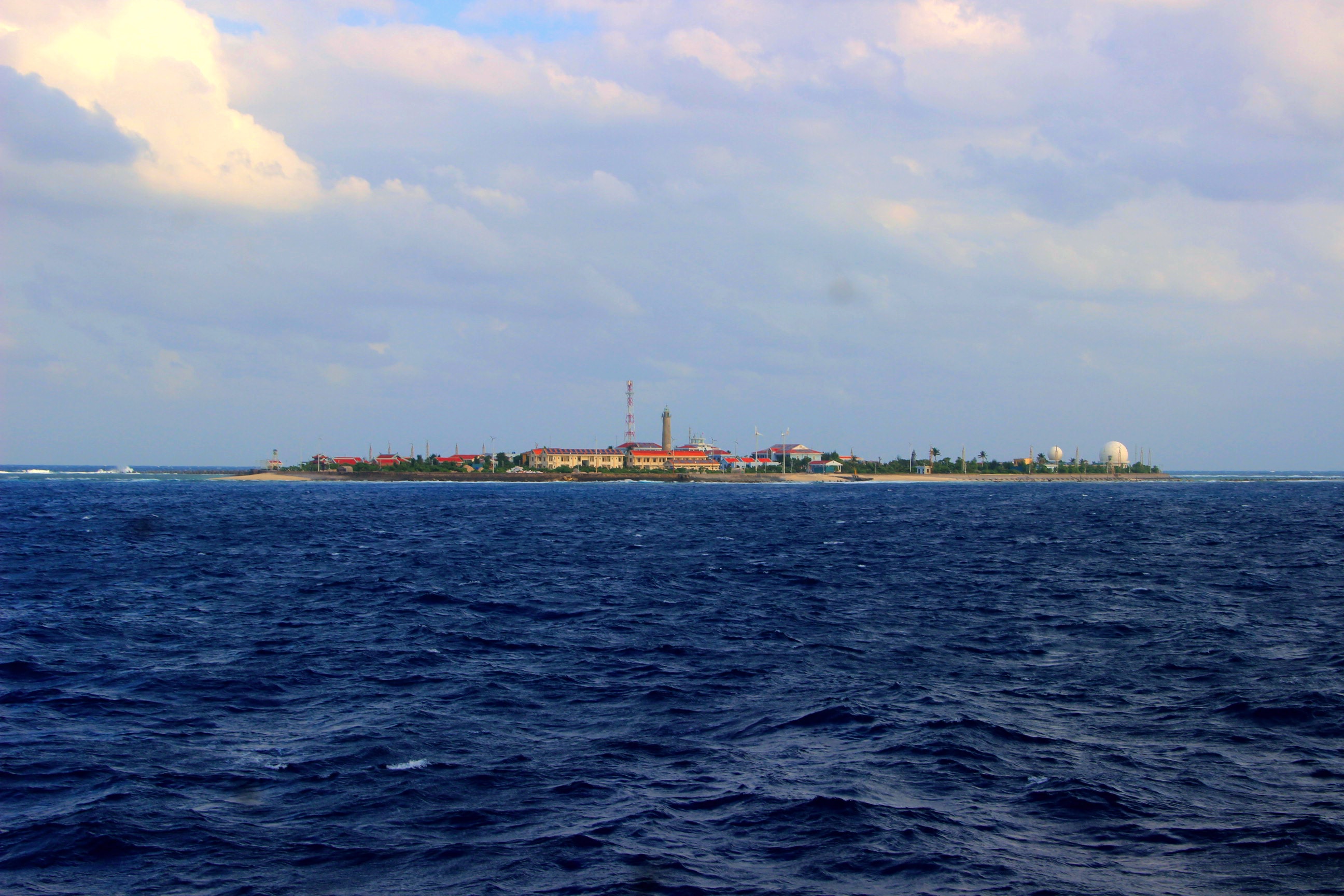 |
Song Tu Tay Island seen from a distance. Photo: QA |
Although modestly situated in a small corner of Song Tu Tay Island, this meteorological and oceanographic station plays a crucial role in measuring and observing information to provide weather forecasts for the sea and islands, which is then sent back to the mainland.
We had the pleasure of meeting Station Chief Hoang Van Minh, a native of Do Luong, Nghe An province, who has worked as a monitoring officer for over a decade in the Truong Sa archipelago. Knowing we were reporters from Nghe An, Mr. Minh smiled brightly at meeting fellow countrymen amidst the vast ocean. After warm greetings and a cup of hot tea, the officers at the station shared interesting stories about their unique work.
Accordingly, the staff at the station are tasked with observing, measuring, recording, and updating meteorological and oceanographic parameters to collect data for domestic and international forecasting, with specific indicators such as: temperature, atmospheric pressure, rainfall, wind speed, radiation, seawater salinity, seawater temperature, sea level, ocean waves, etc. This data is then transmitted to the Southern Central Region Meteorological and Hydrological Station, which sends it to the National Meteorological and Hydrological Center, providing the basis for daily weather forecasts broadcast on mass media.
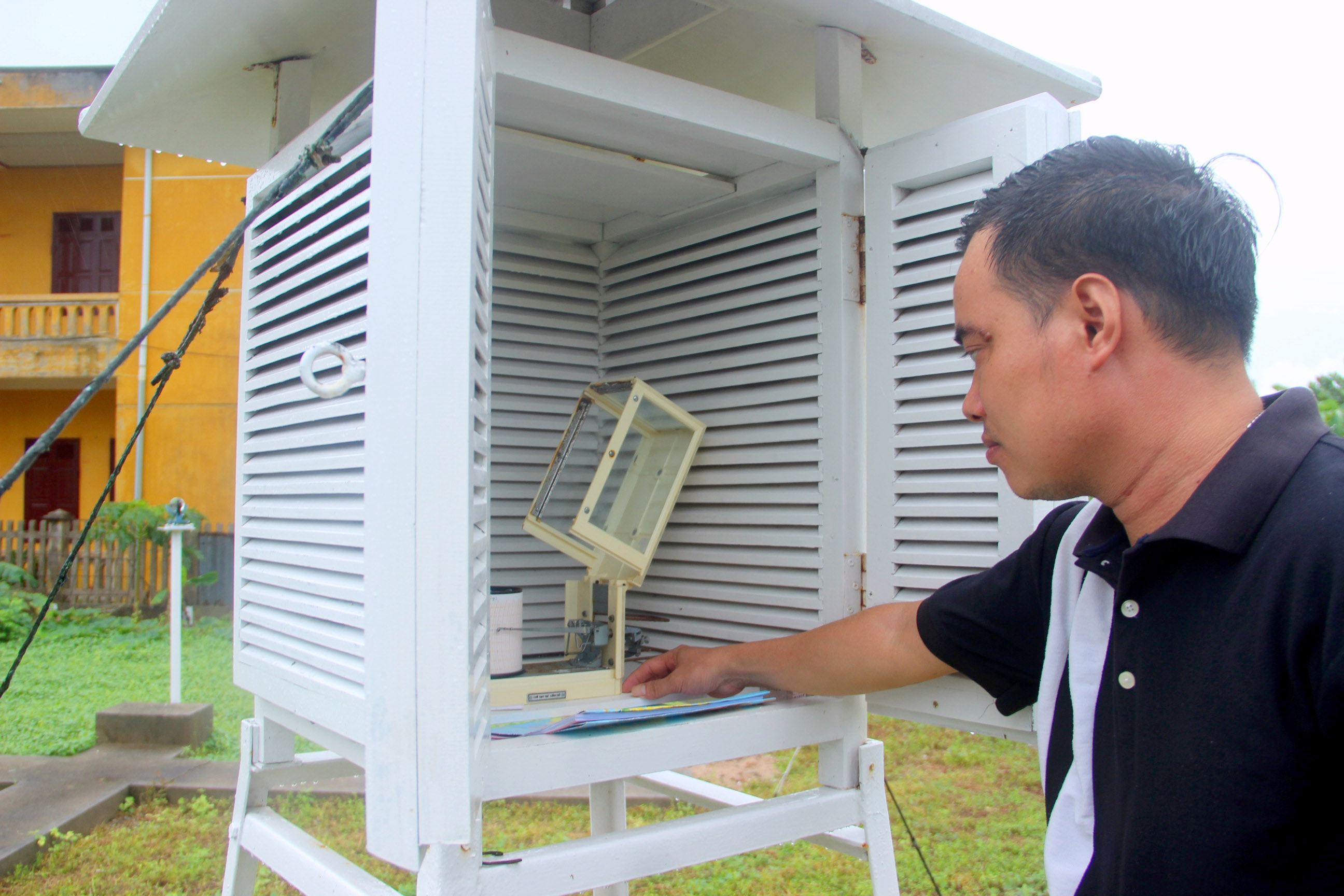 |
Staff at the Song Tu Tay Meteorological and Oceanographic Station measure weather data. Photo: Tien Dong. |
The Song Tu Tay Meteorological and Oceanographic Station has four staff members, including one station chief and three observers. They come from various provinces and cities across the country and are all young, enthusiastic individuals who have received thorough professional training from specialized schools. On average, they are assigned to collect data and take measurements about eight times a day. However, in bad weather, the frequency of data collection can increase to 24-48 times a day, leaving virtually no time for rest.
The station is built on the northernmost outpost island of the Spratly Islands, so it is the first to receive all information about unusual weather events, especially the appearance of tropical depressions or the formation of storms in the East Sea. On such days, observers work 24/7, continuously updating warning data to the mainland to widely disseminate information about the sea weather to the people nationwide. Simultaneously, the station also shares information with the military and civilians on the island, as well as fishermen operating in fishing grounds, to prepare response plans, especially during the rainy and stormy season.
“Weather forecasting data affects the lives, activities, and production of many people on land and at sea, therefore, the data must be measured with utmost accuracy. If there are shortcomings in the observation process, leading to inaccurate weather forecasts, the consequences will be immeasurable. We always keep in mind that when doing this job, we must be meticulous and thorough, avoiding even the smallest mistakes…” – Mr. Minh emphasized.
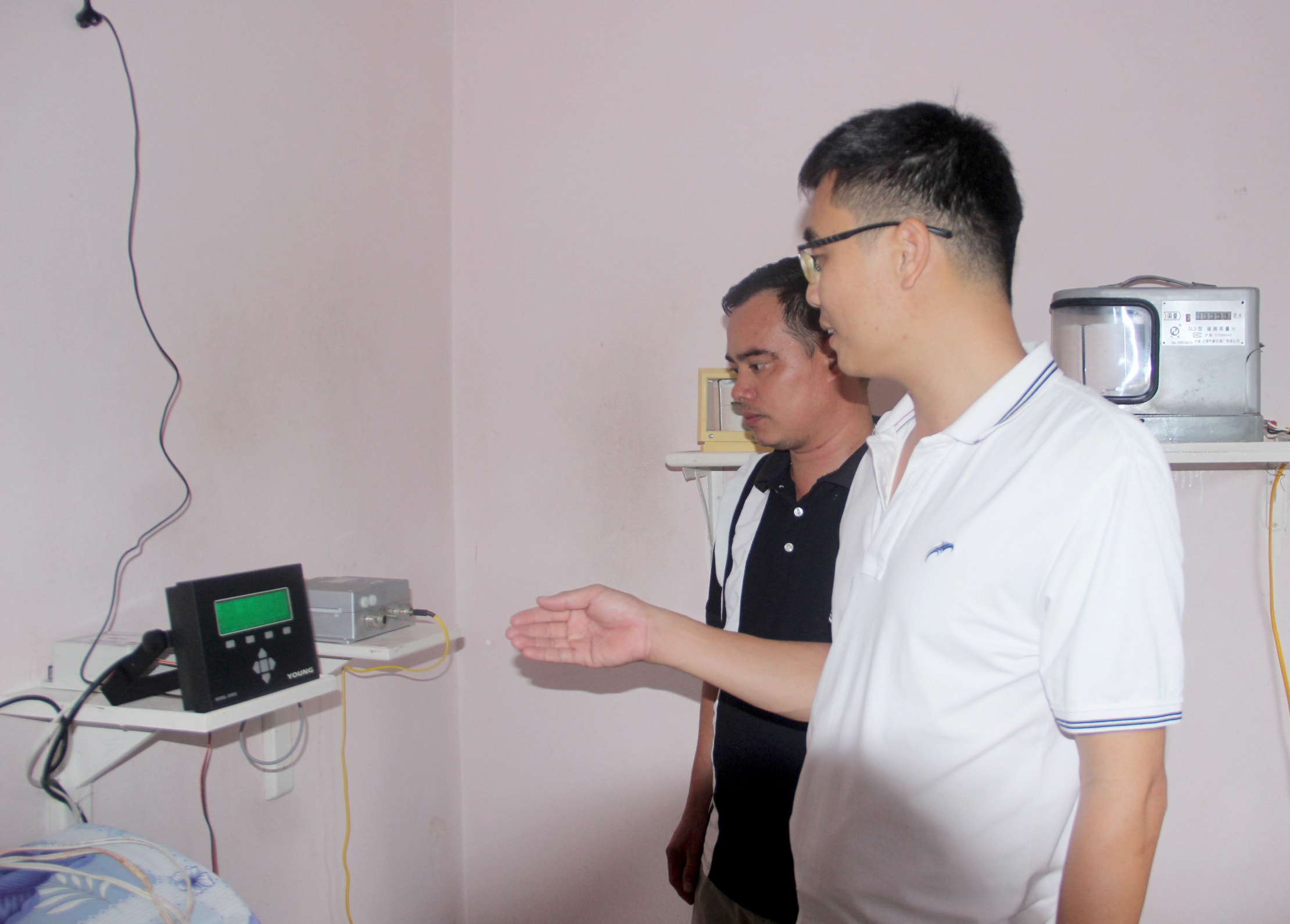 |
Data on sunshine, wind, temperature, ocean waves, etc., are reported to equipment at the station. Photo: QA |
Currently, there are two meteorological and oceanographic stations in the Spratly Islands, located on Truong Sa Lon Island and Song Tu Tay Island. Meteorological and oceanographic staff assigned to the Spratly Islands typically work for three years before returning to the mainland or moving to other islands for new assignments. Thus, the daily work of "measuring rain and counting wind" continues, providing weather information to the people on the mainland, the military and civilians on the islands, and fishermen offshore.
Efforts to overcome difficulties
Monitoring work is already arduous, but monitoring on this strategically important island is even more challenging. Especially during the rainy and stormy season, this area is the first point of contact for typhoons from the East Sea; on such days, while everyone is seeking safe shelter, the monitors brave the rain and wind, continuing their work of recording data to provide information for the entire country.
Mr. Hoang Van Minh recalled that at the end of 2021, a super typhoon appeared in the East Sea. Our meteorological station observed wind speeds of level 14, gusting to level 17, considered a record for the meteorological industry to date. When the wind reached level 17, two wind measuring poles at the unit were broken, leading to a disruption in monitoring. Staff had to observe the movement of leaves to estimate the wind speed. At that time, the typhoon swept through Song Tu Tay Island, causing 90% of the trees to be broken and structures to be damaged. However, because we had already gathered the data, we shared the information with the military and civilians on the island to proactively prepare response plans, so there were no casualties. After receiving the signal, ships also returned to the harbor for safe shelter.
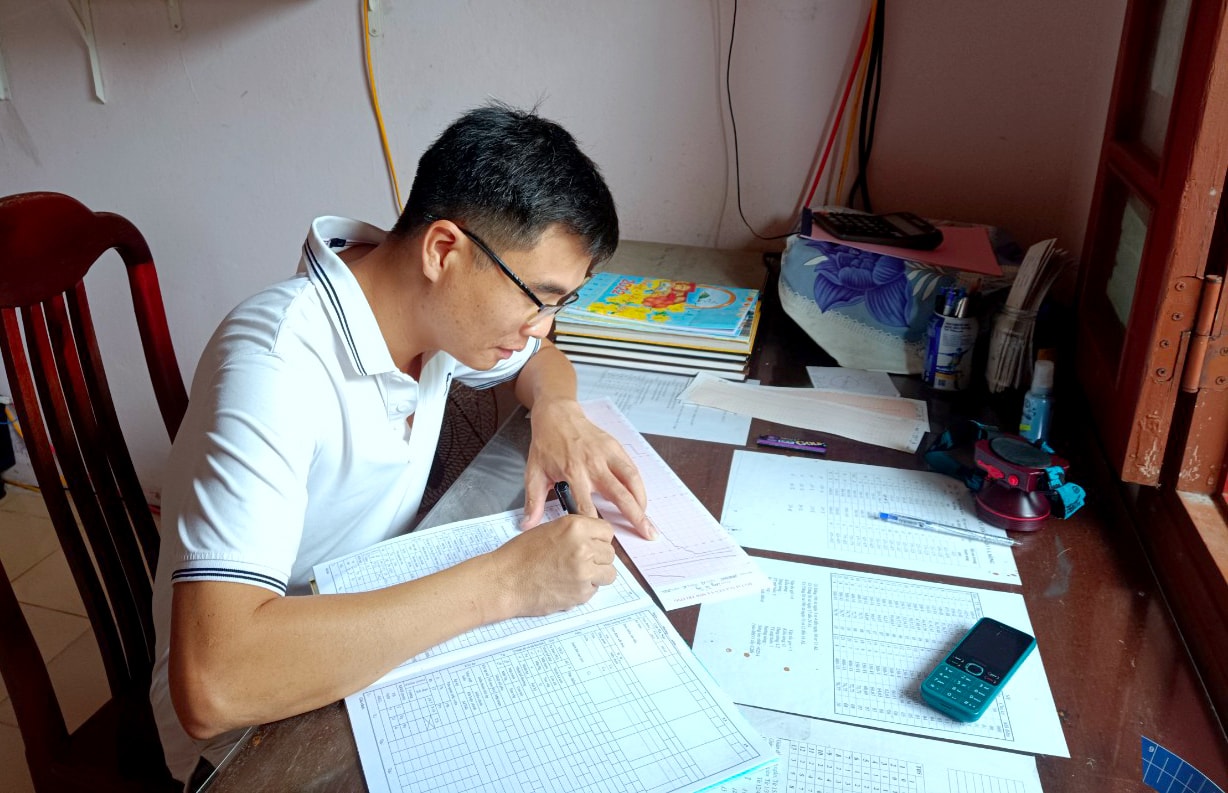 |
After collecting the data, Mr. Minh meticulously recorded it and promptly sent it back to the mainland. Photo: QA |
In the Spratly Islands, surrounded year-round by salt and scorching seawater, the monitoring equipment is constantly worn down and its quality deteriorates. This is the biggest concern for the officers and staff, as equipment malfunctions renders them unable to perform their duties. Therefore, they must constantly clean and maintain the equipment. If the measurement data is inaccurate or the forecasts are flawed, it will affect many people.
Due to the remote location, the monitoring equipment on the island cannot be as modern as that on the mainland, not to mention the intermittent power supply, which disrupts measurement and data transmission. Despite facing many difficulties, the staff at the station encourage each other and work together to successfully complete their tasks. For decades, data has been regularly transmitted to the mainland every day, helping to ensure that disaster prevention and control efforts on the mainland and islands are carried out quickly and effectively, minimizing damage when storms and floods strike.
 |
A reporter from Nghe An Newspaper speaks with staff at the Song Tu Tay Meteorological and Oceanographic Station. Photo: Tien Dong |
Together with the soldiers and people on the sacred islands of the Fatherland, over the years, the staff of the Meteorological and Hydrological Station have always considered working in the face of the waves and winds as a great honor, contributing to the protection of the sacred sovereignty of the Fatherland and the sea and islands of our homeland.


