
Japanese expert offers advice to help farmers increase their income.
Income from agriculture can be 2.4 times higher than the salary of an office worker, said Takebe Tsutomu, special advisor to the Japan-Vietnam Parliamentary Friendship Alliance, discussing ways to improve the lives of farmers...
Mr. Takebe Tsutomu said: "If Vietnam wants to develop advanced agriculture, I think it should learn from the experience of Hokkaido Prefecture. This is a prefecture with the harshest weather conditions. The Hokkaido government has invested heavily in infrastructure. Trucks must be able to access the fields. They have to build dams to irrigate the fields and install drainage systems. So, while rice couldn't be grown in Hokkaido before, the rice produced there is now considered one of the best in Japan."
With these investments, agricultural income in Hokkaido is 2.4 times higher than the salary of an office worker. This harsh land has become very wealthy thanks to agriculture.
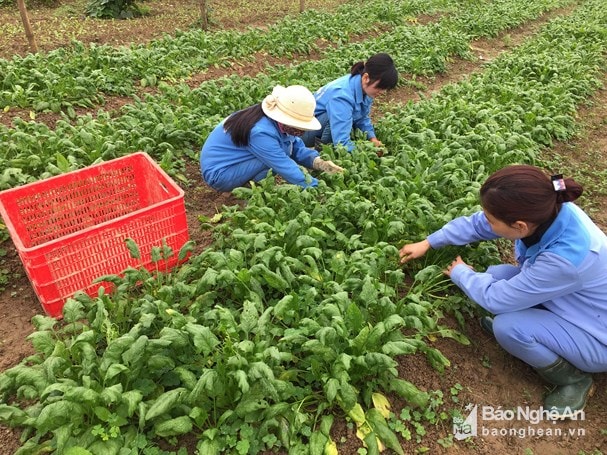 |
| Farmers in Nam Dan are growing spinach under guidance from the JICA organization. (Photo: Archival image) |
* Based on the situation in Vietnam, how can the lessons from Hokkaido be applied, in your opinion?
- I believe that first and foremost, we must build a foundation for favorable investment. Saying "invest now, develop high-tech agriculture" without specific infrastructure or policies is no different than saying "produce cars quickly" when there are no roads yet.
I think the Vietnamese government and provincial authorities should consider all issues related to agricultural and rural development in a holistic way. It shouldn't just be about increasing productivity and income.
Vietnam's declining birth rate and aging population are accelerating faster than even Japan's. With largely no pension system, rural areas are becoming deserted. A comprehensive study of agricultural and rural organization issues is needed to determine what should be done to develop agriculture within the framework of restructuring and sustainable development.
In the future, the workforce in rural Vietnam will decrease, necessitating the restructuring of villages and the replanning of land use. For example, this could involve building residential areas with complete infrastructure and amenities, where farmers can commute to work by motorbike or car.
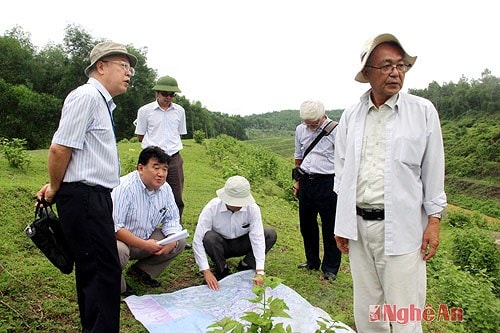 |
| A team of JICA experts surveys irrigation works in Hoa Son commune, Do Luong district. (Photo: Archival image) |
So, where should Vietnam focus its efforts, sir?
- Vietnam's agriculture is about 30 years behind Japan's in terms of development. Recently, I've received a lot of information about inviting Japanese investors into Vietnamese agriculture. The question is whether high-efficiency machinery will operate effectively when brought to Vietnam.
There have been instances where machinery was rendered inoperable due to flooding. Furthermore, infrastructure development such as land reclamation, water management, and soil preparation is costly. Do Japanese companies invest in these areas? Probably not.
The government needs to provide guidance and direction to businesses on sustainable agricultural practices and development. If this is not done effectively, a stable investment environment will not be created.
Besides attracting external investment in agricultural development, young Vietnamese people must be the driving force behind future agricultural and rural development. Young Vietnamese people should visit places like Hokkaido to determine what they need to do in the future.
Many Japanese agricultural cooperatives are currently accepting technical trainees, and young Vietnamese people should take advantage of this opportunity to start businesses in their homeland. If this is widely implemented, I think it will increase the number of people determined to develop Vietnamese agriculture.


