
There are still many difficulties to overcome.
(Baonghean)Since 2007, as part of the project to address old collective housing in Vinh City, 50 collective housing areas have been planned for new land subdivision and plots. However, for the remaining more than 70 collective housing areas, implementation still faces many difficulties and obstacles, significantly impacting the lives of the residents.
Located in Block 11, Quang Trung Ward, the Nghe An Newspaper Printing House's residential complex, despite having only 9 households and a plan to demolish the old collective housing since 2009, remains stalled after nearly 5 years. Originally the residence of the printing house's staff, in 1990, to allow the households to live there long-term, the company sold the apartments to the 9 households at a subsidized price of 250,000 to 500,000 VND per unit. In accordance with the city's plan to demolish old collective housing, the Quang Trung Ward People's Committee held a meeting with the residents of the Nghe An Newspaper Printing House's residential complex to discuss a plan to demolish the dilapidated complex. After discussion, all households agreed to implement an on-site resettlement plan with the following specific details: The plan will be based on the current situation, with adjustments to the land area allocated to each household to suit actual conditions, and the remaining slanted land will be given to the last household.
The policy was in place, and the planning process was expected to be straightforward, but after years of waiting, residents of the apartment complex still haven't received their land use certificates. The biggest obstacle lies with Ms. Tran Thi Van, who, despite numerous revisions to the blueprints, still disagrees with the allocated plot sizes. Similarly, Mr. Bui Van Nhung owns two units, but one of them was acquired through a transfer from another household, making verification of the origin, area, and date of the transfer impossible. Meanwhile, the apartment complex, after many years of construction, has become dilapidated and leaky. Some households, unable to live there, have had to rent houses elsewhere.
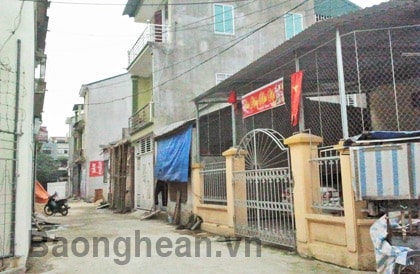
The Viet Duc Garment Factory residential area has been allocated land and housing has been constructed.
Not only the 78 unplanned residential complexes but also those that had been resolved previously are facing similar problems. Those implementing the project are no longer surprised, as they frequently receive requests and questions from residents whenever a project is about to be launched. These usually focus on issues such as: obstacles regarding the timeframe and eligibility criteria, and problems with the necessary paperwork for land allocation. For example, according to regulations, households eligible for land allocation must be those who purchased their houses at subsidized prices before July 1, 2004, but there are cases where people who bought houses and then moved out are now requesting land allocation.
There are cases like the one at the Nghe An Newspaper Printing House's housing complex, where people who bought two houses at subsidized prices are now being allocated one or two new plots of land. Or, in some housing complexes, decisions or notices regarding the subsidization of housing for employees were made before October 15, 1993, but the employees paid later. In the housing complex of the Agricultural Products Import-Export Company in Hong Son ward, there is a confirmation letter from the director stating that the housing complex was subsidized for the households, but the original documents are lost due to a lack of archived records. Therefore, there is no basis for the People's Committee of the ward or commune to confirm the date of the subsidization. Regarding planning, besides some housing complexes that will be resettled in situ, many other housing complexes are located within the Vinh Ancient Citadel planning area or the Quyet Mountain Forest Park planning area, and therefore need to be relocated and resettled. However, this plan is now difficult to implement because most investors are facing many difficulties, making it hard to develop infrastructure; five areas have yet to find investors… On the government side, according to Mr. Nguyen Viet Duc - Deputy Head of the City's Urban Management Department, many issues have arisen during implementation that are beyond the city's authority. Meanwhile, relevant levels and sectors have not yet advised the Provincial People's Committee on appropriate policies and mechanisms regarding planning, land clearance, and granting land use rights certificates according to the specific characteristics of this group.
According to the plan, all 138 residential complexes in Vinh City were supposed to be demolished by 2015. However, given the aforementioned obstacles and current economic difficulties, achieving the project's goals is highly unlikely. Furthermore, several shortcomings remain unresolved during implementation, such as: In some localities, local Party committees, government agencies, and units with residential complexes have not been proactive in implementing the project, failing to consider it a key political task, and even remaining uninvolved (especially in residential complexes with approved land plot plans); the work of mobilizing and persuading residents in these complexes has not been effective, leading to low levels of consensus and a sense of dependence on the government, viewing it solely as a government responsibility. According to the plan from 2007-2010, the province was supposed to provide 50 billion VND to implement the project, but the funds have not yet been allocated... Faced with this situation, the city has proposed solutions for the future, and will continue to review and develop detailed plans to address each residential area in order to implement the project according to schedule.


