
The medicinal uses of papaya
One of the key compounds in papaya is papain, an enzyme that benefits the human digestive system and helps inhibit disease-causing viruses and bacteria.
From the moment he discovered America, the famous explorer Christopher Columbus hailed papaya as the "king" of fruits (fruit of the angels) because of its delicious taste, ease of consumption, and excellent medicinal properties. One of the leading compounds in papaya is papain, an enzyme beneficial to the human digestive system, inhibiting viruses and bacteria that cause disease.
Main nutritional components
Papaya, scientifically known as Carica Papaya L., grows to a height of 6-7 meters. It has numerous leaves at the top, divided into 6-7 oval lobes with serrated edges. The leaves are large, with hollow petioles 30-50 cm long. The flowers are pale white, and the fruit is oval-shaped, 20-30 cm long and 15-20 cm in diameter, initially green and turning yellow when ripe.
When ripe, papaya contains 90% water, 13% sugar, no starch, many carotenoids, organic acids, vitamins A, B, C, protein; 0.9% fat, cellulose; 0.5% calcium, magnesium and antioxidants, so it has a good effect on the cardiovascular system and prevents colon cancer.
In addition, papaya contains a lot of papain, a very useful enzyme similar to bromelain found in pineapple, which is good for digestion, treating injuries, allergies, etc.
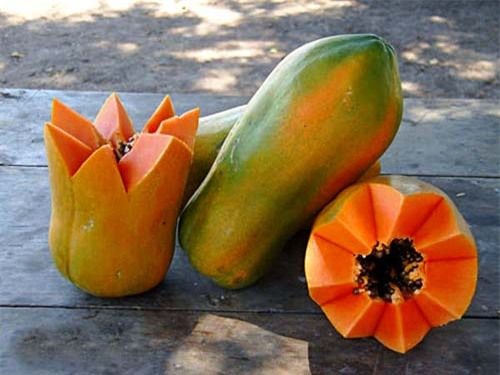 |
| The medicinal uses of papaya |
Cardiovascular protective effects
According to numerous studies, papaya is beneficial in preventing cardiovascular disease in people with diabetes and atherosclerosis, because it contains many antioxidants such as vitamins C, E, and A. These nutrients help prevent the oxidation of cholesterol, limiting the formation of plaque caused by cholesterol oxidation that adheres to the walls of blood vessels, causing blockages and hindering blood flow.
The vitamin E and C in papaya combine to create a compound called paraoxonase, also known as an enzyme, which can inhibit the oxidation process that produces bad cholesterol (LDL).
In addition, papaya is rich in fiber, which helps lower blood fat (cholesterol), and the folic acid in papaya helps convert homocysteine into essential amino acids such as cysteine or methionine.
If not metabolized, homocysteine can directly damage blood vessels, and if levels are high, it can even cause heart attacks or strokes.
Improve digestive health.
For a long time, science has studied and discovered that eating papaya has a positive effect in preventing colon cancer. The fiber in papaya can "collect" disease-causing toxins in the colon and protect healthy cells from infection.
In addition, papaya contains nutrients such as folate, vitamin C, beta-carotene, and vitamin E, which help reduce the risk of colon cancer, especially by preventing free radicals from damaging DNA. Therefore, increasing papaya consumption is also a very good way to prevent colon cancer for everyone.
Anti-inflammatory drugs
Papaya contains two important compounds called papain and chymopapain, which are two effective protein-digesting enzymes that help reduce inflammation and heal injuries.
In addition, papaya contains a lot of vitamins C, E and betacarotene, so it has the highest level of anti-inflammatory effects. Therefore, people with asthma and rheumatism are often prescribed these nutrients by their doctors.
Boost your immune system.
The vitamin C and A provided by papaya help the immune system function better, especially in preventing common illnesses that occur during seasonal changes, such as colds, flu, and ear infections.
Preventing the risk of macular degeneration.
In its early 2009 issue, the American Journal of Ophthalmology (AOO) recommended that people eat three servings of fruits and vegetables daily (each serving equivalent to a small bowl) to significantly reduce the risk of age-related macular degeneration (AMRD).
Specifically, it reduces the risk by up to 36% compared to those who only eat 1-1.5 servings. The best fruits to prevent ARMD include carrots and papaya, as these are rich in vitamins C, A, E, carotenoids, and antioxidants. Papaya can be prepared in salads, juices, or eaten raw.
Reduce the risk of developing rheumatoid arthritis.
Although high doses of vitamin C may increase the risk of osteoporosis, vitamin C found in foods, especially papaya, can protect the body against polyarthritis, a form of rheumatoid arthritis.
This conclusion is based on a study of over 20,000 people who consumed vitamin C found in papaya and found it to be highly effective in preventing inflammation that causes pain in patients.
Enhance lung function
People who smoke or live in environments with secondhand smoke should supplement their diet with foods rich in vitamin A, including papaya.
According to research by experts at the University of Kansas (USA), this nutrient helps prevent lung infections and emphysema caused by carcinogens and benzopyrene in cigarette smoke, which increase the risk of vitamin A deficiency in humans, especially the elderly.
Prostate cancer prevention medication
Regularly consuming foods rich in lycopene, such as papaya, and drinking green tea regularly can have a positive effect on men in reducing the risk of prostate cancer.
This is the latest recommendation published in the February issue of the Asia-Pacific Journal of Clinical Nutrition, based on a study of 130 prostate cancer patients undergoing treatment at 274 hospitals.
Accordingly, those who habitually drink green tea reduce their risk of developing the disease by 86% compared to those who do not drink green tea, while those who habitually eat foods rich in lycopene such as papaya, tomatoes, carrots, dark grapes, watermelon, etc., reduce their risk of prostate cancer by up to 82% compared to the group who do not eat these foods.
Therefore, nutrition experts recommend that men increase their consumption of the two aforementioned foods to reduce the risk of developing the disease.
According to Health and Life


