
Little-known uses of honey
Honey, also known as honeycomb honey or white honey, is a precious natural product, serving as both food and medicine. It is familiar to people all over the world, with numerous applications in daily life and medicine.
Honey contains a lot of protein. According to Traditional Chinese Medicine, honey has a sweet taste, is neutral in nature, and is non-toxic; it acts on the lung, spleen, and large intestine meridians; it has the functions of detoxifying, moistening the lungs, promoting bowel movements, and regulating other medicinal ingredients. It is also used to detoxify drugs, including aconite and processed aconite root.
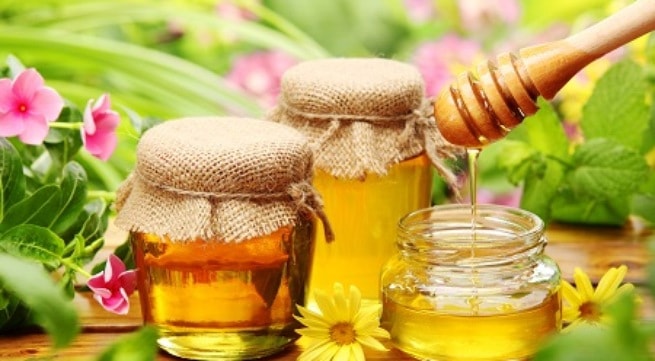 |
| Honey is not only a food but also a medicine that strengthens the body's immune system and prevents many diseases. |
Honey can be used alone or in combination with other medicinal herbs to treat various ailments: coughs, excessive phlegm, dry coughs, sore throats due to acute and chronic pharyngitis, tonsillitis, etc. It can also treat constipation due to weak spleen and stomach, sluggish bowels due to reduced intestinal motility, and epigastric pain. Furthermore, honey is used to treat hypertension, insomnia, and nerve pain. In addition, honey is used as a valuable auxiliary ingredient in the preparation of some medicinal herbs and is included in the composition of many traditional Chinese medicine preparations. Because of its two main functions of strengthening the spleen and benefiting the lungs, honey is used as a valuable auxiliary ingredient in the preparation of medicines that act on the spleen and stomach meridians.
To enhance the spleen-tonifying effects of herbs like Atractylodes macrocephala and Astragalus membranaceus, sliced Atractylodes macrocephala or Astragalus membranaceus are soaked in honey according to a specific ratio (usually 2-2.5 kg of honey diluted with a certain amount of clean water is used for every 1 kg of dried herb slices). The honey is then mixed thoroughly with the herb slices, left to soak for about an hour until the honey is evenly absorbed, and then roasted until the outside of the slices turns a deep yellow color, is not sticky to the touch, and has a sweet, slightly bitter taste and characteristic aroma (Atractylodes macrocephala) or a sweet taste and characteristic aroma of honey (Astragalus membranaceus). Thus, Astragalus membranaceus and Atractylodes macrocephala are used in the ancient formula *Bổ trung ích khí thang*: Astragalus membranaceus (honey-coated) 200g, licorice 100g; Angelica sinensis, Codonopsis pilosula, Atractylodes macrocephala (honey-coated), tangerine peel, Cimicifuga dahurica, Bupleurum chinense, each 60g, along with honey to form pills, 15g per dose. It has the effect of tonifying the spleen and stomach, tonifying qi and raising yang. Used to treat spleen and stomach weakness, prolapse of vital energy, weakness, poor appetite, loose or watery stools; and prolapsed conditions such as gastric prolapse, uterine prolapse, hemorrhoids, rectal prolapse, etc.
To enhance the lung-meridian-targeting effects of herbs such as Ephedra, Mulberry bark, and Loquat leaf, honey is also used in the preparation of these herbs. For example, Ephedra is a herb that induces sweating, reduces fever, relieves cough, phlegm, and asthma; it is used in cases of common colds, high fever, and inability to sweat. However, when wanting to utilize the cough-relieving and asthma-relieving effects of Ephedra in cases of chronic bronchitis with symptoms of frequent coughing, excessive phlegm, and shortness of breath, Ephedra is prepared with honey (as described above). When prepared with honey, Ephedra's diaphoretic effect is reduced, while its cough-relieving and asthma-relieving effects are increased.
According to Health and Life


