
The fight against Ebola: More dangerous than you think.
(Baonghean) - Last week, the World Health Organization (WHO) announced that only 30 cases of Ebola had been detected in African countries. This number is considered the lowest in the past year. Does this mean that Ebola is no longer a global health crisis as it was once known in Africa?
(Baonghean) - Last week, the World Health Organization (WHO) announced that only 30 cases of Ebola had been detected in African countries. This number is considered the lowest in the past year. Does this mean that Ebola is no longer a global health crisis as it was once known in Africa?
Once a hot topic in the media in the fall of 2014, the Ebola outbreak has now seemingly disappeared from Western television programming.
Furthermore, the US Centers for Disease Control and Prevention's prediction that the number of Ebola patients would reach 1.4 million by 2015 also did not come true.
Although some cases of Ebola appeared in the United States and Spain, the Ebola outbreak was mainly concentrated in three West African countries: Liberia, Guinea, and Sierra Leone. Therefore, Ebola did not become a global pandemic as many had feared.
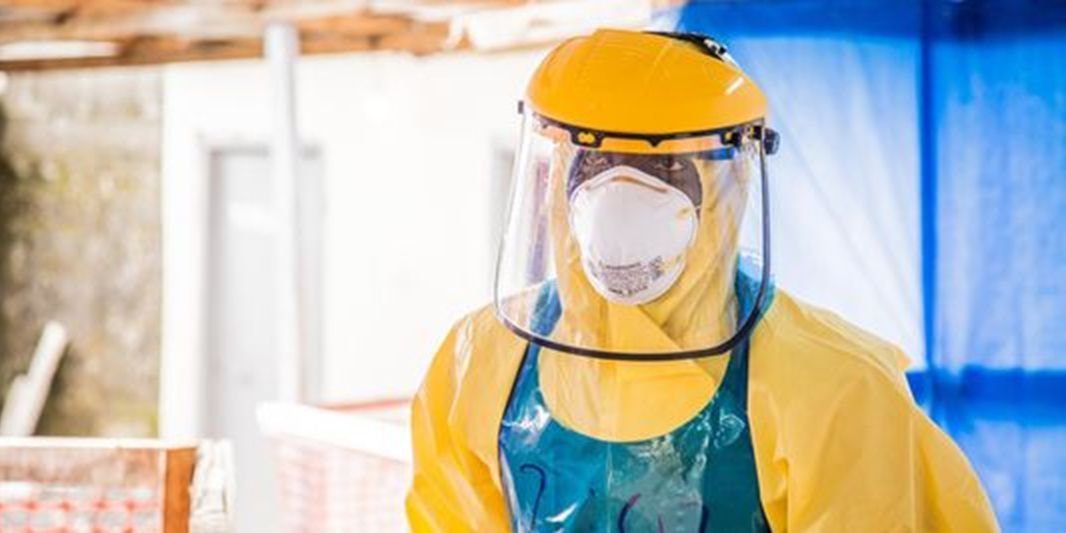 |
| Medical staff at an Ebola treatment center in Freetown. Photo: AP/Michael Duff |
However, according to a study in the US, the actual number of Ebola infections is 2.5 times higher than what the WHO reports, as well as the statistics from health agencies in affected countries.
Accordingly, the reported figure of 10,000 deaths from Ebola is only the tip of the iceberg. Researchers predict that there were even more than 30,000 deaths from Ebola in 2014. Of those, approximately 10,000 deaths were in Liberia, 15,000 in Sierra Leone, and 5,000 in Guinea.
This information is further substantiated by the recent confirmation from the Red Cross that over 14,000 people suffering from the disease were buried without reporting it to the authorities.
As a consequence, the Ebola epidemic reduced the average life expectancy of people in Liberia and Sierra Leone by five years. The average life expectancy in Liberia is no more than 58 years, while in Sierra Leone it is no more than 52 years.
According to assessments, the damage caused by the Ebola epidemic is no different from the civil war that took place in these two countries in 2001-2002. Furthermore, in just a few months, the Ebola epidemic completely wiped out the achievements of the public health systems that these countries had attained over the past 10 years.
Although not as severe as in 2014, the consequences of Ebola have almost completely erased the progress that Africa's health sector has made in recent years. Therefore, it is perhaps too early to conclude that Ebola is no longer a global health crisis.
Chu Thanh
(According to Le Monde)


