
Towards the end of 2024, Nghe An province is forecast to experience heavy rain, flash floods, and landslides.
(Baonghean.vn) - Weather patterns are becoming increasingly extreme, with many unusual occurrences. To provide clearer information on forecasts and warnings, a reporter from Baonghean.vn interviewed Mr. Le Duc Cuong, Deputy Director of the North Central Region Meteorological and Hydrological Station.
Reporter:Recently, the weather in Nghe An province in particular, and the whole country in general, has been frequently changing, with intense heat, hailstorms, and tornadoes occurring often. How do you assess this situation?
Mr. Le Duc Cuong:It can be affirmed that this is an unusual phenomenon. The weather in recent years, especially from 2022 to the first months of 2024, in Nghe An province in particular and the North Central region in general, has been erratic, with frequent heatwaves, cold spells, hailstorms, and tornadoes, and with increasing intensity.
There are many reasons for this situation, but the most direct cause is the influence of the ENSO transition from the warm El Niño phase to the neutral phase, and it is predicted to soon transition to the cold La Niña phase. Specifically, from now (May 2024) to the end of June 2024, El Niño is predicted to transition to a neutral state with a probability of 80-85% and quickly transition to La Niña around July-August 2024 with a probability of 60-65%.
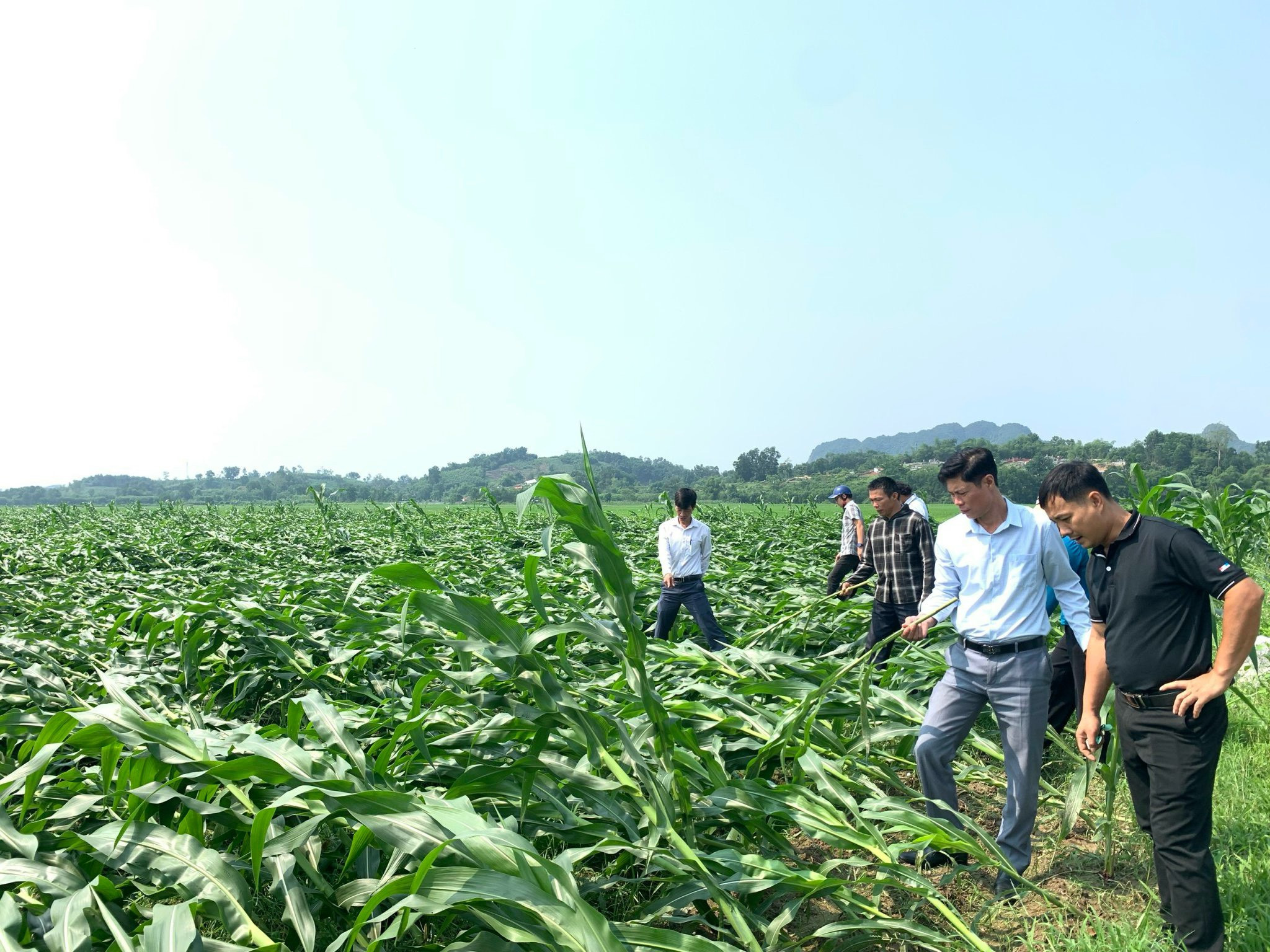
Thus, within just one year, we experience three phases of ENSO, which can cause unusual weather fluctuations. Phase transitions during the changing seasons and global warming disrupt weather patterns, leading to more extreme heatwaves and more erratic hailstorms and tornadoes. The clearest manifestation of this can be seen in the first three months of 2024, when the province, especially the western mountainous areas, experienced numerous hailstorms and tornadoes that damaged houses, uprooted trees, destroyed crops, and caused tens of billions of dong in losses.
Launchpill:What is the likely weather pattern in the coming period, especially from now until the end of 2024?ThoseWhich localities and regions in Nghe An need attention?close, frequentthanmore informationweather forecasttoHow to prevent damage?
GrandfatherPearDuc CuongAs mentioned above, 2024 is predicted to be a year with increasingly complex and unpredictable natural disasters. This is because it marks the transition of the ENSO phase from El Niño to La Niña. Therefore, while the first half of the year may see more frequent and intense heatwaves than the multi-year average, with many record-breaking absolute high temperatures; and drought conditions are predicted to continue locally or widely due to rainfall shortages, the second half of the year will see different developments. Rainfall is predicted to be higher than the multi-year average, with frequent and intense floods leading to natural disasters such as flash floods and landslides.
According to our data, the remaining months of 2024 are forecast to see storms and tropical depressions likely to affect Nghe An province, concentrated towards the end of the storm season (September-November), with unpredictable developments. This is also the peak of the rainy season, with rainfall predicted to be 10-30% higher than the multi-year average. Therefore, people need to be wary of the risk of flash floods and landslides in small rivers and streams, on slopes, and flooding in low-lying areas. During thunderstorms, there is a possibility of tornadoes, lightning, hail, and strong gusts of wind.

In particular, the western mountainous region of Nghe An province needs the most attention. This is because it has a high density of rivers and streams, steep slopes, and frequently experiences flash floods, landslides, and hailstorms. However, due to the limited understanding of meteorology and hydrology among the local population; houses built without proper sturdiness near steep slopes; and the slow dissemination of information and media to the mountainous districts, significant losses of life and property have occurred.
To help people obtain accurate weather forecasts, under the direction of relevant authorities, we will continue to coordinate with agencies to provide the fastest and most timely information. Typically, phenomena such as storms and tropical depressions can be predicted 3-7 days in advance, or even longer. For extreme events like tornadoes and hailstorms, predictions can be made up to 1-2 hours in advance. Therefore, understanding these warnings is crucial in minimizing damage.
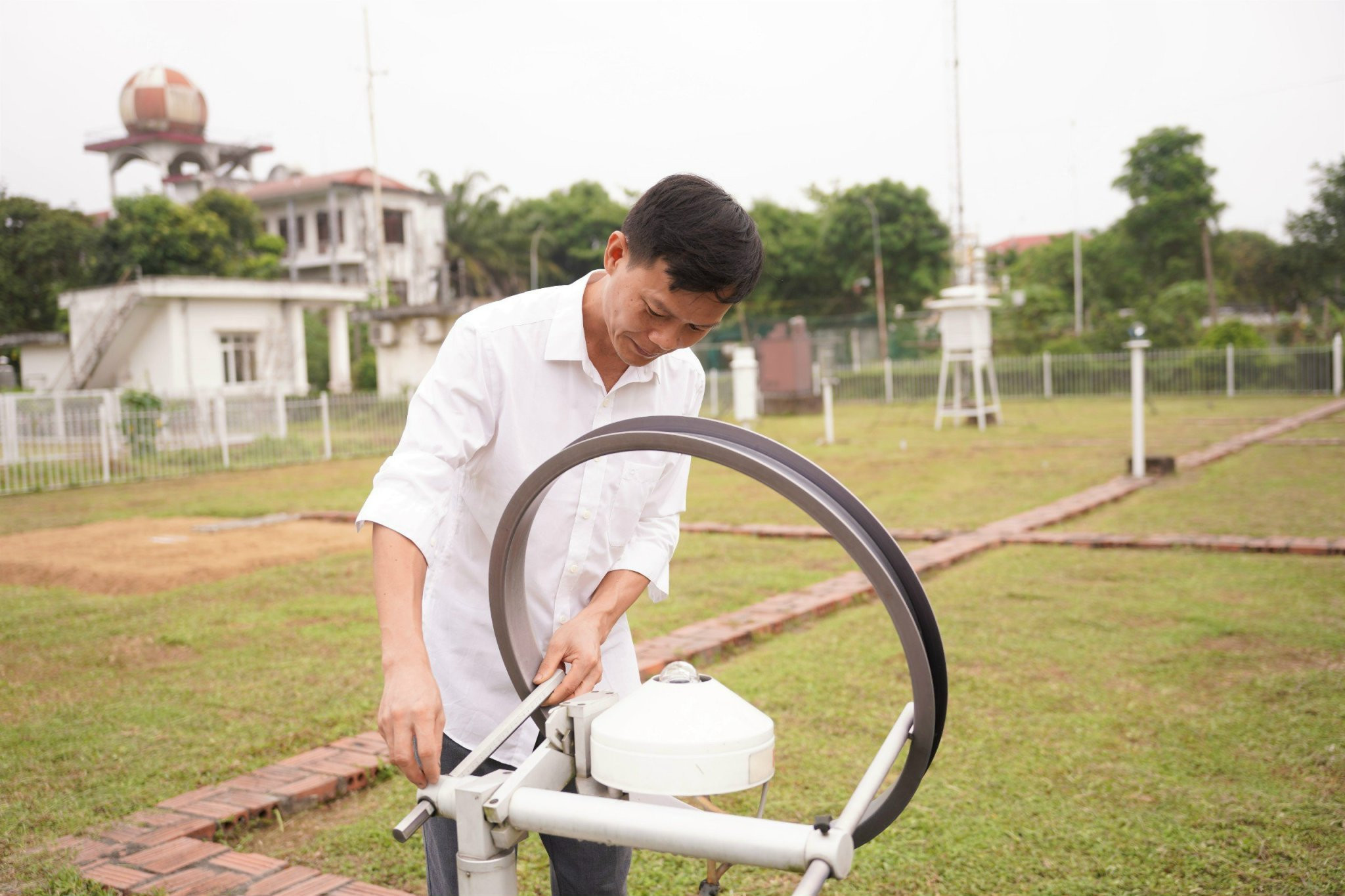
We utilize a system of meteorological and hydrological monitoring stations. Specifically, the North Central region has 26 traditional stations and 56 automated stations. In addition to the assistance of machinery and technology, human resources play an indispensable role. We maintain a 24/7 on-call system, divided into three shifts, without exception. Furthermore, during periods of unusual weather phenomena, the number of personnel on duty is increased, and forecasting and warning activities are carried out more frequently.

Reporter:Compared to previous years, how has the climate in Nghe An and the Central region changed? Are these changes a manifestation of climate change and the effects of the greenhouse effect?
Mr. Le Duc CuongThat's right. In recent years, under the impact of climate change and global warming, there has been an increase in both the frequency and intensity of natural disasters such as storms, floods, droughts, El Niño and La Niña phenomena... What's noteworthy is that these types of natural disasters are increasingly occurring in a way that defies conventional patterns. Previously, these phenomena occurred seasonally and followed a pattern, but now they appear year-round, even in months considered rare.
Specifically, according to statistics from 2015-2022, on average each year there are about 9-10 typhoons and 3-4 tropical depressions, about 22-23 cold spells, 10-11 periods of widespread heavy rain, 9-10 heatwaves, 17-18 thunderstorms, tornadoes, hailstorms, etc. Particularly in the last two years, many record numbers have continuously appeared. This was a heatwave in many places, with temperatures exceeding historical records in the past 40 years, such as: Tuong Duong 44.2°C (May 7, 2023), Quy Chau 43.2°C (May 6, 2023), Tay Hieu and Do Luong 43.2°C (May 6, 2023), Vinh City 42.9°C (April 30, 2024), Quynh Luu 42.0°C (April 30, 2024)...
Reporter:CWeather forecasting and disaster warning are extremely important. Furthermore, in his opinion, what should people do in the long term to prevent and mitigate the negative impacts of natural disasters and adapt to climate change?
Mr. Le Duc Cuong:To effectively implement this, in addition to continuing to deploy forecasting methods that have proven effective in recent years, we will continue to focus on strengthening early and long-term forecasting and warning systems. Specifically, our goals include extending the forecast period and issuing bulletins earlier to give disaster prevention agencies and the public more time to prepare and develop early disaster response plans.
However, alongside the efforts of the meteorological and hydrological sector, the cooperation of all levels of government, agencies, and the entire community is also needed. The tasks are numerous and involve every organization, individual, and country in the world. But first and foremost, to proactively respond, each person needs to continuously raise awareness about climate change and its impacts on human life..
To prevent and mitigate the negative impacts of extreme weather events and adapt to climate change, people need to develop action plans to respond to future climate change. More immediately, to prevent damage and adverse effects caused by weather, people need to regularly monitor weather forecasts and warnings on various media outlets, newspapers, and radio to proactively take preventative measures. Simultaneously, authorities at all levels should organize awareness campaigns and disseminate meteorological and hydrological knowledge to relevant sectors and the public to enhance awareness and responsibility regarding disaster prevention, proactive response, and adaptation to climate change.
Reporter:Thank you very much, sir!


