
Sweet potato specialty
1. My maternal relatives are having a wedding for their eldest son. Several housewives and a chef hired from a famous restaurant in town are huddled together discussing the wedding banquet menu. They still insist on the main dishes: boiled chicken, stir-fried tamarind, steamed shrimp, grilled meat, and bone broth... However, there are differing opinions regarding the vegetable platter. The chef believes it's essential to include a platter of five types of vegetables: green squash, yellow gourd, red carrots, purple yam, and brown sweet potato. He argues that these are inexpensive, nutritious, and a trendy dish at large banquets in upscale restaurants and hotels today. These five vegetables and fruits have five colors, are visually appealing, and delicious. Some spiritualists believe these five represent the five elements: metal, wood, water, fire, and earth, corresponding to the five vital organs: heart, liver, spleen, lungs, and spleen. Others argue that serving potatoes at a wedding banquet is too old-fashioned. Who would serve potatoes to wedding guests? But then everyone agreed that there had to be a plate of vegetables and fruits.
It's easy to talk about it, but actually doing it is difficult. The family assigns people to prepare and gather the food. Chicken, tamarind, shrimp, squid... can be ordered immediately. However, the plate of vegetables and fruits is hard to find. There's plenty of zucchini, gourds, carrots, and purple sweet potatoes at the market. Only sweet potatoes are a bit scarce. It's sweet potato season, but no market in the countryside has them, so we have to send someone to a large supermarket in the city to find them. Fresh sweet potatoes in the South cost 17-18 thousand dong/kg. It's a bit expensive (fresh sweet potatoes are 3-4 thousand dong more expensive than the best quality rice at the market), but having them for the meal is a blessing.
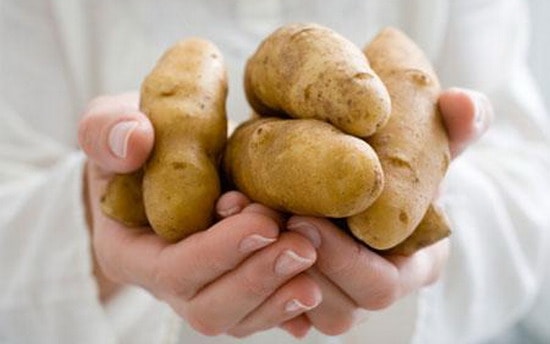 |
Then the wedding day arrived, and the feast was laid out. It must be said that thanks to the chef's skillful cooking and presentation, the dishes looked clean, elegant, and piping hot... many praised them. The most praised dish was the "five fruits," with each table having a full plate, and everyone ate it all up. Some even asked for another plate, but still finished it. It turned out that during wedding season, some people had to work continuously, so their stomachs were already saturated with high-protein dishes. Now, with just simple root vegetables and fruits dipped in sesame salt, everyone enjoyed it. Thus, common dishes like squash, gourds, and sweet potatoes became specialties. Some said: Specialties are foods of the poor in the countryside and mountains that the rich in the city haven't had, or rarely have had, to eat.
2. In our homeland of Nghe An, those in their 30s, 40s and older, those born before the Doi Moi (Renovation) period (1986), few forget the common sweet potato, often eaten with corn, a staple food that sustained generations. Many scholars and mandarins, who achieved academic success, remember their childhood days of "sweet potatoes for breakfast, sweet potatoes for lunch, sweet potatoes for three meals a day." Sweet potatoes nourished adults, enabling production and fighting. Sweet potatoes even feature in songs: "Old mother tills the land to plant sweet potatoes, raising her children to fight the enemy day and night" or "We strive to plant rice and sweet potatoes on the mountain slopes to the riverbank." My friends now are elderly men and women; none of them didn't grow up on the sweet potatoes and rice of their villages. The writer Phan The Phiệt, in an essay about a cultural region of Nghe An, recounts a story about a soldier returning from the Dien Bien Phu battle who, following the call of the Party and President Ho Chi Minh, took up a hoe and went into the forest to clear and cultivate land. During the first harvest, remembering President Ho Chi Minh, he composed a folk song: "These sweet potatoes are so delicious, President Ho Chi Minh! I wish you would come visit and I would offer them to you."
I also have a memorable experience of a sweet potato feast on the beach in Dien Thanh. In the summer of 1964, I went to Phu Dien to take the university entrance exam. I stayed at a friend's house by the sea. My friend's family lived on the coastal beach and worked as fishermen. In the evening, to prepare for his father going to sea, his mother cooked a huge pot of mashed sweet potatoes. When the sweet potatoes were cooked, she scooped them out, mashed them, and put them in a large basket for the fishermen. The rest she served to my siblings and me. At that time, sweet potatoes were the main food source for fishermen who went out to sea. Mashed sweet potatoes with beans, eaten with grilled herring, was something I'll never forget. At home, my mother also cooked mashed sweet potatoes for me every day, but none of them tasted as good as that. The sweetness of the sweet potatoes and the savory flavor of the grilled herring lingered on my tongue. Last year, during a trip to Vientiane with writers from Nghe An province, when visiting the Golden Pagoda, I could smell the delicious aroma of roasted sweet potatoes as soon as I reached the temple gate. Craving sweet potatoes, after visiting the temple, many tourists lined up in long queues to buy roasted sweet potatoes. It turns out that the Laotians also "cherish" roasted sweet potatoes.
In my homeland of Nghe An, we have labor and land, so why are fresh sweet potatoes still more expensive than rice? With so many plans and resolutions discussed about raising livestock and growing crops, why do we still have to import sweet potatoes from the South to serve at restaurants, hotels, and weddings? Don't think that discussing paperwork, land planning, and labor organization related to sweet potato production is a step backward in civilization. Instead, consider that dishes made from sweet potatoes—boiled sweet potatoes, sweet potato soup, sweet potato salad, sweet potato cakes, sweet potato cakes—are both rustic and sophisticated, embodying the soul of an entire region. Why not honor sweet potatoes as a specialty, as they have always been and continue to be?
Ngo Duc Tien


