
The Great Victory of Spring 1975: The historical and contemporary value of the culture of national defense.
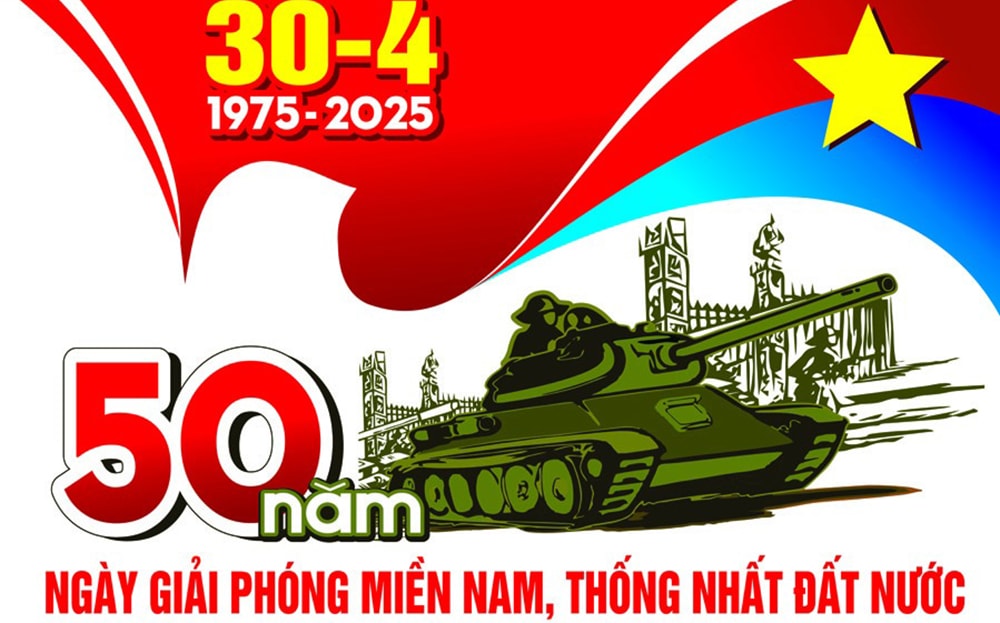
Through the Spring Offensive and Uprising of 1975, culminating in the Ho Chi Minh Campaign, our people gloriously ended the extremely arduous and sacrificial revolutionary war that lasted 30 consecutive years (1945-1975), completely defeating the "two great imperial powers" of French colonialism and American imperialism.
…Years have passed, but the victory of our people in the resistance war against the US, for national salvation, will forever go down in the history of the nation as one of the most glorious chapters, a shining symbol of the complete triumph of revolutionary heroism and human intellect, and will go down in world history as a great victory of the 20th century, an event of immense international significance and profound historical relevance…”(1).
Through the Spring Offensive and Uprising of 1975, culminating in the Ho Chi Minh Campaign, our people gloriously ended the extremely arduous and sacrificial revolutionary war that lasted 30 consecutive years (1945-1975), completely defeating the "two great imperial powers" of French colonialism and American imperialism.
During that long struggle, the great victories on the battlefields of North and South Vietnam forced the US imperialists to sign the Paris Agreement (January 27, 1973) and withdraw their troops. Our people fulfilled Uncle Ho's instruction to "drive the Americans out" and mobilized the total strength of the nation to "overthrow the puppet regime."
The mission was to "defeat the puppet regime" so that "North and South could be reunited."(2)With the wise and creative decisions of our Party, which were recorded in the historic meetings of the Central Committee and the Politburo in 1973, 1974, and 1975.
First, there was the 21st Conference (July 1973) discussing the direction and tasks of the revolution in the South, and the 22nd Conference (December 1973) discussing the restoration and development of the North's economy and support for the South. From these conferences, the Politburo established the "Central Team" to develop the plan for liberating the South, directly under the Central Military Commission. From September 30, 1974, to October 8, 1974, the Politburo held an expanded meeting with the participation of comrades from the Central Military Commission and the General Staff of the People's Army. After analyzing the situation from all angles, the Politburo affirmed: “…This is the most favorable opportunity for our people to completely liberate the South, achieving complete victory for the national democratic revolution, and at the same time, helping the people of Laos and Cambodia complete their national liberation. There will be no other opportunity besides this one…”(3).
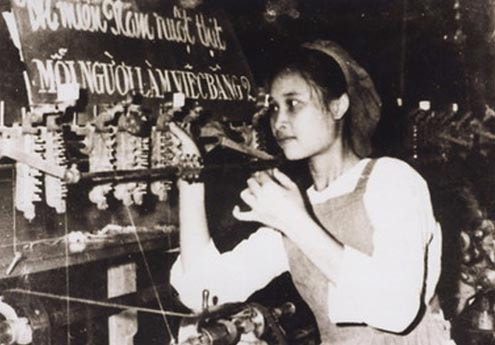
Based on that guiding principle, the Spring of 1975 was the Spring when the whole nation went to war. In the North, "everyone worked twice as hard," "tilting the granaries and baskets" to feed the battlefield, enabling large-scale battles, resulting in "surplus rice and surplus soldiers." The recruitment drive at the end of 1974 alone equaled the combined recruitment numbers of 1971, 1972, and 1973.
Across battlefields from Quang Tri to Ca Mau, the Spring of 1975 became the "Spring of going to war." On December 13, 1974, the Central Military Commission decided to launch the Highway 14 Phuoc Long Campaign. This was a large-scale operation, a combined arms operation at the Corps level. The campaign's objective was to liberate Phuoc Long province, connecting the Ho Chi Minh Trail to Bu Gia Map, and closing in on the liberated zone right up to the Saigon stronghold. This was a "strategic test" to confirm the assessment that the US could not return to the Southern battlefield when our army launched a general offensive and uprising.
Our simultaneous offensives pushed the Saigon regime into a strategically passive position. Seizing the opportunity, from December 8, 1974, to January 7, 1975, the Politburo held its second meeting, attended by key leaders from the Southern battlefields, Zone V, Zone IV, and the General Staff. Three major issues were thoroughly discussed and clarified: 1. Comparison of our forces with the enemy; 2. Requirements to be achieved within two years (1975-1976); 3. Specific tasks on the battlefields.
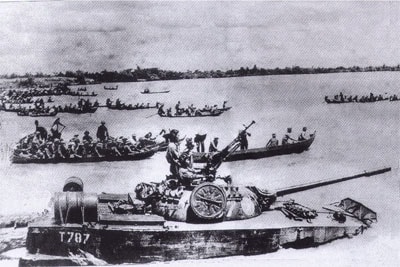
The conference provided daily updates on victories on the battlefields, including the complete liberation of Phuoc Long town, the seizure of over 15,000 tons of ammunition and artillery of all kinds, and the opening of a new direction: "using enemy weapons to fight the enemy."
The conference made several important observations: 1. We have gained the initiative on the battlefield; 2. We have consolidated and perfected our strategic position from North to South; 3. We have successfully built mobile main army units in mountainous and forested areas, and gathered strategic reserves in important locations; 4. We have improved the situation in rural areas and plains, preparing for a mass uprising; 5. The political struggle under the slogans of peace, independence, and national reconciliation is gaining momentum; 6. Progressive people around the world are strongly supporting us; 7. The situation of the puppet army and government, after the US withdrawal and the inability of the US to return, is difficult to maintain.
The conference concluded: “We must urgently prepare in all aspects to successfully conclude the war of national liberation in 1975 or 1976. We must make every effort to achieve a decisive victory in 1975. That is a realistic possibility.”(4)At this conference, the General Staff's Draft Plan for the Liberation of South Vietnam (8th revised draft) was approved and supplemented with the option: When the opportunity arises, liberate South Vietnam in 1975.
The victory at Phuoc Long provided the theoretical and practical basis for the Politburo to conclude that the task of the entire Party, people, and army at this time was clearly defined: “Seize the historical opportunity, launch many comprehensive and consecutive campaigns, fight decisive battles, end the resistance war against the US, complete the national revolution and people's democracy in the South, move towards national reunification, lead the whole country towards socialism, move towards a general offensive and uprising, defeat the enemy in their most important stronghold in Saigon to end the war… Fighting this final battle is, first and foremost, the task of the military and political forces on the Southern battlefield, including the Saigon-Gia Dinh forces, and at the same time, the task of the army and people of the whole country, in which the main forces of the South and the main army units from other battlefields play a decisive role.”(6).
On January 9, 1975, the Central Military Commission held an expanded meeting to implement the Politburo's resolution and decided to launch the Central Highlands Campaign. On March 4, 1975, the Central Highlands Campaign commenced. The victory of this campaign, with the decisive blow at Buon Ma Thuot, fundamentally changed the balance of power, causing the enemy to fall into a passive, demoralized, and strategically disintegrating position, leading to their regrouping and defensive maneuvering on various battlefields.
In coordination with the Central Highlands Campaign from March 5th to 29th, our forces launched the Hue-Da Nang Campaign, inflicting heavy losses on the enemy in both personnel and equipment, and severely demoralizing them. On our side, the more we fought, the more experience we gained, capturing more weapons, equipment, and supplies from the enemy, significantly increasing the combat strength of our units. In particular, the local forces created favorable conditions for the main army units to quickly gain control of the battlefield.
In that context, on March 31, 1975, the Politburo met and concluded: “Strategically, our military and political strength is overwhelming; the enemy is facing the risk of collapse and annihilation… The time is ripe to launch a general offensive and uprising in Saigon - Gia Dinh. Based on that assessment, the Politburo decided: “We must seize this strategic opportunity, resolutely carry out a general offensive and uprising, and end the war of liberation in the shortest possible time. Ideally, it should begin and end in April of this year…”(6).
To fulfill that resolve, on April 7, 1975, General Vo Nguyen Giap - Secretary of the Central Military Commission and Minister of National Defense - sent a historic telegram to the units: "Speed, even greater speed! Boldness, even greater boldness! Seize every hour, every minute, rush to the front, liberate the South. Fight decisively and achieve total victory!"(7).
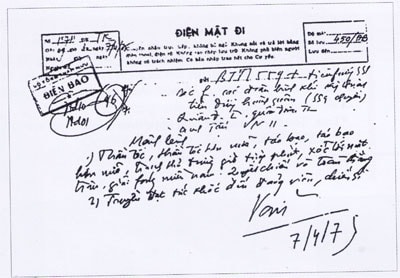
The telegram became a rallying cry, encouraging officers and soldiers on the battlefields to enthusiastically compete and achieve meritorious deeds. Combined arms units, various branches of the armed forces, along with numerous engineering, anti-aircraft, artillery, tank, and special forces units, surged towards key battlefields with soaring morale, fighting the enemy as they advanced, clearing paths and fighting the enemy simultaneously.
On April 6, 1975, the Command Headquarters for the Liberation Campaign of Saigon - Gia Dinh was established. The Politburo appointed Comrade Van Tien Dung as Commander, Comrade Pham Hung as Political Commissar, General Tran Van Tra as First Deputy Commander and Chief of Staff, and Comrade Le Duc Anh as Deputy Commander. (On April 22, General Le Trong Tan was added as Deputy Commander, and Lieutenant General Le Quang Hoa as Deputy Political Commissar).
On April 14, 1975, the Politburo and the Central Military Commission finalized the plan for the liberation of Saigon - Gia Dinh. The plan stipulated an attack on the enemy from five directions. The strategy was to launch a swift, decisive attack to completely annihilate the enemy forces, protect the people, and safeguard economic and cultural infrastructure. The Politburo stated: “…We have all the necessary conditions and capabilities to achieve complete victory in the shortest and quickest time…”(8).
On the same day, April 14, 1975, in accordance with the wishes of the people and the People's Armed Forces on the battlefields, the Politburo approved the proposal of the Campaign Command to name the offensive campaign to liberate Saigon - Gia Dinh as the Ho Chi Minh Campaign.
The good news that the campaign was named after our beloved Uncle Ho reached the entire army and people, creating new strength and strongly encouraging the bold and swift spirit of our army and people.
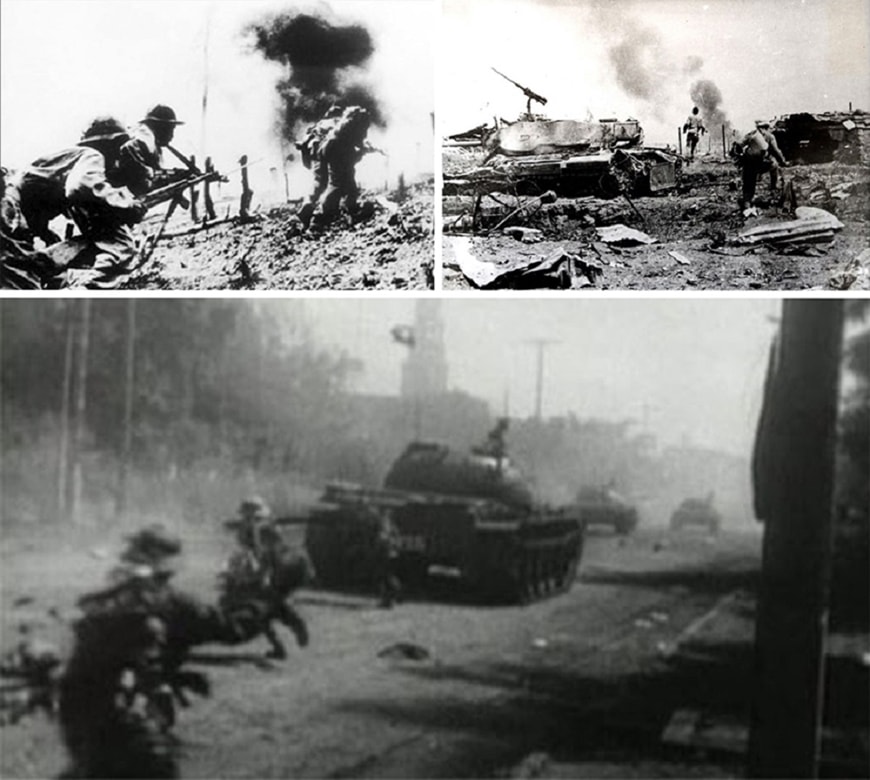
At 5 PM on April 26, 1975, the opening shots of the campaign named after President Ho Chi Minh began. From five directions—northwest, northeast, east, and southeast of Saigon—tank-led deep penetration units gradually crushed the enemy's outer defensive positions. The enemy was completely disorganized strategically. From the afternoon of April 28, 1975, the enemy's defensive lines no longer received orders and directives from headquarters, and arbitrary evacuations and retreats began.
On the night of April 28th, the Campaign Command ordered the troops in five directions to launch a simultaneous attack on Saigon, and simultaneously instructed Military Regions 8 and 9 to coordinate the offensive to liberate Southern Vietnam. At 5:00 AM on April 29th, 1975, our troops attacked enemy defensive positions in the inner city. The units were full of fighting spirit, determined to capture their assigned targets.
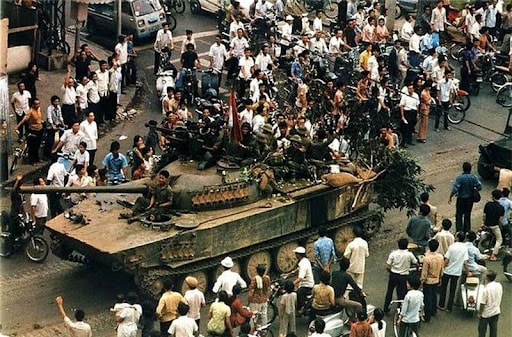
After three days and nights of continuous, daring, and swift fighting, our troops shattered the outer and inner defensive lines of the puppet army, disintegrating most of the enemy's elite main units, such as the 5th, 25th, 22nd, 18th, and 7th Divisions. On the morning of April 30, 1975, our troops surged into Saigon from all directions. The slogan "Advance! Complete victory will surely be ours" was written on the rims of helmets, tanks, and troop carriers. Our troops quickly captured the headquarters of the Air Force Command and the Parachute Division Command of the puppet regime, taking control of Tan Son Nhat Airport. At 10:45 AM, we attacked the Independence Palace, capturing the entire Saigon government and forcing President Duong Van Minh to declare unconditional surrender. At 11:30 AM, the revolutionary flag flew atop the Presidential Palace of the Saigon government. The Ho Chi Minh Campaign was a complete victory. The entire nation resounded with the triumphant anthem "As if Uncle Ho were present on this joyous day of great victory," marking the successful conclusion of the resistance war against the US, the complete liberation of the South, and the reunification of the Fatherland.
***
Assessing the great victory of Spring 1975, General Vo Nguyen Giap wrote:“In the course of the Vietnamese revolution since the founding of the Party, three glorious milestones stand out: the August Revolution, the Dien Bien Phu Victory, and the Great Spring Victory of 1975 – a victory that will forever shine brightly in history. Our people have created a miraculous story that seemed impossible in the 20th century. For the first time in history, a nation that was a semi-feudal colony with a slow-developing economy defeated major imperialist powers primarily through its own strength, setting an example of heroism, indomitability, intelligence, and talent before the whole world.”(9).
The concept of "one's own strength," as mentioned by the General, is precisely the culture of national defense of the Vietnamese people and nation. It is also something that, after more than 10 years, American strategists were finally able to explain: why a wealthy and powerful nation like the United States was defeated by a small, underdeveloped nation like Vietnam.
------------
Source:
(1) Documents of the 4th National Congress of the Communist Party of Vietnam - National Political Publishing House - Hanoi - 1976. p. 58.
(2) President Ho Chi Minh's New Year's greeting poem, Spring 1968
(3) VLawsuit against the Communist Party of Vietnam. National Political Publishing House - Hanoi, 2005 - p. 19
(4) Page 25
(5) Page 28
(6) Page 31
(7) Ho Chi Minh Campaign. People's Army Publishing House 1999, p. 148
(8) Page 150
(9) Page 175


