
Ensuring that people living near forests can make a living from the forest.
(Baonghean.vn) - TCreating conditions for people living near forests to live in harmony with the forest is a proposal fromMs. Cao Thi Xuan - Vice Chairperson of the National Assembly's Ethnic Council atWorking session with the People's Committee of Nghe An province on the morning of September 8th.
On the morning of September 8th, the National Assembly's Ethnic Council, chaired by Ms. Cao Thi Xuan - Vice Chairwoman of the Council, held a working session with the Provincial People's Committee on the situation and results of implementing policies and laws on land and forest allocation to ethnic minority and mountainous communities and households during the period 2006 - 2016. Representing Nghe An province were Mr. Le Minh Thong - Member of the Standing Committee of the Provincial Party Committee, Vice Chairman of the Provincial People's Committee, and representatives from relevant agencies, units, and sectors. |
According to the inventory results, Nghe An province currently has 25,843.03 hectares of forest and forestry land managed by village communities and 8,223.20 hectares of non-forested land. Of this, ethnic minority communities manage 25,199.52 hectares, and have been granted land use rights certificates for 10,695.63 hectares (accounting for 42.44 hectares).
However, due to the unclear legal status, the number of communities allocated forest land is limited, despite the vast area of forest land currently managed by the commune People's Committee.
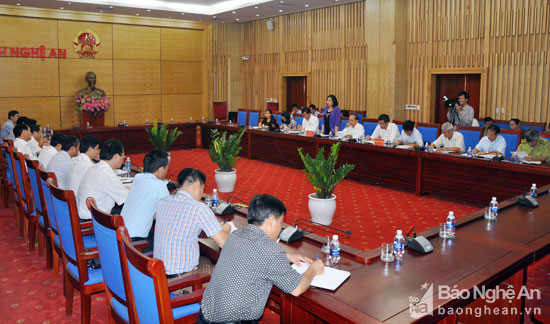 |
| Overview of the working session. Photo: Cong Kien |
As of 2016, the entire province had 183,425.07 hectares of forest and forestry land (including 181,060.76 hectares of forested land and 59,016.10 hectares of non-forested land) allocated to households. Of this, the area of forest allocated to ethnic minority households was 183,425.07 hectares (accounting for 76.4%). The number of ethnic minority households that had been allocated land was 112,401, of which 96,023 households had been granted land use right certificates.
The allocation of forest and forestry land to ethnic minority communities and households for management has contributed to fundamental changes in forest management, protection, and development. Between 2006 and 2016, the planted forest area increased by 65,284.1 hectares (from 88,282.1 hectares in 2006 to 153,566.2 hectares in 2016). Forest cover increased from 47.15% to 57% in 2016.
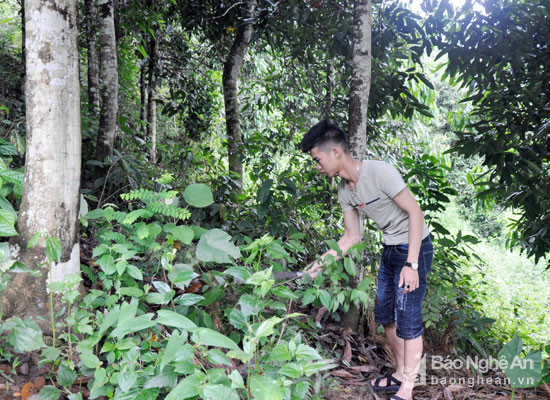 |
| Caring for cinnamon plantations in Hanh Dich commune (Que Phong district). Photo: Cong Kien |
The policy of allocating land and forests to communities and households is a sound solution for exploiting potential and promoting socio-economic development in ethnic minority and mountainous regions. Specifically, it mobilizes capital and labor to improve production efficiency, create raw materials for industrial development, and contribute to political stability, social order, and security.
However, land and forest allocation still faces shortcomings and weaknesses. In some areas, boundaries are not clearly defined and overlap, leading to conflicts and disputes. Some state-owned forest owners are allocated excessively large areas of forest, which they cannot fully manage, resulting in encroachment, while some families living on forest land still lack land for production...
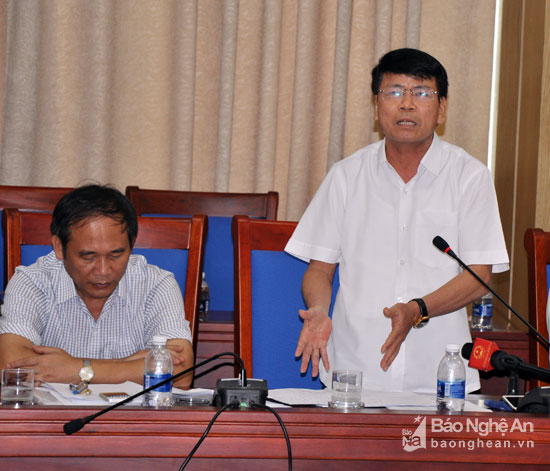 |
| Mr. Nguyen Tien Lam, Deputy Director of the Department of Agriculture and Rural Development, stated that there has long been a conflation between the allocation of land for forestry with natural forests and the allocation of land for reforestation, meaning the forest is separated from the land, making management difficult. (Photo: Cong Kien) |
Members of the monitoring team questioned and exchanged views on several issues surrounding the inefficient exploitation of a large amount of forest land by organizations and businesses, while people lack land for production. They also discussed the excessive amount of forest land reclaimed for large-scale projects, the planning of forest development linked to processing; the effectiveness, costs, and difficulties encountered; solutions to the shortage of production land and illegal land transfers; the funding for land and forest allocation and product output planning; the issuance of relevant documents; the content of public awareness campaigns; the employment of businesses leasing forest land; policies supporting forest development; and the human resources for forestry management and protection.
Discussing these issues, Mr. Nguyen Tien Lam – Deputy Director of the Department of Agriculture and Rural Development – stated that there has long been a conflation between allocating land for forestry with natural forests and allocating land for reforestation, meaning separating forests from land, making management difficult. In addition, policies supporting ethnic minorities are overlapping, causing obstacles in implementation. Regarding processing facilities, Nghe An currently has three large wood processing factories, which can ensure an outlet for raw wood products.
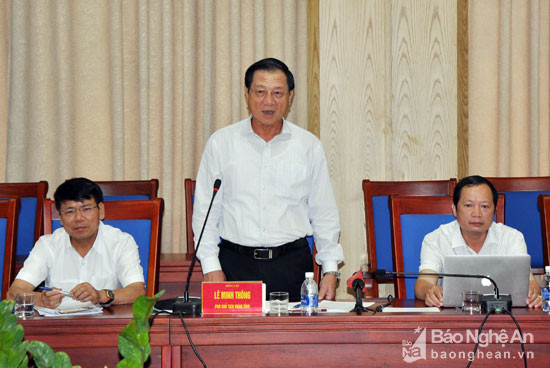
|
| Vice Chairman of the Provincial People's Committee Le Minh Thong receives feedback from the National Assembly's Ethnic Affairs Committee's monitoring delegation. Photo: Cong Kien. |
Representatives from provincial departments and agencies also exchanged views on the issuance of documents, dissemination of policies and guidelines; the process of land allocation and issuance of land use right certificates; plans for restructuring agricultural and forestry farms and agricultural and forestry companies, and reclaiming land for production by households, with priority given to ethnic minorities. Regarding this issue, the Government needs to issue specific directives and provide financial support for forest surveying and protection, ensuring that people living near forests can make a living from them.
Speaking at the meeting, Vice Chairman of the Provincial People's Committee Le Minh Thong acknowledged the feedback from the Supervisory Delegation and promised to direct the inspection and review of the situation to ensure better implementation of the land and forest allocation policy.
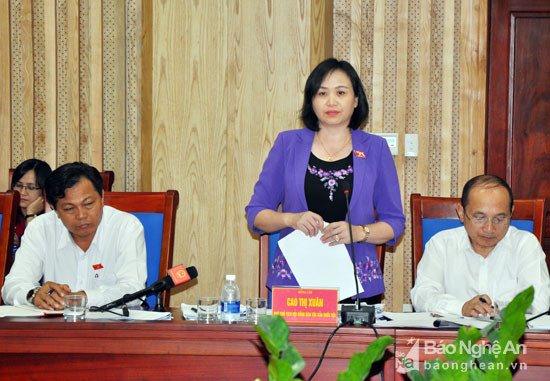 |
| On behalf of the monitoring team, Ms. Cao Thi Xuan requested that conditions be created to enable people living near forests to make a living in harmony with the forest. Photo: Cong Kien |
On behalf of the Supervisory Delegation, Ms. Cao Thi Xuan acknowledged the achievements Nghe An province has made in land and forest allocation. She also noted that the province should pay attention to the fact that the large area of forest land managed by commune People's Committees and agricultural and forestry farms is not being used effectively, while many households still lack land for production, leading to conflicts of interest.
Therefore, the province needs to direct relevant departments and agencies to review and find solutions to reclaim inefficient forest land for allocation to the people, allocate funds for surveying, promptly resolve land disputes, and promptly handle cases of law violations and illegal forest land transfers. In short, it is necessary to ensure that people living near forests can make a living from the forest.
Cong Kien


