
Effective community mobilization brings about transformation in villages.
Lush green vegetable fields, orchards laden with guava and pear trees, brightly decorated roads adorned with the Great Unity flag, village lighting, and sturdy new houses meeting the "three solid" criteria gradually replacing the dilapidated houses of the past… have given Tam Thai commune (in the highland district of Tuong Duong) a new look and renewed vitality.
"Think first, act later."
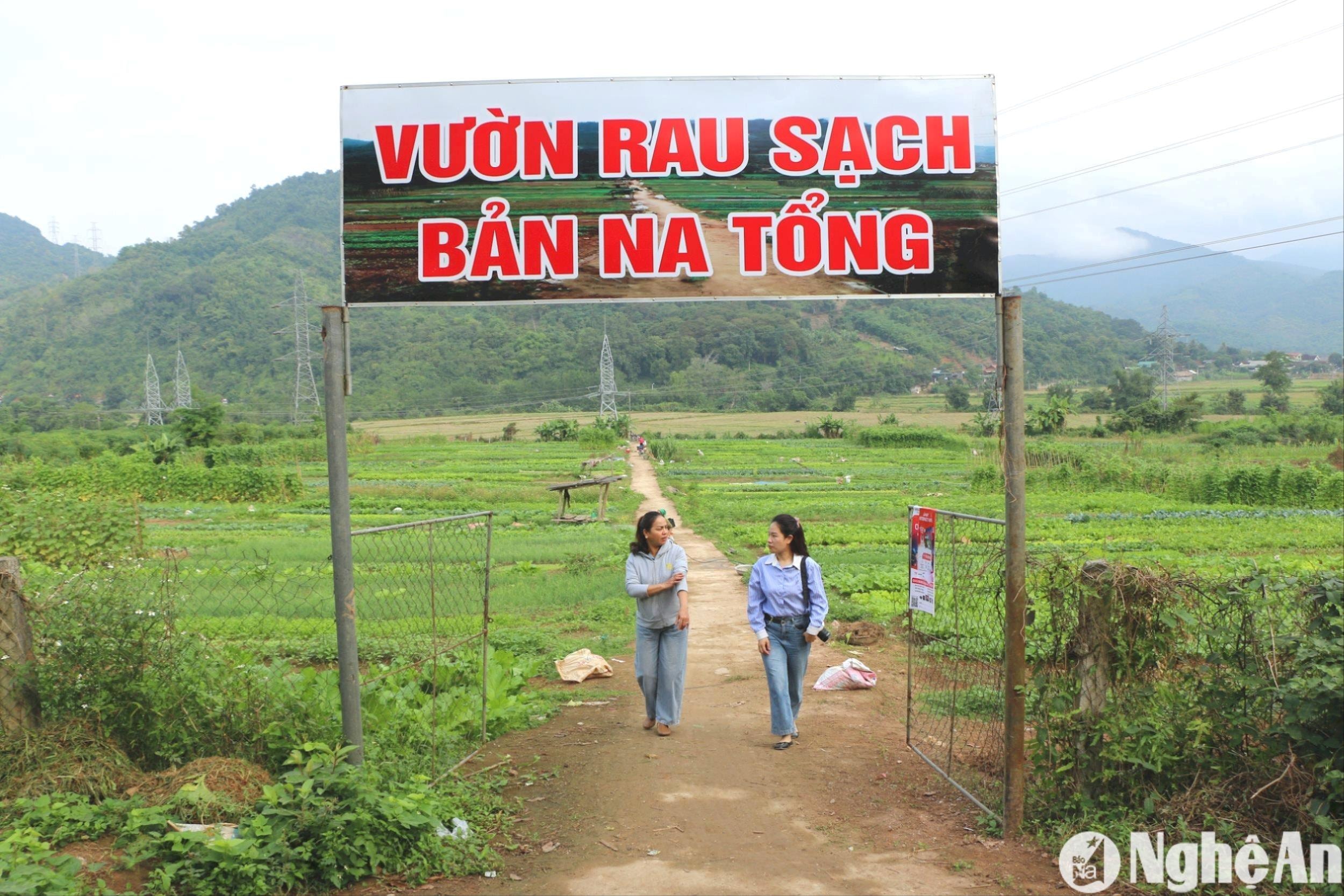
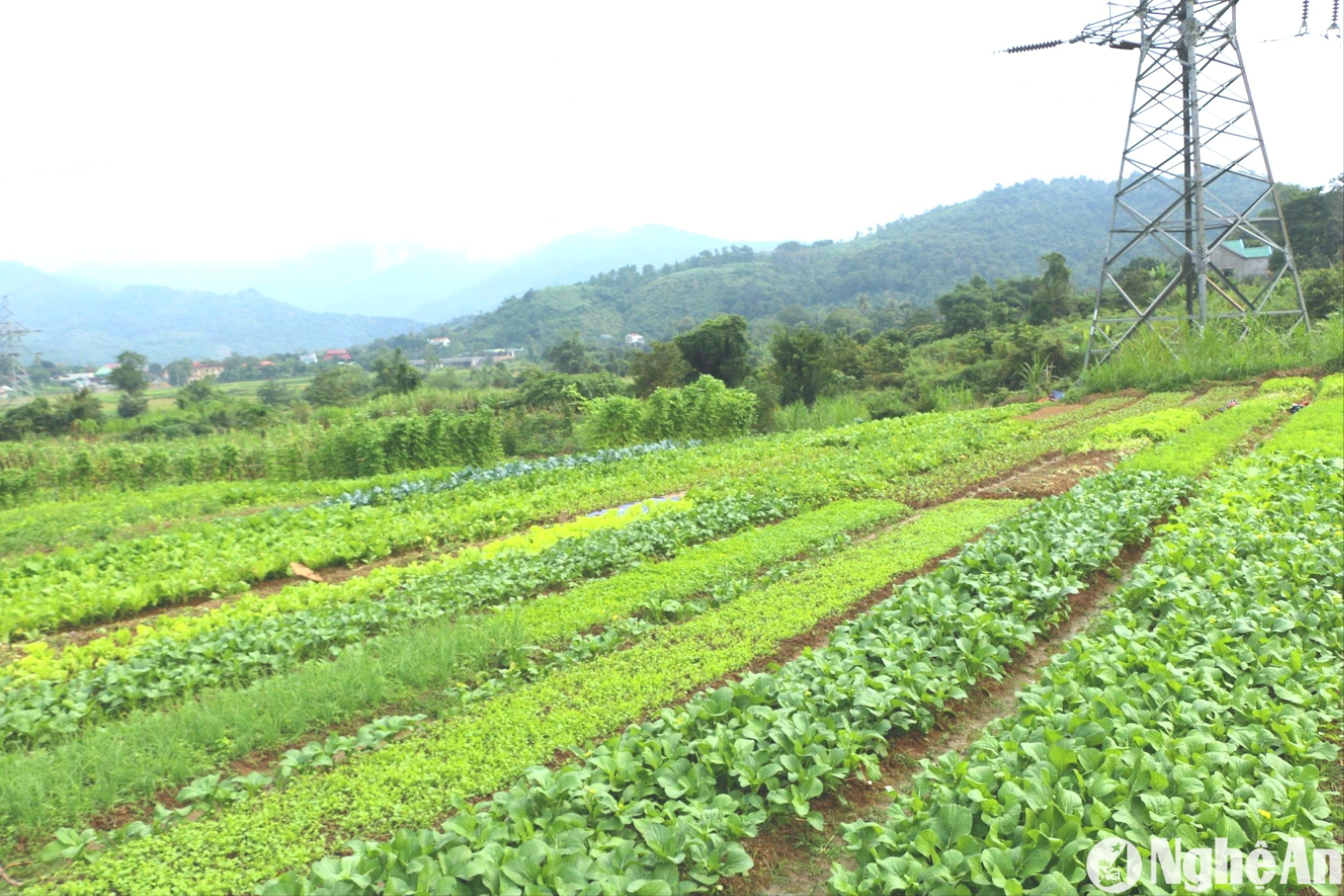
In the final days of the year, many households belonging to the Na Tong clean vegetable cooperative in Tam Thai commune are busy harvesting ripe vegetables to sell at the market or supply to traders, while also diligently tending to their vegetable plots for the Tet holiday.
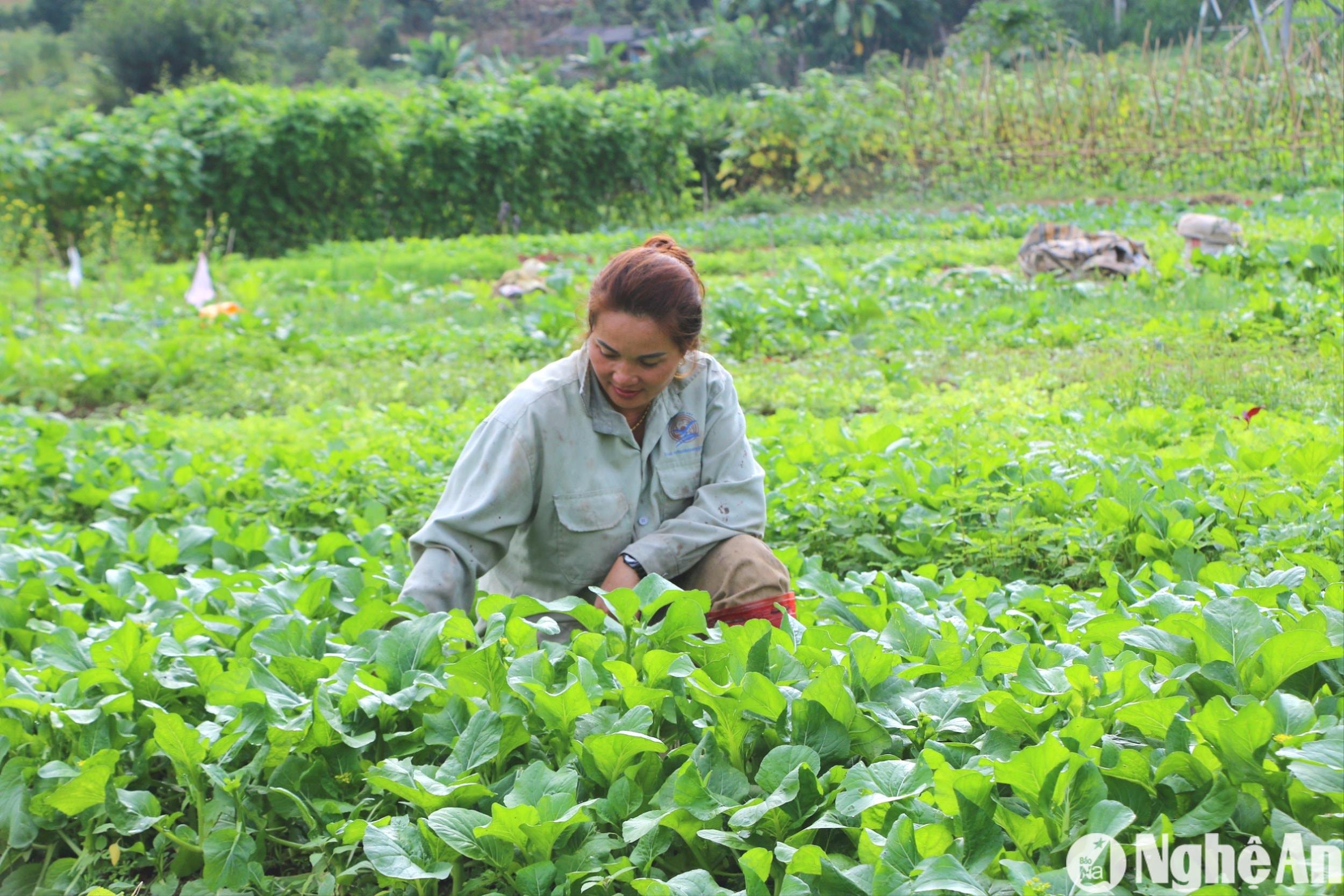
Ms. Cao Thi Than (born in 1980) is one of the first households to join the cooperative and has been involved in growing clean vegetables since 2015. With 900 square meters of land, in addition to local vegetables and fruits, Ms. Than has learned to grow vegetables suitable for the soil conditions and customer demand, such as various types of chili peppers, bringing in an average income of 25-30 million VND per year. Her produce is sold in markets throughout the district and shipped to Vinh City.
Mr. Lo Van Nhien, Chairman of the Na Tong Clean Vegetable Cooperative, said: Currently, 14 households are participating in the cooperative model with an area of 2.5 hectares. Previously, this area was reclaimed by people for small-scale rice farming, but with limited productivity.
Since 2015, after receiving guidance and technical training from the local government, the area has been planned for the cultivation of clean vegetables, creating a stable income for many households.
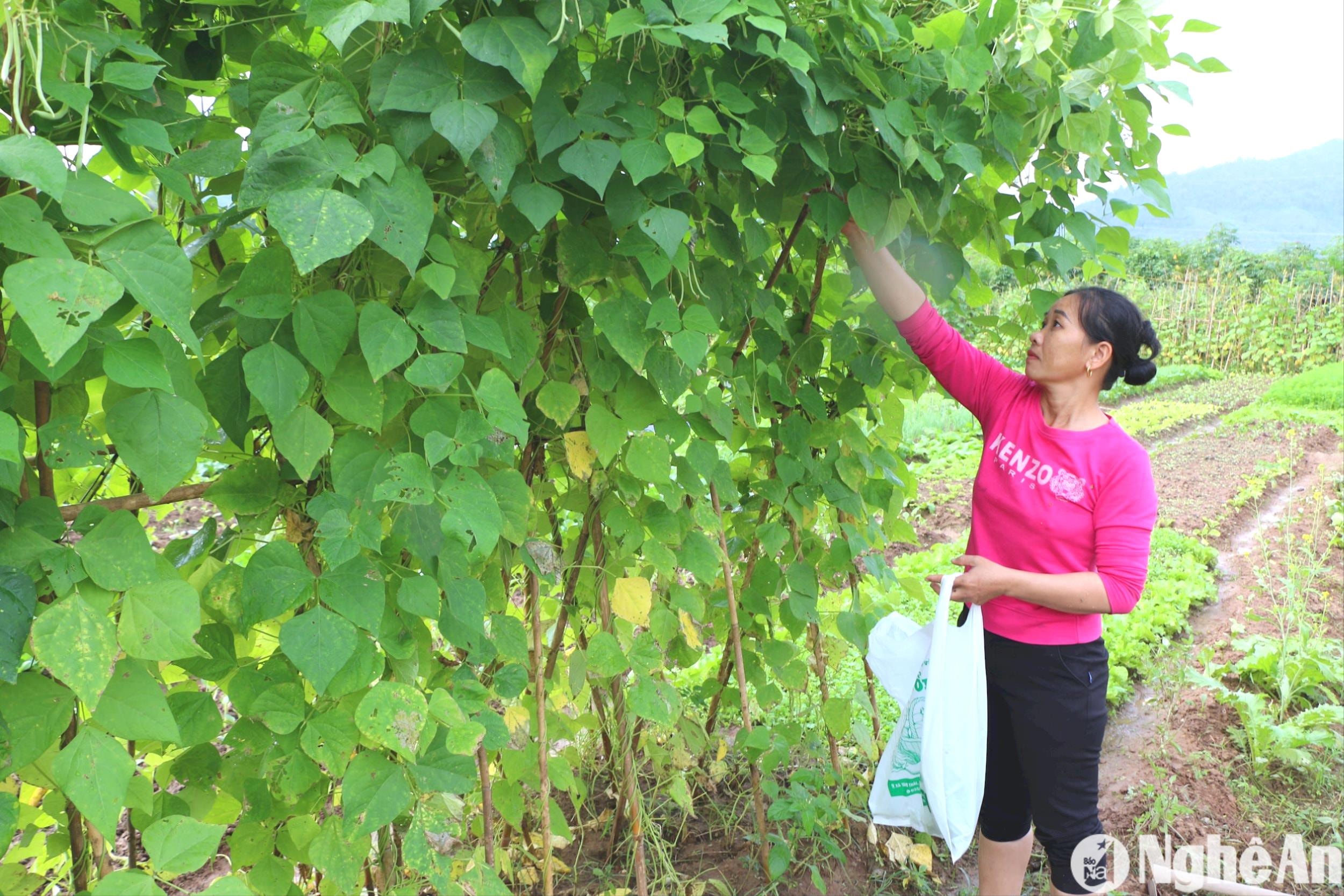
The cooperative grows a diverse range of seasonal vegetables and fruits (cabbage, beans, cucumbers, onions, coriander, kohlrabi, cabbage, and various native leafy vegetables...) and the farmers cultivate them using the "four no's" method (No herbicides; No pesticides; No chemical fertilizers; No growth stimulants), ensuring safety for consumers.
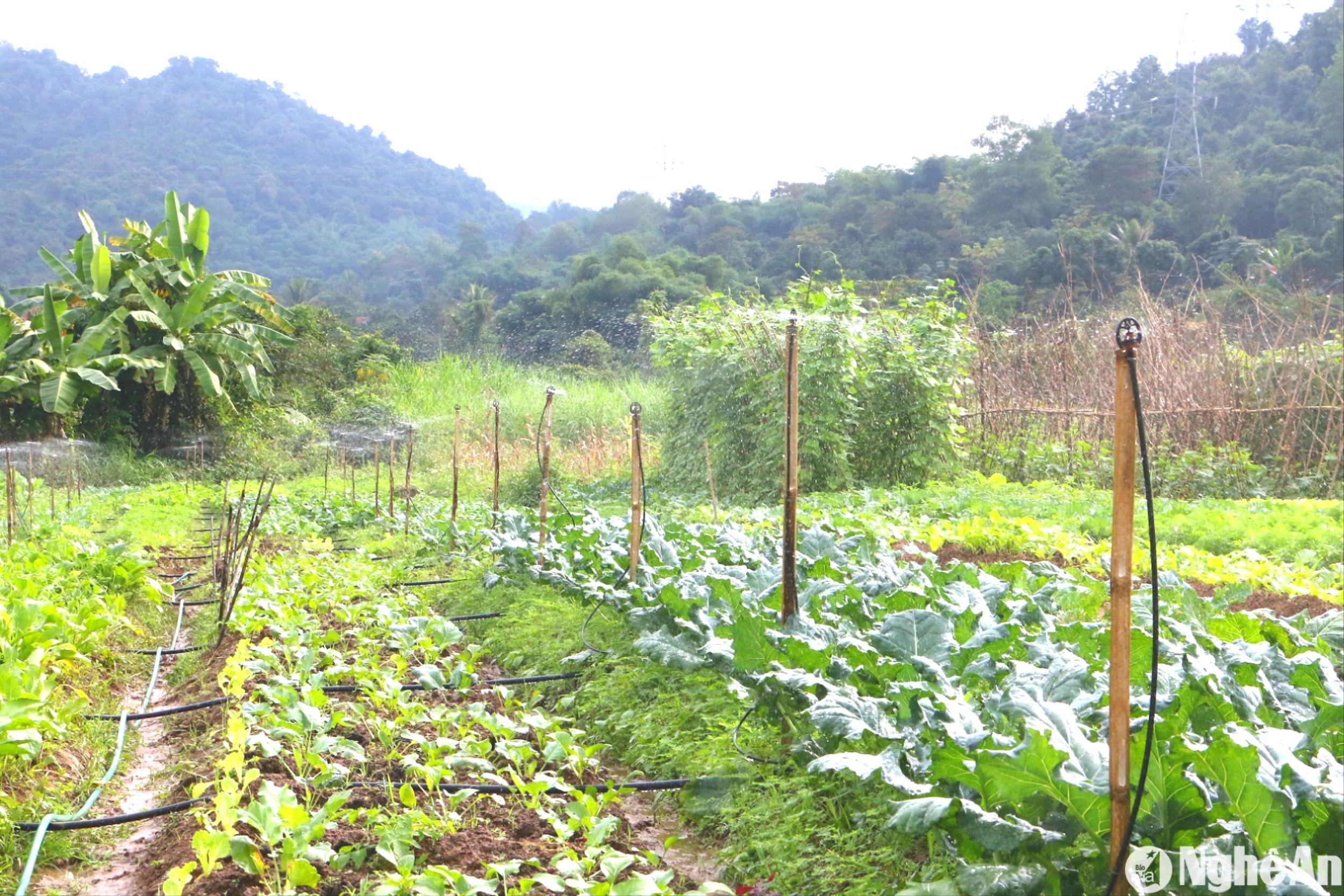
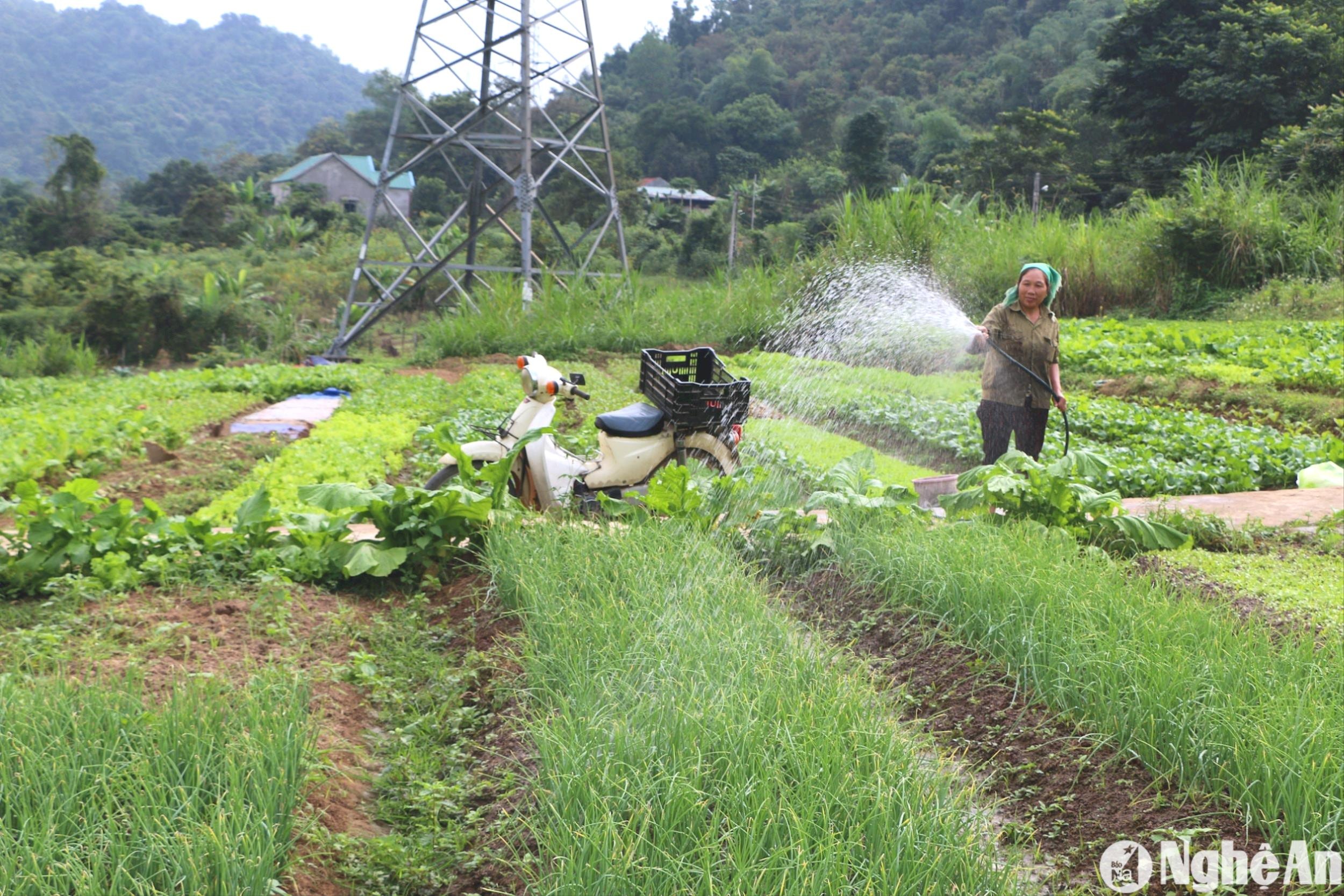
Accordingly, to fertilize vegetables and minimize the use of chemicals, each vegetable-growing household prepares a pit of animal manure. The manure is composted using microorganisms with natural materials such as straw, betel leaves, and animal waste. The composting time is 30 days to ensure that the materials decompose into nutrient-rich humus.
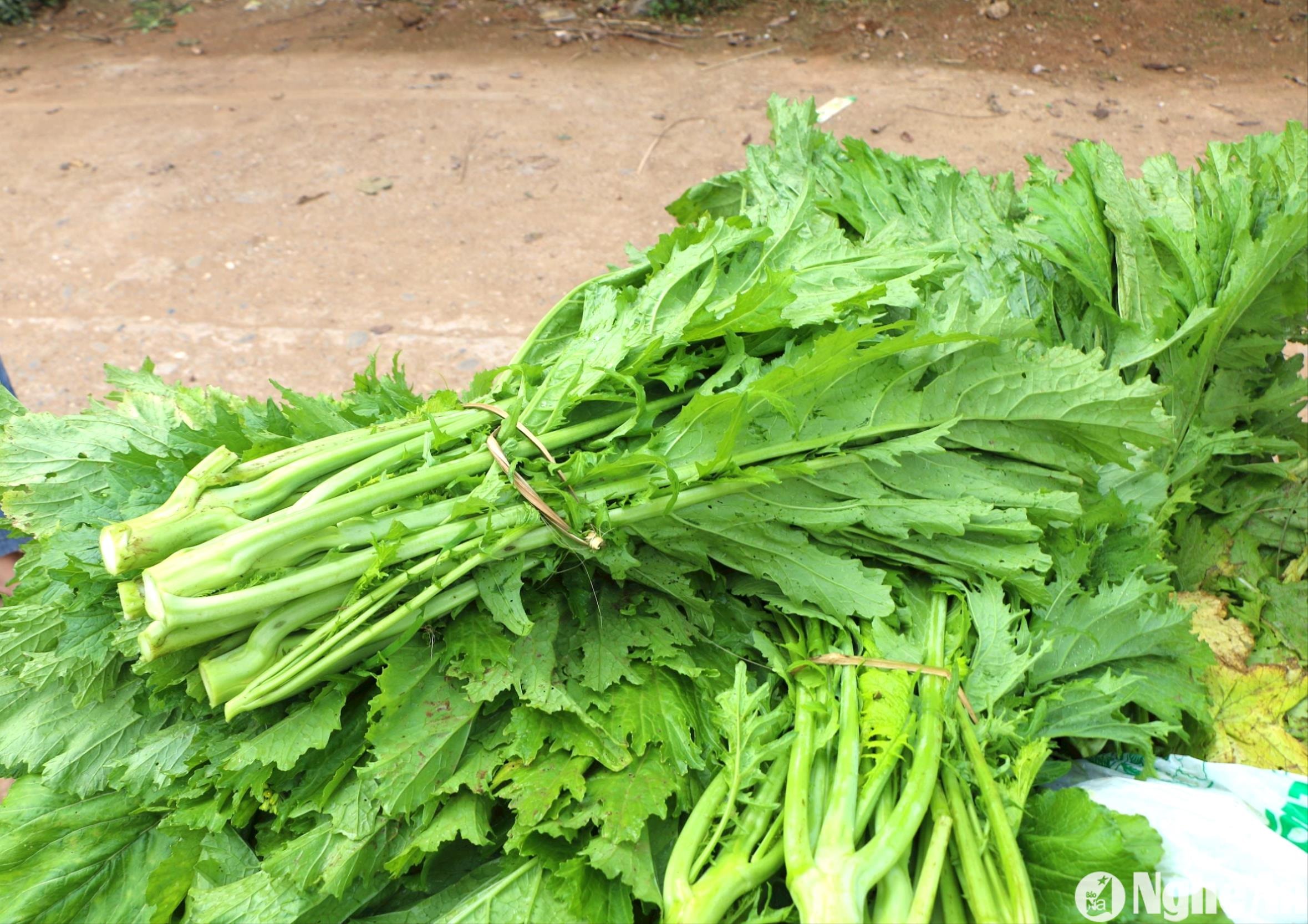
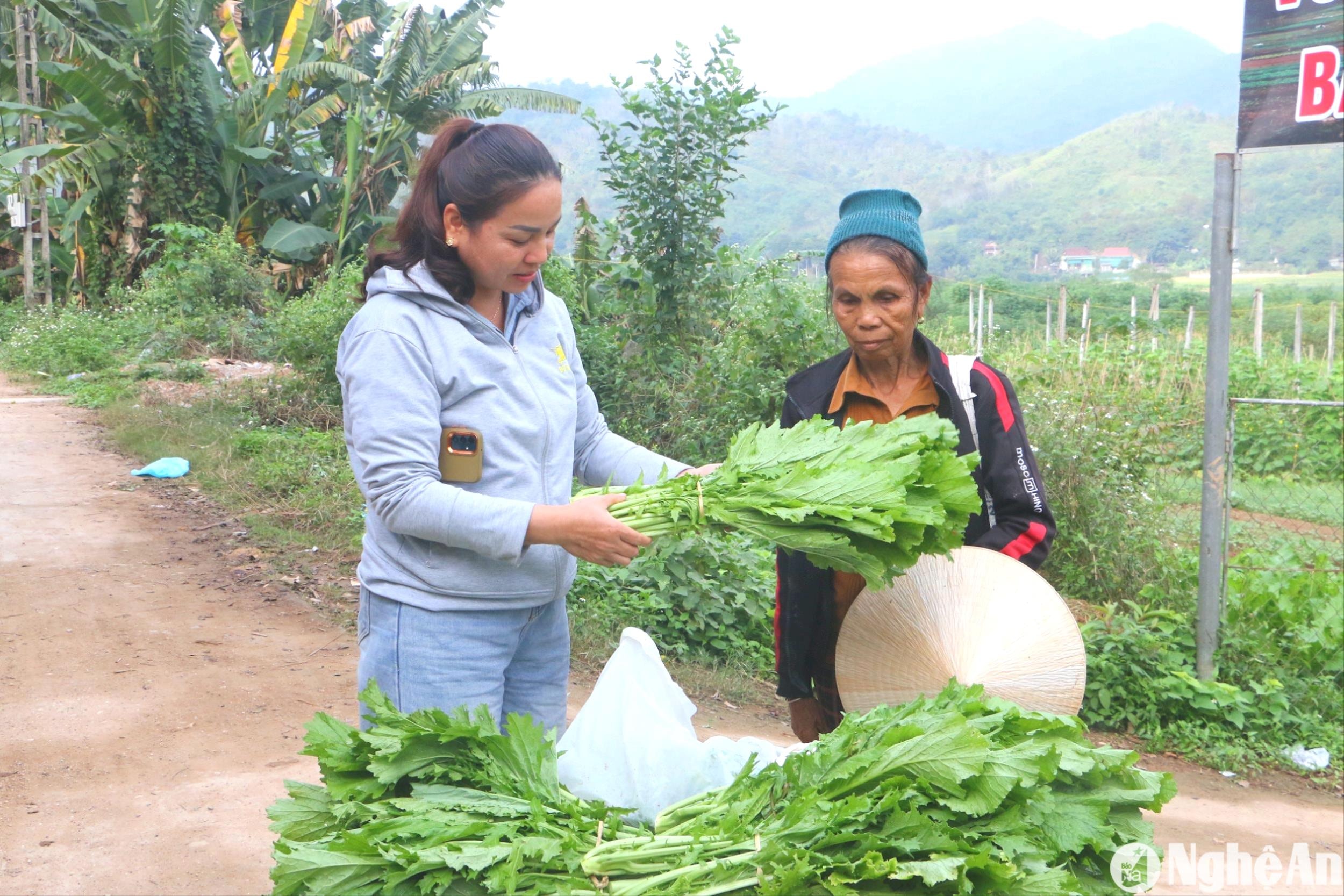
Ms. Vang Thi Hanh, 70 years old, from Na Tong village, said: "Growing clean vegetables is more hard work, but it's more popular with consumers. Although my family only has four small vegetable plots, it still provides a stable income. During peak seasons like last year's Tet holiday, we earned about 10 million VND from cabbage, carrots, kohlrabi, etc."
Tam Thai is a mountainous commune located approximately 9.5 km southeast of Tuong Duong district center along National Highway 7A. The commune comprises 9 villages with 5,025 inhabitants and 1,245 households (98% of whom are ethnic minorities including Thai, Khmu, and Tay Pong).
Although the commune has achieved the New Rural Area status, the lives of many households still face difficulties due to a lack of knowledge about applying science and technology to production, low income; some officials, Party members, and people lack the self-improvement mindset, still clinging to conservative thinking, waiting and relying on the policies and regulations of the Party and the State.
Therefore, according to the Chairman of the People's Committee of Tam Thai Commune, Lo Thanh Tuan: Among the 7 key tasks and 4 breakthroughs of the Resolution of the Commune Party Congress...XXV,term 2020-2025 Agriculture has been identified as a key driver in economic development and in maintaining and developing the new rural areas of the locality.

Based on the principle of "think first, act later," local Party committees and authorities have focused on directing the entire political system to propagate and mobilize the people to change their thinking, leading to voluntary action in developing livestock farming, transforming crop structures, and building household economic models..
This includes the requirement that cadres and Party members must take the lead so that the people can follow. Many economic models have been implemented in villages and hamlets with high efficiency.
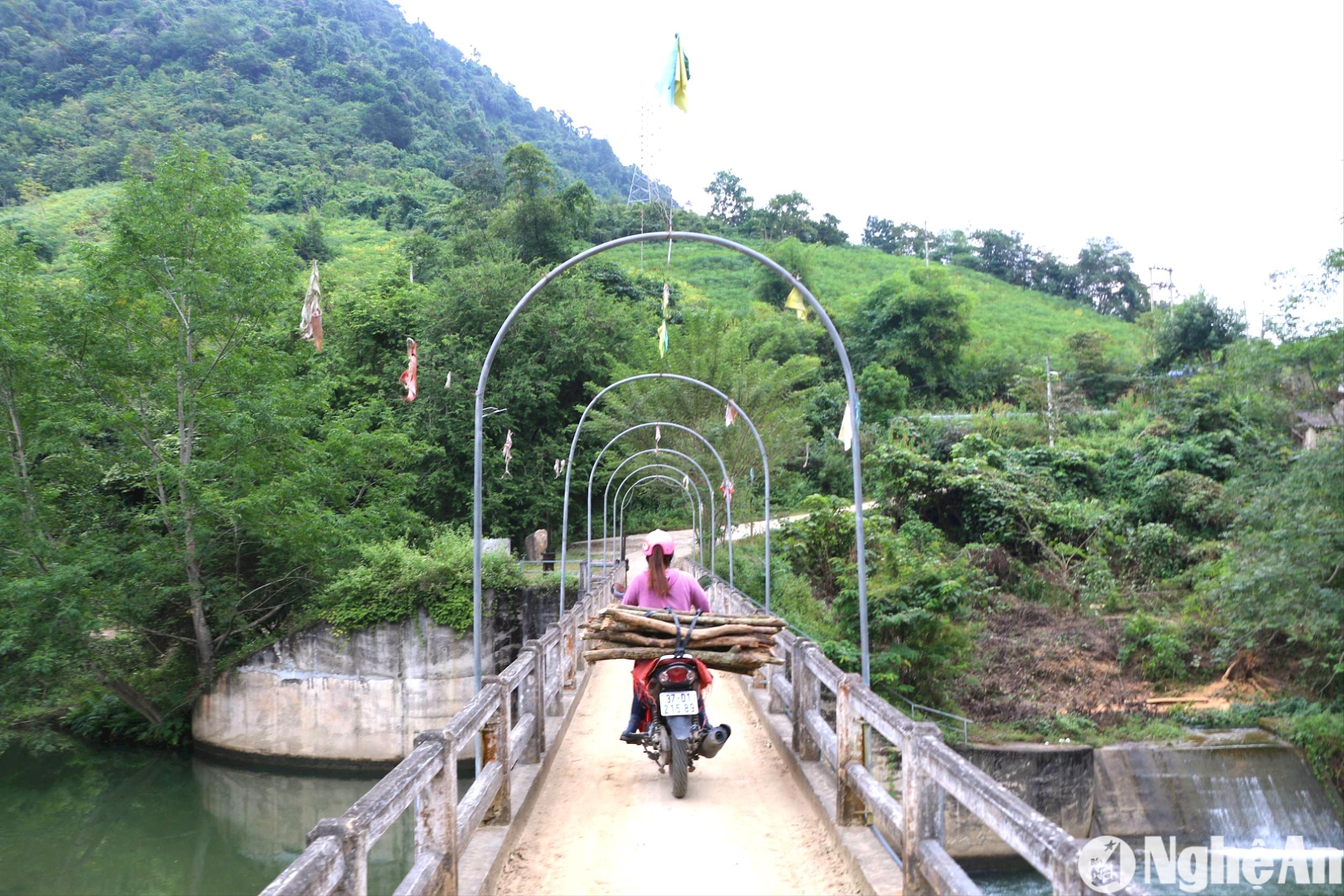
A typical example is the organic Taiwanese pear guava farming model in Dooc Bua village – one of the most disadvantaged areas in the commune, with a rather isolated location and limited transportation access, as there is only a small bridge wide enough for one-way motorbike traffic; cars have never been able to reach the village.
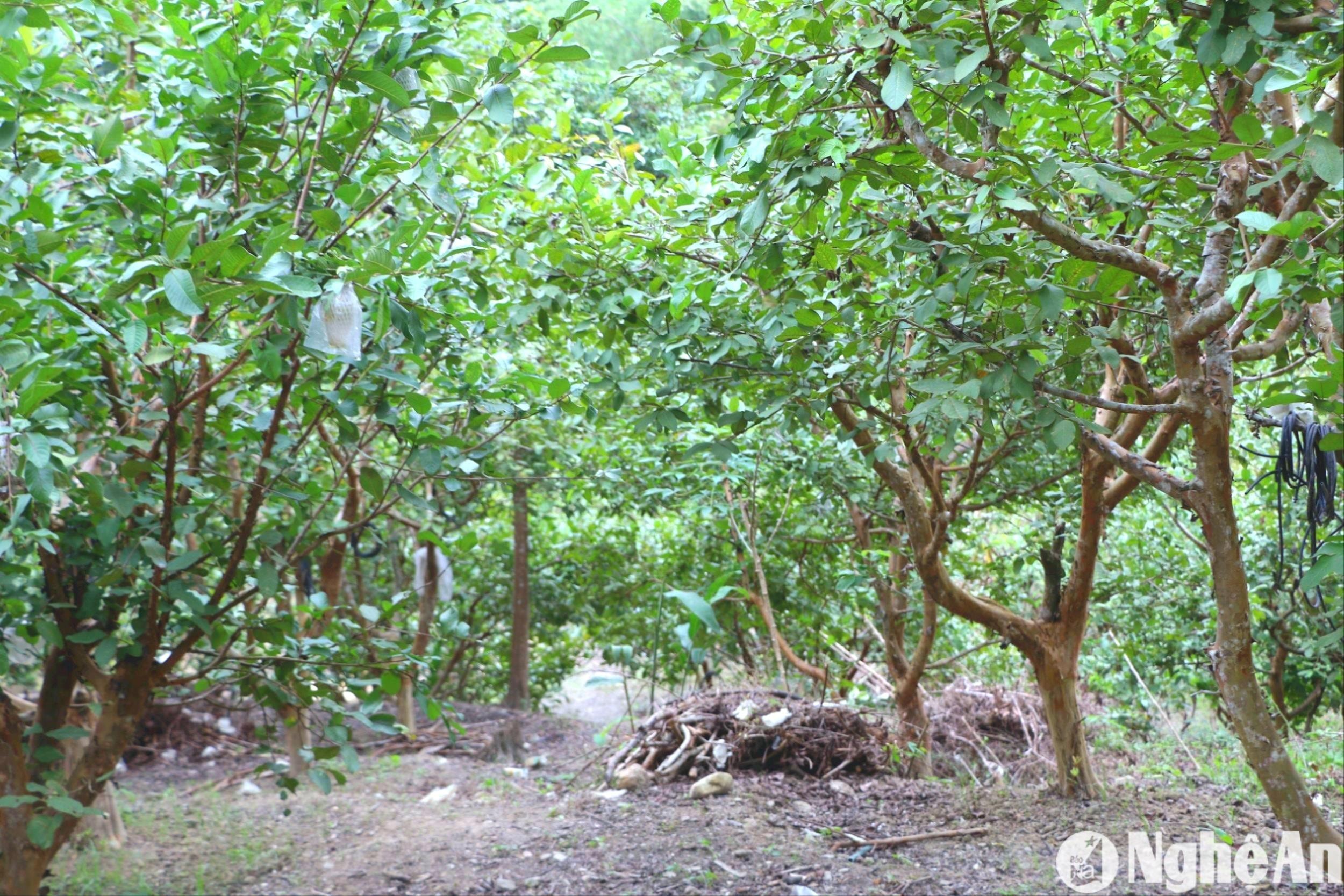
After studying the soil conditions, since 2018, the local government has guided the restructuring of crop patterns, provided scientific and technical guidance, donated seedlings, and encouraged farmers to convert areas of scattered, low-yield vegetable cultivation to Taiwanese pear guava cultivation.
The commune also connects with experienced agricultural officials to provide hands-on guidance to the people of Đoọc Búa village, helping them master scientific and technical knowledge to apply it to production.
.jpg)
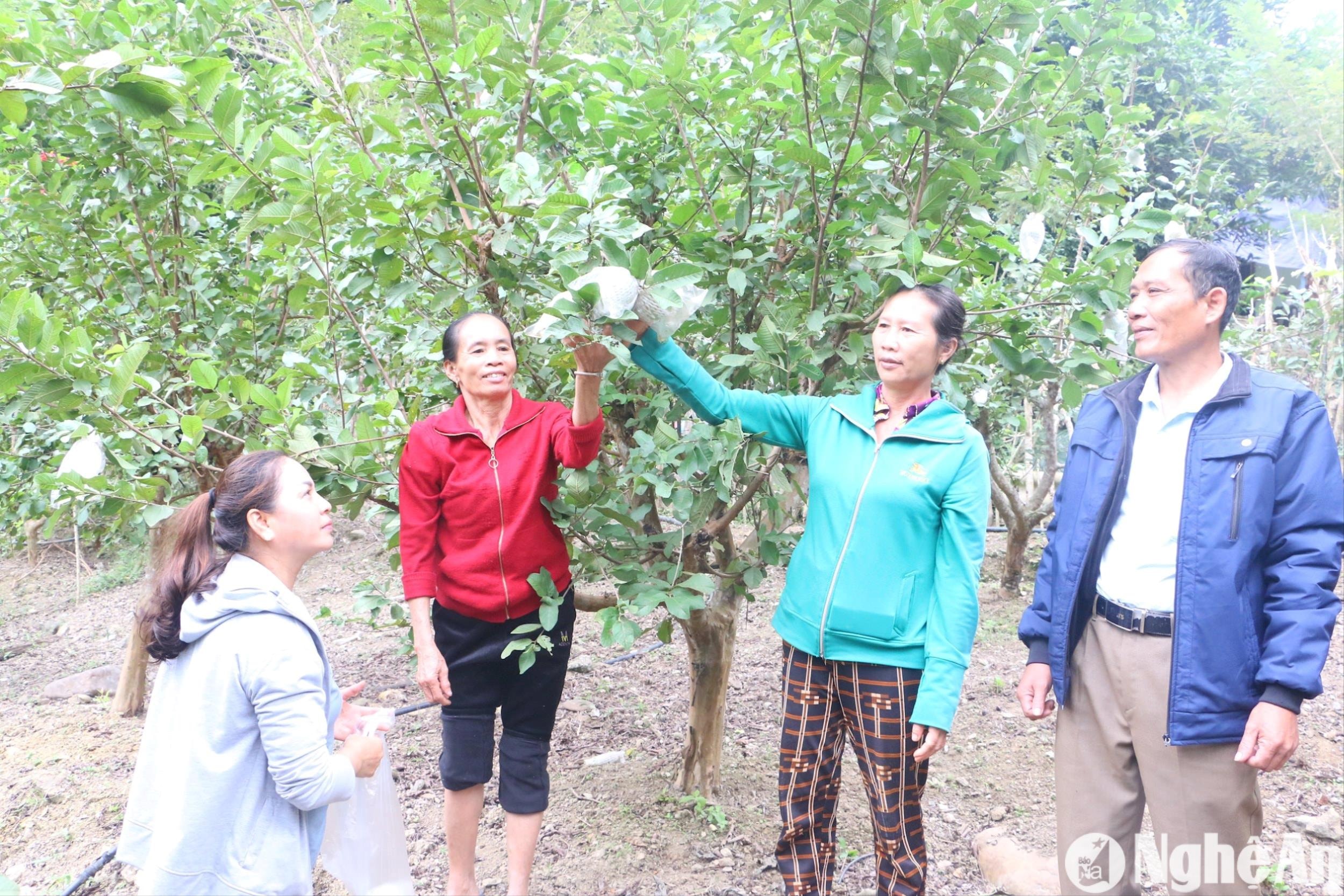
Many households have boldly tried planting guava trees and achieved high efficiency. For example, the family of Mr. Lo Van Hoan - Secretary of the Dooc Bua Party Branch - pioneered planting 100 guava trees; the family of village head Lo Van Van planted 60 trees, earning an average income of about 8 million VND per season.
Currently, the entire Dooc Bua village has 31 households, almost all of which grow pear guava, with a total area of over 2 hectares. The household with the most trees is Mr. Lo Quang Tien's family with 150 trees. The total income from guava for the whole village is about 100 million VND per year.
.jpg)
According to Lo Van Van, head of Dooc Bua village: "The guava variety is sold at a price of 15,000 to 20,000 VND/kg, bringing a significant income to the people."
The families of local officials in the village have all been pioneers in planting guava trees. "Since developing the model of growing pear-shaped guavas, the lives of the people in Dooc Bua village have improved significantly, with an average income of 33 million VND/person/year. There are only 6 poor households in the village due to unavoidable circumstances," said Mr. Lo Van Van.
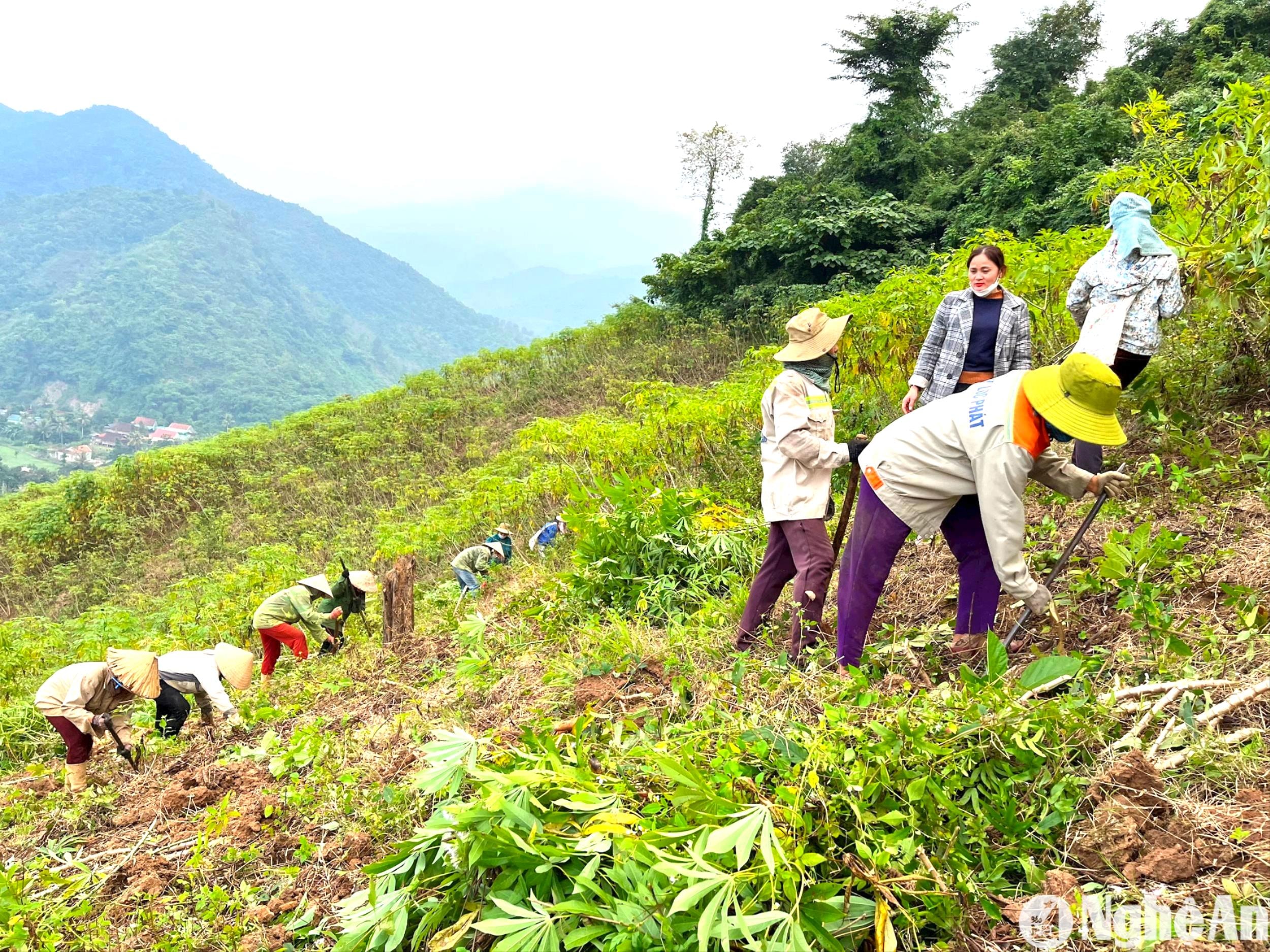
Implementing Project 07-DA/HU dated March 8, 2022, of the Tuong Duong District Party Committee on eliminating the mentality of waiting and relying on others, in many other villages and hamlets in Tam Thai commune, people have also boldly borrowed capital to invest in developing integrated economic models; developing livestock farming, converting barren land and hills, improving land that has been unproductive for many years, and greening the area with fruit trees, high-yield cassava, corn, native Tuong Duong mangoes, and elephant grass.
Some villages, such as Cay Me village, mobilized people to contribute funds to rent an excavator to build a 2.8 km road to Khe Toc at a cost of 28,000,000 VND; Na Tong village leveraged the people's strength to rent an excavator to build a road to the collective rice garden, nearly 2 km long at a cost of nearly 10,000,000 VND... creating favorable conditions for travel, production, and product consumption.
.jpg)
Thanks to these efforts, Tam Thai commune now has 40 hectares of fruit tree cultivation, the area planted with high-yield cassava has increased to 110 hectares, and the area of intensive rice cultivation has increased to 91.6 hectares… The lives of the people have improved significantly, with the poverty rate in 2024 at 12.1%; and the near-poverty rate at 25%.
Efforts to demolish houses for sale.strong
Besides developing the economy towards sustainable poverty reduction, the Party Committee and local government of Tam Thai commune pay special attention to mobilizing support for the construction of houses for the poor and those facing housing difficulties. Accordingly, the commune-level Steering Committee has directed mass organizations and social organizations to leverage the strength of national unity, mobilizing social resources in combination with state resources to jointly eliminate semi-permanent houses that do not meet the three "solid" criteria (solid foundation; solid wall frame; solid roof) for households facing housing difficulties.
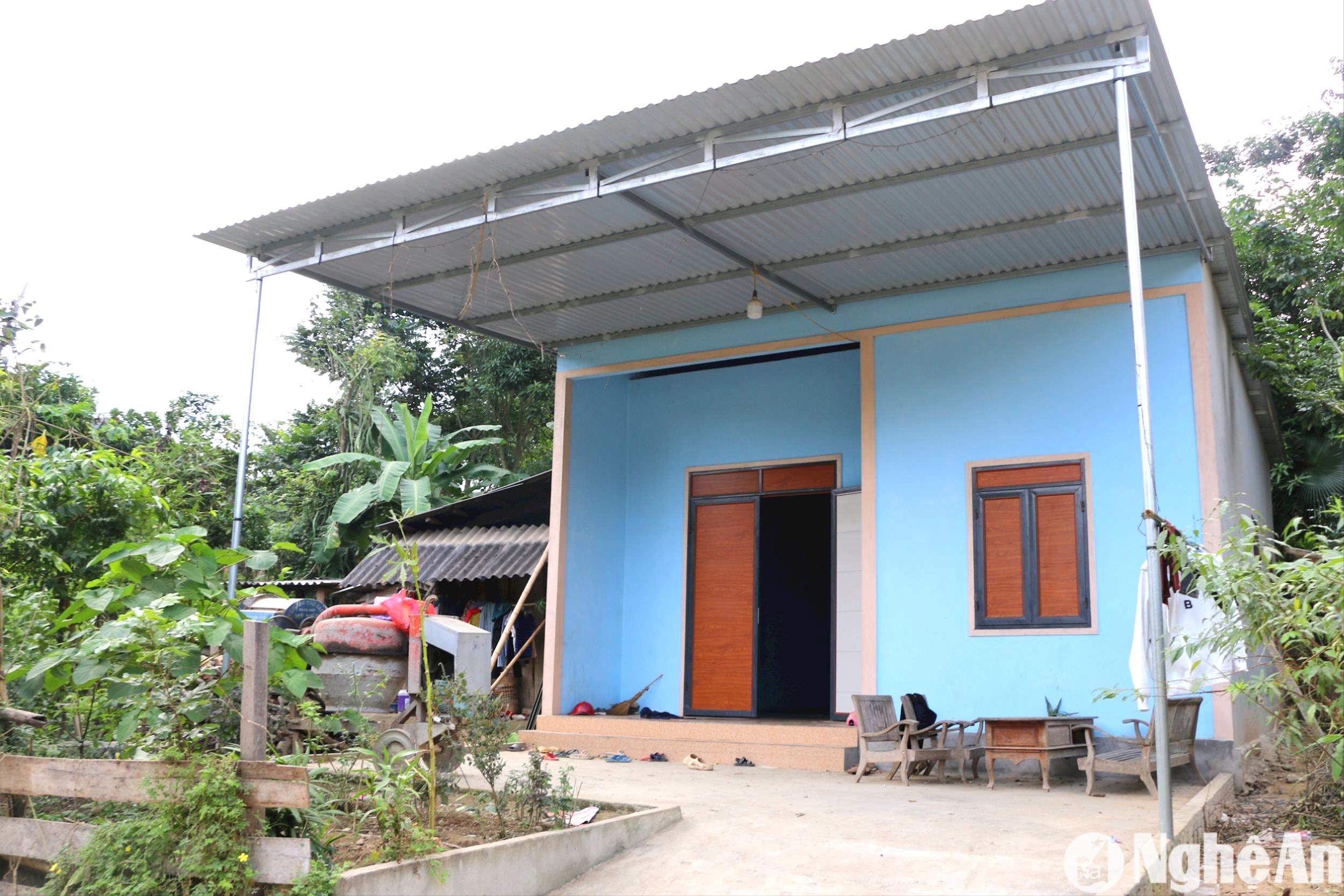
Upon review, during the 2023-2024 period, across 9 villages and hamlets in Tam Thai commune, 97 households with approved housing construction and renovation needs were identified, including 64 households for new construction and 33 households for renovation.
To achieve this common goal, the Steering Committee for the program to mobilize and support the construction of housing for the poor and disadvantaged in Tam Thai commune has implemented many specific solutions, clearly defining responsibilities and tasks for each individual.
Assigning officials to live in the villages to directly oversee and monitor the situation of families eligible for new house construction or renovation, providing support to households from completing the necessary paperwork to the implementation and completion of the project.
For households with few members, limited manpower, and limited resources, the Party Committee and the commune government direct mass organizations and social organizations to coordinate with the village management boards to propagate and mobilize people to provide support through forms such as labor for construction, dismantling, relocation, and material support… Households eligible for new construction or house repair are members of a particular association (Farmers' Association, Women's Association, Veterans' Association, etc.), whichever association they belong to is responsible for supporting and assisting its member.
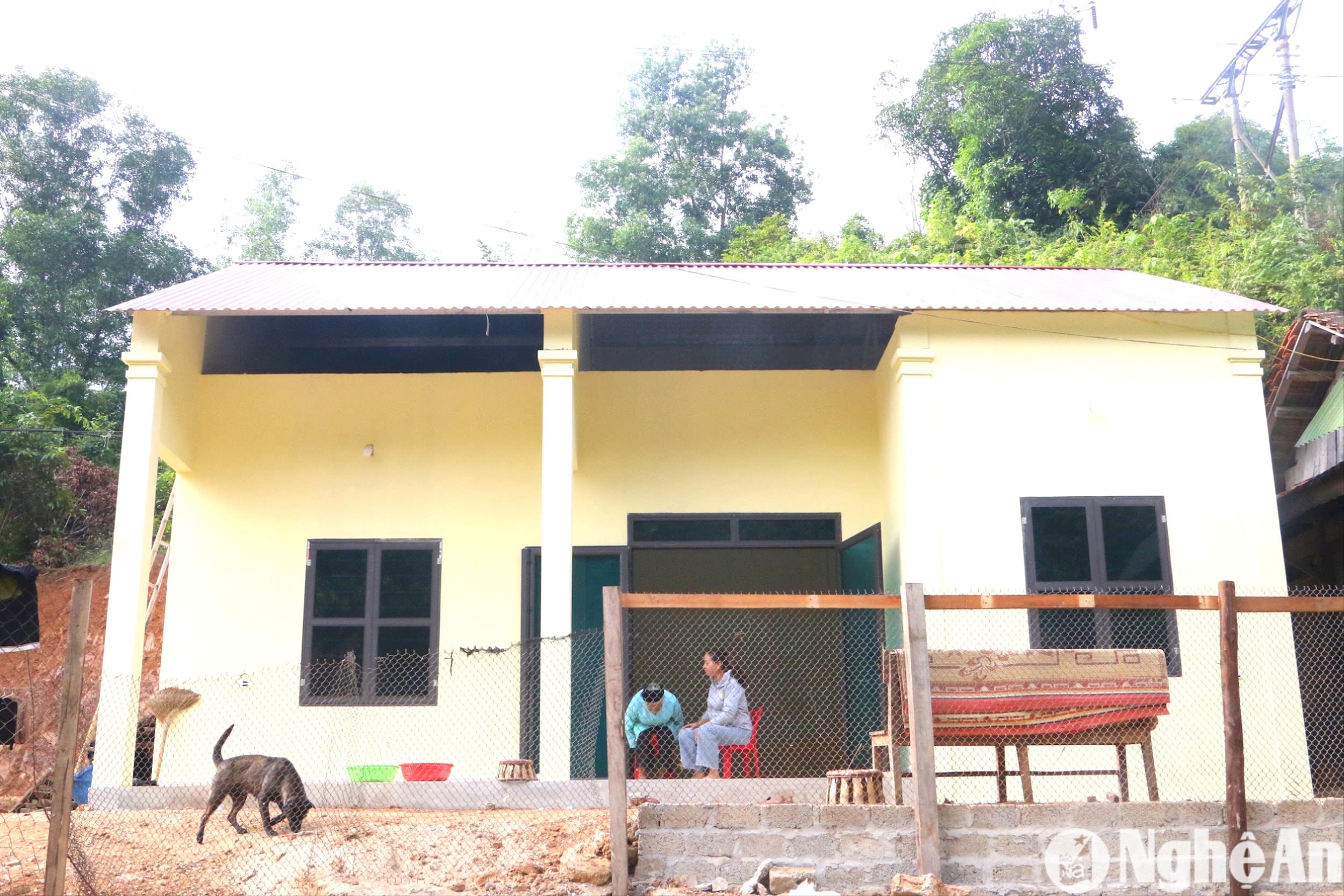
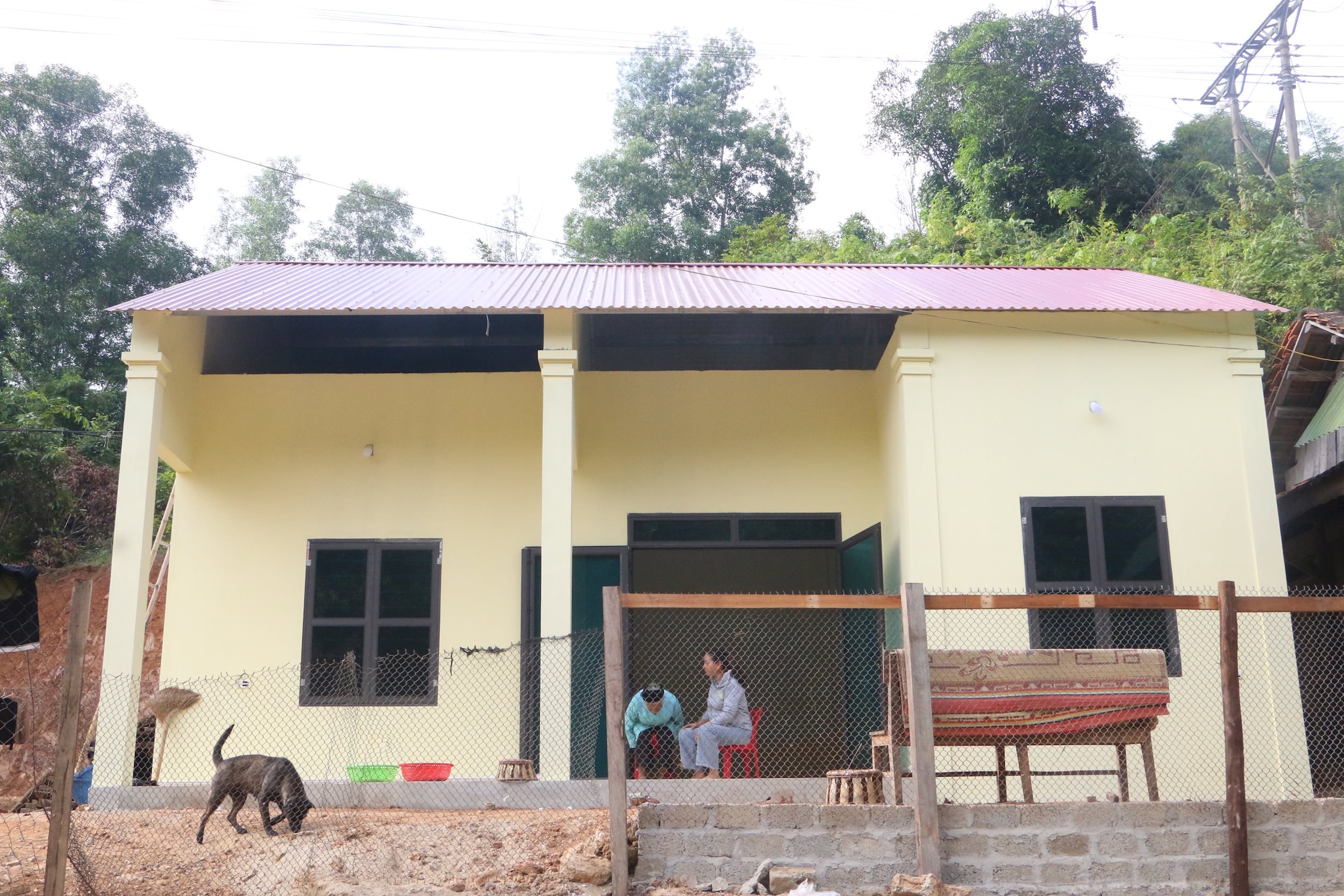
As a result, in the two years 2023-2024, the entire commune had 77 households that had renovated or repaired their houses, and 22 households that were in the process of renovating or repairing their houses, under the National Target Programs on Poverty Reduction, the National Target Program for the Development of Ethnic Minority and Mountainous Areas, and other sources of funding mobilized from organizations and individuals.
According to the leaders of Tam Thai commune: Currently, there are 22 semi-permanent houses in the area that are scheduled for repair but have not yet been renovated, due to family members passing away or working far away. The local authorities will try their best to complete the repairs.wallin the first half of 2024. These are mainly households lacking one of the three strict criteria under the previous Programs 134 and 147, and some cases arising from household separation.
Following the Chairwoman of the Fatherland Front Committee of Tam Thai commune, Vang Thi Trang, we visited the spacious new house of Mrs. Vi Thi Thanh in Na Tong village.
Despite her advanced age, the elderly woman from the Thai ethnic group still has a very witty way of speaking, and her benevolent face reveals her joy at the prospect of celebrating a warm Tet holiday in her new, sturdy home this spring.
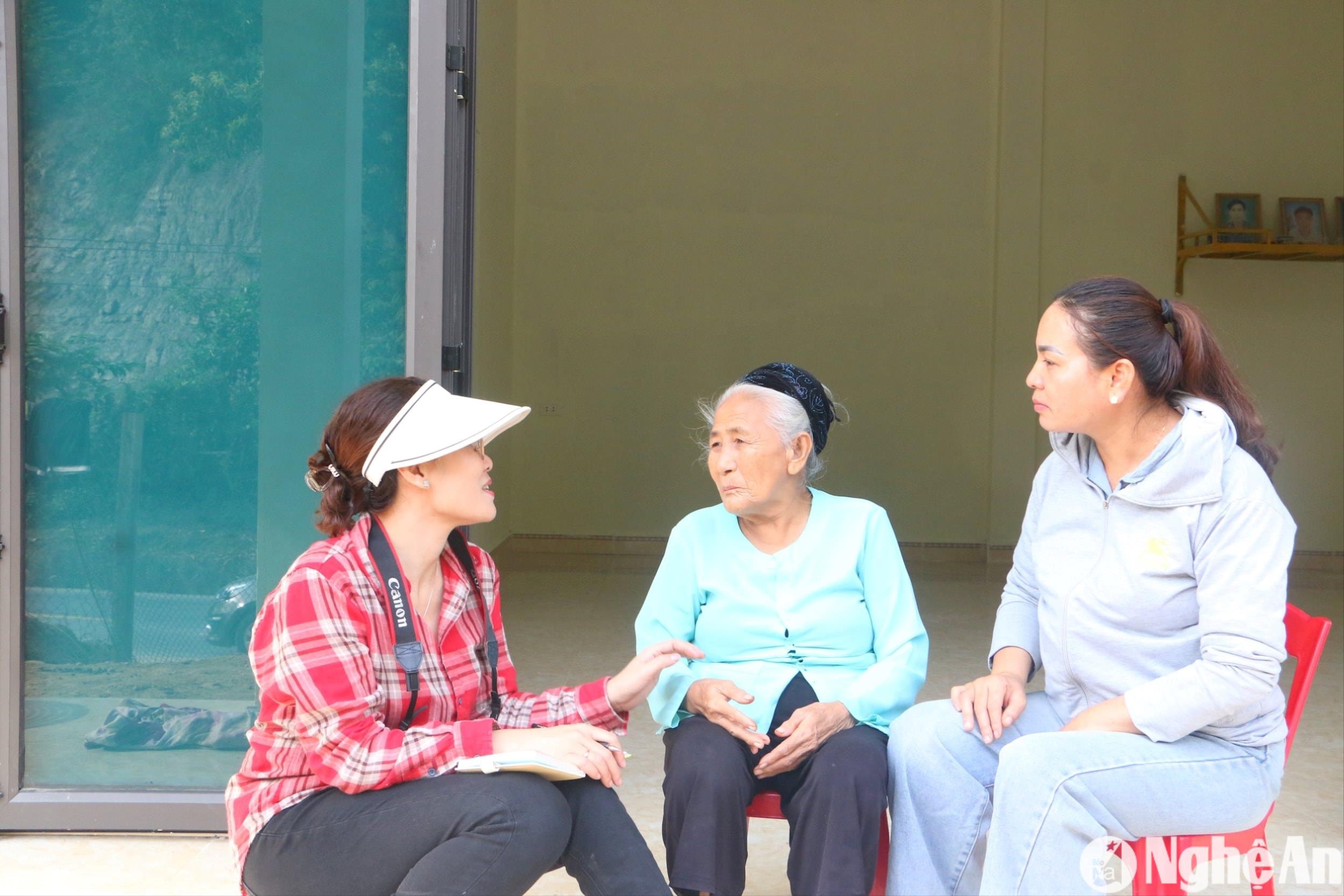
Reportedly, Mrs. Thanh's house was built with a total cost of 120 million VND, of which 50 million VND was provided by the Agricultural and Rural Development Bank, Tuong Duong branch, and the rest was contributed by her children, grandchildren, and relatives, including labor for construction.
Not far from Mrs. Thanh's house, the family of Mr. Vi Van Chien (born in 1970) is completing repairs, roofing, and rebuilding the boundary wall for their new house to welcome the Lunar New Year.
Speaking with us, Mr. Thanh said: "Not only did we receive financial support, but my family also received labor assistance from the villagers and village officials; Comrade Kha Van Huong, Vice Chairman of the People's Council of the commune and in charge of Na Tong village, personally supervised and directed the repair and completion process."
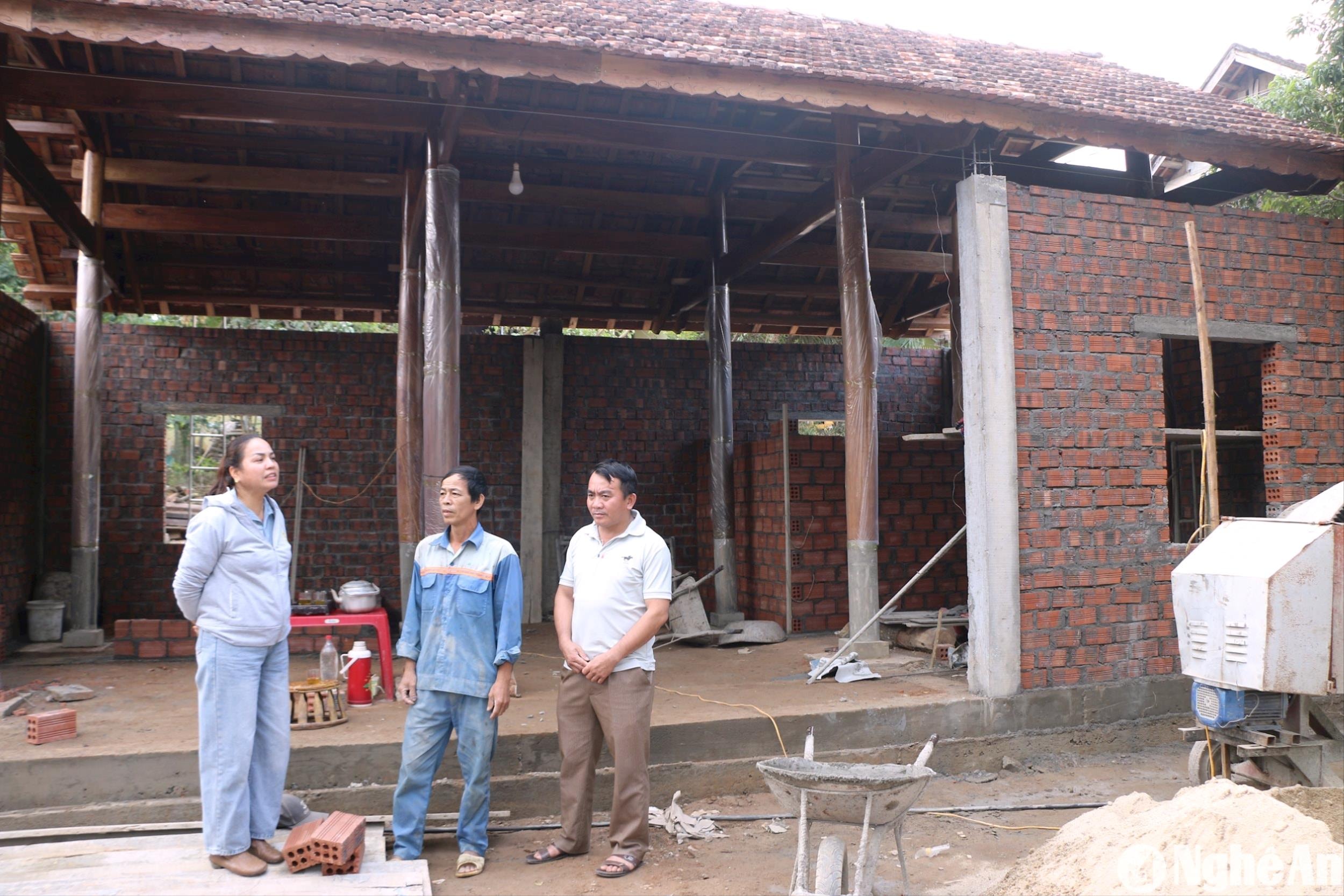
“My family’s old house was built a long time ago and is now dilapidated. Without support from all levels of government and relevant agencies, I don’t know when my family would be able to repair it and have a place to live. I am very happy and grateful that disadvantaged families like ours always receive care, support, and encouragement to strive for a better life.”
According to Mr. Luong Ba Vin, Head of the Mass Mobilization Department and Chairman of the Fatherland Front of Tuong Duong district: Thanks to skillful mass mobilization, the policy of building and repairing houses for the poor and those with housing difficulties has been effectively implemented by the Party Committee and the government of Tam Thai commune, helping the poor to "settle down and prosper" while ensuring social welfare in the area.
The people take responsibility, the village shines brightly.
Not only did the Party Committee and government of Tam Thai commune skillfully mobilize the people in implementing poverty reduction policies, but they also launched emulation movements, encouraging the people's cooperation and contributions in building public works and beautifying the local landscape, without relying solely on government support.
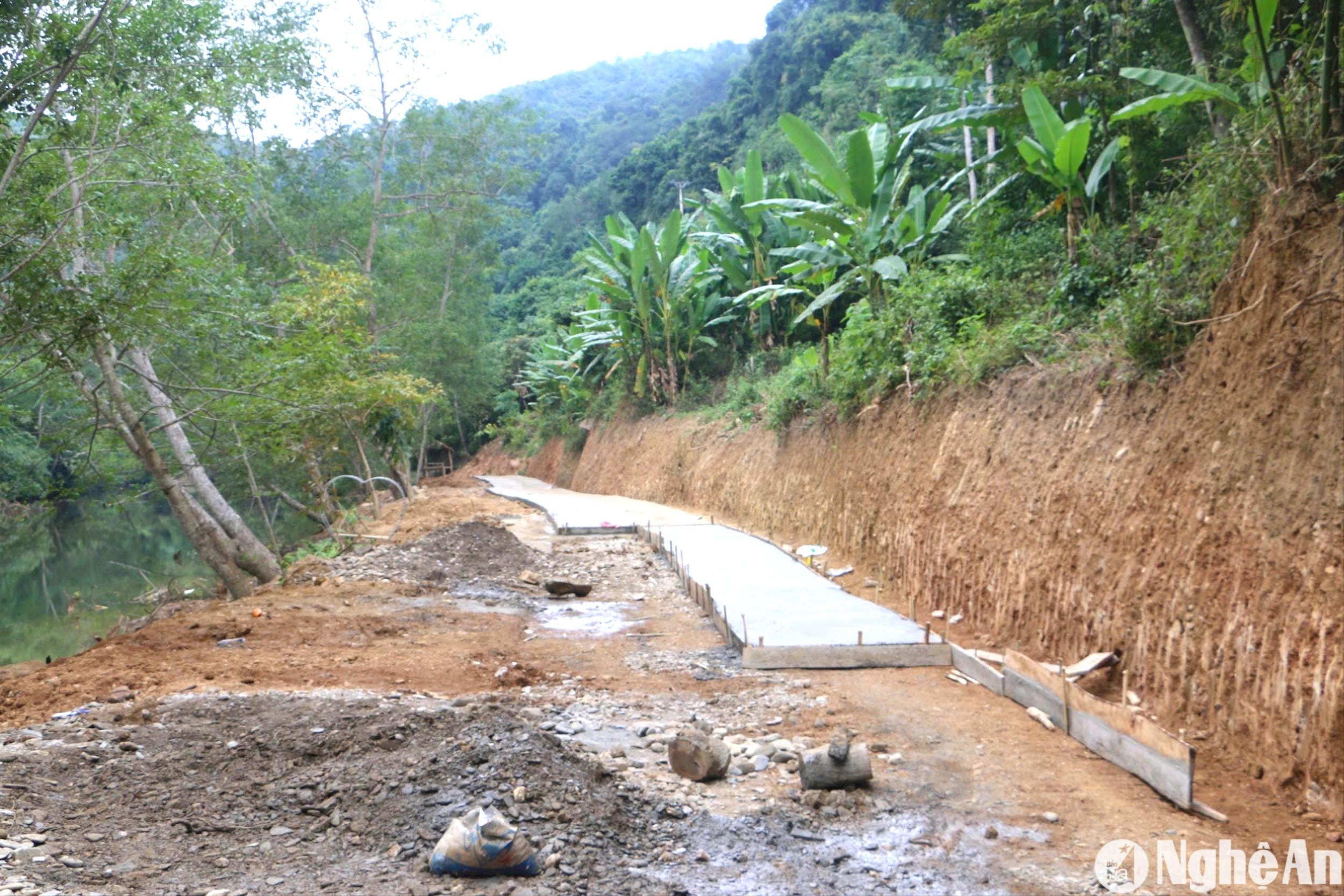
For example, the "street lighting" project in Tan Hop and Xoong Con villages raised over 175 million VND through fundraising; and the waste collection and treatment model in Cam and Dooc Bua villages cost nearly 75 million VND. In addition, residents in Na Tong and Tan Hop villages also donated 256 million VND to build solidarity projects such as installing corrugated iron roofs, upgrading cultural centers, and erecting national flags along roads, creating a new look for the villages.
.jpg)
Ms. Vang Thi Trang, Chairwoman of the Fatherland Front Committee of Tam Thai commune, said: In 2024, in response to the emulation movement of skillful mass mobilization, the Fatherland Front Committee and the Mass Mobilization Teams in many villages and hamlets mobilized cadres, civil servants, and children living and working in all parts of the country and abroad to support and contribute to building their homeland, such as constructing lighting systems, roads to production areas, and models for building a bright, green, clean, and beautiful rural environment… with a total amount of 450,000,000 VND.
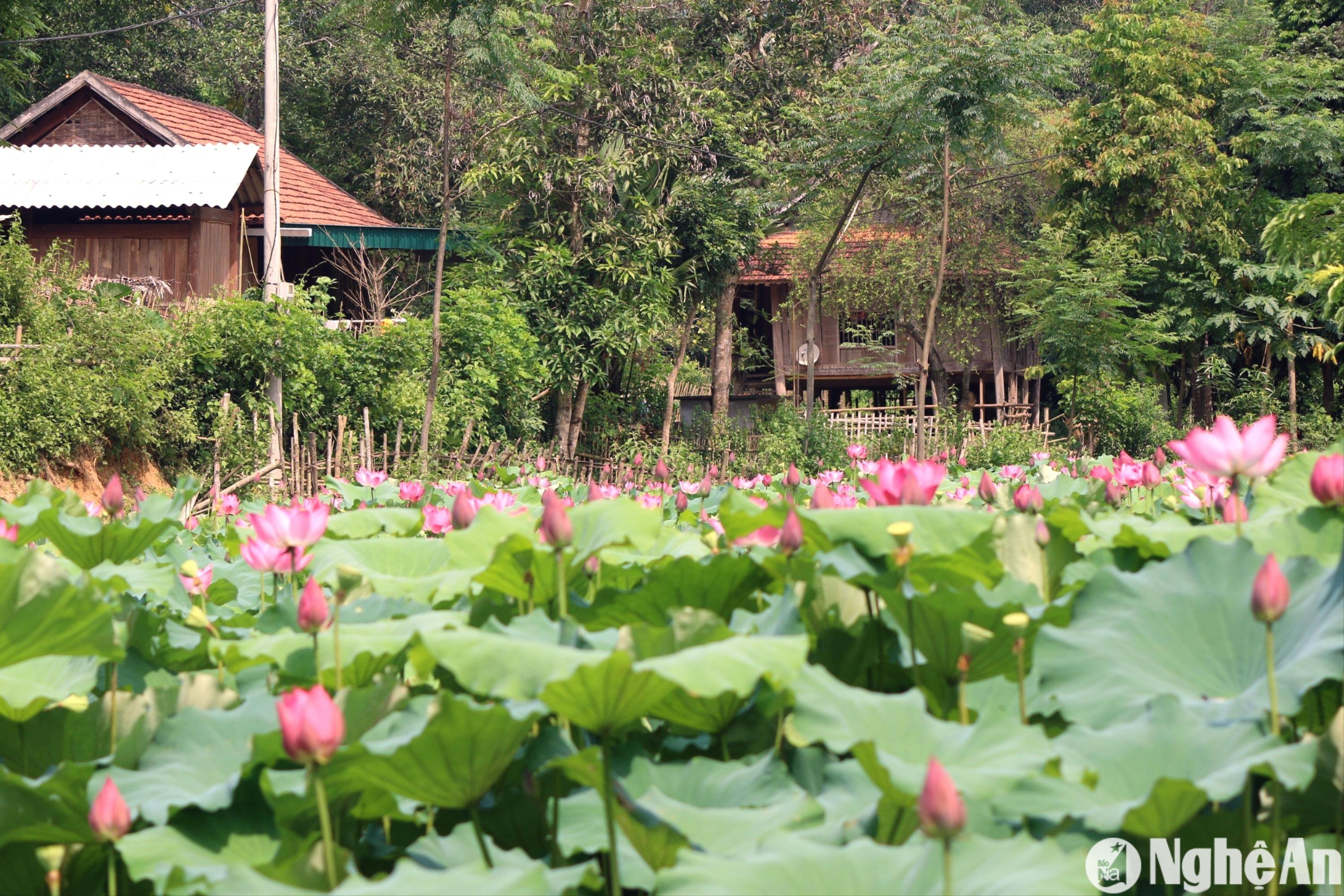
This is the result of effective mass mobilization, transforming villages and hamlets, contributing positively to Tam Thai mountainous commune maintaining and upholding 19 criteria for building new rural areas, and moving towards building advanced new rural areas.


