
In early 2017, imported cars saw a sharp price increase.
Prices of many imported car models are starting to rise due to the appreciation of the US dollar. Conversely, prices of many eligible car models are decreasing due to the depreciation of the Euro.
The US Federal Reserve (FED) raised the benchmark interest rate by 0.25%, to 0.75%. On the market, the US dollar has appreciated significantly against other currencies. This has impacted the import of completely assembled cars. Businesses report that orders for imported cars paid for in US dollars have seen increased costs.
Two months ago, the exchange rate for import and export payments at banks was 22,240 VND/USD, but it has now increased to 22,770 VND/USD. At this rate, importing a car worth 10,000 USD would cost an additional 8-9 million VND.
Currently, several imported car models on the market have had to raise their prices. For example, businesses importing vans in Hanoi recently increased the price of each vehicle by about 15 million VND. The Kia Morning van, which previously sold for 340 million VND, has now increased to 355 million VND.
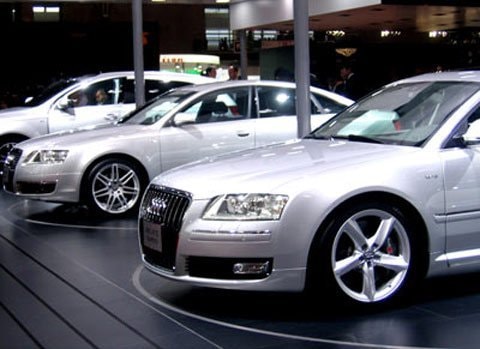 |
Prices for many imported car models are starting to rise due to the appreciation of the US dollar against the Vietnamese dong. |
Locally assembled vehicles may not be affected yet, as components were imported beforehand, while fully imported vehicles are usually impacted immediately. For high-value imported vehicles, the costs increase even more.
However, many imported car models have not yet increased in price because there is still a large quantity of stock imported 4-5 months ago that has not been sold. In addition, because the exchange rate between VND and USD has only increased in the past two months, the number of imported cars entering Vietnam and being put on the market during this period is still relatively small.
In the coming period, as inventory decreases and imported car shipments arrive, complete procedures, and are released to the market, prices will be calculated according to the new exchange rate, resulting in an increase in selling prices, according to an automobile import company.
According to forecasts, the FED will continue to raise interest rates three more times in 2017, each time by 0.25%. If these interest rate hikes continue as expected, the US dollar will certainly appreciate further against the Vietnamese dong. Therefore, in 2017, the price of imported cars paid for in US dollars may continue to increase, and this increase is not yet over.
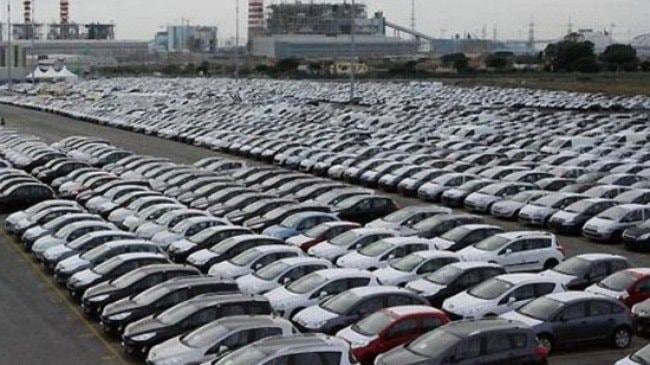 |
The falling exchange rate is bringing significant profits to businesses distributing vehicles originating from the EU. |
Conversely, businesses importing cars from the EU and paying in Euros are benefiting from the sharp decline in the Euro-VND exchange rate. Two months ago, the Euro-VND exchange rate was 24,500 VND/EURO, but it has now fallen to 23,800 VND/EURO. With this exchange rate, importing a car from EU countries priced at 10,000 Euros results in a cost reduction of over 12 million VND.
Due to exchange rate fluctuations, in principle, the price of imported cars from USD-using regions will increase in the near future, while the price of cars imported from Euro-using regions will decrease. However, whether car prices increase or decrease in the market depends on many factors. From January 1, 2017, the import tax rate on completely assembled cars from ASEAN countries to Vietnam decreased by 10%, down to 30%. This will compensate for the decrease, allowing cars imported from Thailand, Indonesia, etc., to lower their prices, even if the exchange rate increases. Imports from other regions such as South Korea, India, the Middle East, and the US will face more difficulties due to the high import taxes.
With cars imported from the EU, many customers are hoping for price reductions. However, it's unclear whether prices will actually drop. A company importing cars from the EU stated that prices depend on many factors, such as the quantity of cars imported, the supplier's selling price, and the included equipment. Therefore, it's impossible to say that if the Euro price drops, all car models will see a corresponding price reduction.
Since the beginning of 2015, the Euro has depreciated significantly against the Vietnamese Dong, but the prices of cars imported from the EU have not decreased much. Price reductions have mainly been seen on slow-selling models. Most best-selling models haven't seen any publicly announced price cuts. When asked, dealerships said they only negotiate prices with individual customers. Logically, best-selling models imported in large quantities should be seeing substantial price reductions. The declining exchange rate is bringing significant profits to businesses distributing cars originating from the EU.
According to Vietnamnet
| RELATED NEWS |
|---|


