
The Prince's Footprints on Nghe An Soil
After more than 30 years of arduous struggle for independence and freedom by the Lao ethnic groups, on December 2, 1975, Prince Souphanouvong was elected by the National People's Congress and the Lao National Assembly as Chairman of the Supreme People's Council and President of the newly established Lao People's Democratic Republic. From then on, the monarchy was abolished, and the Lao ethnic groups joyfully celebrated the day of independence and national reunification.
(Baonghean)After more than 30 years of arduous struggle for independence and freedom by the Lao ethnic groups, on December 2, 1975, Prince Souphanouvong was elected by the National People's Congress and the Lao National Assembly as Chairman of the Supreme People's Council and President of the newly established Lao People's Democratic Republic. From then on, the monarchy was abolished, and the Lao ethnic groups joyfully celebrated the day of independence and national reunification.
|
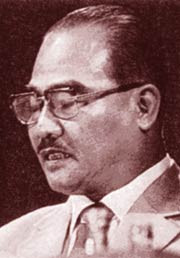
In 1920, Prince Souphanouvong was sent to study at the Albert Sarraut School in Hanoi. More than 10 years later, in 1931, he went to France to study at university. In early June 1937, after receiving his Bachelor of Civil Engineering degree in France, he returned to Indochina and was appointed a civil servant at the Central Vietnam Public Works Department, located in Nha Trang city.
From then (1937) until after the victory of the Vietnamese and Lao people's resistance against the French and Americans, the Prince visited many places, leaving an indelible mark on the irrigation and transportation projects in Nghe An, the cradle of the revolutionary movement and the homeland of the beloved President Ho Chi Minh.
North Nghe An Irrigation Project
The North Nghe An irrigation system, also known as the North Nghe An agricultural canal system, with the Do Luong dam as its headworks, irrigates the province's rice granary and provides drinking water for residents of four districts: Do Luong, Yen Thanh, Dien Chau, and Quynh Luu in Nghe An province. The project was built over five years (1932-1937) to serve the colonial exploitation strategy of the French colonial government and to appease the farmers of Nghe An after the Nghe Tinh Soviet Uprising of 1930-1931. The project was basically completed in mid-1937. Prince Souphanouvong, a bridge and culvert engineer from the Central Vietnam Public Works Department, participated in the technical acceptance and commanded the operation and exploitation of the system, including: the Do Luong dam with 12 steel sluice gates and sand discharge gates; a 502m long tunnel through the mountain; the Dau Ly culvert, the Phuc Tang culvert, and the Lac Tho siphon...
During the two wars of resistance against France and the United States, this system of structures was repeatedly bombed and damaged, but the army and people of Nghe An province protected it safely, ensuring a continuous flow of water for over seven decades. Particularly during the war against the US, the anti-aircraft fire protecting the Do Luong Watershed included a regiment of 100mm and 57mm anti-aircraft guns, 37mm artillery from local troops, 14.5mm artillery from militia and guerrillas, and rifles.
Today, in Do Luong district, the elderly still remember the name of Prince Souphanouvong, expressing gratitude for the contributions of Engineer Souphanouvong, a son of Laos, to the Do Luong River Basin and the irrigation system of northern Nghe An.
Yen Xuan railway bridge project
The Yen Xuan railway bridge crosses the Lam River in Nghe An province at Km 331+111 on the Hanoi to Ho Chi Minh City railway line. The bridge was built in 1917 and completed in 1925. The riverbed where the bridge crosses has the Ta Lam dike (42) running from Nam Dan town to the foot of Thanh mountain downstream on the north side, and the Nam Trung dike running from Nam Dong to the railway on the south side. The bridge has 7 spans, 427.202 m long. According to the diagram from north to south, there are 6 spans with a width of 61.2 m and 1 span with a width of 51.2 m, used for a 1-meter gauge railway, T10 load. The bridge piers are placed on submerged foundations.
During the two wars of resistance against France and the United States, the bridge was repeatedly attacked and severely damaged by the enemy, with only the abutments and pillars remaining. After the complete liberation of South Vietnam and the reunification of the country, the Yen Xuan bridge was restored. On December 31, 1976, after a 36-year interruption, the North-South railway line was reopened.
|
To date, the North-South railway line from Hanoi to Ho Chi Minh City is 1725 km long, with trains SE2, SE3, etc., running safely through Nghe An at a speed of 80 km/h. According to documents from the Vietnam Railway Union, from 1937 to early 1945, Prince Souphanouvong was responsible for the technical management and command of the "road maintenance" of transportation and irrigation projects in North Central Vietnam, including the Yen Xuan bridge.
There was a technical officer who assisted Engineer Souphanouvong at that time, Mr. Nguyen Trong Phong. He recounted to his daughter, Nguyen Thi Hieu, that Prince Souphanouvong's office was called the Service des Travaux Public de l'Annam, headquartered in Vinh town, on Maréchal Fooc street (now Quang Trung street). On his days off, the Prince would go for Biere Hommel on Le Pagodon street, buy souvenirs at the Chaffanjon shop, watch movies at Annam Ciné or the Majestic cinema; walk through Destenay street to Cau Ram Church or Jules Ferry street near Cua Ta.
In September 1945, before leaving Vinh town, Prince Souphanouvong gifted the Nguyen Trong Phong family a pair of ivory chopsticks, which Mrs. Nguyen Thi Hieu currently keeps at her private residence in Xuan Hung hamlet, Hung Loc commune, Vinh City, cherishing them as a priceless family treasure.
Song Ro Reservoir Project
According to the account of Mr. Phan To Duc, 95 years old, a veteran revolutionary cadre of Vo Liet commune (Thanh Chuong district), around 1944-1945, Prince Souphanouvong participated in the Technical Council reviewing the design tasks and construction plans for the Song Ro reservoir irrigation project, located in Vo Liet commune.
The Rộ River is a tributary of the Cả River, originating from the eastern slope of the Trường Sơn mountain range, flowing through Thanh Thuỷ, Võ Liệt, and Thanh Chi communes before emptying into the Cả River near Rộ market. While reservoirs are typically created by damming rivers, the Rộ River reservoir uses a different approach: a dam is built at the end of a valley, creating a reservoir basin. Water is channeled from the Rộ River into the reservoir via a canal with a regulating sluice gate (called Ông Thuộc sluice gate). With a capacity of 4 million cubic meters, it irrigates the rice fields of Võ Liệt, Thanh Chi, and Thanh Long communes in Thanh Chương district.
In late September 1945, President Ho Chi Minh dispatched Le Van Hien and his assistant Hoang Xuan Binh to Vinh to invite Prince Souphanouvong to Hanoi to discuss the Vietnam-Laos alliance's preparations to counter the French colonialists' plot to re-invade Indochina. During this visit, Nguyen Tao (Head of the Nghe An Intelligence Department, later renamed Director of the Nghe An Public Security Bureau in October 1945) personally arranged for the safe and thorough protection of Prince Souphanouvong and the Central Committee delegation during their stay in Nghe An and upon reaching Khe Nuoc Lanh, where they were handed over to the Thanh Hoa Provincial Intelligence Department.
Later, in the memoirs of Mrs. Vieng Kham (the Prince's wife), there is a passage recounting: "...From Vinh, after traveling a short distance, our car unfortunately broke down. Mr. Le Van Hien's car, carrying former Emperor Bao Dai (who was also invited by President Ho to Hanoi to serve as an advisor to the Provisional Government of the Democratic Republic of Vietnam), which was following behind, immediately stopped and invited the Prince to ride in the same car with Bao Dai to go ahead in time to meet President Ho at the Presidential Palace in Hanoi. I stayed behind to wait for the car to be repaired and then followed..."
Prince Souphanouvong was a great friend of the Vietnamese people, who made many important contributions to building, strengthening, and developing the special friendship, solidarity, and comprehensive cooperation between Vietnam and Laos.
Prince Souphanouvong passed away on January 9, 1995, leaving behind immense grief for the people of Laos and Vietnam, including the people of Nghe An province.
Tran Kim Don


