
Promoting information technology to combat corruption and waste in the healthcare sector.
(Baonghean.vn) - Promoting information technology to combat corruption and waste in the health sector is one of the directives issued by the Prime Minister at the online conference on implementing health work in 2017, organized by the Ministry of Health on the afternoon of January 12th.
Prime Minister Nguyen Xuan Phuc, Deputy Prime Minister Vu Duc Dam, and Minister of Health Nguyen Thi Kim Tien chaired the conference; Vice Chairman of Nghe An Provincial People's Committee Le Minh Thong chaired the Nghe An branch of the conference.
The conference was attended by approximately 12,000 delegates from 63 provincial and city-level locations and over 700 district and town-level locations.
 |
| The Nghe An delegation participated in the online conference. Photo: Thanh Chung |
In 2016, the Vietnamese health sector achieved 10 important milestones, including: Innovations aimed at patient satisfaction have created significant changes in hospitals; the shift from a "service-oriented" mindset to a "service-providing" mindset has been initially well-received by the public; and the successful production of a combined measles-rubella vaccine is expected to be included in the expanded immunization program from 2017.
For the first time in Vietnam, robotic laparoscopic surgery was performed on adults; there were over 30 cases of surrogacy... The rate of population participating in health insurance reached 81.7%; 25 hospital beds per 10,000 people were achieved (excluding beds at commune health stations), exceeding the targets set by the National Assembly and the Government.
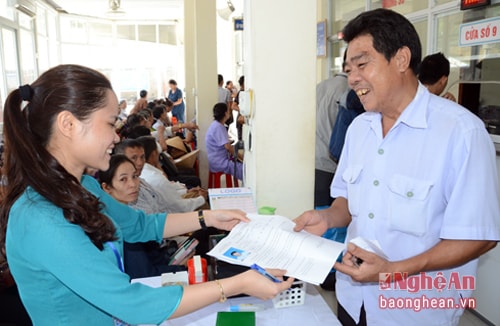 |
| Improving the service style and attitude of medical staff at Vinh City General Hospital. (Photo: Archival image) |
During the year, the incidence and mortality rates from infectious diseases decreased compared to 2015, with no major outbreaks occurring; the expanded immunization rate for children under 1 year old, pregnant women, and women of childbearing age reached over 90%; the HIV/AIDS infection rate in the community was controlled at below 0.3% and the number of new infections decreased; and there was a reduction in the number of cases, the number of people affected, and the number of deaths due to food poisoning.
The sector has expanded its network of satellite hospitals to all 63 provinces and cities, with 22 core hospitals and 98 satellite hospitals; completed the pilot program for the family doctor model and began to replicate it nationwide.
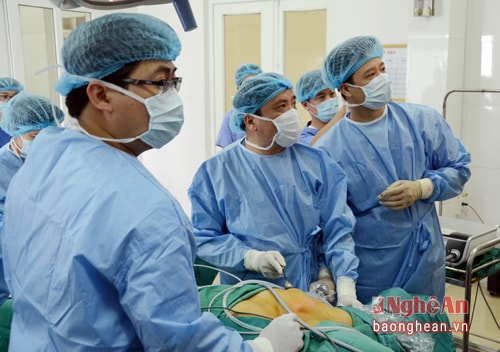 |
| Nghe An Oncology Hospital implements a new technique - endoscopic thyroidectomy. (Photo: Archival image) |
Despite its successes, the healthcare system still falls short of meeting the needs of the people: There is a lack of healthcare facilities for the elderly, non-communicable diseases, and biomedical research facilities; the implementation of the provincial disease control center model and the two-function district health center model is still slow.
Furthermore, investment in primary healthcare and the quality of healthcare services at lower-level facilities have not improved; the proportion of health insurance expenditures at the commune level remains low; and the prevalence of some infectious diseases is still high, etc.
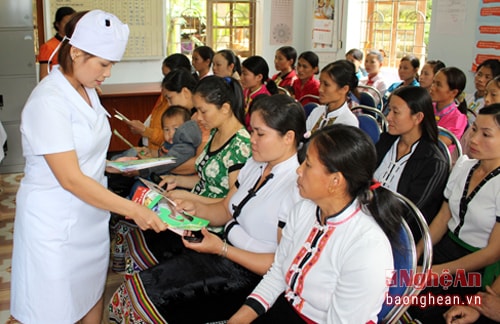 |
| Promoting breastfeeding, nutrition, and expanded immunization programs for residents in Quy Chau district. (Photo: Archival image) |
In 2017, the Ministry of Health continued to strengthen state management; closely coordinated with the People's Committees of provinces and cities to implement "Innovating the style and attitude of healthcare workers towards patient satisfaction"; proactively prevented and controlled epidemics, ensuring that no major outbreaks occurred, maintaining the expanded immunization rate above 90%; and strictly implemented measures to ensure food safety.
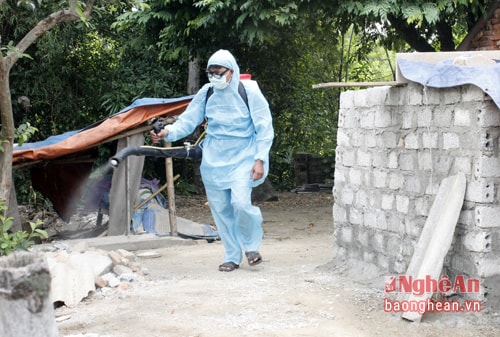 |
| Spraying to prevent dengue fever outbreaks in Hung Nguyen district. (Photo: Archival image) |
In his address at the conference, Prime Minister Nguyen Xuan Phuc commended and highly appreciated the efforts of medical staff in fulfilling their responsibility to protect and care for the health of the people, making a significant contribution to the overall success of the country and society.
The Prime Minister also pointed out the current weaknesses and shortcomings of the medical sector, namely: Hospital overcrowding has not been effectively resolved; there are still many regrettable and heartbreaking incidents related to procedures and the capabilities of doctors and medical staff; hospital management is still inadequate; administrative reforms in medical examination and treatment have not met the requirements; management of pharmaceuticals and medical equipment is still inadequate, with vested interests causing significant losses; weak management of the health insurance fund; food safety has not met the requirements; the model of district-level healthcare is not unified; a small segment of the medical sector is indifferent to the suffering of patients...
Prime Minister Nguyen Xuan Phuc urged the health sector to actively innovate its thinking and working methods to provide better services to the people. The focus should be on grassroots healthcare with the goal of providing healthcare for every citizen, paying attention to supporting the poor and people in remote areas.
Accordingly, the health sector needs to focus on strengthening the grassroots healthcare network and primary healthcare; directing efforts to fully perform its functions and duties; promoting technology transfer, continuous training, practical training, and professional guidance for grassroots healthcare; implementing a two-way rotation system suitable to the conditions of each locality; and implementing military-civilian medical cooperation... Thereby contributing to the effective implementation of solutions to reduce overcrowding in higher-level hospitals.
 |
| The need to further promote the application of information technology to combat corruption and waste in the healthcare sector was one of the key points emphasized by the Prime Minister at the meeting on the afternoon of January 12th. |
The Prime Minister emphasized that the health sector needs to publicly disclose hospital evaluation results so that insurance agencies and the public can be informed and make informed choices; direct hospitals to interconnect and recognize each other's test and imaging results; coordinate with the Ministry of Education and Training to focus on building and perfecting a comprehensive model for training general practitioners, nurses, and pharmacists in line with regional and global integration – providing skilled personnel for mountainous, border, and island areas; improve the quality of healthcare services, coordinate with Vietnam Social Security to effectively implement the roadmap for universal health insurance; and promote the use of information technology to combat corruption and waste.
Prime Minister Nguyen Xuan Phuc posed 12 questions to the health sector. These are thought-provoking questions for the health sector to research and implement in order to propose solutions to improve the quality of all aspects of public health care.
Thanh Son


