
To make History an engaging subject.
(Baonghean.vn) - Implementing the new general education program, from the next school year, History will be an elective subject at the high school level. This change has sparked various opinions, and many are concerned about the current teaching of history in high schools.
Concerns arise when History is an elective subject.
According to the Ministry of Education and Training, inGeneral education programIn 2018, each subject had different functions, tasks, roles, and positions, all contributing to educating students to become well-rounded individuals with sufficient talent and virtue, useful citizens for society. In particular, History, in the basic education stage (from grade 1 to grade 9), is a compulsory subject.
During this stage, the History curriculum will equip students with general, basic, and core knowledge of the entire history of the world and Vietnam, from prehistoric times to the ancient, medieval, modern, and contemporary periods. In high school, the career-oriented education phase (from grades 10 to 12) begins.HistoryIt is offered as a subject within the social science group.
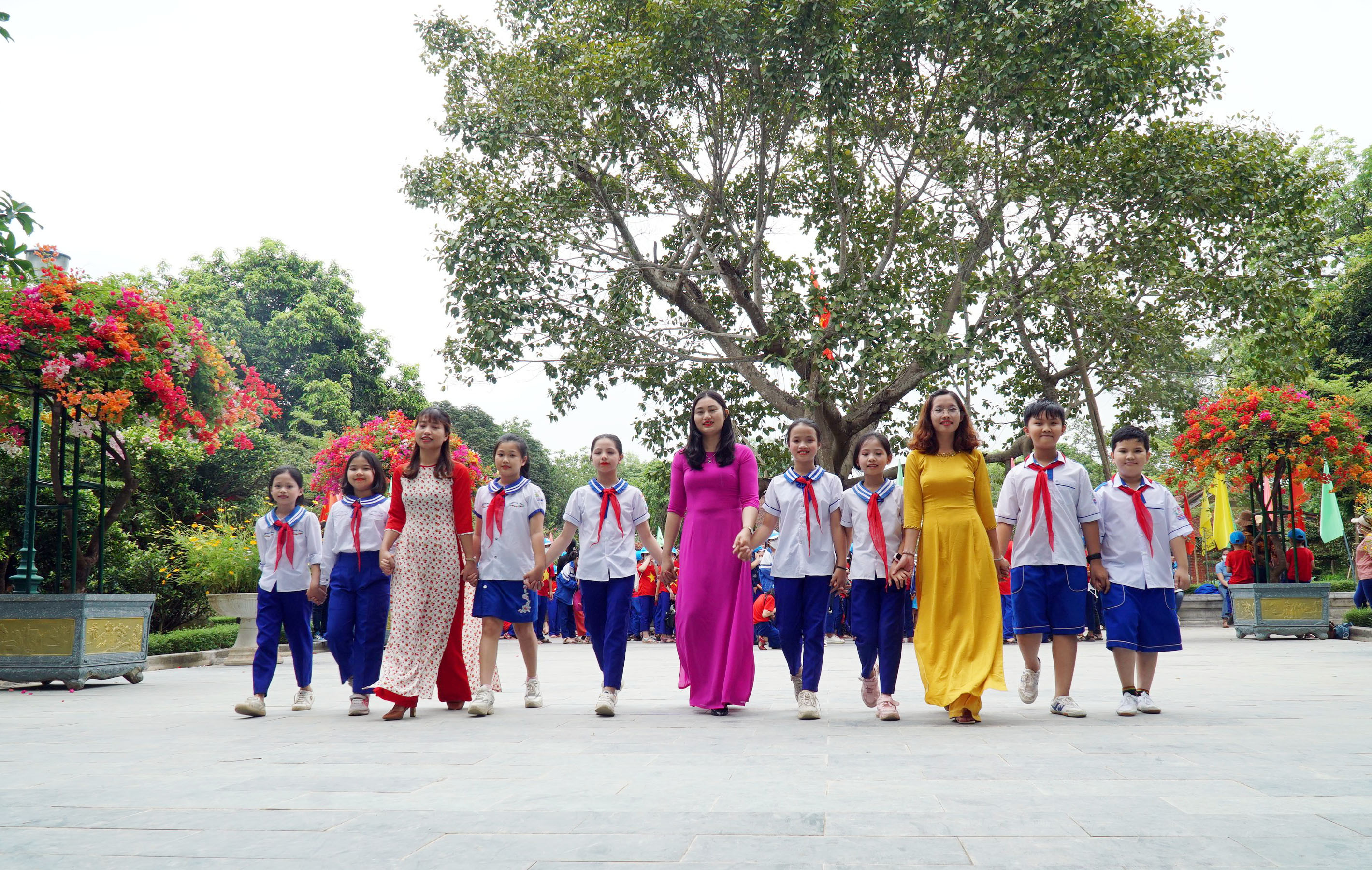 |
| Students from Hoang Tru Primary School (Nam Dan) visit President Ho Chi Minh's birthplace. Photo: MH |
According to the plan, the 2022-2023 school year will be the first year of implementing the textbook replacement for 10th-grade students. Specifically, in the 10th-grade curriculum, instead of studying 17 subjects, students will only study 12 subjects, with the remaining subjects being freely chosen according to their interests and aptitudes. History and Physics, previously considered core subjects, will now be included in the elective list.
In recent days, regarding the change from History to an elective subject, many opinions suggest that this inadvertently causes students to forget the past and the valuable traditions of the nation.
Sharing his thoughts on this matter, teacher Dang Quang Tam from Dang Thai Mai Secondary School (Vinh City) expressed "deep concern about this change and believes that making History an elective subject needs to be reconsidered."
 |
| Students at Ky Son Secondary School (Tan Ky district) during a history lesson. Photo: Duc Anh |
The teacher, originally an English teacher, admitted he wasn't particularly good at History, but two years ago, after spending a long time studying for his master's degree in the US, he realized that History is a very meaningful subject and is highly valued even in America. "During my time in the US, I visited my child's school (as a parent observing the class for the first 15 minutes) at the teacher's invitation, and I saw that History is taught very thoroughly there, from the formation of the country, its language, the history of the state the students live in, to the contributions of prominent individuals to the nation."
From there, students are taught what they have done and what they hope to do to contribute to building a more prosperous country, to eliminate injustice, poverty, and social evils in their country. I noticed they also frankly teach students about the mistakes and disastrous defeats in history, including teaching about the failure of the US in the war in 1975.VietnamBecause it was an unjust war.
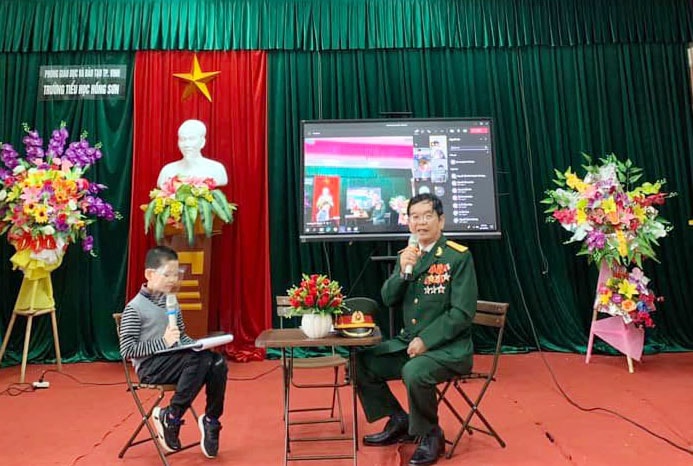 |
| Students from Hong Son Primary School meet with historical witnesses. Photo: MH |
For the reasons above, the teacher believes that studying history helps students see things from many angles, including great achievements and mistakes from which we can learn. Furthermore, it will guide students to think more carefully in important decisions and direct their thinking towards a peaceful and civilized world.”
Sharing the same view, Mr. Nguyen Dinh Phuc - Vice Principal of Phan Thuc Truc High School (Yen Thanh), a history teacher, also believes that if students are not taught history, it will leave a void because "historical knowledge taught in the general education system at all levels is fundamental and reflects the core content of the historical process."
The teacher also stated that many believe students can learn history through various other information channels if they don't study it in textbooks. However, "that historical knowledge is often approached in a fragmented way, focusing on individual events, and sometimes the research is merely out of curiosity, making a complete and thorough understanding difficult."
Innovate teaching and learning methods.
As soon as the new general education curriculum made History an elective subject, in addition to dissenting opinions for various reasons, one of the issues that worried many people was that "students will not study History if it is not a compulsory subject."
This might sound contradictory, but it's a reality shared by many students. For a long time, History has been considered an unappealing subject, filled with too many facts and events and lacking in engaging and lively content. Nguyen Khai, a student at Nghi Huong Secondary School (Cua Lo town), said: “History has a lot of information, is difficult to remember, and often results in low scores on exams. Therefore, next year in 10th grade, I will choose a different elective subject instead of History.”
 |
| On the occasion of important national holidays and anniversaries, and to promote the value of the thematic exhibition "Memories of the War-Time," the Nghe An Museum, in collaboration with the National Museum of History, organized an educational program for young people in the form of a "I Love History" Club with the theme "Memories of the War-Time" at the Nghe An Museum. Photo: TK |
At Huynh Thuc Khang High School, although there hasn't been any survey yet on students' subject combinations for 10th grade, the results seem predictable, because for more than 10 years, the number of students at the school studying and registering for the humanities (Literature - History - Geography) group has been very small.
Ms. Hoang Thi Bach Tuyet, a history teacher at the school, explains that there are two reasons for this. Firstly, it's a difficult subject, heavy on knowledge, and results in low exam scores. Furthermore, when students choose their careers, very few universities accept students from the humanities/social sciences (Block C).
Teacher Phan Xuan Huynh - former Principal of Hermann Gmeiner High School - frankly shared: "Actually, neither the subject of History nor those who dislike studying it are at fault; the fault lies with those who have made History unappealing. Therefore, instead of forcing students to learn something, we need to make it truly engaging and relevant to life, then students will choose to study it."
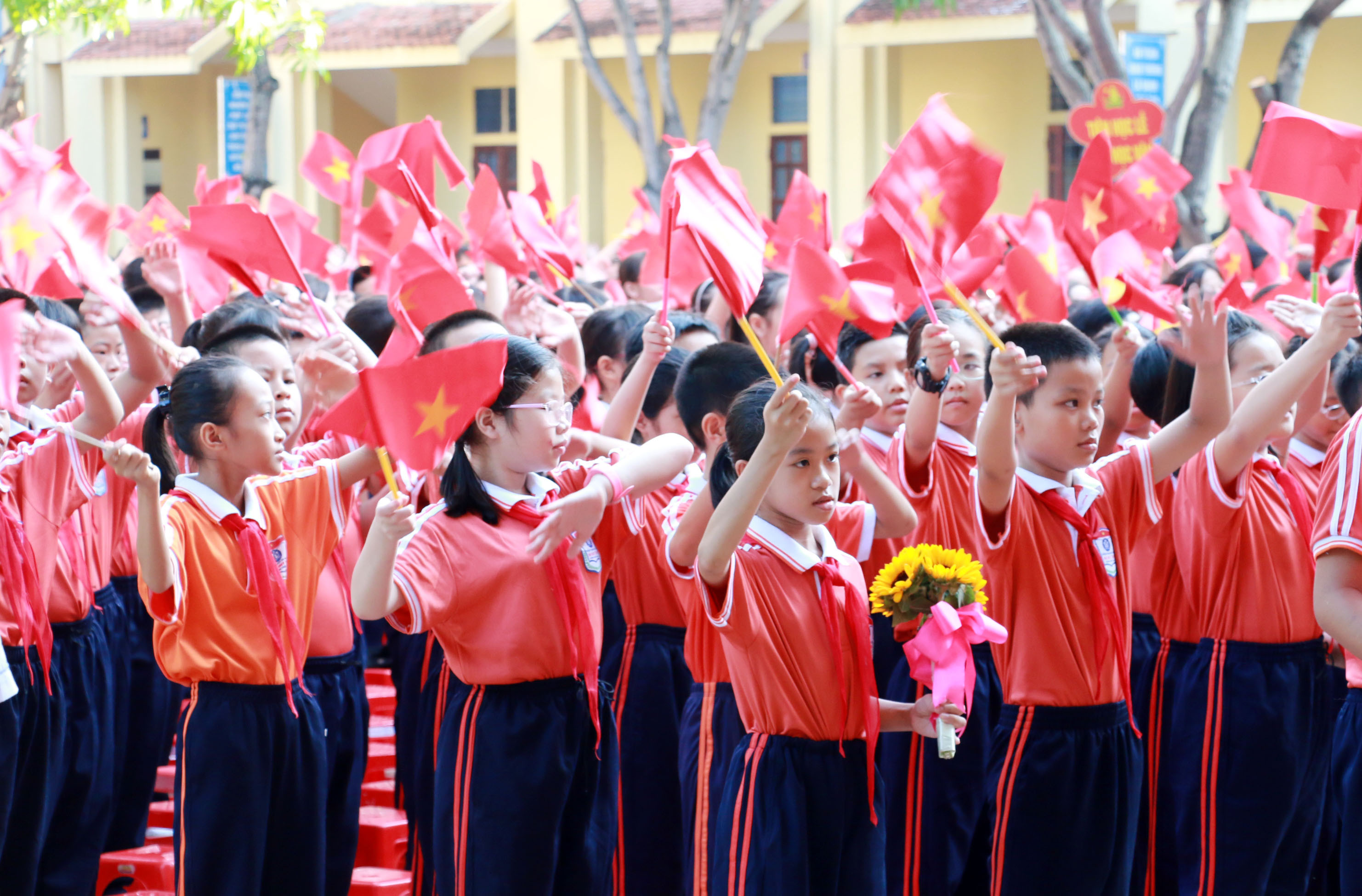 |
| History will contribute to educating students about patriotism and national pride. Photo: MH |
To foster a love and engagement with history among students, many teachers in Nghe An province have recently made efforts to innovate teaching and learning methods, and organize numerous experiential trips to make history learning more effective.
For example, Hong Son Primary School (Vinh City) with its "Classroom Without Borders" model has connected its history lessons with schools in Quang Tri, Hanoi, and Dak Lak. Through this, students are introduced to historical landmarks in their hometowns by their peers in these localities, can take online tours of memorials, and even meet historical witnesses such as Colonel and Hero of the Armed Forces Le Duy Ung - the main character in the story "The Resilient Soldier" (Vietnamese language textbook for 4th grade).
In many other schools, history lessons are also linked to visits to local historical sites, changes in assessment methods, and so on.
In addition, many teachers also expect that the new History textbook will contribute to changing perceptions about History and also change the way it is taught and learned.
“The new textbooks are visually appealing and attract students. The lesson organization will also be different, following a continuous theme, and students will learn using mind maps, making it easier to understand. In addition, the questioning and approach to problems are ‘open-ended,’ creating interest and connecting the past and present so students can see the practical application. With this new teaching and learning method, I believe that students will not be afraid to learn History and will approach the subject in a relaxed and simple way.”
At the plenary session on May 22nd, the National Assembly's Committee on Culture and Education unanimously agreed to propose that the Ministry of Education and Training (MOET) incorporate the opinions of various segments of the population, history experts, and National Assembly representatives, and stipulate that History be a compulsory subject in the 2018 General Education Program for high school students.


