
Ganh Temple, a beautiful landmark of Phuong region.
(Baonghean) - Ganh Temple in Lam Dinh hamlet, Thanh Giang commune (Thanh Chuong district) is not only a place of spiritual and cultural activity for the local people, but also a stopover point for many tourists whenever they visit Phuong region. The temple is located next to Binh Ngo cliff, hence the name Ganh Temple...
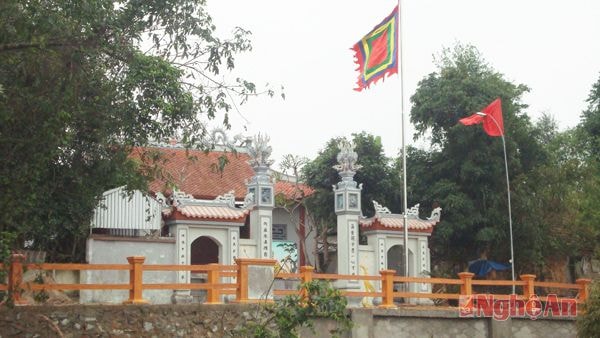 |
| Ganh Temple is located in Thanh Giang commune (Thanh Chuong district). |
According to the elders in the village, Gành Temple dates back to ancient times. Here, the Lam River flows swiftly, creating a deep, swirling eddy of water that poses a danger to people and boats passing by. Perhaps because of this, the local people built an ancient temple on this precarious location, dedicated to the "Local Guardian Deity of Lam Giang," praying for good health for everyone, peace for the river, and prosperity for their businesses... In front of the temple is the eddy. Behind the temple is the village. Over time, due to wars and floods, the temple has been damaged, and there are no documents, books, or oral traditions about its ancient origins.
Mr. Nguyen Xuan Dong (93 years old) - a pre-revolutionary cadre - said: “In the old days, Ganh Temple had two buildings, upper and lower. The upper building had two bays and six pillars, arranged lengthwise, and inside were many ritual objects such as swords, spears, dragon thrones, and ceremonial vessels; the lower building had three bays, surrounded by a mud wall, where a large, long wooden gong, shaped like a fish, was hung, only struck when there was an event at the temple. Next to the temple, there were dense trees, with many lush ancient trees such as fig trees and persimmon trees... Next to the temple was Ganh Wharf, also known as Lam Dinh Wharf, where people transported a large quantity of various stones, including slabs of stone like tabletops, to build a sturdy water landing, convenient for the villagers' daily lives for generations. The water landing and the temple courtyard are familiar places closely associated with the daily lives of the people here.”
Gành Temple served as both a spiritual center for the people of Gành hamlet (now Lam Dinh hamlet) and the surrounding area, and a meeting place for villagers in the past whenever there was an event. Mr. Nguyen Huu Hoa (95 years old), whose house is next to the temple, said: During the revolutionary and wartime periods, the temple was a meeting place for local officials and organizations; a place to hide weapons; and a gathering place for villagers to disseminate the Party's policies and guidelines... From ancient times to the present day, the temple has always been a sacred place in the hearts of every child of Gành hamlet.
Over the years, with the contributions of families in the village and the support and devotion to their roots from Lam Dinh's descendants across the country, Ganh Temple has been restored and renovated. In July 2013, the temple was completed with a new, grand, and majestic appearance, including a triple-arched gate, lower hall, and upper hall, preserving the graceful and soft features of ancient architecture with its crescent-shaped yin-yang tiled roofs and soaring dragon-shaped eaves. The religious artifacts inside the inner hall, such as the dragon throne, the eight treasures, and the Guardian Deity statues, have all been fully purchased. The only remaining ancient artifact from the old temple is a pair of ceremonial swords. At the end of 2014, the villagers restored and upgraded more than 100 meters of road in front of the temple, transforming a narrow, precarious path close to the cliff into a 4-6 meter wide concrete road with a sturdy stone foundation and elegant railings. The temple road encircles the back of the village, connecting with the village road and Highway 533, through two entrances. To the right of the temple, near Lam Dinh wharf, a four-columned "watchtower" has been erected, resembling a lotus about to bloom. For the villagers, this "watchtower" is a resting place for the deities and a place for villagers to relax and enjoy the cool breeze whenever they visit the temple.
Looking north from Gành Temple, one takes in the panoramic view of the Lam River landscape. To the right is Triều Beach, with endless fields of corn and sweet potatoes. To the left are Phuống Market, Bản Huyện Temple, and Bích Thị Communal House, all National Historical and Cultural Monuments. These structures are all located close together, on the same open strip of land, reflecting themselves in the Lam River, creating a complex of historical sites, a rare and sacred cultural space with its own unique beauty.
On the first and fifteenth days of each lunar month, people from the village and surrounding areas come here to light incense, offer sacrifices, and pray for blessings for their families. The temple hosts important annual festivals: the Spring Festival, the Kitchen God Festival, and the Grand Festival (July 13th)... This spring, the people of Lam Dinh and visitors from near and far will gather at Gành Temple, rejoicing in the new colors and changes in the Phuong region.
Huy Thu


