
Going to 'mine' for crabs in Hung Nguyen.
(Baonghean.vn) - The Lam River in Nghe An province, specifically the section flowing through Hung Nguyen (near the coast), provides the local people with a unique natural resource: crabs and mud crabs. These not only provide delicious and clean food daily but also create jobs and income for hundreds of households in the area.
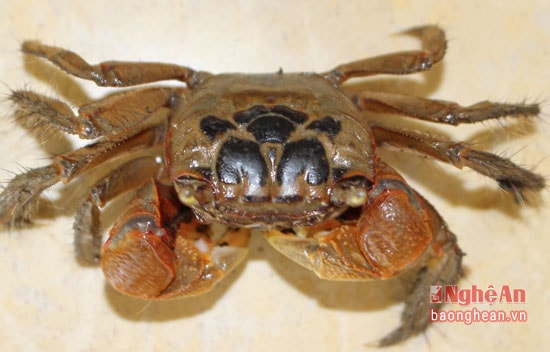 |
| A spotted crayfish in Hung Nguyen.The mud crab resembles a regular crab in shape, with hairy legs. |
Mud crabs reproduce quickly and abundantly, living in brackish water areas along rivers such as mudflats, reed beds, and streams. Crabs, on the other hand, usually dig shallow burrows along rivers and rice paddies to hide in and swim with the current. In Hung Nguyen district, people in riverside communes along the Lam River, such as Hung Loi, Hung Nhan, Hung Khanh, Hung Lam, and Hung Phu, often catch mud crabs and other freshwater crabs to supplement their meals and earn extra income.
Depending on the specific conditions of each region, local people have appropriate methods for catching crabs and mud crabs. In the morning, on muddy riverbanks covered with reeds, fishermen row their boats along the shore, erecting two wooden planks to herd the crabs into buckets or basins, or setting up a rectangular net frame with a 7-8 meter long strip at the back. Then, two people use branches to herd the crabs from the reeds into the net frame that has been set up.
Those without nets or boats can use empty mineral water bottles or cooking oil bottles, cutting off the necks, adding bait (bran, snail meat, etc.), and placing them close to the mud in areas where crabs are found along rivers and canals. They wait for many crabs to come in, then pour them into buckets.
In the evening, when the temperature drops, crabs and shrimp come out of their burrows all at once, and people, carrying lanterns, walk along the riverbanks and streams to collect them.
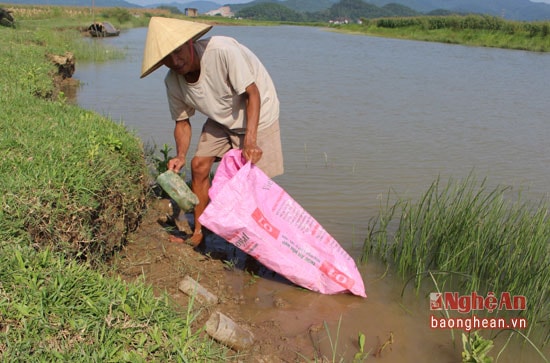 |
| Catching crabs and shrimp by lowering a tube filled with bait such as rice bran or snail meat is a simple yet effective method. |
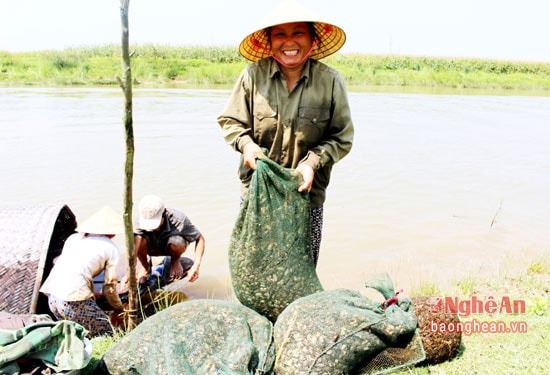 |
| The fruits of a day's work catching crabs and shrimp by the people of Hung Nguyen. |
Hung Loi commune is the area with the highest catch of crabs and mud crabs in the district, approximately 20-30 tons per month (mud crabs account for a small percentage, about 1/100). In Hamlet 2, besides households that catch crabs and mud crabs occasionally, there are two households that have been doing this for many years. Every day, they set off on their boats at 2-3 am and return at 9-10 am, catching 20-30 kg of crabs per boat each day.
Nowadays, crabs and mud crabs have become specialties and are exported to other provinces, making the catching and trading of these creatures more vibrant. The crabs and mud crabs caught are usually brought to purchasing facilities for packaging and daily shipment to Hai Phong and Hanoi.
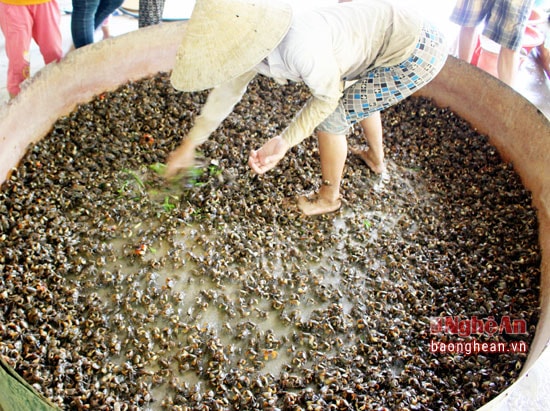 |
| The crabs and prawns caught are brought to the collection point, cleaned, and sorted. |
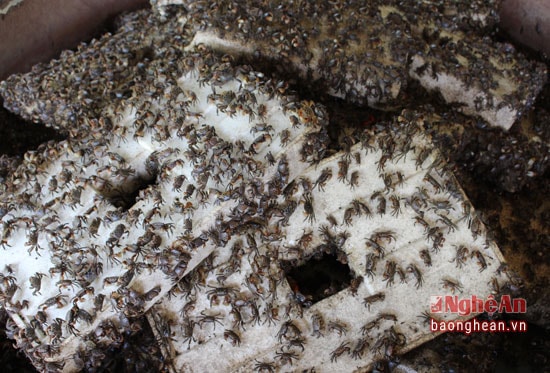 |
| Crabs and shrimp are being prepared for packaging and shipment to other provinces. |
Crabs and mud crabs can be prepared into many nutritious dishes. After initial preparation, they can be steamed, boiled, fried, stir-fried, used in soups, or made into patties, depending on individual preferences. Mud crab paste, made from crab meat with salt, galangal, and roasted rice flour, is a popular specialty with a distinctive flavor.
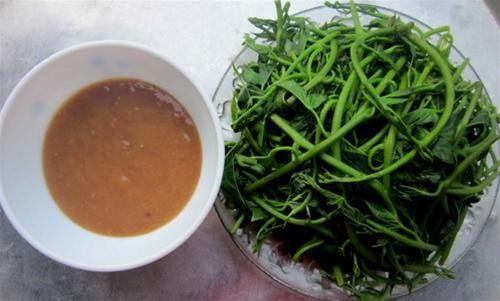 |
| Fermented crab paste is a local specialty served with boiled sweet potato leaves. (Image: Internet) |
Huy Thu