
Searching for the hidden dangers accumulating beneath the surface of hydroelectric reservoirs.
Beyond simply reflecting the damage caused by floods, the five-part report "Sedimentation in Hydropower Reservoirs: A Threat Crossing the 'Red Line'" by Ngo Nhat Lan and a team of reporters (Nghe An Newspaper, Radio, and Television) raises questions about the safety limits of hydropower reservoirs in the face of increasingly serious sedimentation in western Nghe An.
Following the heavy rains and floods of 2025, many areas along the reservoirs of hydroelectric dams in western Nghe An province were littered with mud, debris, and newly formed sandbars. From these scenes, author Ngo Nhat Lan and a team of reporters from Nghe An Newspaper, Radio, and Television posed the question: if mud and sediment continue to accumulate in the hydroelectric reservoirs, what will happen to their flood control capacity and the safety of downstream areas?
That is also the core issue of the five-part report "Sedimentation in Hydropower Reservoirs: A Threat Crossing the 'Red Line'" – the work that won First Prize at the 1st Central Highlands and Central Coastal Region Journalism Awards in 2026.

From a submerged lotus pond to questions about reservoir safety.
According to journalist Ngo Nhat Lan, the series of articles did not begin with technical concepts, but with what the reporting team witnessed firsthand after the natural disaster.
In the Bai Gao area of Chau Khe commune, where there was once a lotus pond of about 5 hectares linked to the livelihoods and community tourism of the local people, the flood on the morning of July 23, 2025, left the landscape almost completely wiped out. The lotus pond was covered with mud, and the bamboo bridge, rest stops, and many tourism facilities were buried.
But according to the reporting team, the worrying aspect is not just the damage that is visible on the surface.
Following the floodwaters, a massive amount of soil, rocks, fallen trees, mud, sand, and debris from upstream continues to flow into the downstream reservoirs of hydroelectric power plants.
“At first, if you only looked at Bai Gao, you might think it was simply flood damage. But when we visited many other reservoirs, we realized this wasn't an isolated phenomenon. Sedimentation has formed sandbanks in the middle of the reservoir, altering the flow and gradually filling up the water-holding space.”Journalist Ngo Nhat Lan shared.
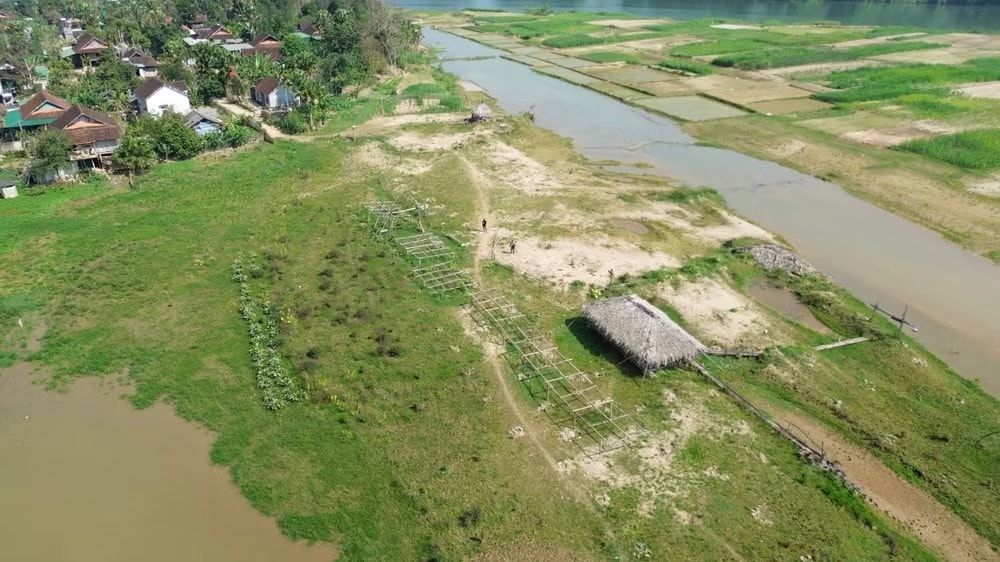
According to the research team, the worrying aspect is that sedimentation not only detracts from the landscape or agricultural land. As more and more soil, rocks, silt, and waste accumulate at the bottom of the lake, its useful capacity and flood control capacity will be reduced. This means that the reservoir's ability to store water, mitigate floods, and regulate flow will decrease, creating greater pressure on downstream areas during extreme rainfall and flooding.
Therefore, the "red line" in this series is not just a warning image, but the safety limit for reservoirs, the environment, and the communities living around the rivers.
Following the trail of mud and soil from upstream
To clarify the causes of the sedimentation, the reporting team continued to delve into upstream areas such as Huu Khuong, Nhon Mai, and My Ly – areas heavily affected after the 2025 floods.
Journalist Ngo Nhat Lan stated that this was the most difficult but crucial part of the reporting, because without going to the source, it would be very difficult to imagine the sheer volume of earth and rocks accumulating in the reservoir.
On one trip, when the group of reporters wanted to go upstream to My Ly, the boat driver said they couldn't continue because the waterway was heavily clogged with trash. As they ventured deeper into Ban Ve Lake, the water was densely covered with bamboo, logs, plastic bottles, and various other types of waste. Some large tree trunks, half submerged, struck the bottom of the boat forcefully, forcing the driver to slow down to avoid damaging the engine.
"From a drone's perspective, the entire stretch of river looks like a 'garbage highway' amidst the mountains and forests. But what's even more worrying is the mud and sediment that lies at the bottom of the lake – something invisible to the naked eye but which accumulates over time and poses a much greater danger."Journalist Ngo Nhat Lan said.
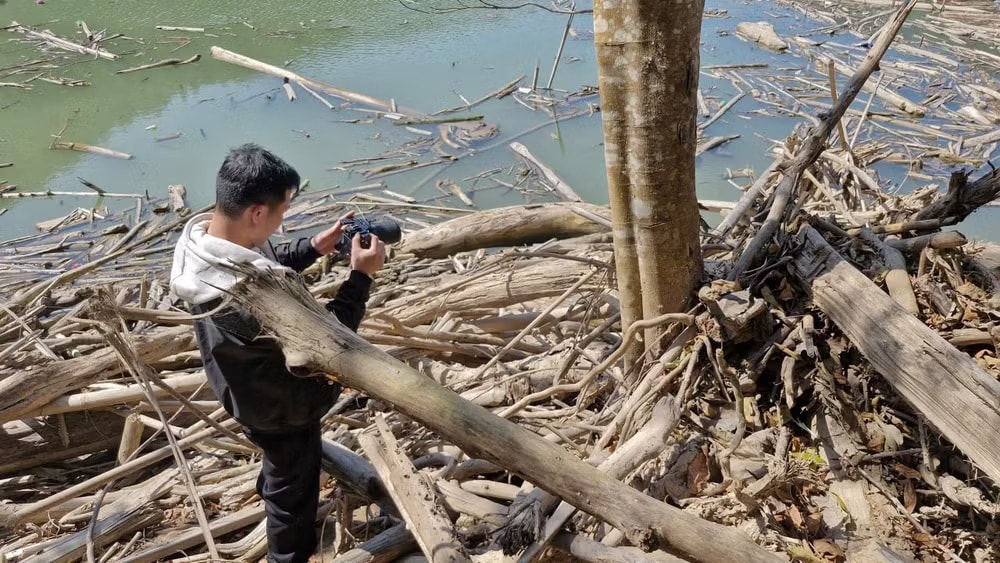
From Bản Vẽ, the team of reporters continued to Nậm Nơn, Khe Bố, and Chi Khê to document landslides, silted-up streams, and agricultural land swept away by the river. In many areas, the river's flow was almost completely altered after the floods.
These trips helped the authors connect a chain of causes: extreme rainfall, landslides, rocks and soil from upstream, fallen trees and debris being washed away, all accumulating in hydroelectric reservoirs. When the river is divided by hydroelectric dams, the reservoirs become places that retain this enormous volume of sediment.
From the scene to the parliament
According to journalist Ngo Nhat Lan, while a series of articles might attract attention with only on-site images, it lacks the weight to become a significant journalistic issue.
To clarify the extent of the danger posed by sedimentation in the reservoir, the authors further consulted monitoring reports, technical documents, dam safety inspection records, and expert opinions.
Through their research, the team discovered that not all projects had adequate assessments of sedimentation conditions, while the actual situation on the ground had changed significantly after the floods in 2025.
Notably, the 2024 sediment monitoring report for the Khe Bo hydropower reservoir shows that the amount of silt and sand accumulated after 11 years of operation has reached nearly 20% of the reservoir's designed capacity.
"These figures show that sedimentation is no longer just a feeling or a personal reflection of the people, but a risk that can be measured by data."Journalist Ngo Nhat Lan shared.
From there, the series continues to explore the issue of responsibility: who is responsible for monitoring sedimentation, who is accountable for monitoring, dredging, and assessing the safety of reservoirs as their flood control capacity continues to shrink?
The issue was not merely a reflection of the situation on the ground, but was raised at the 35th session of the Nghe An Provincial People's Council in 2025 as a matter directly related to the safety of the downstream area and the lives of the people.
"We wanted the series of articles to follow a consistent thread: from the site of siltation, to the upstream causes, then to technical data, management responsibilities, and the need to improve the legal framework."Journalist Ngo Nhat Lan said.
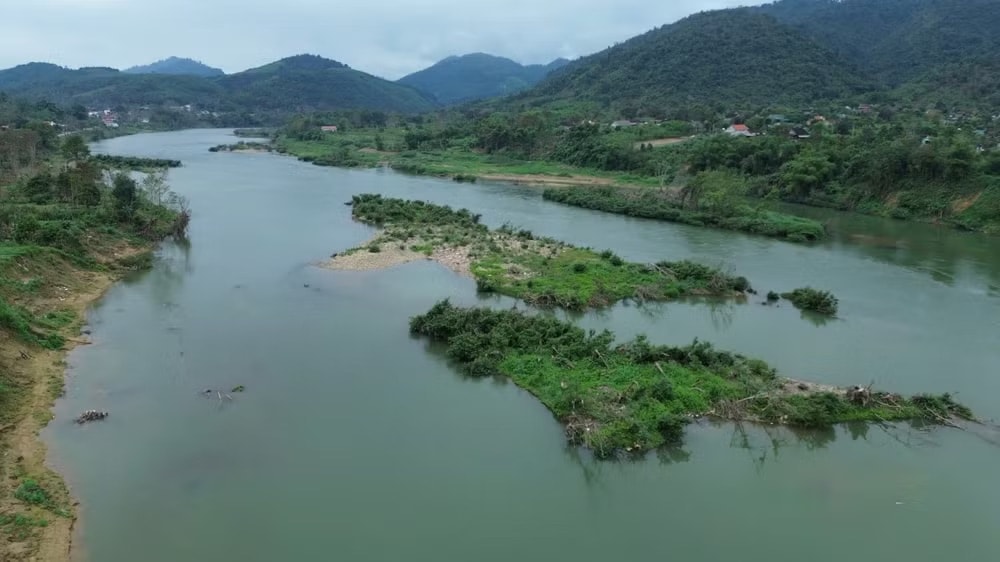
Journalism delves into the "hidden side" of risk.
According to journalist Ngo Nhat Lan, the most difficult thing when working on this series of articles is maintaining composure in your approach.
"We are not vehemently denying the role of hydropower. But any development that crosses the 'red line' regarding the environment and safety needs to be promptly warned against."He shared.
Therefore, this series not only reflects the damage after the floods, but also attempts to clarify the dangers that have been silently accumulating beneath the lake's surface over the years.
Looking back on the journey of creating the investigative series, journalist Ngo Nhat Lan believes that the most valuable thing is not just that the work has highlighted an environmental threat, but also how journalism can clarify issues that are often obscured by technical language.
Sedimentation in reservoirs is a dry concept. But when it manifests itself through a buried lotus pond, a boat unable to proceed due to trash covering the lake's surface, a silted-up stream, or a house precariously perched on the edge of an landslide, the reader will understand that this is no longer just a problem for the hydropower industry.
“There are risks that don’t appear immediately. They accumulate at the bottom of the lake, in diverted currents, in outdated reports, in responsibilities that go unaddressed. A reporter’s job is to go there, read the files, and ask thoroughly to see those risks before it’s too late.”Journalist Ngo Nhat Lan shared.
For him, the weight of the series lies in the fact that journalism not only recounts what happened after the natural disaster, but also contributes to warning about what could happen if these "red lines" continue to be ignored.
Beneath the seemingly calm surface of lakes and reservoirs, layers of mud, waste, sediment, and even gaps in accountability may be silently accumulating day by day. And when the press correctly identifies these issues, it gives society another opportunity to reflect on how people treat rivers, nature, and their own safety.


