(Baonghean.vn) - These images, taken at the Quynh Thuan salt fields (Quynh Luu, Nghe An), show the hard work and sweat of the salt farmers.
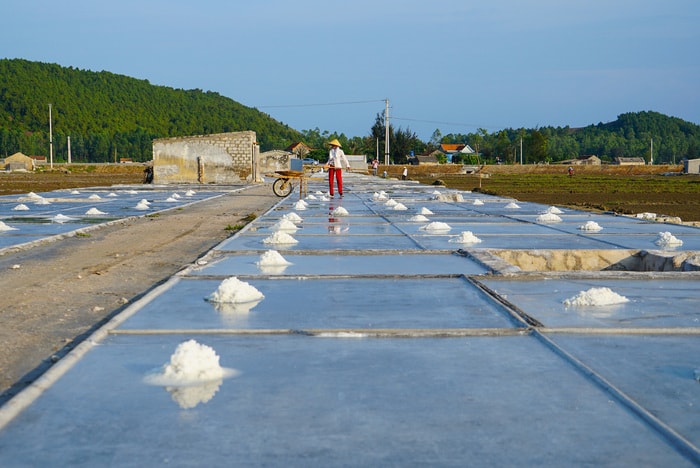 |
| For the people of the coastal area of Quynh, salt making is not just a means of livelihood, but also a way of life, a family tradition passed down from father to son. Photo: Ho Chien. |
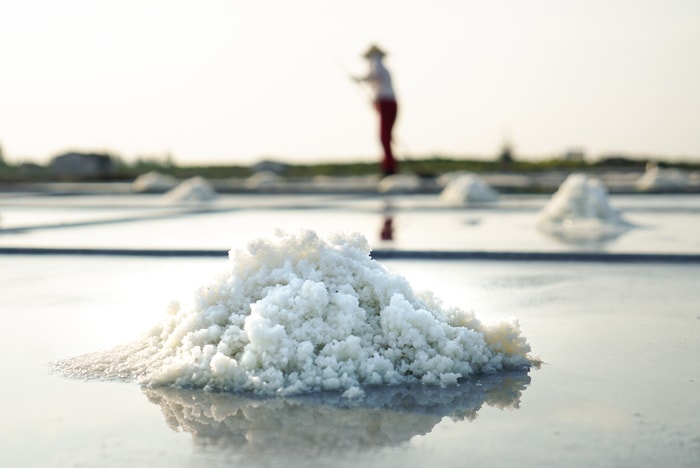 |
| To obtain the white, crystallized salt produced by the sun, wind, and seawater, salt farmers must work on the sunniest days, from dawn until dusk. Photo: Ho Chien |
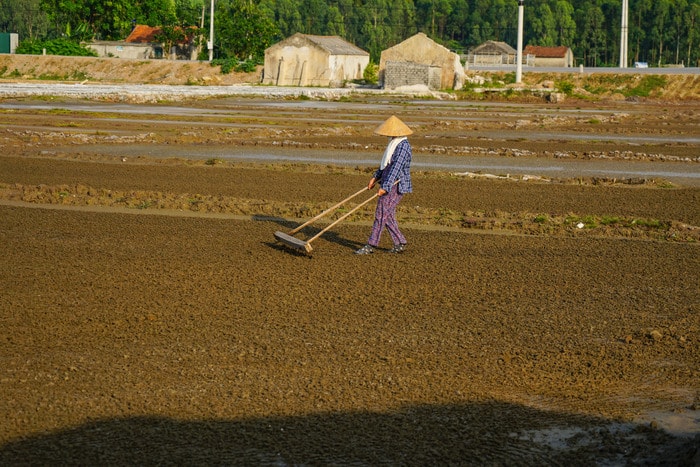 |
| Salt production involves a series of steps following a fixed time sequence. Salt fields must be meticulously prepared, tilled to loosen the soil, combined with frequent irrigation with seawater and sun drying to increase the salt concentration. Photo: Ho Chien |
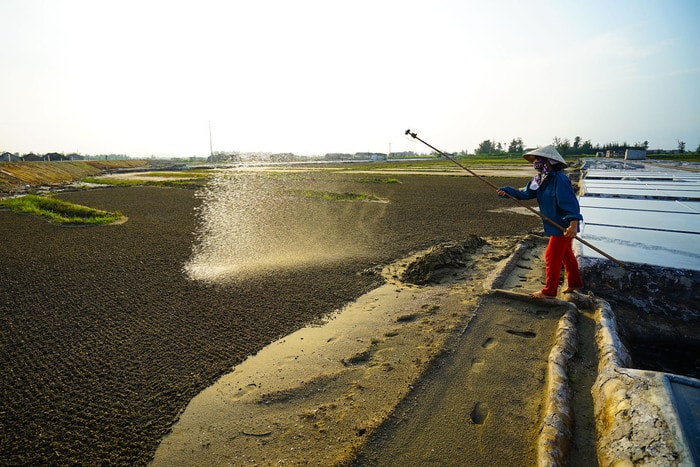 |
| Once the salinity reaches the desired level, the soil and sand are placed in a separation tank, and seawater is continuously added to filter and obtain saturated brine in the settling tank. Photo: Ho Chien |
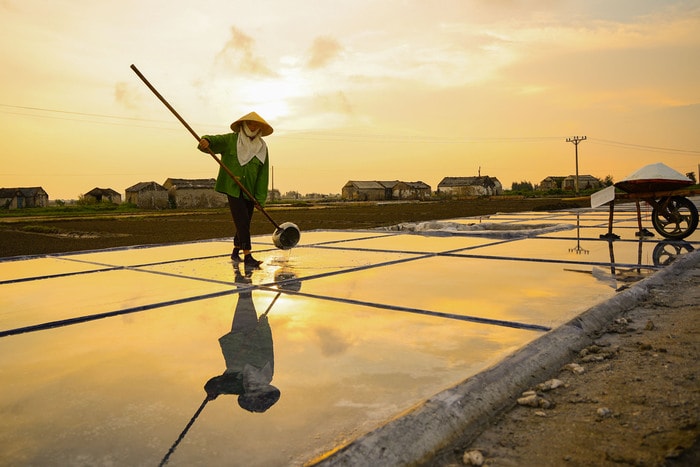 |
| The saturated brine (called salt water) is then poured onto the drying racks to allow the water to evaporate completely. Photo: Le Thang |
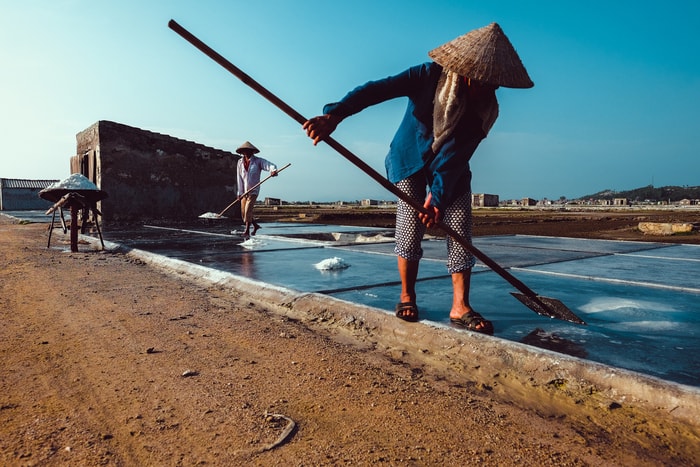 |
| Seawater, exposed to sun and wind, has crystallized into salt crystals on the salt pans. Salt farmers pile the salt onto pushcarts. Photo: Le Thang |
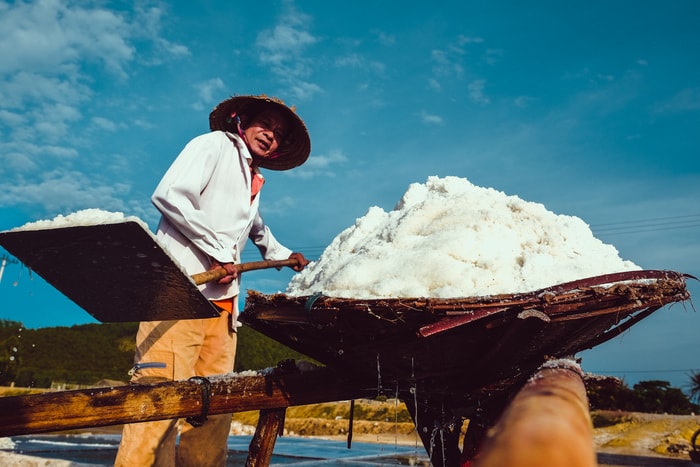 |
| Loading salt onto trucks to transport it to warehouses. Photo: Le Thang |
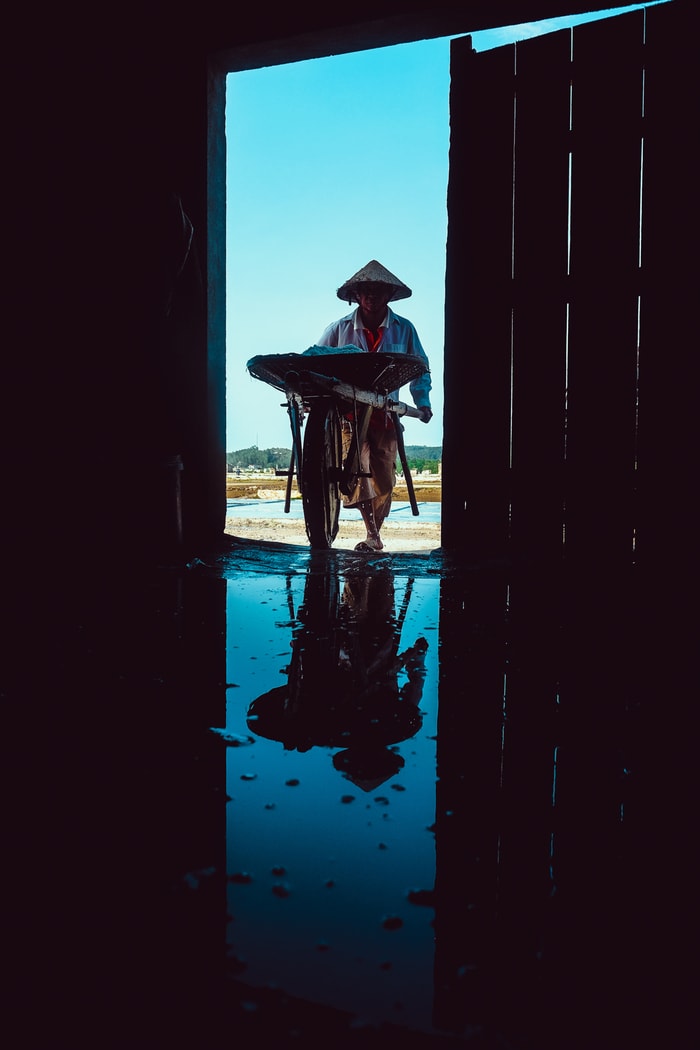 |
| Small salt storage sheds are built amidst the salt fields, on the vast, sun-drenched and windswept plains. These are where the salt is stored after each day's harvest. Photo: Le Thang |
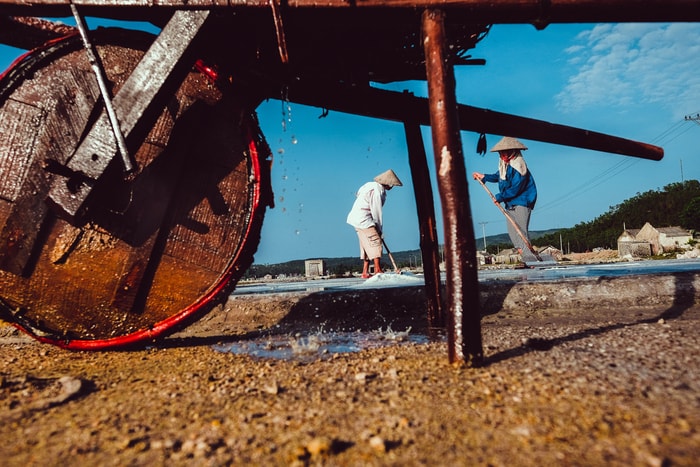 |
| The wheels turn steadily across the fields, as patient as the salt farmers of this region. Photo: Le Thang |
Le Thang - Ho Chien



