
Measuring salinity and retaining freshwater for spring rice irrigation in Nghe An.
(Baonghean.vn) - Despite being on the April 30th and May 1st holidays, workers operating the Nghi Quang (Nghi Loc) and Ben Thuy sluice gate systems are still diligently monitoring water sources (measuring salinity) and ensuring water quality for irrigation and daily life.
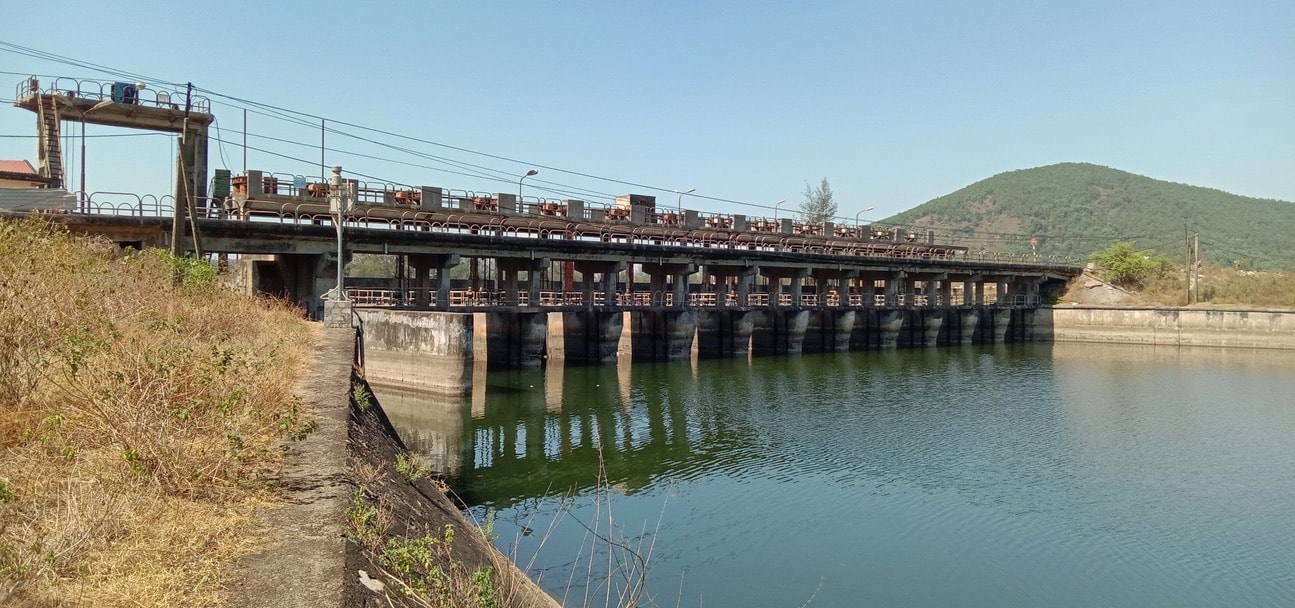 |
The Nghi Quang sluice gate system is tightly closed to prevent saltwater intrusion. Photo: Van Truong |
Guarding the canals to retain freshwater.
At the Nghi Quang sluice gate in Nghi Loc district, irrigation workers are currently deploying equipment to measure salinity levels.
A worker said: "Every day, we use salinity measuring devices at various locations to obtain accurate results. After taking water samples from the surface, middle, and bottom layers of the river, we use the measuring devices to analyze and update the data hourly to ensure water quality. This allows us to promptly warn local authorities and the Southern irrigation system, advising people to use water rationally and minimize the harmful effects of saltwater intrusion."
Upon detecting saltwater intrusion, the operating team must wait for the tide to recede and promptly open the sluice gate (sluice gate) 1.5 meters wide to release the bottom water (discharge saltwater) at a flow rate of approximately 10 cubic meters.3/S.
Mr. Hoang Van Huong, Head of the Nghi Quang Barrage Station, said: The Nghi Quang barrage system, located in Nghi Quang and Nghi Thiet communes, Nghi Loc district, plays a crucial role in preventing saltwater intrusion, preserving freshwater, and serving irrigation for agricultural production in southern Nghe An province, covering 23,000 hectares of rice paddies, industrial zones, and residential areas in Nam Dan, Nghi Loc, Hung Nguyen districts and Vinh City.
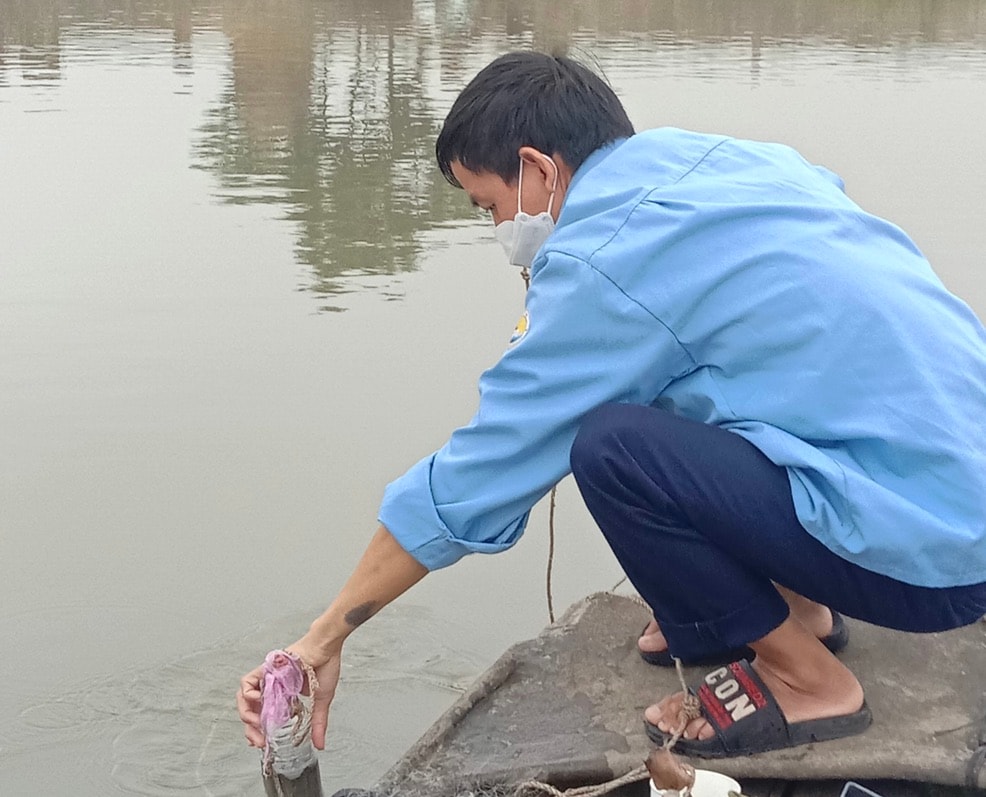 |
Workers at the Nghi Quang sluice gate system take water samples to measure salinity on the Cam River. Photo: Van Truong |
Recently, due to the extremely low water level of the Lam River and the limited freshwater flow to the downstream area of the Cam River, saltwater intrusion has occurred every year since the end of the spring crop, especially from the Nghi Quang sluice gate to the Phuong Tich bridge in Nghi Phuong commune, causing difficulties in...agricultural production.
The current challenge is the severe deterioration of the Nghi Quang sluice gate system. All 13 automatic gates, including flat sluice gates, arch gates, and automatic gate locks, are broken. The bridges are also in disrepair, with damaged bridge girders. Saltwater intrusion occurs through leaks in the gates; during the drainage season, the locking system malfunctions, making it impossible to proactively drain floodwaters.
"Currently, to cope with saltwater intrusion caused by leaky drainage systems, we have to use old blankets rolled up and hire divers to 'insert' them. However, this is only a temporary solution. In the long term, the Nghi Quang sluice gate system needs to be upgraded; otherwise, saltwater intrusion will increase, affecting water quality and crops," Mr. Hoang Van Huong further shared.
According to a report by Nam Irrigation Company Limited, thanks to effective water monitoring, approximately over 3,000 hectares of rice fields along the Cam River in Nghi Tien, Nghi Hung, Nghi Phuong communes... in Nghi Loc district and some communes in Hung Nguyen district still have safe irrigation water and are not affected by saltwater intrusion.
Nghe An province does not yet have a salinity monitoring station.
Mr. Nguyen Truong Thanh, Head of the Irrigation Sub-Department, said: In recent years, Nghe An has been one of the provinces affected by climate change. Especially the drought and saltwater intrusion into inland areas during the hot season have caused many agricultural production areas in the province to lack irrigation water.
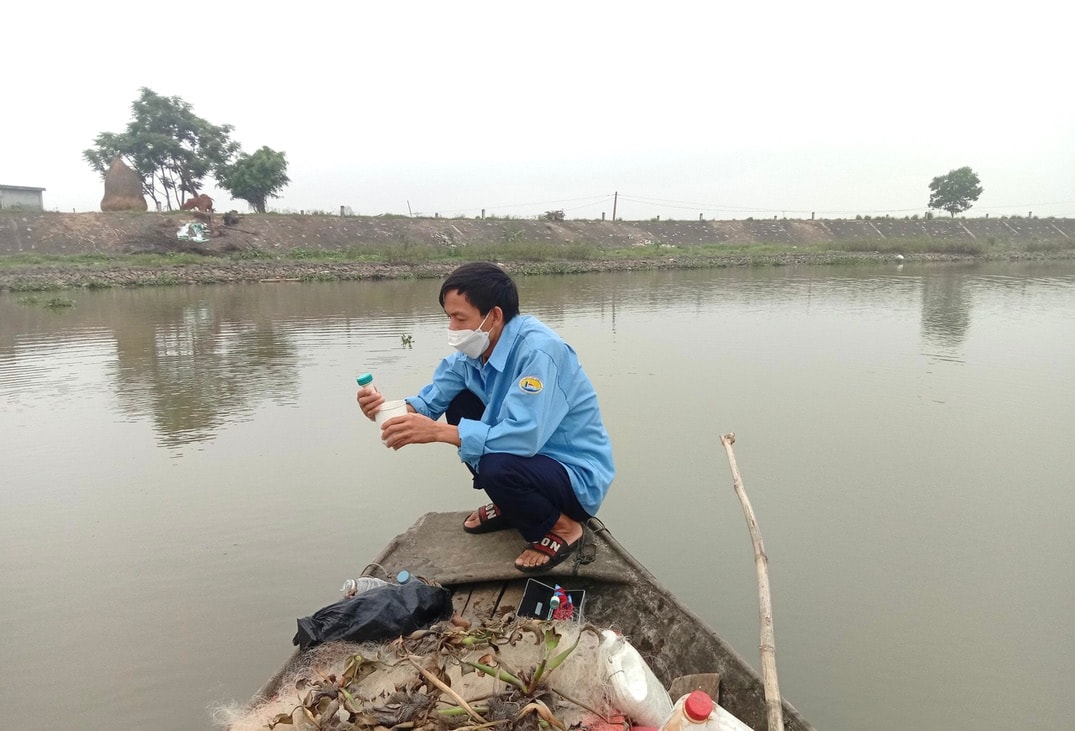 |
Workers had to borrow boats from locals to go to the middle of the Cam River to collect water samples to measure salinity. Photo: Van Truong |
To protect crop areas and minimize damage from drought and saltwater intrusion, the Irrigation Sub-Department has directed irrigation management units in the southern districts of Nghi Loc, Hung Nguyen, and Nam Dan to assign workers to be on duty at key sluice gates in their areas. They are also strengthening water monitoring on rivers, at key sluice gates, and in inland areas, as well as at pumping stations at risk of salinity intrusion. They are to close all key sluice gates when salinity levels are high. Simultaneously, they are to inform local authorities about water quality and absolutely prohibit pumping when salinity levels exceed 1‰.
The relevant authorities update the water level fluctuations of each tide and measure water quality, adjusting salinity control and discharge accordingly. They strictly manage water resources, preventing leakage and loss; during periods of severe drought and salinity intrusion, they prioritize water for domestic use and drinking water for livestock.
At the same time, localities in the province are carrying out maintenance and repair measures for damaged and degraded structures; accelerating the construction progress of drought and salinity control projects to put them into operation and exploitation, promptly preventing saltwater intrusion and storing freshwater to serve production and people's lives during the hot season, such as the project to upgrade the Mo River dike, the section passing through coastal communes including Quynh Bang, Quynh Luong, Quynh Minh, Quynh Nghia (Quynh Luu)...
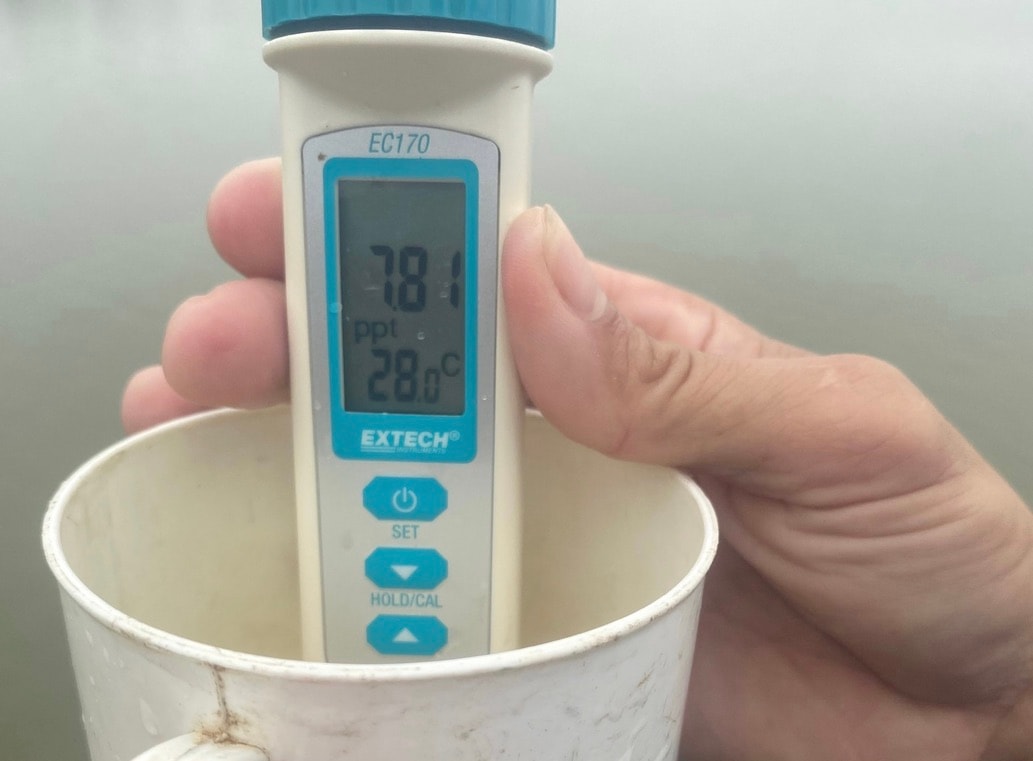 |
The meter displays salinity readings. Photo: Van Truong |
A representative from the North Central Meteorological and Hydrological Station stated that Nghe An province has the Lam and Cam river systems, which are often affected by salinity intrusion during the hot season. However, the difficulty lies in the fact that Nghe An currently lacks salinity monitoring stations. Currently, the meteorological and hydrological agency only has one salinity monitoring point on the Lam River (near Ben Thuy Bridge - Vinh City).
This salinity monitoring point operates primarily manually, mainly during the hot, dry season to monitor saltwater intrusion events. Due to the lack of dedicated salinity monitoring stations and the reliance on manual methods, salinity monitoring remains challenging, and a detailed assessment of saltwater intrusion across the entire region is not yet possible.
In the long term, it is essential for the State and investment programs and projects to develop a modernized and automated salinity monitoring system to assess the current state of salinity levels and accurately and quickly predict saltwater intrusion, thereby ensuring efficient rice irrigation.


