
The delegation from Nghe An province visited revolutionary historical sites in Ho Chi Minh City.
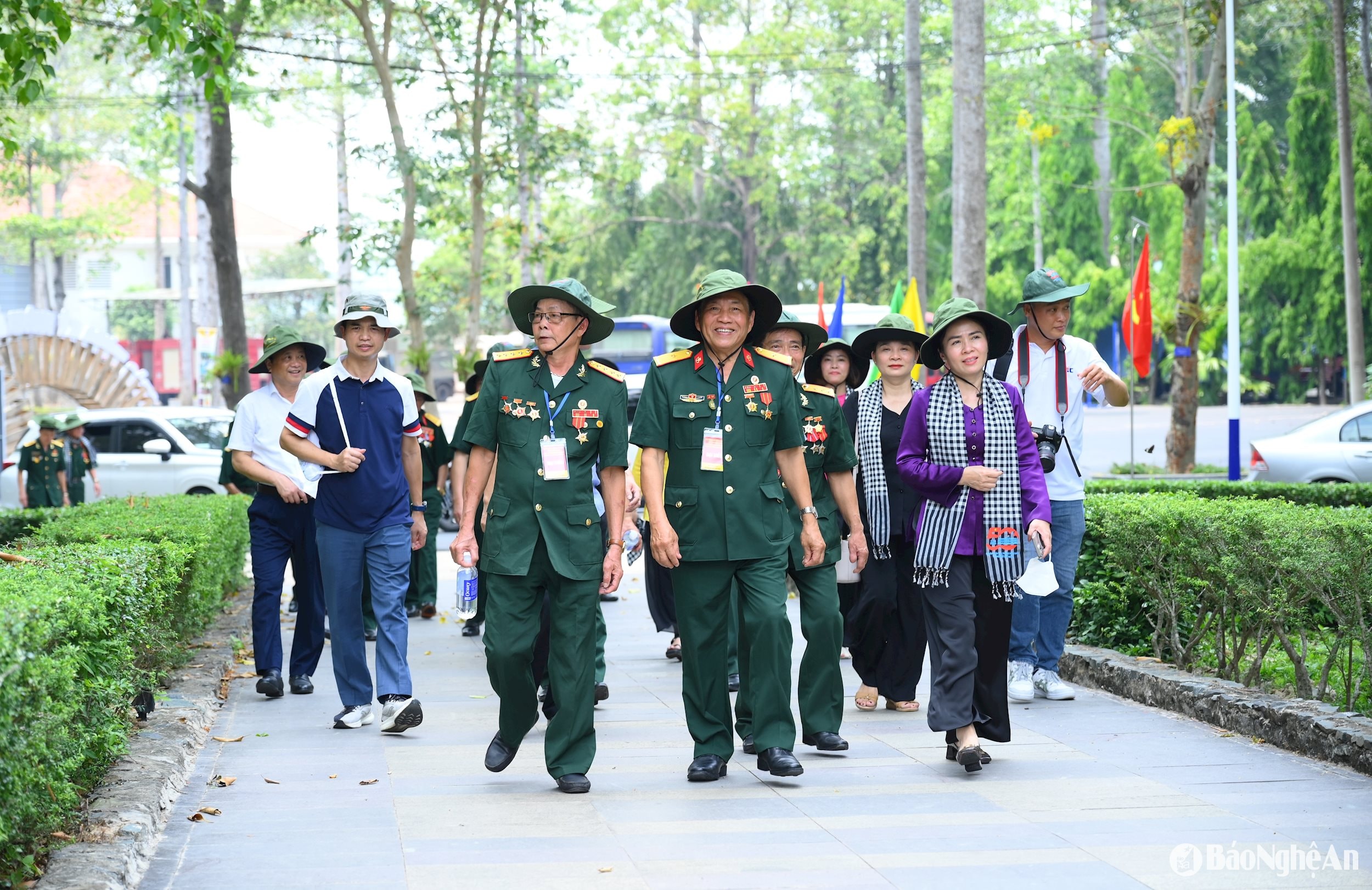
On the morning of April 19th, as part of the program commemorating the 50th anniversary of the liberation of Southern Vietnam and the reunification of the country (April 30, 1975 - April 30, 2025), the delegation from Nghe An province, led by Ms. Vo Thi Minh Sinh - Deputy Secretary of the Provincial Party Committee, Chairwoman of the Provincial Fatherland Front Committee, and Head of the Provincial National Assembly Delegation, visited the Independence Palace historical and cultural site and the Cu Chi Tunnels historical site.
The delegation included members of the Provincial Party Committee: Thai Thi An Chung - Deputy Head of the Standing Delegation of the National AssemblyNghe An province; Nguyen Van Hai - Deputy Head of the Provincial Party Committee's Internal Affairs Department.
Also attending were representatives from the Provincial Party Committee's departments, the Provincial Party Committee Office, the Provincial Military Command, the Provincial Police Department, the Department of Health, the Department of Education and Training, the Provincial Youth Union, the Provincial Women's Union, the Provincial Veterans Association, and veterans who were officers and soldiers directly contributing to the great victory of Spring 1975.
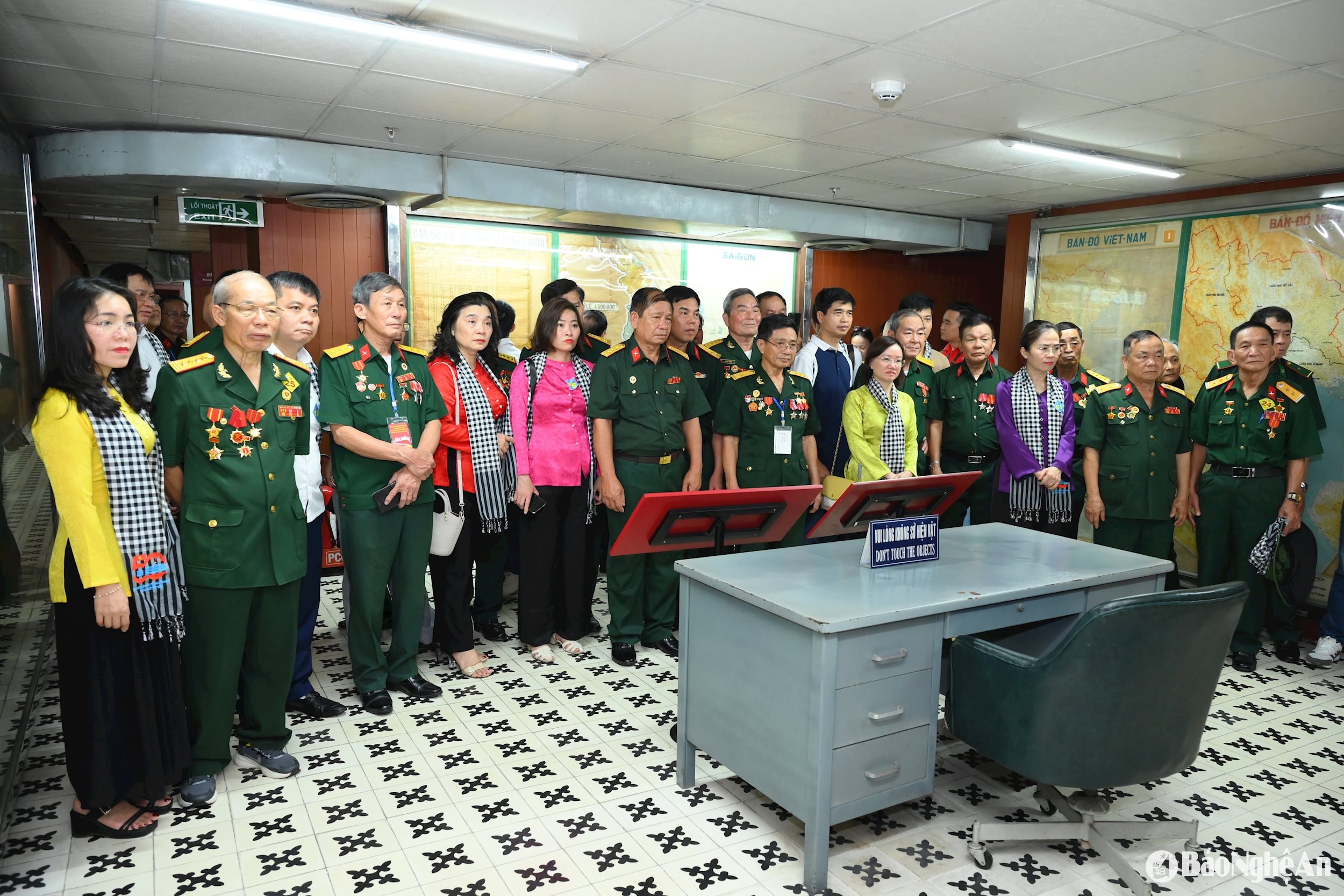
Participating in activities during the 50th anniversary celebration of the liberation of Southern Vietnam and the reunification of the country, the delegation visited the Independence Palace historical and cultural site, which is associated with the 50th anniversary of the liberation of Saigon (April 30, 1975 - April 30, 2025).
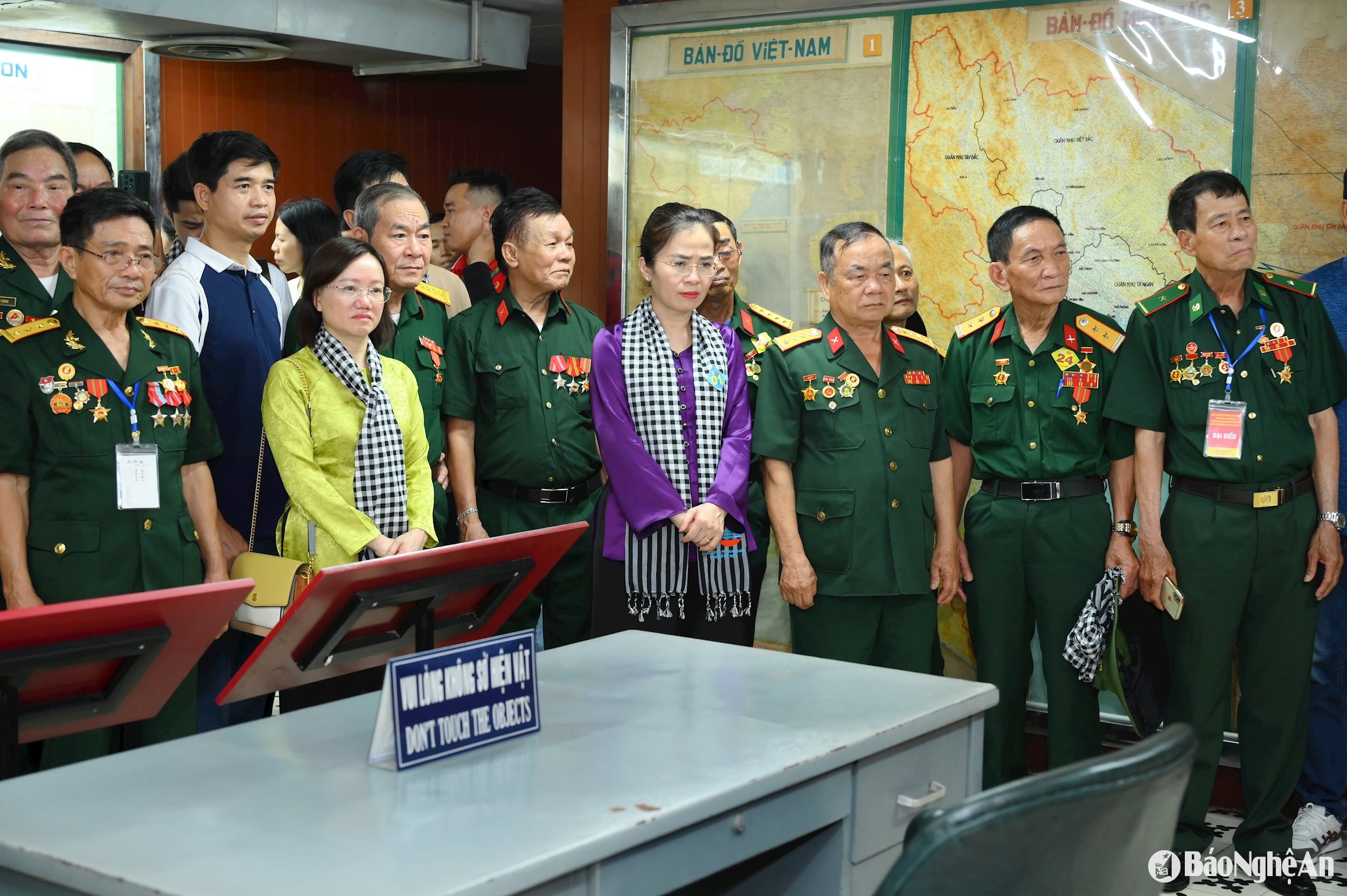
At exactly 10:45 AM on April 30, 1975, Tank 843 of the Liberation Army, belonging to Company 4, Battalion 1, 230th Tank Brigade, 2nd Corps, led the formation and rammed through the side gate of the Independence Palace. Following this, Tank 390 rammed through the main gate and advanced straight into the palace. At 11:30 AM the same day, Lieutenant Bui Quang Than, the company commander of Tank 843, raised the flag of the National Liberation Front of South Vietnam on the roof of the palace, marking the complete victory of the resistance war against the US and the reunification of the country by the Vietnamese army and people.
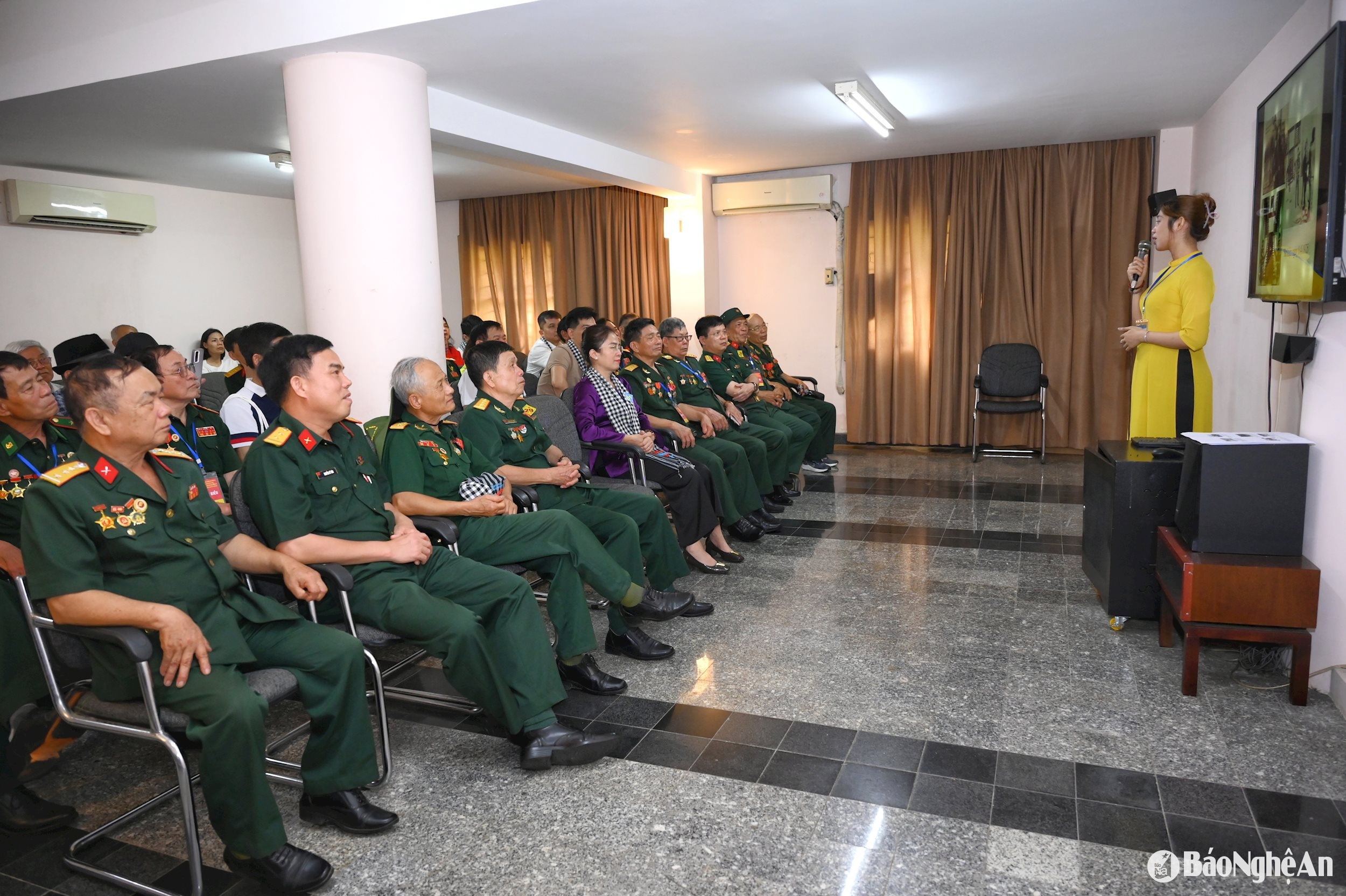
From November 16th to 21st, 1975, the Independence Palace was chosen as the venue for the Political Consultative Conference on the reunification of North and South Vietnam. Subsequently, conferences to unify mass organizations nationwide were also held there. To commemorate these significant political events, the government decided to rename the Independence Palace the Reunification Hall.
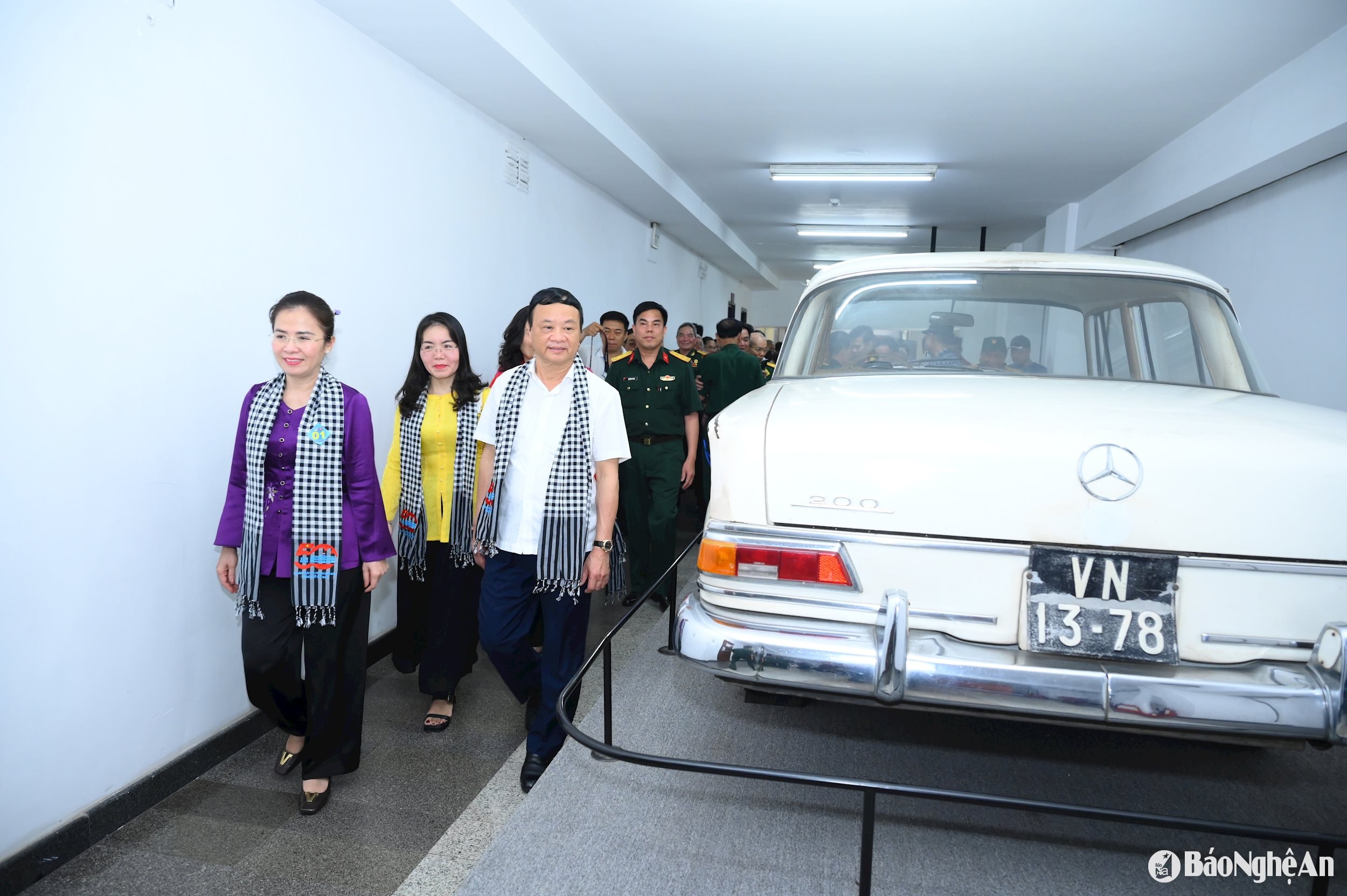
On June 25, 1976, the Minister of Culture (now the Ministry of Culture, Sports and Tourism) signed Decision No. 77A/VH-QD, classifying the Independence Palace as a National Historical Monument.
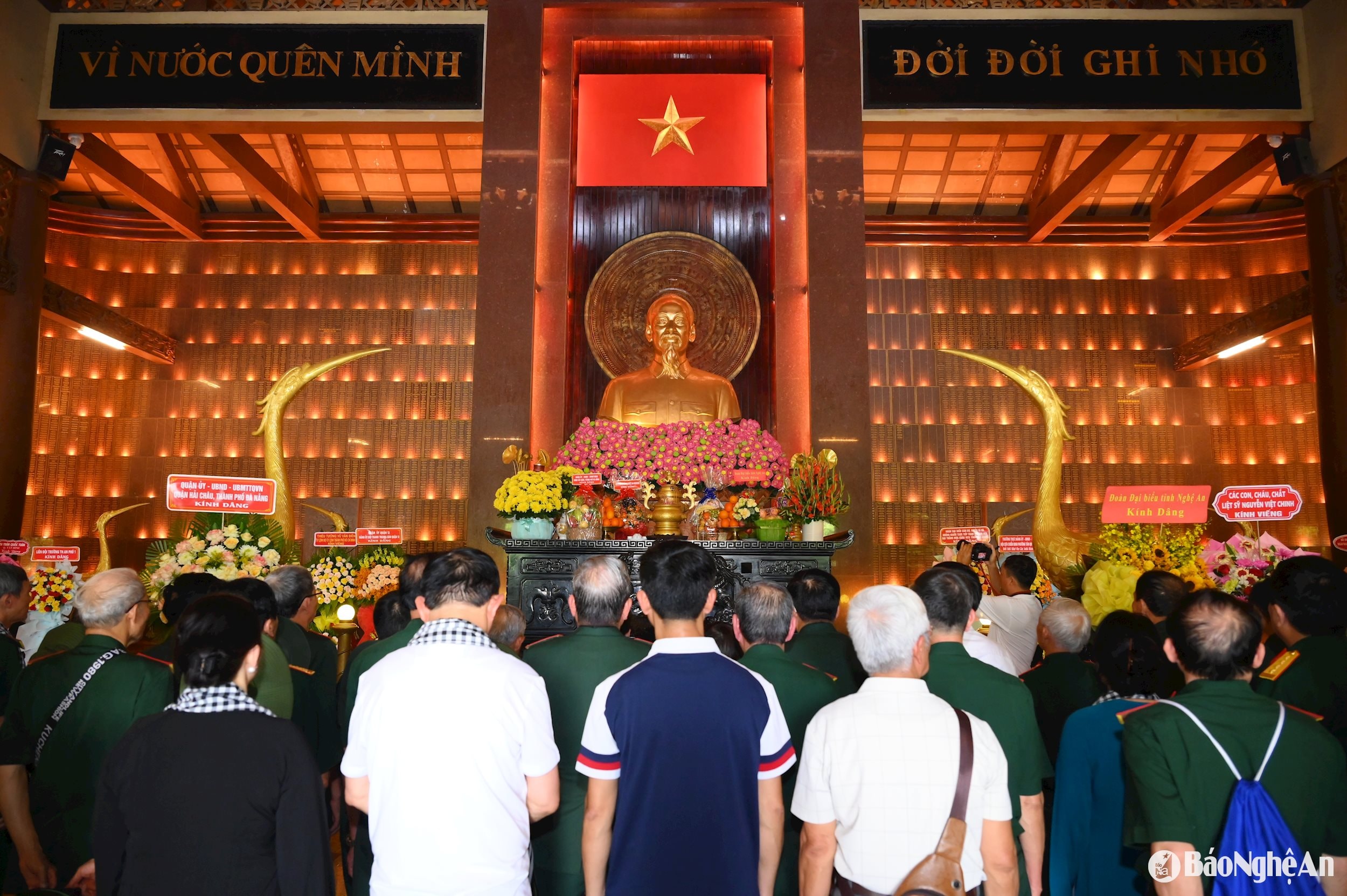
On the same day, the delegation visited and reminisced about the glorious historical memories at the Cu Chi Tunnels historical site - a place that commemorates the indomitable will of our army and people during 30 years of fighting against invading enemies to win independence and freedom for the Fatherland.
With the slogan "not an inch will be given up, not a millimeter will be surrendered," soldiers, militia, and Party and government agencies, along with the people, dug tunnels, trenches, and fortifications day and night, regardless of bombs, bullets, rain, or sun, actively building "fighting villages and hamlets" to establish a "ring to destroy the Americans," creating a solid defensive position to encircle, attack, wear down, and annihilate the enemy.
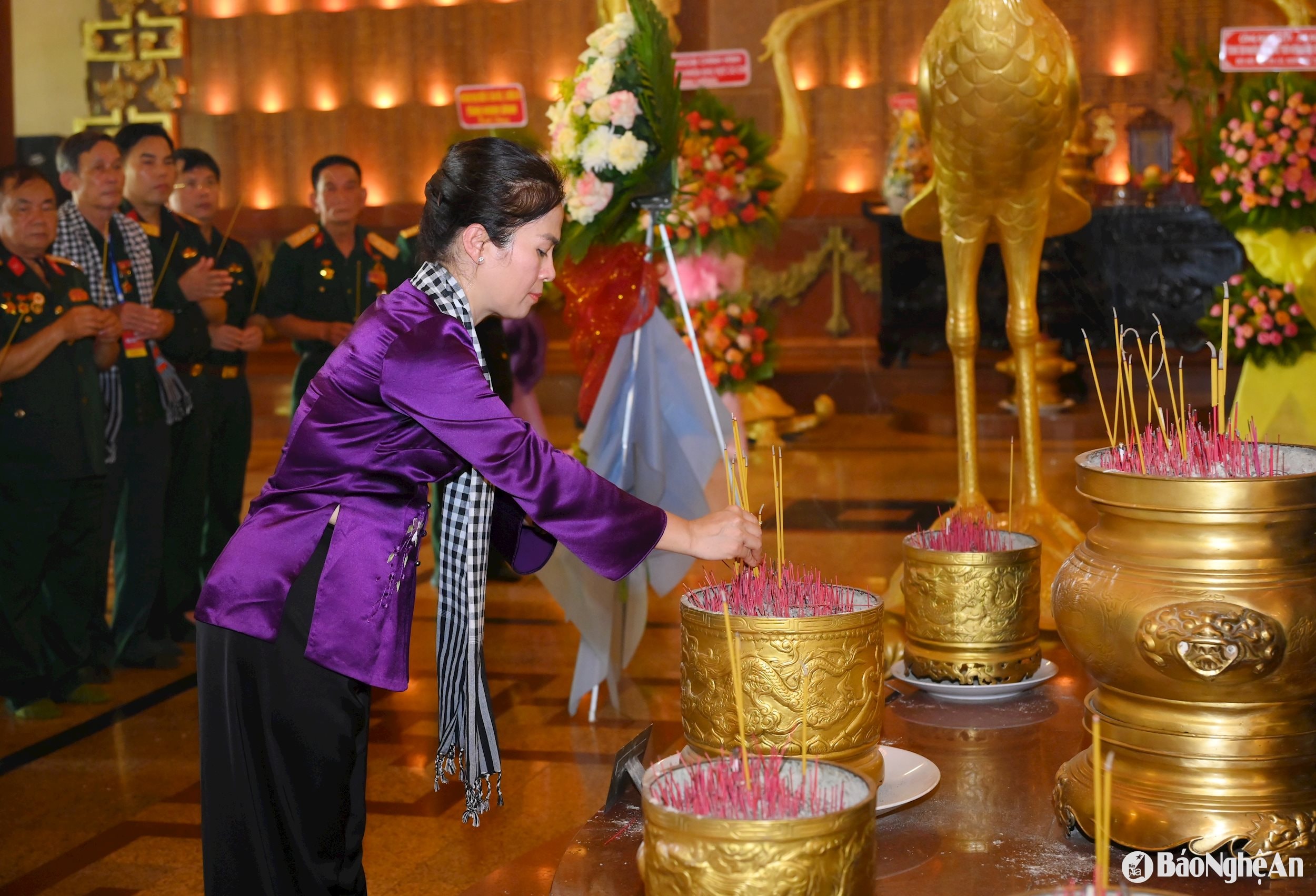
Using only rudimentary tools and equipment, the soldiers and people of Cu Chi created a massive tunnel system with 250 km of underground passages, connecting villages and hamlets.
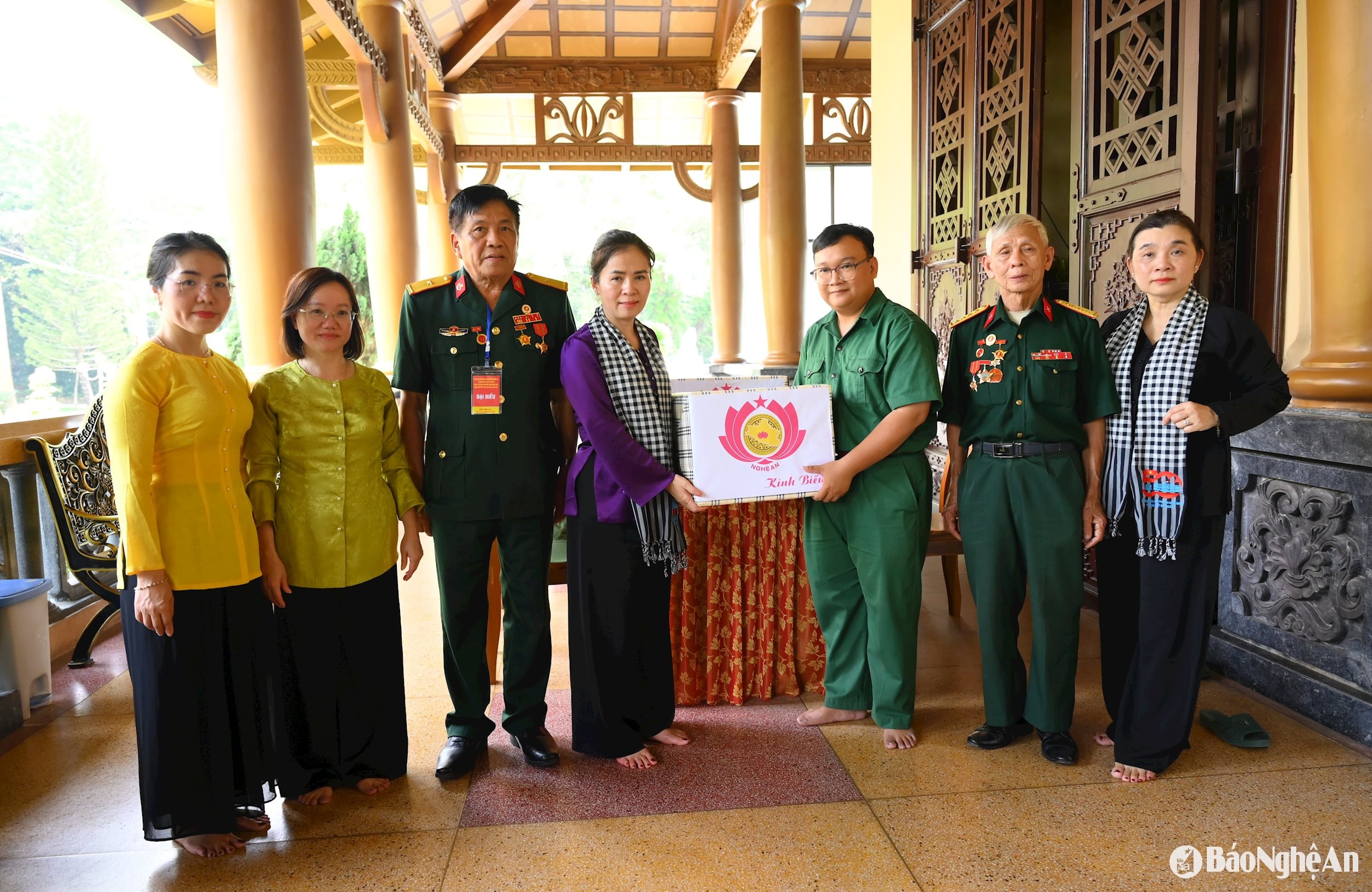
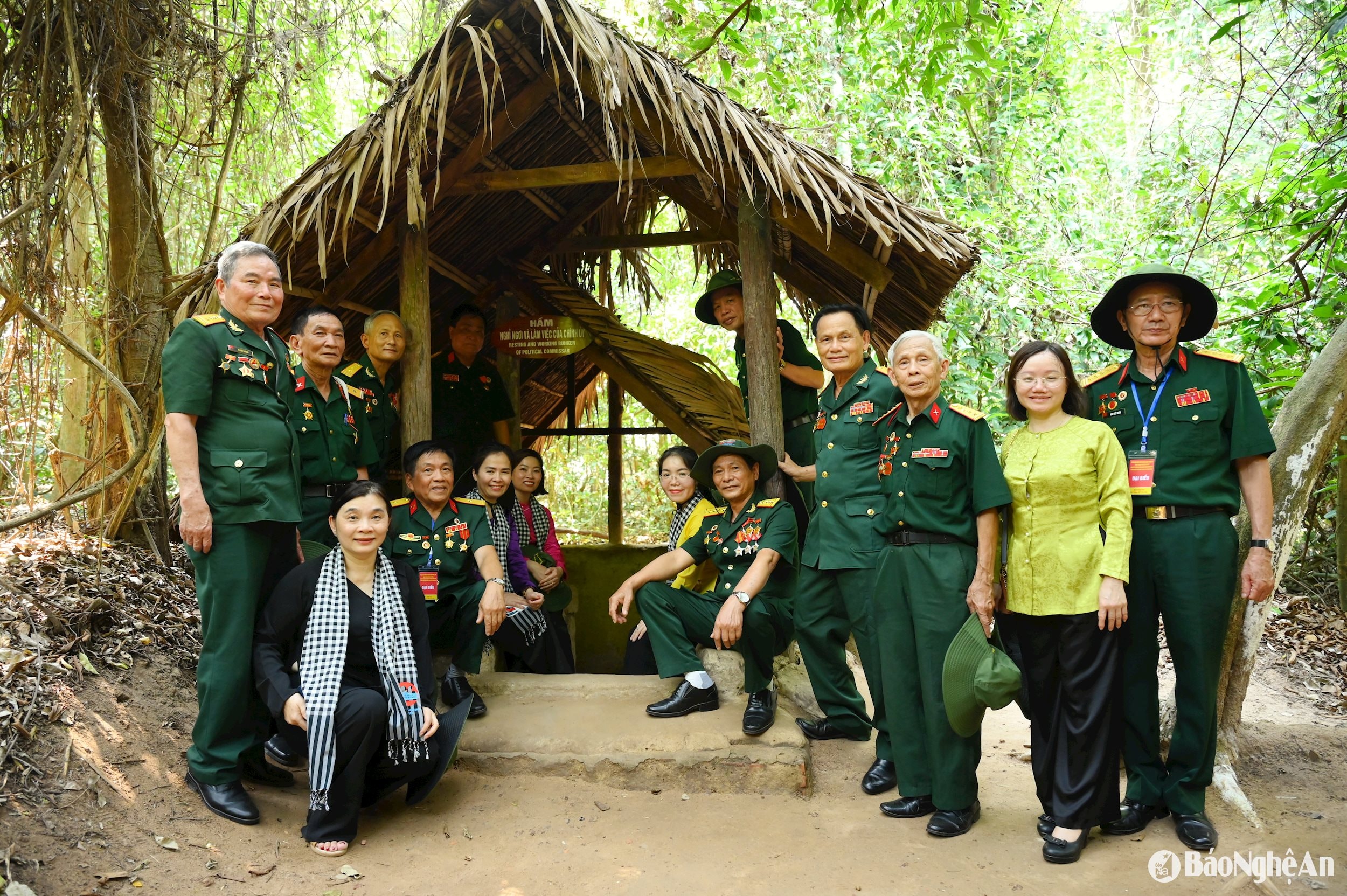
Relying on the tunnel system, the army and people of Cu Chi tenaciously held their ground, fighting the enemy with a three-pronged attack strategy based on the motto "grab the enemy by the waist and strike," employing close-quarters combat tactics such as sniping, ambushes, and surprise attacks, maximizing the combined strength of people's war, neutralizing many of the most modern weapons, foiling the enemy's schemes, and contributing to the great victory of Spring 1975.


