(Baonghean.vn) - Located within the Gam Mountain - Dinh River complex (Yen Thanh district), Gam Pagoda, a historical and cultural relic, is one of the religious and spiritual structures with unique artistic features reflecting ancient cultural beauty.
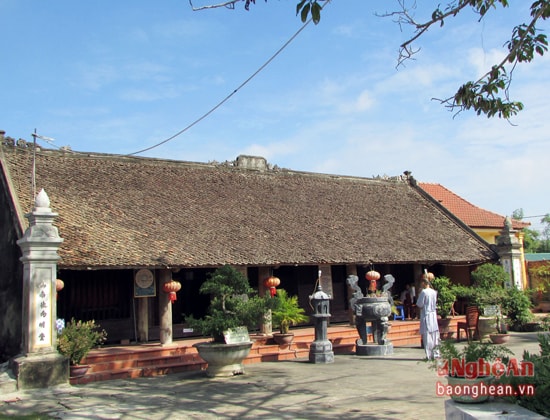 |
| According to documents, artifacts, and historical records, Gam Pagoda was built during the Tran Dynasty, belonging to the Truc Lam sect - a Zen Buddhist lineage founded by Emperor Tran Nhan Tong, which was the official form of Buddhism in Dai Viet. |
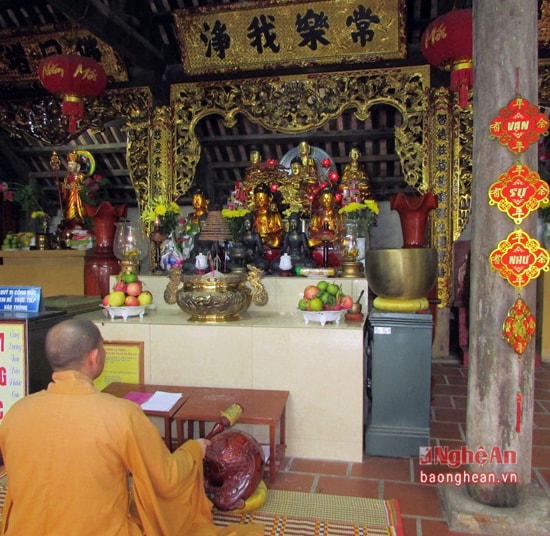 |
| With the attention and investment of the local government, the pagoda is gradually being restored and renovated to a majestic and imposing state, aiming to preserve the cultural values that our ancestors painstakingly built, and to enrich the cultural beauty of Nghe An province. |
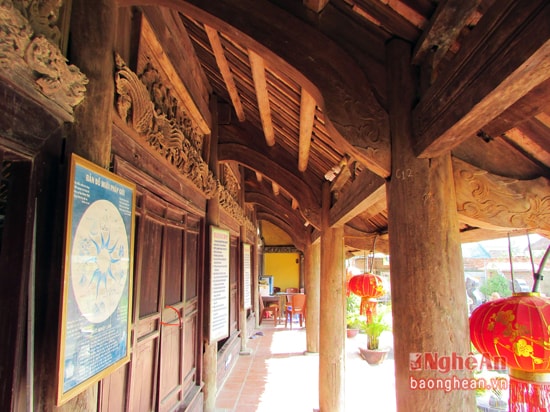 |
| Gám Pagoda, formerly known as Chí Linh Temple, comprises a complete set of ancient architectural structures. The main hall, a five-bay structure made of ironwood, is joined together by tightly fitted mortise and tenon joints. |
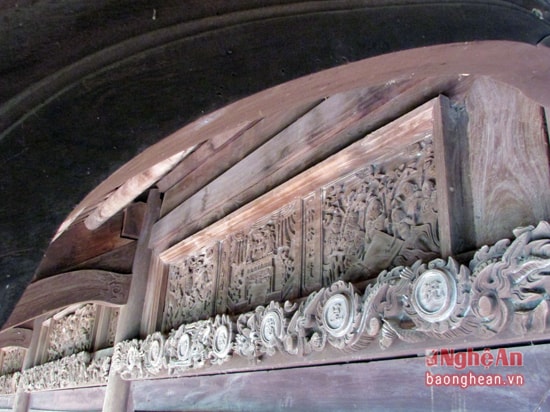 |
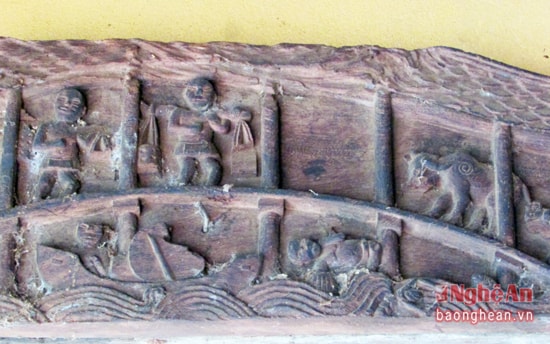
| A unique artistic feature here is the system of carved panels on the front windbreaks, extending throughout the five bays. These openwork carvings feature various raised and recessed figures, including different decorative motifs. Prominent among them are the four mythical creatures (Dragon,麒麟, Turtle, and Phoenix), highlighted by patterns depicting scenes of "The Seven Sages of the Bamboo Grove," "The Four Seas of the Southern Mountains," and "Scholars, Farmers, Craftsmen, and Merchants," all rendered with soft, peaceful lines. |
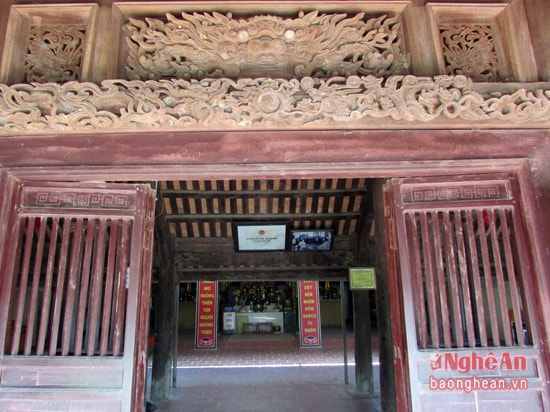 |
| In the central section, there are intricately carved reliefs of intertwined dragons, while below, skilled artisans have incorporated carved images such as: Two dragons worshipping the moon, interspersed with images of a phoenix holding a book, a carp transforming into a dragon, etc. |
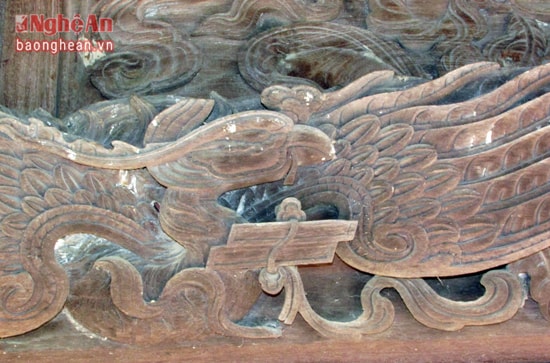 |
| With the art of relief carving, sacred animals are depicted vividly, meticulously, softly, gracefully, and vigorously, with well-balanced decorative themes, creating a sense of closeness between nature and humanity. This reveals the skillful hands and exquisite sculpting artistry of ancient craftsmen, as if they wanted to imbue this tangible cultural heritage with the cultural traditions of their ancestors for generations to come. |
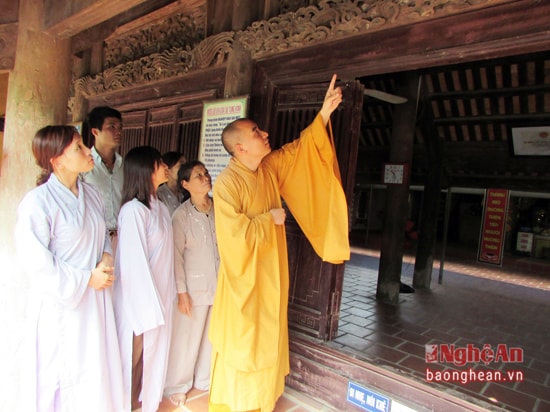 |
| Venerable Thich Tue Minh, Deputy Abbot of Gam Pagoda (Xuan Thanh), said: "All the patterns and motifs on the wooden parts exude profound humanistic values, reflecting the traditions of the Vietnamese people: nobility, purity, loyalty, gentleness, resilience, and a soul inclined towards goodness, virtue, beauty, and optimism for a peaceful life." |
 |
| Through countless historical upheavals, wars, changing political systems, and the harshness of nature, the original architectural art of the temple has been preserved and maintained by the people, closely linked to the historical evidence of the land and people of Ke Gam. |
Sun



