
The taro stems evoke the soul of the countryside.
(Baonghean) - On the weekend, my younger brother called and said, "Today Mom is making steamed fish with pickled taro stems, and there's also taro stem soup with clams, and pickled taro stems mixed with lime leaves and shrimp paste dipping sauce, sister! Please try to bring the kids down." "Wow, the pickled taro stems mixed with finely chopped lime leaves and red chili powder... it looks so tempting!" I tasted each piece of the sour, salty, and spicy taro stems... It's been a long time since I've enjoyed taro stems, and it brought back nostalgic memories.
Every time we ate taro stems, my grandmother would say that taro is the easiest plant to grow; all you need is a pond, lake, or ditch running nearby, and it will thrive. Later, as I grew up, I learned that touching taro stems often causes itching. No wonder, when I was little, I saw my grandmother uprooting small taro plants and planting them in the mud. Wherever her hands touched the taro, they itched. At first, I thought the mosquitoes from the pond were biting her thin, bony hands. That time, it was raining heavily and the wind was biting. My grandmother, hunched over, came back into the house from the taro patch, a handful of small taro plants, about 30 or 40 centimeters tall. She placed the bundle of taro stems down in the corner of the yard and scratched herself from her arm to her hand. Her face at that moment was so pitiful.
I ran to my grandmother, gently stroking her arm, and whispered, "Grandma, did the mosquitoes by the pond bite you again?" My grandmother smiled, a kind smile on her lips, always chewing betel nut, and looked at me affectionately, "I waded into the taro garden, that's why it itched, my child." That evening, my grandmother pulled up young taro plants for my aunt to take home and plant in the garden. Back then, every house in my village had a taro garden to cook in soup, make pickles, and feed the pigs in the sty with the leaves. Many times, my sisters and I, being playful, would gather our friends from the village and pick countless fresh green taro leaves that my grandmother had carefully tended to make umbrellas. We innocently played, unaware that we had ruined a whole section of my grandmother's taro pond, yet my grandmother never scolded us. Instead, she would ask, "Did anyone get itchy?" After that incident, my grandmother advised: "Children, never pick the leaves of the taro plant like that again, so that the plant can grow and flourish..."
Back then, my grandmother's taro pond was the greenest and most thriving in the village. Every day she would go out to tend to it, picking off worms and snail eggs from the taro plants. My sisters and I simply thought it was because our whole family loved eating the taro dishes she made. As I grew older, I learned that she used those ever-expanding taro plants to pickle and carry to Thoi Market to sell, raising my sisters and me. My father worked far from home frequently, and my mother was busy with her office all day, so my grandmother took care of everything. The people in my village grew up partly thanks to those jars of pickled taro, which provided food for extended periods or for carrying to the market. Taro plants could be harvested a month after planting. When one patch was cut, another would grow tall and healthy, so taro was available for sale year-round.
Nowadays, people in my hometown are no longer as poor as they used to be. No more families pickling large jars of water spinach and using large stones to weigh it down for longer storage. Life is much better now. Water spinach is cooked with clams, used in snakehead fish soup, steamed fish with water spinach, chicken cooked with water spinach... And the pickled water spinach dish isn't just simply scooped from the jar and dipped in fish sauce or shrimp paste; now, people in my hometown add lime leaves, sugar, chili, and garlic – it's delicious!
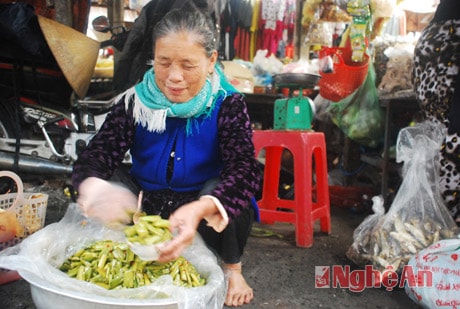 |
| Ms. Hoa has been selling salted bamboo shoots at markets for nearly four years now. |
Speaking of taro stems, I remember a story my grandmother told me decades ago, while we were sitting enjoying the cool breeze under the bamboo grove in front of our house. Seeing my curiosity about taro stems, she explained: Initially, very few people in my village ate taro stems (both cooked and pickled), because eating them often caused itching. On one occasion, during a family memorial service, my grandmother braised sea fish with pickled taro stems. The dish was incredibly fragrant. Everyone praised the aroma of dill, taro stems, and sea fish, but many people who didn't eat taro stems still had the habit of fearing itchy mouths.
My grandmother picked up a chopstickful of taro stems and offered it to Mrs. Kim. Out of respect for my grandmother, Mrs. Kim ate it with relish. Strangely, she didn't feel any itching at all. Mrs. Kim said, "I haven't dared to cook taro stems for a long time; the whole family has felt itchy after eating them several times!" Mrs. The, sitting next to her, chimed in, "They say you shouldn't complain of itching after eating taro stems to avoid it following your mouth. Several times, when we served a pot of taro stem soup, the grandchildren said the stems were itchy, and then they actually felt itchy while eating." That day, my grandmother shared some of her experience with delicious taro stem dishes that don't cause itching with Mrs. Kim and Mrs. The.
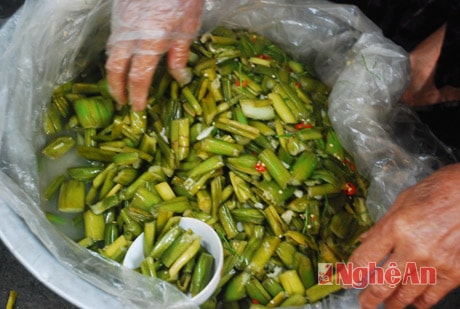
To prepare delicious, non-itchy taro stem soup and pickled taro stems, my grandmother put in a lot of effort. She washes the taro stems thoroughly to remove mud and dirt, then peels them. After peeling, she cuts them diagonally into slices, each slice longer than two finger lengths. After cutting, she soaks the taro stems in a bowl of diluted salt water for about 30 minutes. She then rinses them twice with clean water, and finally rinses them one last time with diluted salt water. She says this meticulous process is necessary to prevent itching when eating the taro stems. After hearing my grandmother share this little "secret," several people followed her advice, and it worked just as she said.
 |
Back then, my sisters and I often enjoyed delicious dishes made from taro stems prepared by our grandmother. Sometimes it was pickled taro stems, sometimes taro stems in a vegetable soup with a few shrimp, and sometimes she made clam soup with taro stems. I can never forget that memorable clam soup. My grandmother boiled the sea clams, took out the meat, sautéed shallots in fragrant oil, mixed in the clam meat, added a tomato for color, squeezed in a few sour starfruit, seasoned with fish sauce and salt to taste, poured in water, brought to a boil, added the taro stems, boiled a few times, then removed from the heat and added a little ripe chili. To vary the dishes made from taro stems, besides clam soup, she also made stir-fried taro stems and taro stem salad, which were extremely appealing. For the stir-fried taro stems, after blanching them in boiling water, she sautéed garlic until fragrant, added the taro stems, mixed them in, added MSG, chili powder, a spoonful of fish sauce or shrimp paste, and sprinkled chopped lime leaves. It was that simple. Putting a piece of the taro in your mouth, you'll taste the fragrant aroma of shrimp paste, the chewy yet soft texture of the taro soaked in delicious, rich spices!
Whenever I miss my grandmother's pickled taro dish, I ride my motorbike to the market to buy some. Sometimes I buy fresh taro to make my grandmother's clam soup, other times I buy pickled taro to make snakehead fish soup or clam soup. Gradually, I became a regular customer of Mrs. Bui Thi Hoa (72 years old) in Hamlet 5, Nghi Van Commune (Nghi Loc District). Mrs. Hoa has been pickling taro for almost 40 years. She makes two types of pickled taro: one for dipping and a sourr one for making soup. People from Quan Banh Market (Vinh City) often come to Hamlet 5, Nghi Van Commune to ask about Mrs. Hoa's pickled taro. Her pickled taro is not only delicious but also very clean. Mrs. Hoa confided that in the old days, she pickled taro to eat as a substitute for food, mainly during the rainy months.
Some neighbors were invited by her to take home some pickled bamboo shoots to eat, and they praised her pickled bamboo shoots profusely, saying they were neither sour nor salty. She also shared her "secret" to making pickled bamboo shoots. After washing the bamboo shoots thoroughly, they are sun-dried for a few days, turning them over several times a day to ensure even wilting. Boiled and cooled rice water (using rice water prevents the bamboo shoots from becoming mushy and allows them to last for several weeks) is used to soak the bamboo shoots for about 1 to 2 hours. Afterward, the bamboo shoots are placed in a jar, layered with a little salt, a bowl of crushed garlic, a bowl of white or brown sugar, and warm boiled water to taste. A fairly heavy stone is placed on top of the bamboo shoots to keep them firm and crispy. After about 2 or 3 days, the pickled bamboo shoots are ready to eat. When served on a plate, the yellow color is very appealing. Because of the small amount of garlic and the well-balanced preparation, the bamboo shoots are not sour and are delicious when dipped in fermented shrimp paste or a lime and chili fish sauce. Steamed taro leaves with fish, or used in sour soup, are pickled more sourly than taro leaves used as a dipping sauce...
Mrs. Hoa recounted that once, during a flood, the water reached her yard and house. Schools of tilapia, seemingly out of nowhere, swarmed into the house and yard. Her whole family gathered them in baskets, and since she had pickled bamboo shoots in a jar, she used them to make a stew with the fish, enough to last a whole month. From making pickled bamboo shoots for her family, Mrs. Hoa became a renowned pickler throughout the village. Many people came to buy her bamboo shoots, so she quit farming and switched to making them, a profession she's pursued for nearly 40 years. She doesn't make a lot, only bringing about two basins of pickled bamboo shoots to the market each day, mostly to regular customers. She sells them all within an hour. She goes to the market every few days, saying that making a small quantity makes it tastier, and that she has to let the bamboo shoots wilt before pickling them. Seeing her passion for pickling bamboo shoots, her children and grandchildren indulge her, even though it's a very laborious process.
Taro stems, a traditional dish, are now found in restaurants and hotels everywhere, not only in Nghe An province but also throughout Vietnam, from North to South. In the North, taro stem noodle soup is a popular dish, especially in the summer. Taro stem noodle soup is refreshing and helps to cool the body... For people in Nghe An, pickled taro stems are a traditional dish. Pickled taro stems mixed with lime leaves, pickled taro stems mixed with bean sprouts, taro stem salad, taro stem soup with fish, or steamed fish with taro stems... Many times when we went out to eat with friends, seeing a plate of pickled taro stems mixed with bean sprouts and lime leaves, we all praised it while eating. It's not a fancy dish, just a simple, rustic dish from our hometown that everyone loves!
Thu Huong


