
Innovate and replicate successful models of mass mobilization.
(Baonghean) - In recent times, the development and replication of effective "people mobilization" models from the provincial to the grassroots level have truly contributed to promoting socio-economic development, ensuring security and order, and strengthening unity among the people...
Effective mass mobilization linked to practical application.
Dien Phong commune was one of the first localities in Dien Chau district to achieve the new rural development goals in 2015. This success was partly due to the development of specific and practical "effective mass mobilization" models, which had a truly positive impact on achieving the targets.
Starting in the two years of 2014-2015, the commune focused on directing community-based development models such as mobilizing people to contribute to building concrete roads, canals, cultural houses; cultural villages; ensuring security and order; and economic development models to increase income...
After achieving the new rural development goals, to further improve the criteria, the commune implemented three more community-based service models, each linked to the responsibilities of various organizations to ensure effectiveness. These included environmental sanitation work undertaken by the Women's Union; the development of high-income fields led by the Farmers' Association; and the maintenance of security and order undertaken by the Veterans' Association.
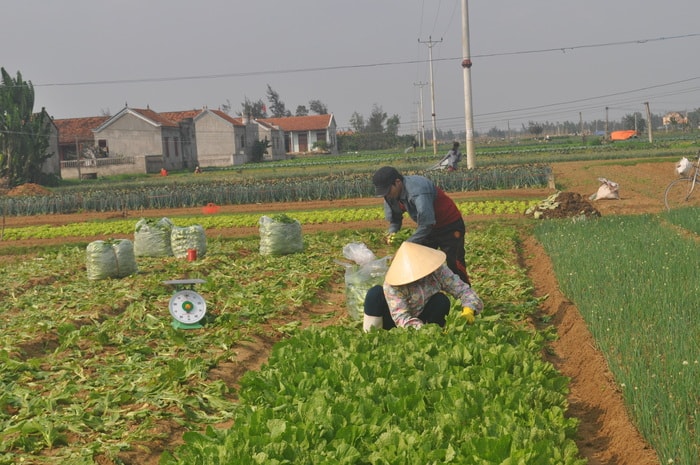 |
| Mobilizing people to build high-income fields in Dien Phong (Dien Chau). Photo: Minh Chi |
In addition, each Party branch and village-level mass mobilization team has developed a model of mass mobilization that suits the practical requirements of each residential area. For example, the villages of Duong Dong, Duong Doai, and Dong Tac have implemented a model of mass mobilization focusing on maintaining rural and agricultural environmental hygiene; the two villages of Tay Ho and Dau Vinh, located at opposite ends of the border with other communes, have implemented a model of mass mobilization focusing on ensuring security and order; and the villages of Nga Nghi and Duong Tien have implemented mass mobilization in the construction of high-income fields...
Comrade Duong Binh Chan - Acting Secretary of the Party Committee of Dien Phong commune - affirmed: The community-based development models implemented in the past have all stemmed from the requirements of fulfilling the local political tasks as well as the difficulties and weaknesses in each residential area. Therefore, most models have been supported and actively implemented by cadres, Party members, and the people, bringing practical results.
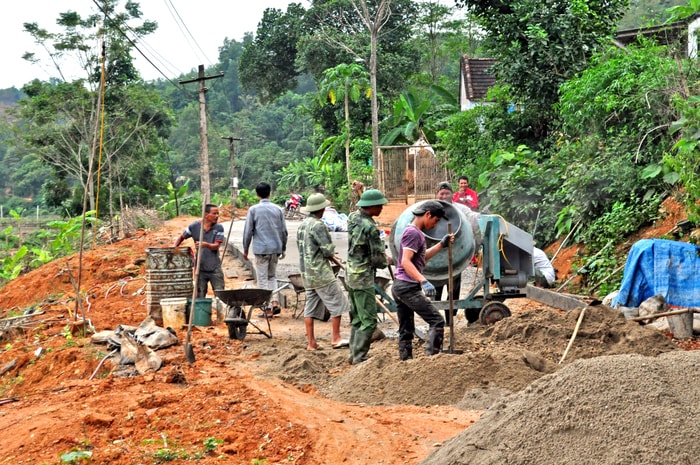 |
| Many localities have chosen the DVK model, mobilizing people to contribute to building new rural areas. Photo: Minh Chi |
In Hung Dao commune (Hung Nguyen district), the campaign to encourage people to shift the structure of crops and livestock and increase income has mobilized contributions from the people to reinvest in the New Rural Development program. To date, low-lying rice-growing areas have been transformed into specialized aquaculture zones; higher, more elevated areas have been planned as integrated farms and livestock breeding farms, with 30 farms and breeding facilities. Favorable rice-growing areas have been developed into large-scale model fields and high-income fields, improving the lives of the people and bringing the average per capita income to over 30 million VND per year.
Following Resolution No. 25/NQ-TW dated June 3, 2013, of the Central Committee of the Party (11th term) on "strengthening and renewing the Party's leadership over mass mobilization work in the new situation," the Provincial Party Committee issued Project 06 on promoting the "skillful mass mobilization" movement and established steering committees for the "skillful mass mobilization" movement at each level.
Through changes in awareness and action, this movement has been systematically and widely implemented from the provincial level down to the commune, hamlet, and village levels, encompassing all aspects of socio-economic development, national defense, and security. Based on practical experience, each district, commune, commune, hamlet, and village selects a model that suits its local reality.
To date, the province has over 3,000 grassroots democracy models, with an average of 2-3 models per district and commune, and approximately 50% of hamlets and villages have such models. These grassroots democracy models have proven effective, not only contributing to improving the material and spiritual lives of the people and maintaining security and order in the area, but also contributing to the effective implementation of grassroots democracy regulations, linked with administrative reform; enhancing the leadership capacity and fighting strength of grassroots Party organizations, the management and operation of the government, and the quality of activities of the Fatherland Front and other mass organizations, contributing to consolidating the political system at all levels, especially in difficult and special areas.
Expand and improve the quality of the model.
Despite the effectiveness and positive impact of the DVK (Democratic and Self-Help) models, the implementation of this movement at all levels still faces some shortcomings and limitations. Regarding this issue, Comrade Hoang Van Bon, Head of the Mass Mobilization Department of Dien Chau District Party Committee, stated: “The guiding principle for the DVK movement is comprehensive across all fields, but in practice, there is a strong focus on models in the socio-economic sector, with less emphasis on models in the administrative, public service, and defense-security sectors.”
For example, implementing administrative reforms is a major issue and should have been pursued through a widespread emulation movement from the district to the commune level, but it has not been directed decisively and effectively. On the other hand, many pressing and prominent issues at the grassroots level, such as handling citizens' complaints and denunciations; land management, issuing land use right certificates, mediation work, etc., have not been selected for implementation of the "DVK" (Democratic and Scientific Research and Development Program).
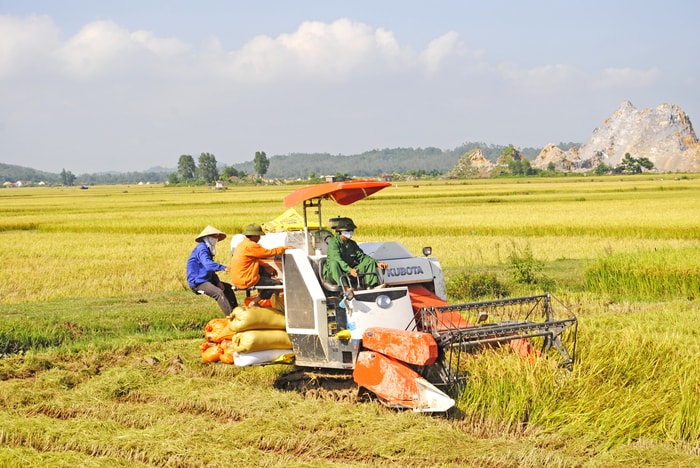 |
| Mobilizing the people to build high-income fields in Hung Nguyen district. Photo: Minh Chi |
The process of studying the practical situation also revealed that some localities registered to build DVK models but did not pay sufficient attention to directing their implementation, leading to low numbers of registered models meeting the criteria after evaluation. Many DVK models were implemented and recognized but have not been re-evaluated.
Some DVK models lack effectiveness and sustainability, especially in environmental sanitation, mobilizing people to shift the structure of crops and livestock, and models of villages and hamlets free from lawbreakers and social vices; villages and hamlets without people having a third child, etc.
According to Comrade Nguyen Manh Khoi, Deputy Head of the Standing Committee of the Provincial Party Committee's Mass Mobilization Department, in the coming time, all levels and sectors need to continue to replicate successful models and exemplary examples of mass mobilization, linking them with the work of building a clean and strong Party, government, and political system; motivating and promoting the people's right to self-governance, mobilizing all resources from the people to develop socio-economic development; and paying attention to resolving the people's urgent and legitimate issues. Emphasis should be placed on innovating mass mobilization work at all levels of government, state agencies, and the armed forces in building successful models and exemplary examples of mass mobilization to create a deep, wide, and sustainable ripple effect...
Minh Chi
| RELATED NEWS |
|---|


