
Dong Bich - the village of poets
(Baonghean) - Dong Bich village would be just like any other village in Nghe An province in my memory, if it hadn't been featured in so many poems and stories by writers who were born and raised there.
The name Dong Bich evokes images of Quy Mountain, the three-branched banyan tree, Nha Vang stream... and peasant mothers lulling their children to sleep and teaching them with folk songs, proverbs, and poetry.
Traveling from Vinh, through Thanh Chuong to Do Luong town, stop at the road to Do Cung ferry crossing, turn left and go a few hundred meters further to find a small village nestled in the middle of the fields. That is Dong Bich village in Trung Son commune, Do Luong district.
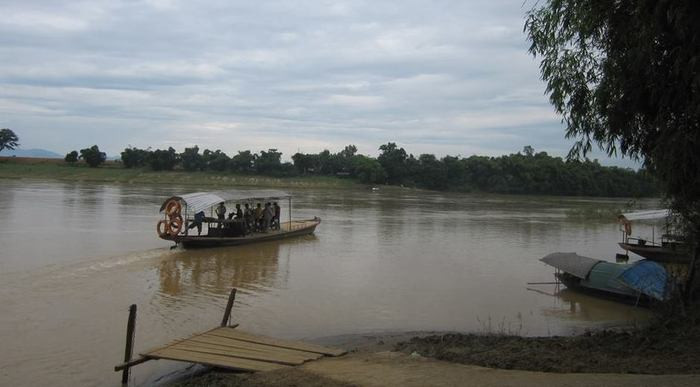 |
| Cung ferry terminal today. Photo: Vuong Trong |
The village is imbued with a timeless tranquility. To the right lies Mount Quy, as if yielding to the village the morning sunlight... Legend has it that the children of Dong Bich village are usually the best students in the region, because heaven and earth have bestowed upon the village all that is brightest and purest in the morning light.
Upon entering the village, you'll be greeted with smiles from the residents. If you stop beneath the village's banyan tree, where the breeze lingers for a moment before departing, you'll find yourself feeling refreshed and at peace. The people of Dong Bich love trees, especially banyan trees. Beneath the banyan tree, villagers sit to enjoy the cool breeze, while the tree itself provides a space for birds to chat. The villagers, plants, and animals live together in harmony.
In this village, you'll find that you almost never hear loud voices. For generations, the villagers have treated each other with smiles and gentle greetings. In this small village, you'll always hear the lullabies of mothers singing to their children.
Those lullabies lulled all the children of the village as they grew up. The village has only one occupation: farming. It has never had a traditional craft. Perhaps that's why the simplicity and honesty of the people of Dong Bich village remain intact to this day. Many writers and journalists who have visited here jokingly say that if there were a secondary occupation in the village, it would be… poetry.
This small village, home to nearly 500 people from the Nguyen Van, Tran Van, Vuong Dinh, and a few other families, is mostly populated by people who know each other and live in love and support. The villagers live long lives, with several having passed away before the age of 100. Of the 500 villagers today, nearly 100 are 80 years old or older.
Normally, after 7 PM, the village is quiet, with only the sounds of people inside each house. However, if you visit during holidays or festivals, you'll see villagers returning from all over the country. On the village roads, vehicles and people bustle about, exchanging greetings. The reunions are filled with color and laughter. No matter where they are or what they do, the villagers always remember their birthplace.
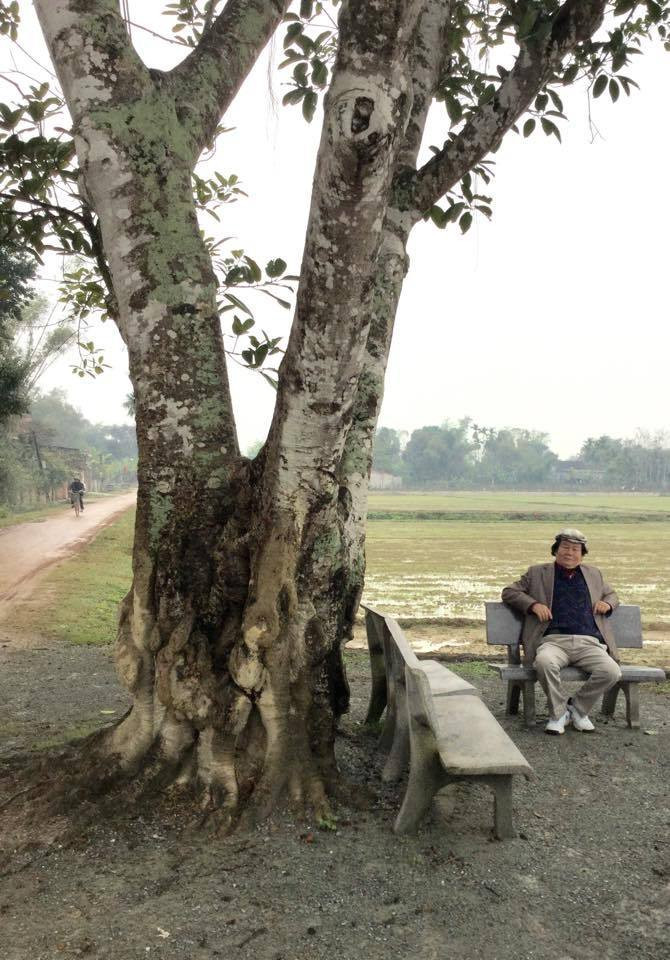 |
| Poet Vương Trọng standing next to the banyan tree in Đông Bích village. Photo: VT |
Then you'll encounter banyan trees and stone benches; the newly built cultural center, its beautiful seating a testament to the affection of villagers living far from home. You'll see paved roads winding around the village, partly reflecting the love of those who have left. The village has nurtured beautiful souls, its children. Those who have left always remember every tree and blade of grass in the village. They remain connected to the village, even in their thoughts.
The older villagers often gather to recount stories from their childhood. These might include tales of ghosts in the Nhà Vàng stream, which remain sacred legends to this day. Poet Vương Cường, a native of Đông Bích village, recounts that his father bathed only in one place his entire life: the Nhà Vàng stream.
It was a stream flowing from the heart of Quy Loc mountain, its water fragrant with the essence of the earth, clear, cool, and sweet-smelling. The sky had been built around it with boulders like a bathing chamber. A small trench was carved where the water flowed. Children in those days often heard stories of figures in white emerging from the Nha Vang stream; villagers insisted they saw young men carrying yokes on their shoulders, marching in unison and singing songs of the Southward March.
Then, at noon and in the evening, ghosts would gather to make a market. The sounds of buying, selling, bargaining, and arguing could be heard clearly. At night, will-o'-the-wisps would light fires and patrol. There were even ghosts who cut medicinal herbs... These spine-chilling stories made the children of yesteryear, now grandparents, "not only afraid to enter the Golden House ravine but also afraid to sleep alone."
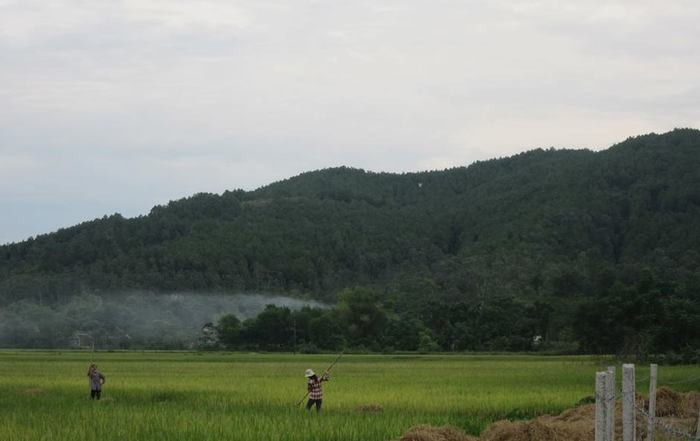 |
| Mount Quỳ, a mountain that has become a symbol of the Đông Bích village, is also the origin of the name of a famous poet from Nghệ An province: Thạch Quỳ - Vương Đình Huấn. Photo: PV |
It could be the story of a "common friend" of many generations in the village, the "buffalo herder of the century" named Lan, who from childhood to old age was always seen leading his buffalo along the bumpy village road every day. He, along with his buffalo, has weathered countless storms and changes, leaving a lasting impression on so many villagers…
It could be a shared dream about the village banyan tree, a banyan tree with three branches and nine shoots, where many jet-black wood-boring beetles live in its hollows. When the banyan fruit ripens and falls, it turns the road purple. Under the tree, people walk and children play. Above, birds hop around, eating fruit and singing. Occasionally, they defecate all over the children's heads and faces.
These could be the mischievous games of their childhood, herding buffalo, cutting grass, catching bees and butterflies, picking wild berries, and collecting dung on Quy Mountain. They could also be the times when young children would sneakily steal pomelos or peanuts from the village. Despite these unusual games, the villagers never considered them bad. The tolerant villagers still gave the children special space, believing in them as children of the village.
Indeed, those carefree games of the past contributed to nurturing souls filled with immeasurable love for their village. So many children of yesteryear, growing up, took up arms and fought on battlefields across the country when the nation faced danger. These sons and daughters of the village went forth, doing everything good, enriching the village's beauty. They knew that only they had the right to beautify their village; no one could tarnish it. A small village has produced hundreds of martyrs, wounded soldiers, and volunteer youth...
That village has hundreds of graduates and dozens of teachers who have spread throughout the country, working and contributing with pride in their village, all bearing the spirit of Dong Bich. That small village has three PhDs and many Master's degree holders. Poet Dang Huy Giang said that, throughout the country, only Dong Bich village and the Vuong family have a collection of poems spanning four generations, with 28 authors and 900 pages of quality poetry, on par with national poetry. In the past, there was the "Ngo family literary school," now there is only the "Vuong family literary school"!
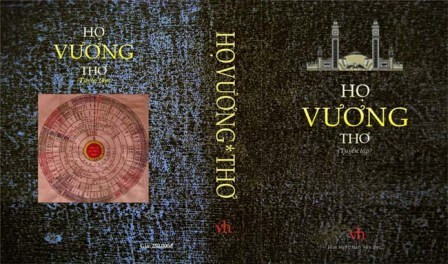 |
| Cover of the anthology of poems by the Vuong family. Photo: PV |
The poet was not exaggerating at all. Because this small village has three poets who are members of the Vietnam Writers Association (they are brothers, uncle and nephew: poet Vuong Trong, poet Thach Quy - Vuong Dinh Huan, and poet Vuong Cuong), many are members of the Provincial Literature and Arts Association, and many others are not members of any association but still write poetry daily. That village, those people of that village, seem to have been born to express the soul of the village.
Dong Bich village has always valued righteousness over wealth. The people cherish and revere culture, and admire what is good and beautiful. In today's market economy, this is also a continuation of the ancients' ideals, extending the qualities of the people of Dong Bich village – a cultural village – to future generations…
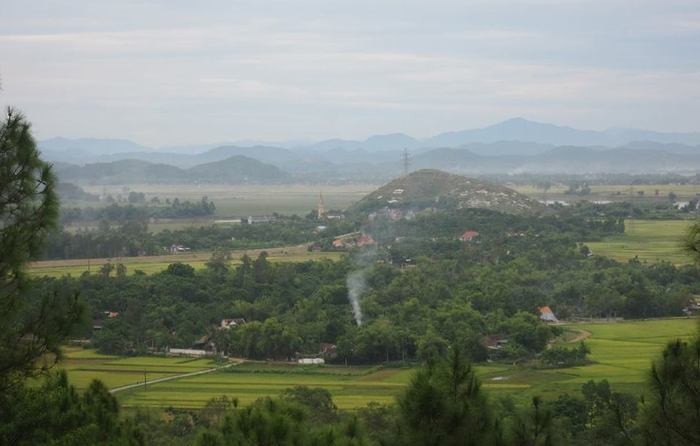 |
| Dong Bich village as seen from Quy mountain. Photo: PV |
And like me, I came to Dong Bich also because of the evocative verses: “When my eyes close, take me back to my birthplace/ My village is small, the entrance to the village is also small/ Cars returning must stop at the main road….” (Vuong Trong), “The Quy Mountain is small, yet so full of rocks? The age of herding cows shelters from the rain in rocky crevices/ Broom flowers fall under the wings of wasps/ White rocks are exposed to the midday sun/ I haven't even finished cutting enough firewood to tie with two strips/ And I'm already sitting leaning on a rock, my lips turning purple…” (Thach Quy).
Once you arrive in Dong Bich, you'll understand why this small village remains a source of endless longing and affection for those who have left. Only then will you understand why such passionate poets were born here…
PV
| RELATED NEWS |
|---|


