
Comrade Truong Chinh and the Vietnamese Revolution
(Baonghean.vn) - Comrade Truong Chinh, whose real name was Dang Xuan Khu, was born on February 9, 1907, into a patriotic intellectual family in Hanh Thien village, Xuan Hong commune, Xuan Truong district, Nam Dinh province.
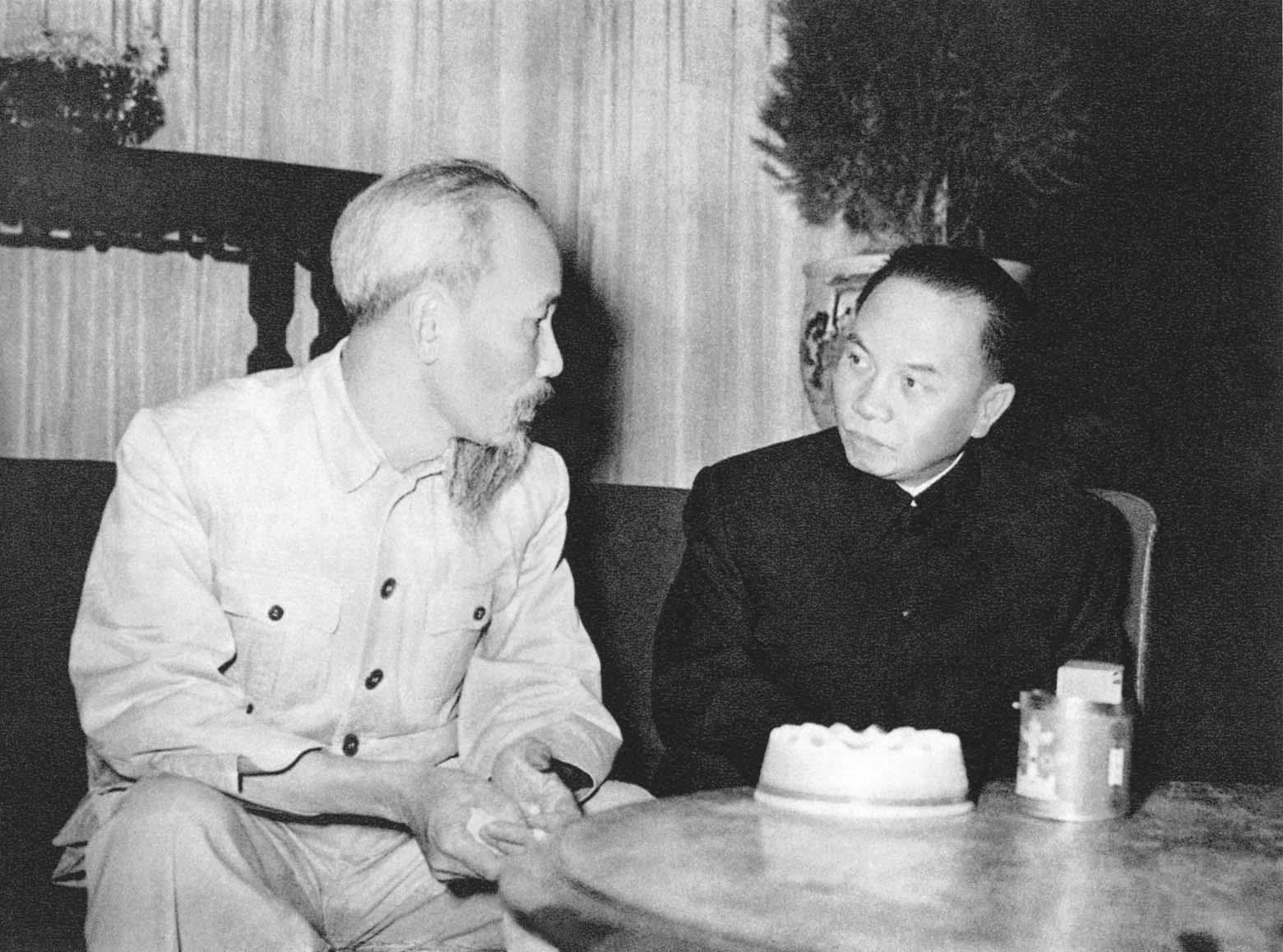
At 81 years old, with over 60 years of continuous revolutionary activity, he was assigned many important responsibilities within the Party and the State. He was an outstanding leader of the Party and a great cultural figure of the nation.
A shining example of upholding the banner of national independence linked with socialism.
At the 7th Central Committee Conference (November 1940), Comrade Truong Chinh was appointed Acting General Secretary, replacing Comrade General Secretary Nguyen Van Cu (who was arrested and executed by the French colonialists in August 1940). At the 8th Central Committee Conference (May 1941), Comrade Truong Chinh was elected General Secretary of the Party.
The Outline of Vietnamese Culture was drafted by General Secretary Trường Chinh and adopted at the Central Party Standing Committee meeting in Võng La (Đông Anh, Phúc Yên) in February 1943. The Outline of Vietnamese Culture outlined three major principles for the movement to build Vietnamese culture: nationalization (opposing all enslaving and colonial influences that would allow Vietnamese culture to develop independently), popularization (opposing all policies and actions that would turn culture against or alienate the masses), and scientification (opposing everything that makes culture unscientific and anti-progressive). The Outline of Vietnamese Culture contributed to gathering cultural figures and intellectuals to participate in the cause of national liberation. In 1943, the National Salvation Cultural Association was also established and joined the Viet Minh Front, founded by the Party, contributing to the victory of the August Revolution in 1945.
Subsequently, at the Second National Cultural Conference held from July 16 to 20, 1948, in Dao Gia commune, Thanh Ba district, Phu Tho province, General Secretary Truong Chinh delivered an important report on Marxism and Vietnamese Culture, clearly outlining the revolutionary cultural stance in the world and in our country. The report on Marxism and Vietnamese Culture pointed out the responsibilities of cultural fighters as follows: Absolute loyalty to the Fatherland and the resistance; no compromise with reactionary ideology and culture, no neutrality, no indifference; love of science, taking Marxist science as a guiding principle for action, knowing and doing go hand in hand, combining theory and practice; wholeheartedly serving the people; being close to the masses of workers, farmers, and soldiers, empathizing with the masses, learning from the people, but educating and guiding the people. "That is the genuine attitude of our new cultural fighters, and also the secret to our success," General Secretary Truong Chinh emphasized.
One of Comrade Truong Chinh's great contributions was that, on behalf of the Standing Committee of the Central Party, he issued the Directive "The Japanese and French are fighting each other and our actions" (March 12, 1945), contributing to the victory of the August Revolution in 1945. The Directive proposed a high tide of resistance against Japan to save the country as a prerequisite for the general uprising. The Directive also clearly stated that wherever the balance of forces was favorable to the revolution, a partial uprising should be carried out, seizing power in each part and ready to switch to a general uprising once the conditions were met[1].
Following the successful August Revolution of 1945, the Democratic Republic of Vietnam (now the Socialist Republic of Vietnam) was established. However, the French colonialists returned to invade our country. In accordance with the spirit of the Party's Directive on National Resistance dated December 12, 1946, General Secretary Truong Chinh wrote a series of articles published in the newspaper Su That (Truth) – the central mouthpiece of the Party – from issue 70 (March 4, 1947) to issue 81 (August 1, 1947). These articles were later published as a book by Su That Publishing House under the title "The Resistance Will Certainly Be Victorious." In this work, General Secretary Truong Chinh presented the arguments and developed the entire strategy of a people's, comprehensive, protracted, and self-reliant resistance war waged by our Party.
In response to the new demands of the national liberation revolution, the Second National Congress of the Party was held in Tuyen Quang from February 11 to 19, 1951. The political report presented by President Ho Chi Minh on the afternoon of February 11, 1951, affirmed the correctness of the Party's all-people, comprehensive, protracted, and self-reliant resistance strategy, and asserted that the Vietnamese people's resistance against French colonialism and American intervention would certainly be victorious. The Congress elected President Ho Chi Minh as Chairman of the Party, and Comrade Truong Chinh was re-elected as General Secretary of the Central Committee of the Party.
From July 1960 to July 1981, Comrade Truong Chinh was re-elected Chairman of the National Assembly. This was the period of building socialism in the North, fighting for the liberation of the South, and subsequently the period of national reunification and progress towards socialism.
Speaking about Comrade Truong Chinh's contributions to the cause of national liberation and socialist construction, General Secretary Nguyen Van Linh assessed that: "Comrade's role was outstanding as one of the outstanding leaders who brought the August Revolution to success and brought the resistance war against French colonialism to final victory" and "Comrade made many great contributions to the collective leadership of the Central Committee of the Party during the years of resistance war against the US, liberating the South, and unifying the country"[2].
General Secretary of the Reform Movement
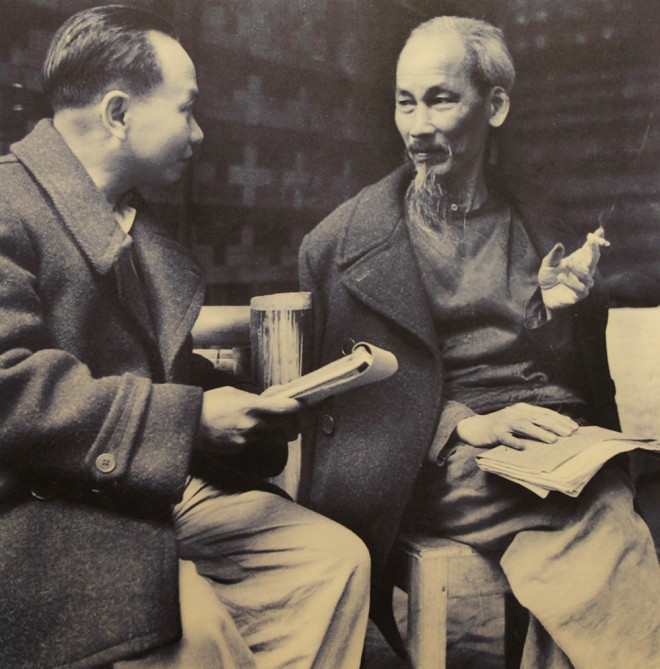
Our economy had not yet recovered from the war against the US when it was wounded again by war on the northern and southwestern borders. In addition, hostile forces intensified their blockade and embargo against our country. Furthermore, inflation also caused a decline in people's living standards.
That situation affected all production activities and impacted all aspects of social life. Faced with this situation, Comrade Truong Chinh pondered and sought ways to lead the country out of its difficult predicament.
From 1983 to 1986, Comrade Truong Chinh, in his capacity as a member of the Politburo and Chairman of the State Council, organized and directly participated in numerous field surveys in nearly 20 provinces and cities across the country. In December 1982, Comrade Truong Chinh also established a research group to study the fundamental tenets of Marxism-Leninism and the basic content of Lenin's New Economic Policy, with the aim of applying them to the Vietnamese context in the new situation.
On December 27, 1983, Comrade Truong Chinh stated: “Here, it is necessary to emphasize the decisive role of the proletarian dictatorship in the issue of building a new man. Historical experience shows that when the proletarian dictatorship is weakened, when the constituent parts of the proletarian dictatorship, such as the leadership role of the Party, the management function of the State and the right of the working people to be masters, the worker-peasant alliance... are violated, not only is the socialist regime in danger of degeneration, but many complex developments in thought and action also arise in people”[3].
"The deviations in ideology and mistakes in the work of our cadres and Party members from the past to the present are often due to not fully studying Marxism-Leninism and not deeply understanding the Party's guidelines and policies," Comrade Truong Chinh emphasized.
On July 14, 1986, following the death of General Secretary Le Duan, the Central Committee of the Party held a special session and unanimously elected Comrade Truong Chinh as General Secretary.
At the Sixth National Congress of the Communist Party of Vietnam (held from December 15 to 18, 1986 in Hanoi), Comrade Truong Chinh read the Political Report of the Fifth Central Committee to the Sixth Congress. The political report affirms: “For our country, innovation is an urgent requirement of the revolutionary cause, a matter of vital importance. For many years, in our understanding of socialism there have been many outdated concepts, especially concepts about industrialization, about socialist transformation, about economic management mechanisms, about distribution and circulation... Therefore, we must innovate, first of all, innovate our thinking, only then can we overcome difficulties and achieve the goals set by the Sixth Party Congress... Innovation in thinking does not mean denying the theoretical achievements that have been achieved, denying the correct line that has been determined, on the contrary, it is to supplement and develop those achievements”[4].
After the Sixth Party Congress, Comrade Truong Chinh continued to dedicate himself to the Party as an advisor to the Central Committee. He paid particular attention to organizing and implementing the reform resolution of the Sixth Party Congress. Despite his advanced age and declining health, Comrade Truong Chinh visited and worked in many localities. During these visits, he reminded local leaders that reform is a continuous process, progressing from lower to higher levels, from individual aspects to a comprehensive one, requiring urgency and boldness, but also caution.
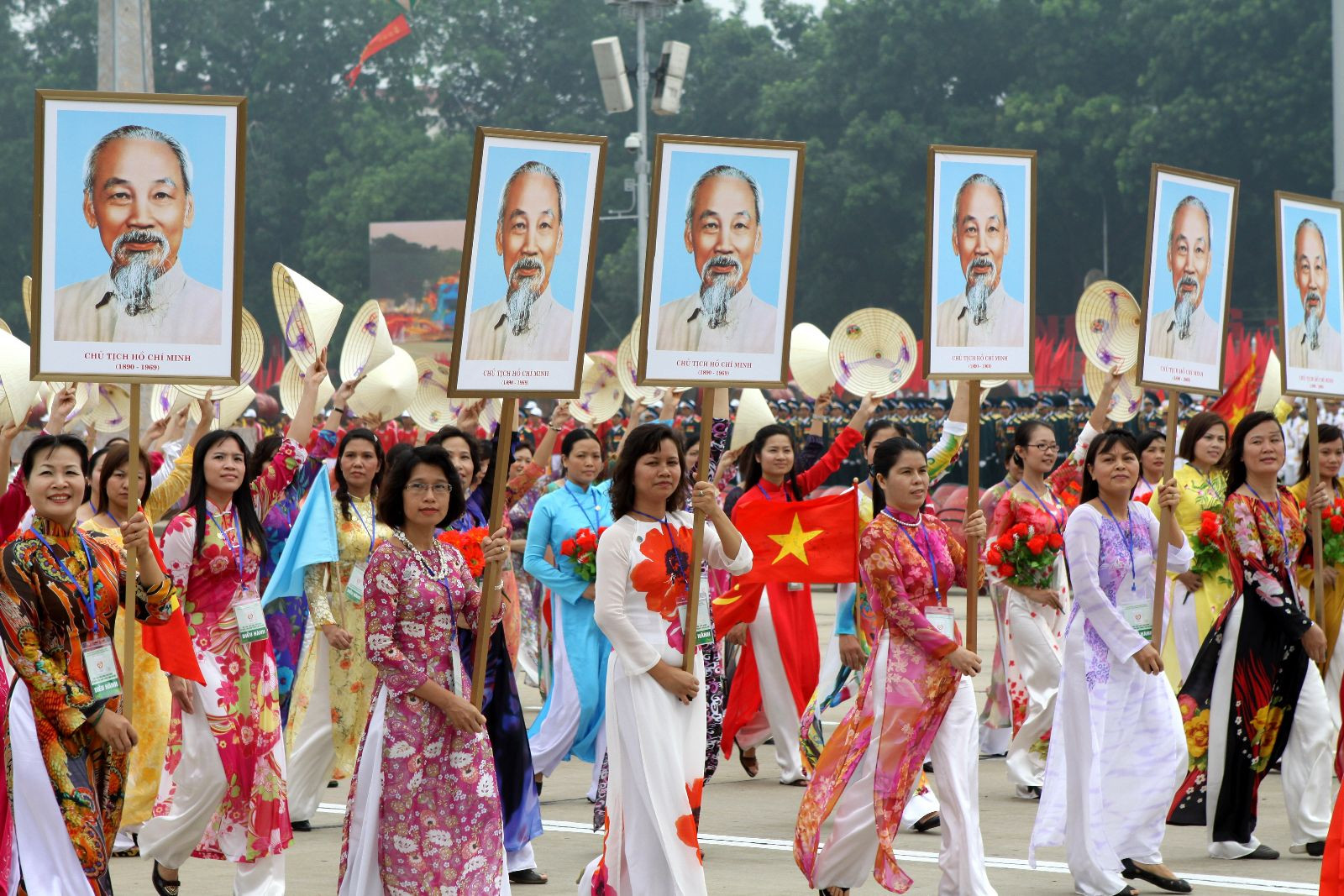
The 13th National Congress of the Party (2021) emphasized: “Through 35 years of carrying out the reform process and 30 years of implementing the Platform for building the country during the transitional period to socialism, the theory of the reform line, of socialism, and the path to socialism in our country has been increasingly perfected and gradually realized. We have achieved great achievements of historical significance, developing more strongly and comprehensively than in the years before the reform. With all humility, we can still say that: Our country has never had such a foundation, potential, position, and international prestige as it does today. These achievements are the product of the crystallization of creativity, the result of a process of persistent and continuous efforts over many terms by the entire Party, the entire people, and the entire army; further affirming that our path to socialism is correct, in accordance with objective laws, and with the reality of Vietnam and The development trend of the era; the Party's reform line is correct and creative; the Party's leadership is the leading factor that determines all victories of the Vietnamese revolution. The Party's political platform continues to be the ideological and theoretical banner guiding our nation to firmly continue to comprehensively and synchronously promote the reform process; it is the foundation for our Party to perfect the line of building and protecting the socialist Vietnamese Fatherland in the new stage"[5]
The 13th National Congress of the Party (2021) set the goal of developing the country to become a developed, high-income country by 2045 (the 100th anniversary of the founding of the Democratic Republic of Vietnam, now the Socialist Republic of Vietnam).
The renovation process has the significance of a revolution in the new era, affirming that our country's path to socialism is in accordance with objective laws, with Vietnamese reality and the development trend of the times. The victory of the renovation process has affirmed the correctness of the renovation line set forth by the Sixth Party Congress, of which Comrade Truong Chinh was the "General Secretary of the renovation"[6].
References:
[1] Communist Party of Vietnam, Complete Party Documents, Volume 7, National Political Publishing House, Hanoi, 2000, p. 367
[2] Eulogy read by General Secretary Nguyen Van Linh at the funeral of Comrade Truong Chinh, October 5, 1988, see Truong Chinh - a great personality, an outstanding leader of the Vietnamese revolution, National Political Publishing House, Hanoi, 2002, p. 16.
[3] See the article “On the ideological and cultural revolution (December 27, 1983)” in the book Truong Chinh's collected works (1976 - 1986) - Volume III, National Political Publishing House, Hanoi, 2009
[4] Communist Party of Vietnam: Documents of the 6th National Congress, Truth Publishing House, Hanoi, 1987, p. 125
[5] Communist Party of Vietnam, Documents of the 13th National Congress, Volume I, National Political Publishing House, Hanoi, 2021, pp. 25-26
[6] Vo Van Kiet: “Comrade Truong Chinh - General Secretary of the Renovation”. According to the book: Truong Chinh, a great personality, an outstanding leader of the Vietnamese revolution, National Political Publishing House, Hanoi, 2002, p. 36.


