
Using energy as a "tactic": a double-edged sword.
(Baonghean.vn) - The plunge in world oil prices and the collapse of the South Stream project were the hottest international news stories of the past week. Both stories share the common theme of energy and are easily recognizable as the result of a vicious cycle of sanctions and retaliation between Russia and the West. However, using energy as a political tactic is like using a double-edged sword.
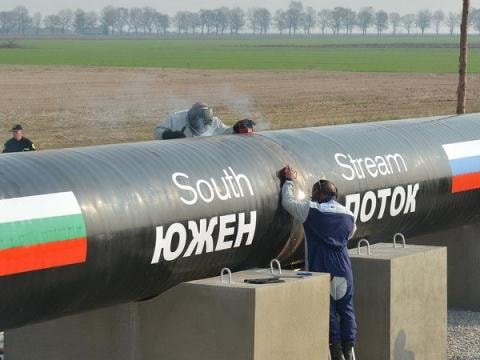
The cancellation of the South Stream project is the clearest evidence of the effects of the retaliatory actions between Russia and the European Union. Russian President Putin's decision to halt the South Stream project due to European opposition has sparked mixed reactions. Some consider it a "painful blow" to Russia, while others argue it was a calculated move by the Kremlin, ultimately resulting in Europe bearing the brunt of the attack. Of course, each perspective has its own objective basis.
 |
| Illustrative image |
In fact, the "South Stream" project has long been considered a cherished dream of Russian President Putin. Launched in December 2012, the project is planned to transport 63 billion cubic meters of natural gas from Russia to Central and Southern Europe, bypassing Ukraine. The pipeline will traverse the Black Sea and the Balkans, reaching Bulgaria, Serbia, Hungary, Slovenia, Austria, and ending in Italy, where it will connect to the European gas pipeline network. If realized, Russia will become increasingly independent from Ukraine in terms of energy transportation. Furthermore, Russia has another ulterior motive behind the South Stream project.
Russia's natural gas supply accounts for one-third of the EU's needs. If Russia had established the South Stream gas pipeline, it would have increased its gas supply to Europe by 25%. This would have allowed Moscow to increase its influence in Europe through the energy sector. However, things did not go as planned due to the events in Ukraine and the breakdown in Russia-EU relations. Clearly, the suspension of the South Stream pipeline represents a failure for Russia in its attempt to make Europe dependent on it for energy.
Furthermore, the immediate loss for Russia is that Gazprom has spent $4.66 billion on this pipeline over the past three years, which is now essentially wasted. Against the backdrop of a declining Russian economy due to Western sanctions, this outcome is unwelcome for Moscow. Although Russia immediately proposed an alternative solution – building a new gas pipeline system called Green Stream from Russia through Turkey to Europe – this plan also appears to require a long time and considerable expense.
However, from the perspective of European countries, the decision to halt the South Stream project, forcing Russia to cancel it, was a self-defeating move. Although the European Union (EU) has long sought to reduce its energy dependence on Russia, especially since the Ukraine crisis, finding alternative energy sources to Russia has proven difficult. Energy conservation is challenging given the need for growth in European economies. Relying on energy from its ally, the United States, is even harder, as distant aid is often insufficient. Therefore, immediately after Russia's decision to cancel the South Stream project, European leaders became anxious, and the EU may even experience internal conflict over this issue.
The European Commission has called for talks on the South Stream pipeline project to begin on December 9th. According to Jerome Ferrie, President of the International Union of Gas Industries (UIG), Europe cannot do without its gas supply from Russia. Once the instability in Ukraine subsides, the EU will see just how important these gas pipelines are to the stability of the continent. Thus, using energy as a "trump card" in the mutual sanctions war seems to have brought no victory to either Russia or the EU. In fact, each side is suffering its own set of setbacks.
Similarly, the plunge in oil prices last week to their lowest level in five years has raised concerns about the state of the energy market. Some analysts believe that the US and its allies have been manipulating the global oil market. The US is playing a game of driving down oil prices by influencing its oil-producing allies, aiming to undermine Russia – a country with which Washington has disagreements over events in Ukraine – much like they did 30 years ago with the Soviet Union. Naturally, the drop in oil prices has significantly impacted Russia, leading its officials to officially acknowledge the risk of economic recession for the first time. However, conversely, the drop in oil prices doesn't bode well for the US. The US doesn't benefit from the price drop because the cost of extracting shale oil is very high. At current oil prices, the US is only incurring losses, not profits.
In short, using the "power" tactic in politics is like a double-edged sword. Therefore, no one truly wins.
Thanh Huyen


