
The road connecting Nghe An and Ha Tinh (DT.542C) is severely degraded: Residents hope for early upgrading.
As a short and convenient connecting route from Nghe An to Ha Tinh leading to the Cau Treo border gate, the DH.20 road passing through Thien Nhan commune has been in a state of serious disrepair for many years, becoming a constant worry for residents and vehicles. When this road was officially upgraded to provincial road DT.542C, residents and local authorities placed their hopes on a new, safer, and more modern appearance.
Upgrade to a provincial road.
The former DH.20 road, previously managed by the old Nam Dan district, is less than 2 km long and connects the south side of Yen Xuan bridge from Trung Phuc Cuong intersection to Tung Chau bridge (Duc Minh commune, Ha Tinh province).
This is a short connecting road between the socio-economic development center of Nghe An and the northwestern region of Ha Tinh, and also serves as a route to the Cau Treo Border Gate.
This is also an intersection with local roads, serving the transportation needs of residents and students of Trung Phuc Cuong 3 Kindergarten, Trung Phuc Cuong 2 Primary School, and Trung Phuc Cuong 2 Secondary School.
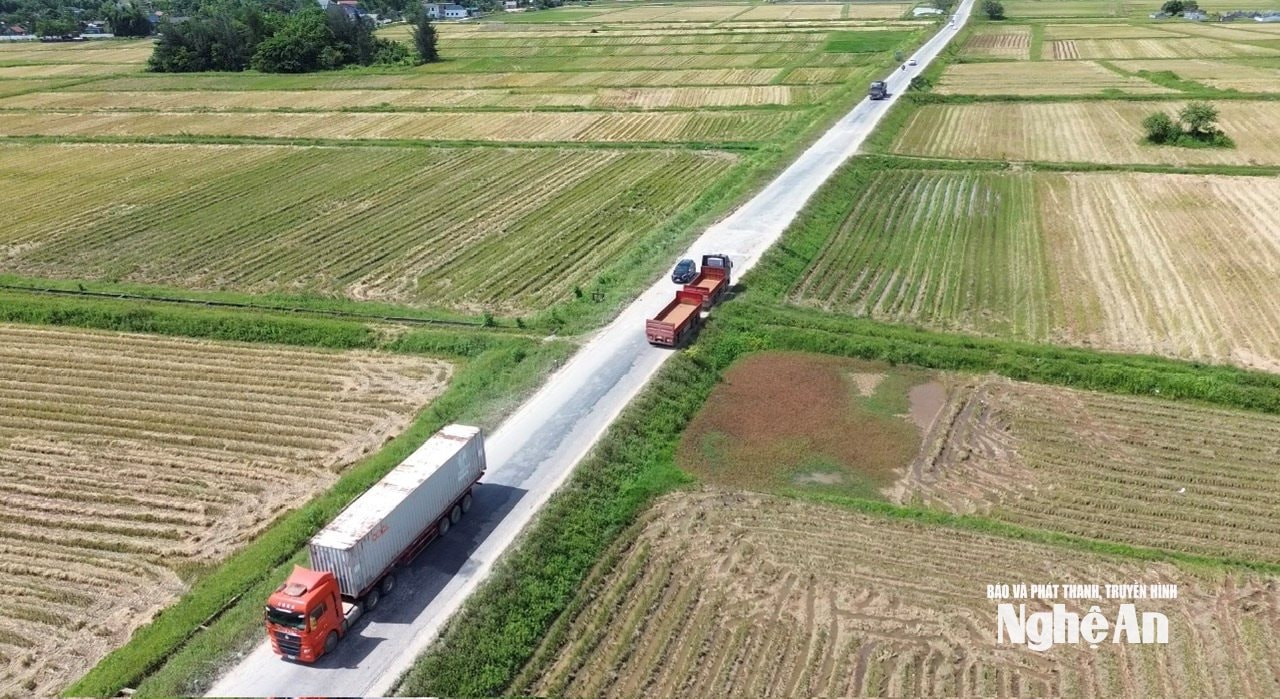
Notably, since the Yen Xuan bridge opened in 2016, traffic volume on this route has increased rapidly to avoid the toll station, primarily consisting of large trucks and container trucks transporting goods between provinces. The frequent passage of these heavy vehicles has caused the road surface, which was built to district road standards, to deteriorate quickly and become damaged in many places.
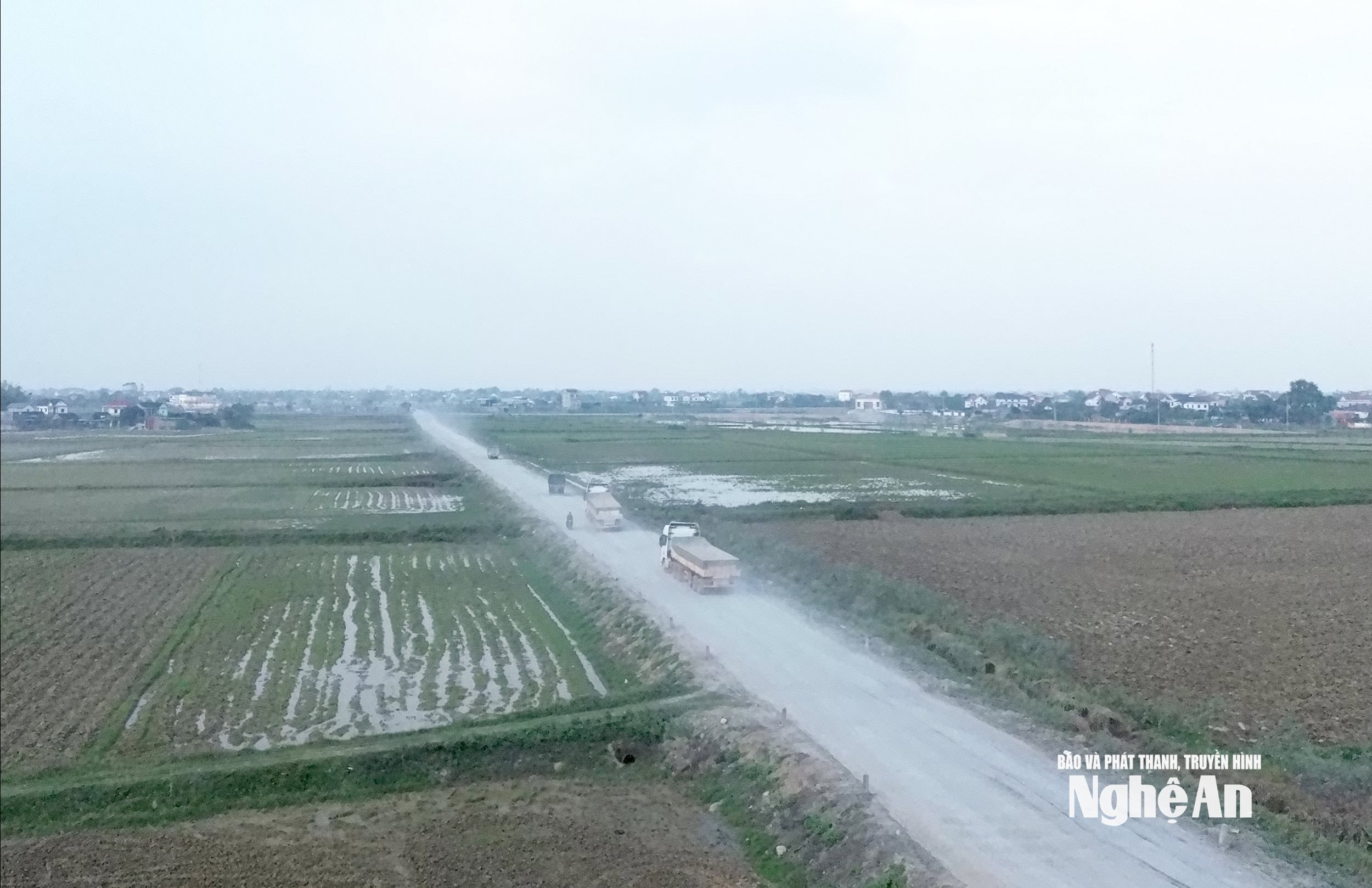
Recently, after crossing the Yen Xuan bridge, many vehicles have avoided this damaged section of road and instead used the road within the residential area, further frustrating local residents.

Following the establishment of a two-tiered local government system, on October 13, 2025, the People's Committee of Nghe An province issued Decision No. 10860/UBND-CN on the acceptance and management of infrastructure assets of district-level roads and road sections within the province.
Accordingly, the Provincial People's Committee agreed with the proposal of the Department of Construction in Report No. 6693/TTr-SXD dated September 10, 2025, regarding the issuance of a decision assigning the management, operation, exploitation, and maintenance of urban roads, district roads, and other technical infrastructure systems in the province. In the list of routes to be taken over and adjusted for management, the DH.20 road is officially merged with the other route.Provincial road DT.542CCurrently, it is approximately 8 km long, in order to form a complete provincial road.

Also on October 13, 2025, the People's Committee of Nghe An province issued Decision No. 3192/QD-UBND, assigning the task of managing, operating, exploiting, and maintaining district roads when implementing a two-tiered local government system, including transferring the aforementioned DH.20 road from district-level management to provincial-level management. This is considered a very significant step, not only administratively, but also opening up substantial opportunities for investment and upgrading the road, which has been severely degraded for a long time.
According to the plan, after being integrated into the route, provincial road DT.542C will start at the intersection with National Highway 46 at Km18+600, in Hung Nguyen commune, heading south towards the Lam River with a length of approximately 8 km. This road continues along the Yen Xuan bridge and the roads at both ends of the bridge for 3.15 km (managed by the Vinh Bypass BOT Branch) and ends at Km13+00, intersecting with provincial road DT.522 in Ha Tinh province.
It needs to be repaired soon.
The official conversion of Highway 20 into a provincial road, part of Provincial Road 542C, has sparked much hope among the local government and residents of Thien Nhan commune. Speaking with reporters, Mr. Le Ngoc Hien, Vice Chairman of the Thien Nhan Commune People's Committee, stated that this has been a long-awaited aspiration of the locality.
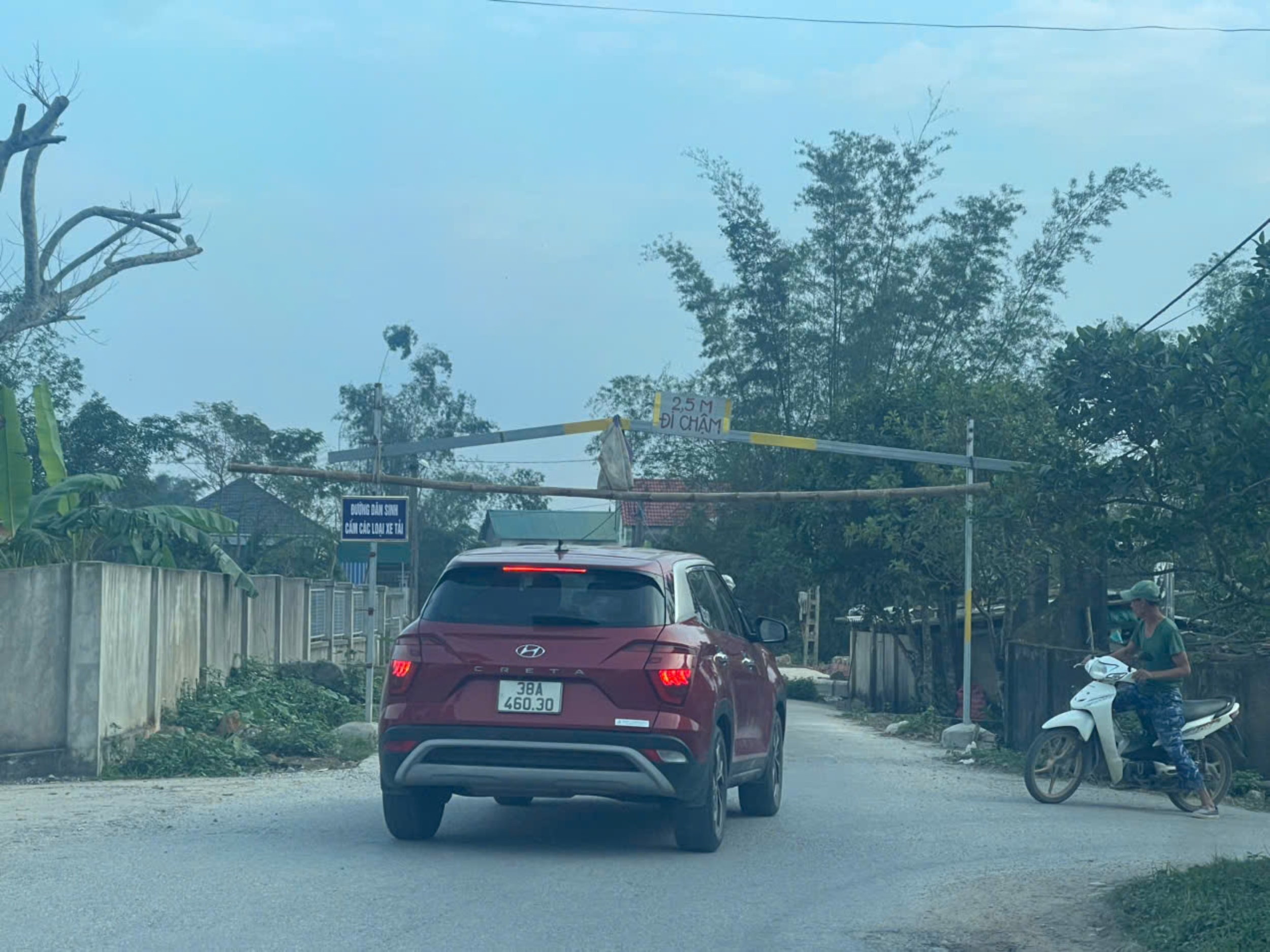
According to Mr. Hien, after the road was upgraded, what the people and the commune authorities most expect is for the management unit to promptly implement thorough and systematic upgrades and repairs to ensure traffic safety and facilitate the daily lives and production activities of the people. In particular, this is a road that students use daily to get to school, so the deteriorated condition of the road surface poses many potential safety risks.
Besides road surface improvement, the local authorities also hope that relevant agencies will soon pay attention to reinstalling speed limit and weight limit warning signs. In reality, this road frequently sees heavy truck traffic, while the current infrastructure has not been upgraded accordingly.
Previously, when the road was under the management of Nam Dan district, the local authorities had erected weight limit signs to protect the road surface. However, some of these signs were vandalized, hindering management and causing the road to continue deteriorating rapidly.
Mr. Le Ngoc Hien - Vice Chairman of Thien Nhan Commune People's Committee
From a long-term perspective, according to local assessments, the relocation of Highway 20 to become part of Provincial Road DT.542C is a viable option. This road not only addresses the immediate deterioration but also holds significance in the transportation infrastructure planning of Nghe An province, especially the southern region. In the context of the increasingly evident need for regional connectivity in the North Central region, inter-provincial transportation routes, which play a crucial role in connecting and transporting goods and services, are becoming increasingly important. This route connects residential areas, schools, and production facilities, while also linking to larger economic zones, contributing to the transportation needs and development of the locality.

Based on this situation, the people of Thien Nhan commune hope that the road will be upgraded soon. Along with that, the management of vehicle weight limits, vehicle control, and protection of transportation infrastructure also need to be strengthened to prevent the continuation of overloaded vehicles and vandalism of road signs, which negatively impacts the road's usability.


