
The Strait of Malacca and Singapore: "Holy Land" for Pirates
The attack and robbery of cargo on the Vietnamese vessel Sunrise 689 by pirates has once again brought to light the pressing security issue in South Asia – a maritime region considered "the most dangerous in the world," CNBC reports.
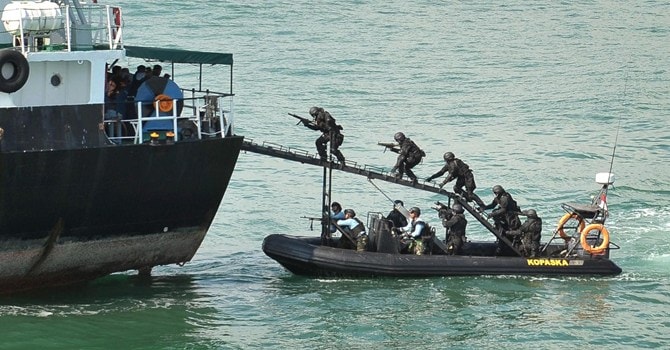 |
| Malaysian and Indonesian troops practice rescuing ships attacked by pirates. Photo: CNBC |
The Ai Maru was sailing silently through the night of June 14th when a speedboat ripped through the darkness, swiftly apprehending the oil tanker 30 miles off the coast of Malaysia.
At 9:15 p.m., seven men armed with handguns and knives stormed onto the ship from the side, smashed windows, tied up crew members, and sabotaged the vessel's communication equipment.
The attackers stripped the 13 crew members of their belongings, confined them to a single room, and spent the next few hours tackling the main task: stealing the cargo.
Another oil tanker, carrying even more pirates, approached Ai Maru. The pirates siphoned a total of 620 cubic meters of oil and gas from Ai Maru onto their ship.
At 5 a.m. the following morning, as the navy and coast guard approached the Ai Maru, which was drifting freely on the water, the pirates had already fled, taking with them $550,000 worth of oil at the black market value of the time.
Ai Maru has just become a victim in the world's most dangerous waters, facing pirate tactics never before seen in any nautical manual.
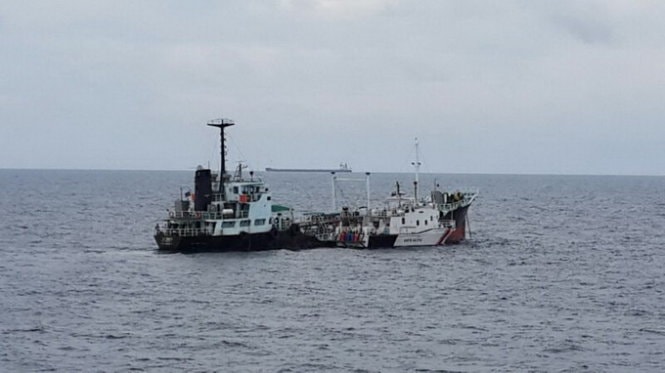 |
| The oil tanker Ai Maru moves alongside a Malaysian naval vessel. |
| RELATED NEWS |
|---|
In comparison, the hijacking of the Ai Maru vessel has many similarities to the recent incident involving the Vietnamese vessel Sunrise 689, as recounted by the captain.
Captain Nguyen Quyet Thang of Sunrise 689 said the robbery occurred at around 2:40 AM on October 3rd, Vietnam time, shortly after the ship left Singapore.
Dozens of armed pirates suddenly boarded the ship, severely injuring two crew members and holding 16 others hostage. The pirates seized the bridge, destroyed the machinery, took all the belongings, and locked the sailors in a room.
For four days while the ship drifted, the pirates brought a large vessel alongside the Sunrise and pumped out all of its more than 5,000 tons of oil. At 1:00 AM on October 9th, the Sunrise was released by the pirates, but the rudder, all navigational equipment, and personal phones of the 18 crew members had been destroyed.
Distinctive
Unlike the now-defunct Somali pirates, pirates in South Asia rarely take hostages. They focus solely on stealing cargo, primarily liquid fuels.
Unlike Somali pirates—a motley crew of amateur criminals from coastal villages—South Asian pirates are well-structured criminal "corporations" with knowledge, systematic attacks, and independent operations, sometimes even owning their own oil tankers. Their spoils are then sold to large buyers they've tipped off beforehand.
"Piracy in the Horn of Africa is losing its prestige because of the increased police presence," said Richard Phillips, the Oscar-nominated actor in "Captain Phillips" and former captain of the Maersk Alabama, which was hijacked by Somali pirates in 2009.
"On the other hand, Indonesia is a 'target' area with a large volume of ships passing through. And there are certainly organizations on shore that abet pirates operating here," he asserted.
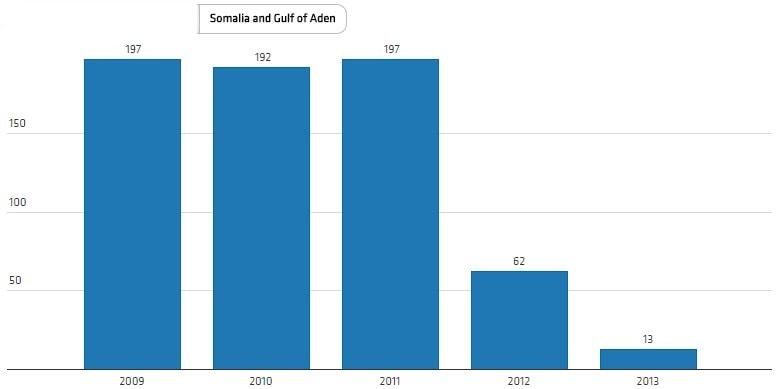 |
| While Somali and Gulf of Aden pirates are losing their prominence... |
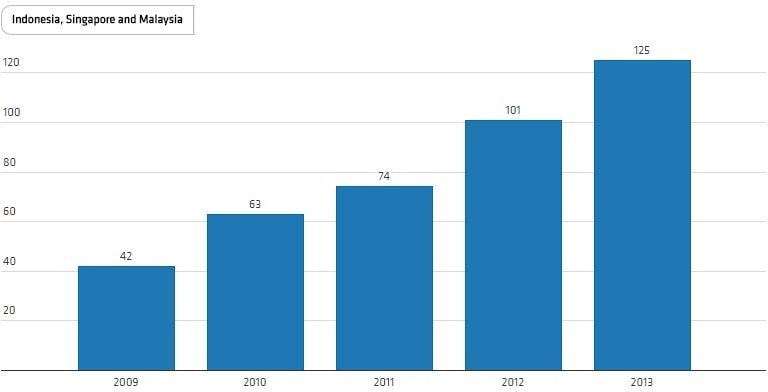 |
| ...then South Asian piracy rose up with a steady increase in the number of attacks. over the years. |
Why South Asia?
From a business perspective, the surge in piracy in South Asia is understandable. One-third of the world's shipping passes through the Malacca and Singapore Straits annually, including trade routes between Europe and China.
In addition, almost all of the crude oil transported from the Persian Gulf to major Asian economies such as China, Japan, and South Korea also passes through this shipping route.
In Singapore alone, 130,000 ships dock at its port each year, according to government figures. On average, a ship enters the port every four minutes. The volume of international trade passing through this narrow, bottlenecked waterway – just 1.7 miles wide at its narrowest point – is on the rise.
Most of these vessels have reached ports safely, and the Singapore Strait is not yet at risk of being closed. However, the number of attacks is escalating.
In 2013, 125 pirate attacks were recorded in the region, more than three times the number in 2009. In comparison, the number of attacks in the Horn of Africa decreased from 197 to just 13 during the same period.
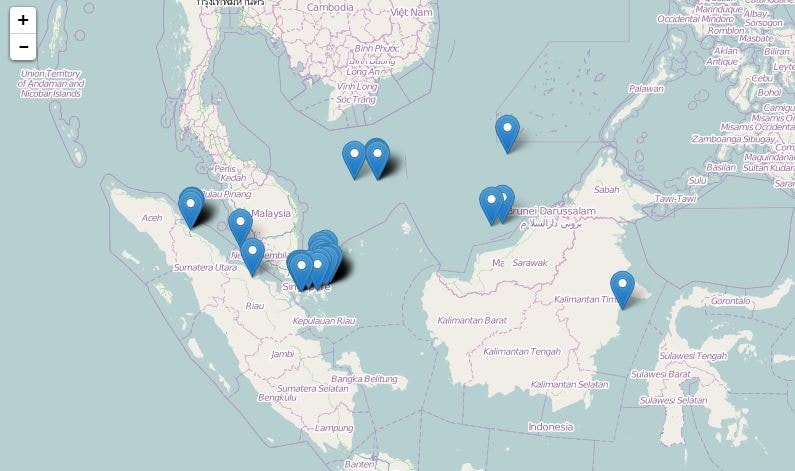 |
| Numerous piracy incidents have been recorded in the Malacca Strait and Singapore Strait areas since the beginning of 2014. |
That's not to mention the many smaller attacks that go unreported to authorities, as shipowners often don't want the trouble.
They wanted to protect the security image of their company's ship. If they reported it, their ship would be detained for investigation, which would negatively impact their business in the short term.
However, the damage caused by piracy extends beyond the ships attacked. The U.S. Maritime Trade Organization estimates that piracy costs shipowners worldwide between $5 and $8.3 billion annually. Half of that occurs in the waters surrounding Indonesia, Singapore, and Malaysia.
Besides the loss of cargo, a plundered ship incurs many other costs such as insurance, additional shipping fees, compensation for crew members, investigation and consulting fees. Even increasing the ship's speed incurs costs. (Experience shows that pirate gangs often "prioritize" targeting ships that move at slow speeds).
For example, to increase the speed of a supertanker from 12.8 knots to 17.9 knots, the shipowner needs to add an extra $88,000 USD in fuel costs per day.
These resulting costs are ultimately passed on to consumers in a globally interconnected market, where losses in one industry push others into turmoil.
While the exact extent of consumer losses cannot yet be determined, it is important to note that over 90% of global trade is transported by sea, according to the United Nations' International Maritime Organization.
The "buy it if you see it" rule.
As in the case of the Ai Marum, pirates in the Malacca Strait and Singapore did not resort to chasing, seizing, and kidnapping the ship like Somali pirates did in the waters off Maersk, Alabama.
Instead, South Asian pirates preferred stealthy raids, selling the stolen goods for cash rather than demanding ransom. But this didn't mean raids didn't strike fear into shipowners.
Former captain David Watkins, now a director at a Chinese marine insurance company, recounted a horrifying incident.
That night, he was awakened from his sleep by a sailor who reported that nine pirates armed with ropes, hooks, and machetes had seized the stern of the oil tanker, which had approached the strait so closely that the faint lights from Singapore were visible.
Immediately, the 19 crew members on board, armed with crowbars, gathered on deck and prepared to engage the pirates in hand-to-hand combat.
"No one slept that night. No one wanted conflict, I have to admit. People thought fighting pirates was a brave act, but when faced with a real situation, everyone just wanted peace," he asserted.
Fortunately, during that encounter, two of the pirates were drowning because the crew outnumbered them.
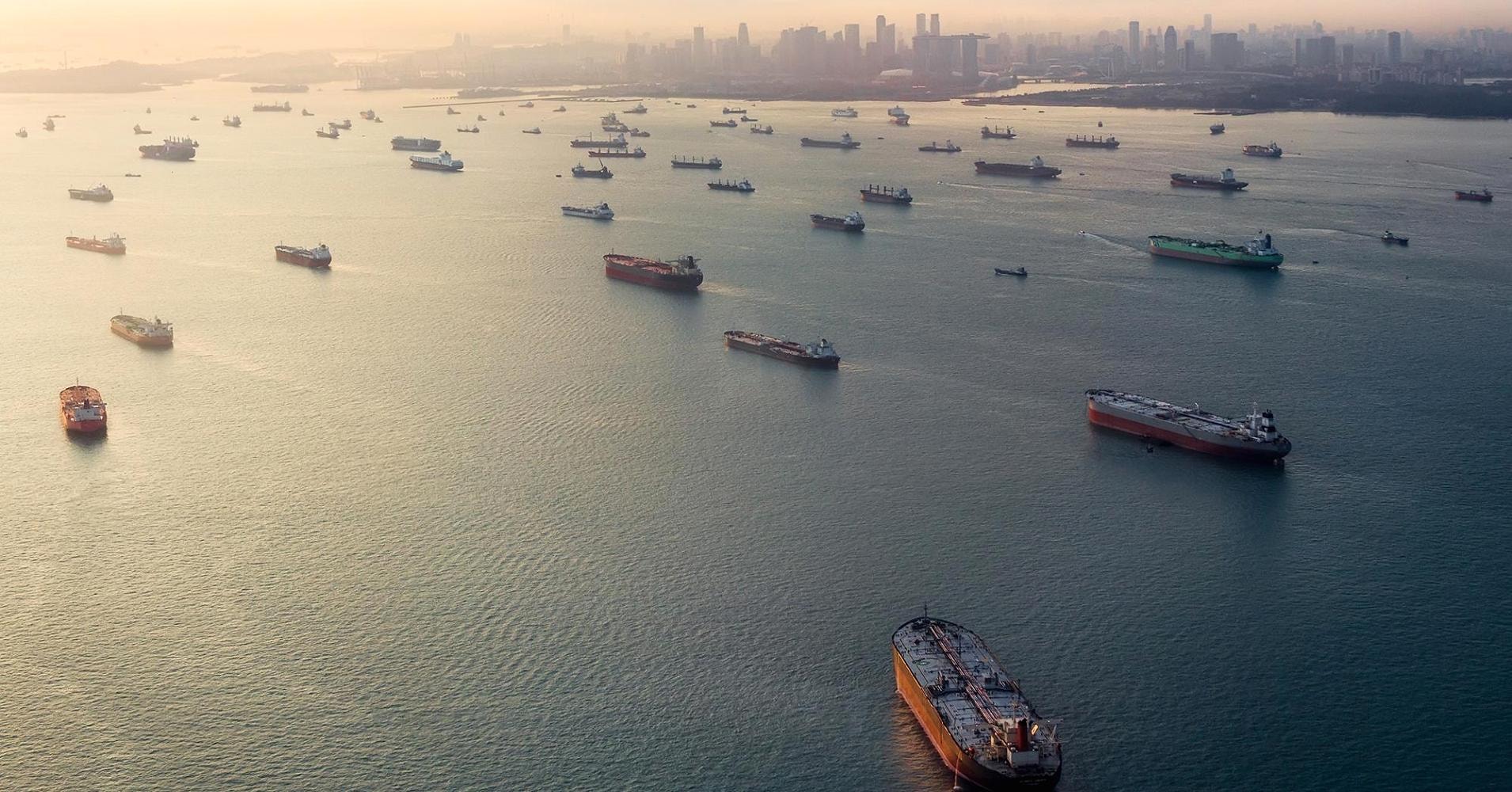 |
| According to experts, it is precisely this small but bustling area that creates favorable conditions. to allow the gangs to blend in. |
"Preferred" goods
Pirates in the Malacca Strait and Singapore prefer small vessels carrying metals, liquid fuels, and petroleum products, as the origins of these goods are difficult to trace on the black market.
Between April and August alone, at least nine ships were robbed of oil in the Strait of Singapore and off the east coast of the South China Sea, according to IMB data.
Heist operations like these require careful planning. It's necessary to identify the cargo ship, its specific location at a particular time, the density of security forces surrounding it, and information about the crew.
Most pirate organizations obtain this information from a variety of sources, including double agents, family members of crew members or port workers, and in some cases even from the government and military.
When Western navies began bombing Somali pirates 5-6 years ago, they often complained about the difficulty of capturing the troublemakers due to the vastness of the waters. So why is a small shipping lane through the Malacca Strait and Singapore such fertile ground for pirate groups?
According to experts, it is precisely this small but bustling area that creates favorable conditions for pirate gangs to blend in. From the outside, there is nothing unusual about two cargo ships sailing close together to pump oil or transfer cargo, and this is perfectly legal.
According to experts, when a gun is pointed at their head, no crew member would dare to signal for help, even if a coast guard vessel were passing by.
After looting the cargo, pirates often disable the victim's ship's communication equipment and steal the crew's telephones.
Even if the pirate group moves on a large ship, they can still blend in with hundreds of other vessels in the area before authorities can approach them.
Simply put, if Somali pirates are like gangsters, attacking isolated targets outside the watchful eyes of security forces, then Asian pirates are like pickpockets, using the crowds themselves as a shield.
In the Singapore Strait alone, there have been at least four daytime attacks since the beginning of the year, despite the area being heavily patrolled by Singaporean, Malaysian, and Indonesian vessels.
(to be continued)
According to BizLIVE


